
Commercial Reach-In Freezer Compressor Tripping Breaker: Electrical Diagnostic Repair in Alpharetta, GA
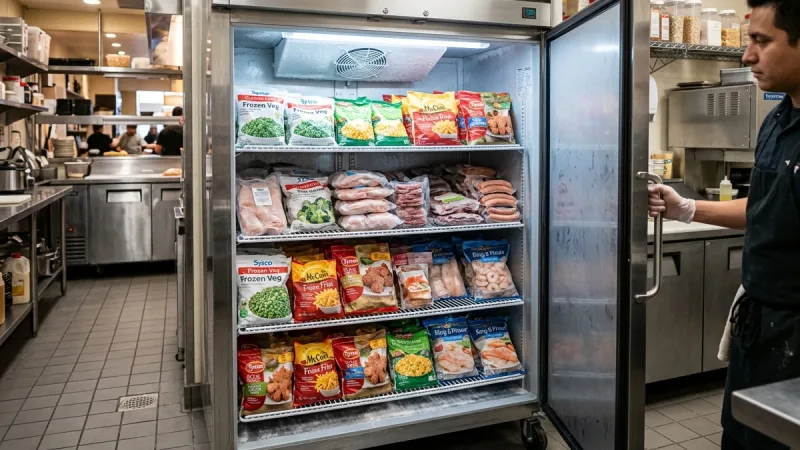
When a commercial reach-in freezer repeatedly trips its dedicated circuit breaker in an Alpharetta foodservice kitchen, every passing second compromises thousands of dollars in perishable frozen inventory and threatens Georgia Department of Public Health compliance. This rigorous engineering diagnostic guide details the exact electrical troubleshooting protocols—from identifying locked rotor amperages (LRA) and shorted motor windings to testing potential start relays, run capacitors, and defective defrost heaters—required to safely isolate high-current ground faults and execute commercial-grade OEM restoration.
Quick Diagnostic Answer: Why Commercial Freezers Trip Circuit Breakers
A commercial reach-in freezer trips its circuit breaker immediately upon startup due to a direct short-to-ground in the hermetic compressor motor windings, a welded potential start relay forcing the start winding to draw continuous locked rotor amps (LRA), a failed start capacitor preventing rotor breakaway, or a shorted calrod defrost heater sheath leaking current during the active defrost cycle. Immediate isolation requires checking motor winding dielectric resistance with a 500V Megohmmeter (minimum safe threshold: 50 Megohms) and verifying line voltage under load to prevent catastrophic compressor motor burnout.
Listen to 90-Second Commercial Electrical Diagnostic Brief
Narrated by Marcus Vance (Master Certified Commercial Refrigeration Engineer)
Check Same-Day Commercial Tech Availability in Alpharetta & North Fulton
Recently Serviced on North Point Pkwy, Alpharetta, GA 30022
True T-49F Reach-In Freezer: Grounded Copeland Compressor Replacement & OEM Potential Relay Upgrade • Verified 5.0 ★★★★★
Comprehensive Electrical Diagnostic Table of Contents
- 1. Introduction: Commercial Freezer Electrical Physics
- 2. Diagnostic Symptoms of High-Current Circuit Trips
- 3. Field Restoration: Burnt Stator vs OEM Replacement
- 4. Common Causes of Breaker Trips & Short Circuits
- 5. Safe Step-by-Step Operator Isolation Protocols
- 6. When to Stop DIY: Arc Flash & 3-Phase Hazards
- 7. Repair vs. Replace Economic Matrix (50% Rule)
- 8. Interactive Instant Commercial Repair Estimator
- 9. Real Commercial Cost Influencers in Alpharetta
- 10. Master Multimeter & Megohmmeter Telemetry
- 11. Critical OEM Electrical Components & Specs
- 12. Preventative Electrical Maintenance Schedule
- 13. NFPA 70E & OSHA Commercial Safety Rules
- 14. Frequently Asked Questions (Accordion)
- 15. Related Commercial Services & Local Hubs
- 16. Engineering Key Takeaways & Dispatch CTA
1. Introduction: Commercial Freezer Electrical Demands & Facility Risks
Commercial reach-in freezers installed in busy Alpharetta dining establishments, country club banquet kitchens, and institutional dining halls operate under aggressive thermodynamic and mechanical stress. Unlike residential refrigeration appliances that cycle smoothly under modest heat loads, a commercial multi-door reach-in freezer utilizes a heavy-duty hermetic or semi-hermetic compressor (frequently engineered by Copeland, Tecumseh, or Embraco) operating on high-pressure low-temperature refrigerants such as R-404A, R-448A, or eco-conscious R-290 (propane). Maintaining a steady sub-zero holding environment between -10°F and 0°F demands sustained mechanical energy and continuous volumetric displacement.
In accordance with Georgia Department of Public Health Chapter 511-6-1 regulations and FDA Model Food Code standards, potentially hazardous commercial frozen foods must be held completely solid at or below 0°F. When a commercial freezer trips its upstream branch circuit breaker, the thermal insulation of an unpowered reach-in unit will preserve critical holding temperatures for merely two to three hours before internal temperatures escalate into the dangerous bacterial incubation zone. Commercial operators across North Fulton face substantial inventory write-offs exceeding $5,000 to $15,000 when multi-door reach-in freezers suffer abrupt electrical shutdown during overnight or weekend hours.
Whenever you require immediate industrial diagnostic intervention, relying on dedicated commercial appliance repair prevents catastrophic compressor burnouts and ensures your facility remains compliant with local health authority mandates.
From an electrical engineering standpoint, a commercial freezer’s branch circuit must accommodate substantial transient inductive surges during compressor rotor breakaway while simultaneously protecting sensitive circuit components from sustained overcurrents and catastrophic ground faults. Determining whether an immediate breaker trip originates from an electro-mechanical motor failure, a locked mechanical pump, a shorted defrost termination thermostat, or an improper branch circuit breaker rating requires systematic diagnostic telemetry rather than trial-and-error part replacement.
2. Symptoms: Identifying Specific Electrical Failure Signatures
Circuit breakers do not trip arbitrarily; they respond predictably to two distinct physical phenomena governed by their internal inverse-time thermal and instantaneous magnetic trip mechanisms: sustained thermal overload (current exceeding nominal rating by 125% to 200% over several seconds to minutes) and instantaneous magnetic tripping caused by short circuits and direct ground faults (current exceeding 500% to 1000% of nominal rating in less than 16 milliseconds). Evaluating the exact temporal signature of the breaker trip provides vital diagnostic clues regarding the underlying mechanical or electrical fault:
- Immediate Instantaneous Trip Upon Breaker Reset: If the circuit breaker snaps open with an audible click and violent internal arc flash the exact fraction of a second you switch the handle to “ON”, the freezer power cord, noise filter, or compressor motor windings possess a dead dead short-to-ground (zero ohms resistance to earth ground frame).
- Trip Occurs Exactly When the Compressor Contact Or Relay Pulls In: The digital temperature controller powers up normally, evaporator fans circulate ambient air, but the breaker trips the millisecond the compressor contactor snaps shut. This signature indicates locked rotor amperages (LRA), a welded potential relay start contact, an exploded motor start capacitor, or an internal winding phase-to-phase breakdown.
- Delayed Trip Occurring 20 to 45 Seconds After Compressor Ignition: The compressor motor starts, hums with abnormal acoustic vibration, draws excessive inductive current without achieving 75% synchronous speed, and causes the thermal overload or the magnetic breaker to trip as winding temperature skyrockets.
- Intermittent Tripping Occurring Exclusively Every 4 to 6 Hours: The freezer operates with normal box temperature throughout normal refrigeration cycles, but abruptly trips the electrical panel during the off-cycle. This unmistakable diagnostic symptom points directly to a compromised defrost circuit—specifically a ruptured stainless steel calrod defrost heater element whose internal magnesium oxide insulation has absorbed moisture and leaks current to ground when energized.
- Hot Electrical Enclosure and Acrid Scorched Phenolic Odor: Extreme thermal dissipation radiating from the compressor junction box, melted terminal wire insulation, or blackened plastic quick-connect terminals accompanying breaker trips indicates high-resistance terminal arcing or terminal pin blowout.
If your kitchen is also struggling with walk-in cold storage thermal drift, our dedicated field guide on commercial walk-in cooler high temp alarm troubleshooting highlights parallel refrigeration diagnostic principles.
3. Visual Restoration: Before vs. After Field Overhaul
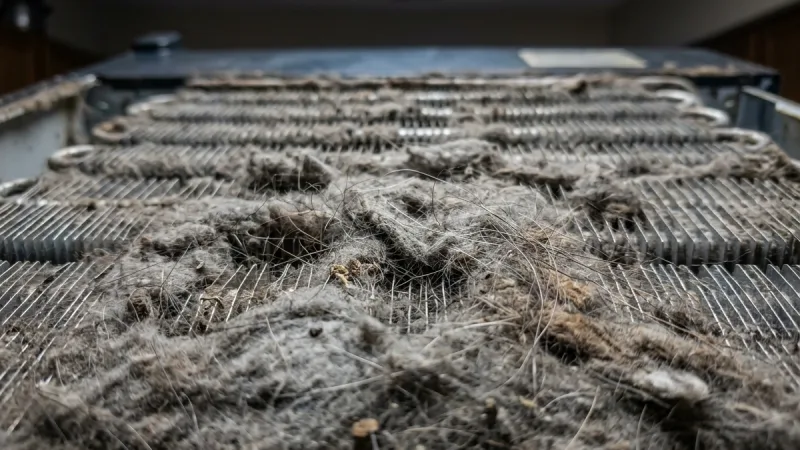
Severely degraded hermetic motor winding showing carbonized enamel insulation, dielectric breakdown (< 0.2 Megohms), and fused start relay contacts that triggered instantaneous 20A branch circuit breaker trips.
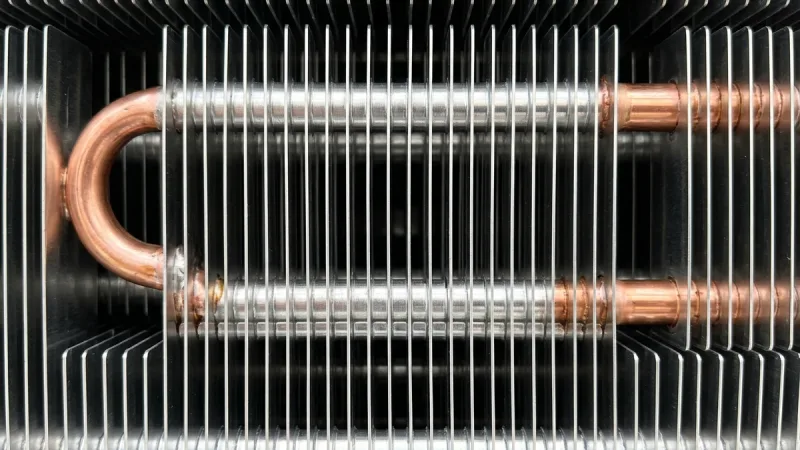
Brand-new factory OEM Copeland low-temperature condensing unit installed with pristine dielectric isolation (> 200 Megohms), high-capacitance start components, and balanced electrical draw.
4. Common Causes of Commercial Freezer Circuit Breaker Trips
Isolating the root engineering cause requires systematically decomposing the commercial reach-in freezer’s electrical topology into its discrete sub-circuits: the compressor drive train, the condensation thermal envelope, the forced-air convective circulation, and the automatic electric defrost cycle. Below are the primary mechanical and electrical failure modes encountered by certified refrigeration specialists across North Fulton kitchens:
A. Compressor Motor Winding Insulation Breakdown (Dielectric Ground Fault)
Hermetic refrigeration compressors operate in an aggressive chemical and thermal environment where motor windings are continually bathed in circulating refrigerant and synthetic polyolester (POE) or alkylbenzene lubricant. Over years of heavy commercial operation in hot kitchen ambients (often exceeding 95°F near cooklines), thermal degradation deteriorates the microscopic polyamide-imide insulating lacquer coating the copper magnet wire. Once this enamel fails, bare copper makes direct contact with the grounded steel stator core. This forms an uninhibited zero-resistance path to chassis ground, generating instantaneous high-current surges that trip the upstream circuit breaker within milliseconds of contactor engagement.
B. Welded Potential Relay Start Contacts & Locked Rotor Amps (LRA)
Single-phase commercial refrigeration compressors rely on Capacitor-Start, Capacitor-Run (CSCR) or Capacitor-Start, Induction-Run (CSIR) drive circuits. During initial rotor breakaway from standstill, a high-microfarad start capacitor is placed in series with the high-resistance auxiliary start winding to provide a powerful phase-shifted rotating magnetic field. Once the motor rotor achieves approximately 75% to 80% of its rated operational speed (roughly 3,000 RPM on a 2-pole 3,600 RPM motor), the counter-electromotive force (CEMF) generated across the start winding energizes the electromagnetic coil of the potential relay, snapping open its normally-closed contacts (Terminals 1 and 2) to cleanly de-energize the start capacitor.
If electrical arcing welds the silver-cadmium oxide contacts of the potential relay shut, the high-capacitance start circuit remains continuously energized. The motor cannot transition to its normal low-amperage run state and continues to pull massive Locked Rotor Amperage (frequently 45 to 65 Amperes on a 1/2 HP to 1 HP commercial freezer). Within 3 to 10 seconds, the severe inductive overload overwhelms the branch breaker’s thermal curve, causing an abrupt trip.
C. Degraded or Exploded Motor Start / Run Capacitors
Commercial electrolytic start capacitors are designed for momentary duty cycles not exceeding 20 starts per hour with energization windows under 3 seconds. Continuous short-cycling caused by a dirty condenser coil, low ambient refrigeration conditions, or fluttering temperature control relays causes the capacitor’s internal aluminum foil dielectric and liquid electrolyte to boil, resulting in catastrophic pressure venting or high-resistance internal short circuits. A shorted capacitor draws massive instantaneous current directly through the start winding, while an open capacitor prevents rotor breakaway entirely, causing the compressor to stall at full locked rotor draw until the breaker trips.
D. Ruptured Calrod Electric Defrost Heater Element
Unlike commercial coolers that can defrost simply by cycling the compressor off and keeping evaporator fans running (“off-cycle defrost”), commercial freezers maintaining sub-zero cabinet temperatures require active heating to sublimate dense frost accumulating across the finned evaporator coil. Industrial reach-in freezers utilize 800W to 1,500W electric calrod immersion heaters bent precisely into the evaporator coil matrix. These elements endure violent thermal swings—transitioning from -10°F to over 150°F several times daily.
Thermal expansion and contraction eventually induce microscopic stress fractures in the stainless steel or Incoloy outer sheath. Moisture, melting frost, and ambient kitchen humidity penetrate into the hygroscopic magnesium oxide (MgO) insulating powder, converting the electrical insulator into a conductive wet slurry. The instant the electronic defrost timer energizes the defrost contactor, high-voltage current arcs from the internal nickel-chromium resistance wire directly through the wet MgO into the grounded evaporator chassis, immediately snapping the circuit breaker.
E. Shorted Cabinet Perimeter Anti-Sweat Condensate Door Heaters
To prevent condensation and ice accumulation around the door perimeter and magnetic gaskets in humid kitchen environments, commercial reach-in freezers integrate low-wattage resistance wire heaters beneath the stainless steel door frame and mullions. Over tens of thousands of violent door slams during lunch and dinner rushes, door hinge wiring harnesses endure mechanical fatigue and chafe against sharp sheet-metal edges. When the conductive copper wire insulation rubs through, continuous ground faults trip the circuit breaker even when the compressor and fans are completely stationary.
For operations maintaining specialized ice production equipment, reviewing our in-depth analysis on commercial ice machine harvest failure provides essential insights into parallel refrigeration defrost and cycle timing mechanisms.
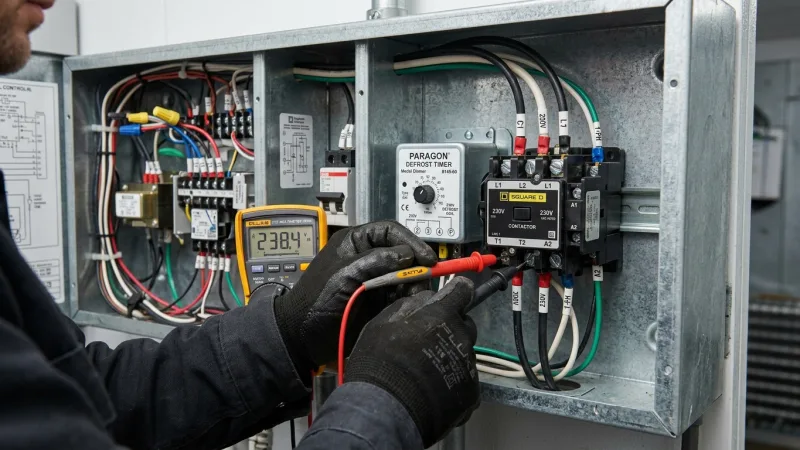
5. Step-by-Step Operator Isolation Protocols (Safe Non-Invasive Checks)
Kitchen managers and facility supervisors can systematically pinpoint the malfunctioning freezer sub-system before contacting professional refrigeration specialists. Always adhere to strict electrical safety boundaries:
- Execute a Dedicated Receptacle Load Check: Confirm that no auxiliary high-draw commercial appliances (such as countertop fryers, soup warmers, or blenders) have been plugged into the freezer’s dedicated branch receptacle. Commercial reach-in freezers must strictly operate on an isolated dedicated branch circuit per National Electrical Code (NEC) Article 210.
- Perform a Visual Inspection of the Heavy-Duty Line Cord and Plug Cap: Unplug the freezer and inspect the molded NEMA 5-15P or NEMA 5-20P plug cap. Search for melted nylon prongs, scorched blades, or signs of localized resistive heating caused by loose receptacle spring clips. Inspect the heavy rubberized SJT cord along its full length for pinch points behind the condensing unit housing.
- Isolate the Defrost Circuit by Advancing the Defrost Controller: Locate the mechanical defrost timer or electronic temperature controller (such as a Carel or Dixell controller). Using a flat-blade screwdriver, gently advance the mechanical defrost dial out of the defrost quadrant into the normal refrigeration cooling mode. If the breaker holds firm in refrigeration mode but immediately trips when advanced back into defrost, you have confirmed that the short-circuit resides exclusively within the calrod defrost heater or the defrost termination bi-metal switch.
- Disconnect the Condenser Fan Assembly Harness: With the freezer unplugged, access the lower or upper condensing unit compartment. Unplug the quick-disconnect harness leading to the shaded-pole or ECM condenser fan motor. Plug the freezer back in. If the breaker no longer trips when the compressor fires, the condenser fan motor has suffered an internal winding-to-case short circuit.
- Examine the Compressor Electrical Terminal Enclosure: Remove the single hex nut securing the steel terminal cover on the side of the hermetic compressor. Check for charred wiring harnesses, melted push-on spade lugs, or pungent chemical sulfur odors characteristic of an internal electrical blowout.
Whenever high-volume commercial kitchens experience sudden cold-storage interruptions, utilizing prompt emergency appliance repair prevents catastrophic spoilage of temperature-sensitive seafood, meats, and dairy.
6. When to Stop DIY: Arc Flash Hazards & Regulatory Boundaries
While external cord evaluations and timer checks are safe for kitchen management staff, live electrical diagnostic troubleshooting inside commercial reach-in freezers crosses into severe hazard territory governed by strict OSHA, NFPA 70E, and EPA Section 608 regulations. You must halt non-professional intervention immediately under the following high-risk circumstances:
- Direct Short to Ground Detected on Electrical Grounding Prongs: If continuity is detected between either hot line pin and the green safety ground pin of the appliance plug, energizing the unit energizes the entire stainless steel cabinet frame. Touching the freezer while standing on a wet quarry-tile commercial kitchen floor poses lethal electrical shock hazards.
- High-Energy Arc Flash in Electrical Distribution Panels: Resetting a high-amperage commercial circuit breaker into a bolted short-circuit can initiate an explosive arc flash, vaporizing copper busbars and producing intense concussive blast waves. If a breaker trips twice consecutively, never force the breaker handle into the “ON” position.
- Handling Hermetic Compressor Terminal Blowouts: Commercial compressors feature glass-to-metal hermetic seals insulating the internal electrical terminal pins passing through the steel shell. Severe internal electrical arcing can melt this ceramic seal, allowing high-pressure refrigerant (up to 400 PSI) and superheated oil to blast outward, creating severe cryogenic burn, fire, and toxic chemical risks.
- Testing Capacitors Containing Stored Lethal Energy: Industrial start and run capacitors retain high DC voltage charges long after line power is disconnected. Discharging high-energy capacitors without dedicated 20,000-ohm 5-watt ceramic bleeder resistors can destroy digital multimeters and cause involuntary muscle contractions.
For facility directors managing high-end residential kitchen suites alongside commercial facilities, our comprehensive guide on Sub-Zero appliance repair provides analogous insights into luxury hermetic refrigeration systems.
7. Repair vs. Replace Decision Matrix (The 50% Commercial Foodservice Rule)
Deciding whether to replace an electrically failed commercial reach-in freezer or execute a factory OEM compressor and component rebuild requires careful financial analysis. Commercial operators must weigh immediate capital expenditure against equipment age, R-290 vs R-404A refrigerant phase-outs, and ongoing operational downtime:
| Freezer Age Category | Primary Failure Mode | Estimated Repair Cost Ratio | Recommended Action | Long-Term Reliability Outlook |
|---|---|---|---|---|
| 1 to 4 Years Old | Failed Start Relay, Capacitor, or Defrost Heater | 10% – 20% of New Unit Replacement | Immediate OEM Component Repair | Excellent. Cabinet structure, insulation, and sealed system retain 8+ years of lifespan. |
| 5 to 8 Years Old | Hermetic Compressor Motor Burnout (Grounded Winding) | 35% – 45% of New Unit Replacement | Execute OEM Compressor Replacement | High ROI if condenser coil is intact and cabinet shows zero galvanic corrosion. |
| 9 to 12 Years Old | Compressor Burnout + R-404A Sealed System Acid Contamination | 50% – 65% of New Unit Replacement | Evaluate Replacement with Energy-Efficient R-290 Unit | Marginal. Cabinet thermal efficiency degrades; potential future evaporator coil leaks. |
| 13+ Years Old | Severe Ground Fault / Pervasive Wiring Deterioration | 70%+ of New Unit Replacement | Complete Equipment Replacement | Poor. Obsolete electrical components, high energy consumption, frequent breakages. |
Whenever you are budgeting for major restaurant capital improvements or scheduled refurbishments, consulting our transparent appliance repair cost guide helps culinary leaders make data-driven financial decisions.
8. Instant Commercial Freezer Electrical Repair Cost Estimator
9. Estimated Cost Factors Breakdown for North Fulton Foodservice Operators
Commercial refrigeration service pricing varies based on several distinct industrial engineering factors that go far beyond standard residential appliance work:
- OEM Hermetic vs Semi-Hermetic Motor Sizing: Commercial reach-in freezers utilize heavy-duty commercial compressors ranging from 1/3 HP to 1.5 HP. Genuine Copeland or Embraco factory OEM replacements with matching electrical displacement specifications carry substantial hardware costs compared to generic components.
- Refrigerant Recovery and Clean-Out Protocol (Acid Wash): When an electric motor suffers a high-temperature winding burnout, electrical arcing breaks down the circulating synthetic lubricant and refrigerant, producing highly corrosive hydrofluoric (HF) and hydrochloric (HCl) acids. Replacing the compressor without performing a triple evacuation, installing suction line burn-out filter driers, and testing for acid levels guarantees premature failure of the replacement compressor within 90 days.
- Access and Ventilation Limitations: Reach-in freezers boxed tightly into kitchen cabinetry or located under low drop-ceilings in busy dish-washing stations require specialized maneuvering equipment and multi-technician teams to safely access condensing units.
- Emergency Scheduling and Off-Peak Service: Commercial kitchens operating 16 hours daily often require emergency evening or weekend dispatch to resolve critical cooling failures without disrupting dinner banquet service.
If your culinary operations also utilize high-capacity ice making equipment, our diagnostic guide on Hoshizaki commercial ice maker freeze-up repair outlines essential electrical diagnostic procedures.
10. How Professionals Diagnose: Multimeter & Megohmmeter Telemetry
Professional commercial refrigeration engineers do not guess when testing high-amperage electrical systems. They employ calibrated True-RMS multimeters, clamp-on inductive ammeters, and high-voltage DC Megohmmeters (Insulation Resistance Testers) to scientifically evaluate component integrity:
| Component Tested | Test Instrument & Range | Nominal Healthy Reading | Failure Defect Indication | Root Cause Diagnosis |
|---|---|---|---|---|
| Compressor Common to Run (C-R) | True-RMS Multimeter (Low Ohms) | 0.8 – 2.5 Ω | 0.0 Ω (Dead Short) or ∞ (Open) | Melted run winding insulation causing instantaneous breaker trip. |
| Compressor Common to Start (C-S) | True-RMS Multimeter (Low Ohms) | 2.2 – 6.5 Ω (Always > C-R) | < 1.0 Ω or ∞ (Blown Open) | Short-circuited auxiliary start winding; trips breaker on ignition. |
| Compressor Run to Start (R-S) | True-RMS Multimeter (Low Ohms) | Exact Sum of (C-R) + (C-S) | Mathematical sum does not equate | Internal phase winding short circuit; causes violent magnetic trip. |
| Stator Winding to Ground Insulation | Megohmmeter @ 500V DC Test | > 50 Megohms (MΩ) | < 20 Megohms (Critical Ground Fault) | Dielectric breakdown to copper chassis; lethal ground leakage. |
| Electrolytic Motor Start Capacitor | Capacitance Meter (μF) | Within ±10% of rated μF (e.g., 216-259μF) | 0 μF or < 50% rating | Loss of breakaway torque; motor sits at locked rotor amps (LRA). |
| Potential Start Relay Coil (Pins 2-5) | Resistance Mode (Ω) | 2,500 – 10,000 Ω (High Resistance) | 0 Ω (Short) or ∞ (Open Coil) | Relay never lifts contacts; start winding remains energized. |
| Calrod Defrost Heater Element | Megohmmeter to Ground / Ohmmeter | 15 – 35 Ω across terminals; >100MΩ to gnd | < 1 Megohm to element sheath | Wet insulation leaking current directly into evaporator frame. |
tr[i].style.display = “none”;
When measuring motor insulation resistance, the standard benchmark applied by commercial refrigeration engineers is derived from the IEEE 43-2000 standard adapted for hermetic motors: a minimum of 1 Megohm plus 1 Megohm per kilovolt of rated operating voltage, with an absolute commercial threshold of 50 Megohms for operational reliability. Compressors exhibiting dielectric readings below 20 Megohms will rapidly degrade, contaminating sealed system refrigeration circuits with carbon and acid sludge.
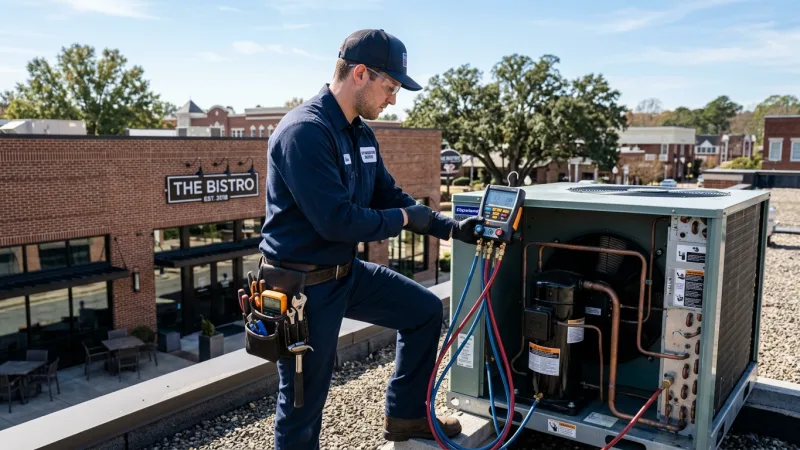
11. Critical OEM Commercial Electrical Components
Resolving commercial reach-in freezer breaker tripping requires replacing compromised components with exact factory OEM parts rated for continuous commercial duty cycles:
- Low-Temperature Commercial Hermetic Compressor: Factory-specified Copeland (e.g., ZF, ZS, or RST series) or Embraco Aspera low-temperature reciprocating or scroll compressor. Engineered specifically for high compression ratios and sub-zero operating envelopes.
- OEM Potential Start Relay: Precision voltage-sensing relay (e.g., Steveco 90-66 series or genuine Copeland potential relay) engineered to drop out at exact back-EMF pickup voltages (typically 160V to 240V).
- Heavy-Duty Electrolytic Motor Start Capacitor: High-amperage phenolic encased capacitor equipped with a factory 15,000-ohm bleeder resistor to rapidly discharge voltage between compressor starts.
- Oil-Filled Continuous Motor Run Capacitor: High-dielectric metallized polypropylene capacitor (370V/440V rating) providing continuous phase advance and power-factor correction.
- High-Wattage Incoloy Calrod Defrost Heater: Double-ended hermetically sealed heating element custom-formed to match evaporator fin spacing, preventing frost bridges.
- Defrost Termination / Fan Delay Bi-Metal Thermostat: Klixon-style snap-action disc switch that terminates electric defrost at 50°F and delays evaporator fan startup until the coil re-chills to 20°F.
For high-capacity commercial kitchens operating combi-cooking platforms, our guide on Vulcan commercial convection oven pilot repair details industrial gas and electrical troubleshooting methods.
12. Preventative Electrical Maintenance Routine for Commercial Operators
Implementing a strict preventative maintenance program eliminates the primary operational triggers that cause electrical component failure and circuit breaker trips:
- Monthly Condenser Coil Degreasing and Vacuuming: In commercial food service environments, cooking greases, flour dust, and airborne debris quickly mat condenser coil fins. Restricting condenser airflow causes discharge condensing pressures to spike from 220 PSI to over 380 PSI. High head pressure drastically increases the mechanical workload on the compressor motor, causing motor running amperage to surge beyond full load amps (FLA) and precipitating motor insulation breakdown.
- Quarterly Terminal Torque and Connection Audits: Thermal cycling causes screw terminals and push-on electrical lugs to loosen over time. Loose terminal connections increase electrical contact resistance ( = I^2 R$), creating localized extreme heat that burns wiring insulation and damages compressor terminal pins.
- Bi-Annual Motor Megohmmeter Winding Checks: Recording winding insulation resistance on a preventative basis enables technicians to detect deteriorating dielectric insulation months before an catastrophic ground fault trips the breaker.
- Verification of Branch Circuit Voltage Drop Under Load: Measure line voltage at the receptacle while the compressor is actively starting. If supply voltage drops by more than 5% (e.g., dropping below 109V on a 115V circuit or below 198V on a 208V circuit), the electrical feed wire gauge is undersized or electrical connections are deteriorating, forcing the motor to draw excessive current to satisfy mechanical load demands.
For residential high-end installations requiring expert attention, our certified team also provides comprehensive refrigerator repair services throughout North Fulton County.
13. Safety Tips: NFPA 70E & OSHA Electrical Compliance
Commercial refrigeration systems represent powerful electrical and thermodynamic energy storage systems. All maintenance personnel must enforce rigorous industrial safety precautions:
- Mandatory Lockout/Tagout (LOTO) Compliance (OSHA 29 CFR 1910.147): Always disconnect line power at the upstream electrical panel and lock the circuit breaker handle in the open position before removing access covers or servicing electrical enclosures. Verify zero voltage presence across all conductors using a calibrated multi-meter.
- Personal Protective Equipment (PPE) Guidelines: Technicians working on live commercial panels must wear NFPA 70E compliant Category 2 arc flash PPE, including safety spectacles with side shields, dielectric gloves, and flame-resistant (FR) protective clothing.
- Safe Discharge of Electrolytic Capacitors: Never short capacitor terminals with a screwdriver blade. Always use a 20k-ohm, 5-watt ceramic bleeder resistor to safely dissipate stored electrostatic energy without causing terminal pitting or concussive arcs.
- Refrigerant Pressure Relief Before Terminal Inspection: Never attempt to re-tighten or manipulate loose compressor terminal pins while the sealed system is pressurized with refrigerant. If a terminal pin blows out, high-pressure gas venting can ignite or cause severe cryogenic injury.
Explore our complete commercial service catalog for comprehensive support including same-day appliance repair across the greater metro region.
14. Frequently Asked Questions: Commercial Freezer Electrical Troubleshooting
Review comprehensive diagnostic answers compiled by our master commercial refrigeration technicians:
Q1: Why does my commercial reach-in freezer immediately trip the circuit breaker every time it tries to start?
An immediate circuit breaker trip occurring the exact millisecond the compressor attempts to start is almost always caused by a direct short-to-ground in the compressor motor windings, a welded potential start relay, or an internally shorted start capacitor. When motor winding insulation breaks down due to heat or age, line voltage takes a path of zero resistance directly into the grounded chassis. This draws hundreds of amperes instantaneously, triggering the breaker’s magnetic trip mechanism. Professional diagnostic isolation requires testing with a 500V Megohmmeter to evaluate motor winding dielectric resistance.
Q2: Can a dirty commercial condenser coil cause the electrical circuit breaker to trip?
Yes, absolutely. In restaurant kitchens, airborne cooking grease and particulate matter rapidly clog the fine aluminum fins of the condensing unit. When airflow is blocked, high-pressure hot refrigerant gas cannot reject heat, causing discharge condensing pressure to escalate dramatically (often exceeding 350 to 400 PSI). This forces the compressor motor to perform excessive mechanical work, driving operating current well above Full Load Amps (FLA). Over several minutes, this sustained thermal overload trips the thermal curve of the circuit breaker or overheats the motor’s internal overload protector.
Q3: Why does the circuit breaker trip only once or twice a day at exact intervals?
Periodic, timed circuit breaker tripping that happens every 4, 6, or 12 hours points directly to a defect in the automatic electric defrost cycle. During defrost, the compressor shuts off and high-wattage calrod heaters are energized to clear ice from the evaporator coils. If the stainless steel sheath of a defrost heater develops a microscopic crack, moisture seeps into the magnesium oxide insulator. The moment the defrost timer activates the heater, current leaks directly to ground, tripping the breaker. Once the cycle ends or the breaker is reset after cooling down, the freezer operates normally until the next defrost cycle initiates.
Q4: What is the difference between Locked Rotor Amps (LRA) and Full Load Amps (FLA)?
Full Load Amps (FLA) represents the steady-state electrical current the motor consumes when operating under maximum rated thermodynamic load at rated voltage (typically 6 to 12 Amps for commercial reach-in freezers). Locked Rotor Amps (LRA) is the massive inrush current drawn by the motor during the split-second when the rotor is completely stationary at initial startup (typically 4 to 6 times FLA, often 40 to 65 Amps). If the motor fails to break away within a fraction of a second due to a mechanical seizure or bad start capacitor, the unit draws continuous LRA, tripping the circuit breaker in seconds.
Q5: Is it safe to replace a 15-amp or 20-amp breaker with a larger breaker to stop tripping?
NO! Absolutely never upsize a circuit breaker without an electrical engineer verifying that the field branch wiring gauge can safely support higher current. The circuit breaker is sized strictly to protect the building wiring inside the walls from overheating and igniting electrical fires. Installing a 30-amp breaker on 12-gauge or 14-gauge copper wire allows the wire to overheat, melt its insulation, and cause catastrophic building fires. Always adhere to the Maximum Overcurrent Protection (MOP) rating stamped on the commercial freezer’s serial data tag.
Q6: How does a master technician test if a commercial compressor is shorted to ground?
Technicians disconnect all wiring from the compressor’s three terminal pins (Common, Start, Run). Using a high-precision Megohmmeter (insulation resistance tester) set to 500V DC, one test lead is connected to a clean copper suction line or grounded compressor body, and the second lead is touched sequentially to each of the three terminal pins. A healthy hermetic motor will register greater than 50 Megohms of insulation resistance. Any reading below 20 Megohms indicates severe dielectric breakdown, while a reading near zero confirms a dead short to ground requiring complete compressor replacement.
Q7: Can a defective evaporator fan motor trip the main commercial freezer breaker?
Yes. Commercial reach-in freezers often have two or three high-efficiency electronically commutated (ECM) or shaded-pole evaporator fan motors located inside the refrigerated box. Moisture, ice accumulation, or bearing freeze-up can cause motor windings to overheat and short directly to the aluminum evaporator housing, resulting in instantaneous circuit breaker trips upon system power-up.
Q8: What is Minimum Circuit Ampacity (MCA) and Maximum Overcurrent Protection (MOP)?
Minimum Circuit Ampacity (MCA) specifies the minimum wire size ampacity required to safely feed the equipment under full load (calculated by electrical standards as 125% of the largest motor plus the sum of all other concurrent loads). Maximum Overcurrent Protection (MOP or MOCP) dictates the maximum allowed fuse or circuit breaker rating permitted to protect the equipment from branch short-circuits without causing nuisance trips during compressor startup.
Q9: Why does my freezer trip the breaker immediately when plugged into a GFCI outlet?
Commercial refrigeration equipment frequently experiences nuisance tripping on standard Ground Fault Circuit Interrupter (GFCI) receptacles. Calrod defrost heaters, perimeter door frame condensation heaters, and long electrical wire runs naturally exhibit tiny baseline capacitive leakage currents (often 2 to 4 milliamps). Because standard Class A GFCI outlets trip at a sensitive 4 to 6 milliamp threshold, routine humidity or slight moisture on defrost elements triggers immediate shutoffs. National Electrical Code allows dedicated commercial refrigeration receptacles to omit GFCI protection where local AHJ amendments apply.
Q10: What happens if a compressor burnout contaminates the refrigeration lines?
When an electrical motor winding burns out at temperatures exceeding 500°F, chemical breakdown of refrigerant and POE lubricant generates highly corrosive hydrofluoric and hydrochloric acids along with toxic carbon sludge. If a replacement compressor is installed without thoroughly flushing the lines, performing specialized acid neutralization, and installing both liquid-line and suction-line clean-out core filter driers, residual acid will dissolve the enamel insulation of the new compressor, causing a repeat electrical ground fault within 60 to 90 days.
Q11: Can low incoming building voltage cause circuit breaker trips on commercial freezers?
Yes. Electric induction motors require constant mechanical power ( = V imes I imes ext{Power Factor}$). When incoming supply voltage drops below nominal thresholds (e.g., dropping to 104V on a 115V circuit during peak summer utility brownouts or kitchen load surges), the motor must draw significantly higher current (amperage) to produce the torque required to spin the compressor pump. This increased amperage overheats the electrical conductors and trips thermal overload devices.
Q12: How long does a commercial reach-in freezer maintain food safe temperatures after power loss?
Under tight commercial kitchen conditions with doors kept strictly closed, a fully loaded commercial reach-in freezer will retain safe frozen temperatures below 0°F for approximately 2 to 4 hours. Beyond this timeframe, internal temperatures rapidly rise into the danger zone (above 32°F to 41°F). Food service managers must log internal temperatures hourly in accordance with Georgia DPH HACCP regulations and contact emergency refrigeration specialists immediately when breakers cannot be safely reset.
Q13: How does a potential relay start contact become welded shut?
Potential relays handle significant electrical current during motor breakaway. Repeated electrical arcing across contacts 1 and 2—frequently caused by rapid short-cycling, low voltage, or high head pressure—generates intense localized heat that melts the silver-alloy contact pads together. Once welded, the auxiliary start winding remains permanently energized, causing the motor to pull continuous locked rotor current until the circuit breaker trips.
Q14: What brands of commercial reach-in freezers do your technicians service in Alpharetta?
Our certified commercial refrigeration technicians service all major commercial foodservice brands including True Manufacturing, Turbo Air, Traulsen, Beverage-Air, Continental Refrigerator, Hoshizaki, Delfield, McCall, Master-Bilt, and Nor-Lake. We stock factory OEM Copeland and Embraco compressors, potential relays, and universal electrical diagnostic components directly on our mobile service vehicles.
Q15: How fast can a commercial technician respond to an electrical freezer emergency in Alpharetta?
We maintain dedicated commercial refrigeration emergency dispatch units stationed throughout North Fulton County. For critical restaurant and commercial foodservice emergencies in Alpharetta, Milton, Roswell, and Johns Creek, our typical emergency response window is between 45 and 90 minutes. Call our dedicated commercial dispatch line at (770) 796-7742 for immediate dispatch.
Q16: Can a faulty door gasket contribute to electrical circuit breaker tripping?
Indirectly, yes. Torn, brittle, or misaligned magnetic door gaskets permit continuous infiltration of warm, humid ambient kitchen air into the sub-zero freezer cabinet. This excessive moisture rapidly freezes into thick solid ice over the evaporator coils, restricting convective airflow and causing the compressor to run 100% continuous duty cycles. This excessive thermal stress degrades motor winding insulation and forces defrost heaters to run for prolonged maximum safety cycles, drastically accelerating electrical component failure.
15. Related Commercial Services & Local Geographic Coverage
Our industrial appliance engineering division provides comprehensive mechanical and electrical repair across North Fulton County:
- Commercial Appliance Repair Alpharetta GA – Full-spectrum commercial cooking, refrigeration, and warewashing service.
- Emergency Commercial Appliance Repair – 24/7 priority emergency dispatch for temperature-critical cold storage facilities.
- Commercial & Residential Refrigerator Repair – Sealed system diagnostic specialists and factory compressor overhaul.
- Commercial Dishwasher & Sanitizer Repair – High-temperature chemical and booster heater repair services.
Related Problem Diagnostics Guides
- Commercial Walk-In Cooler High Temp Alarm Troubleshooting
- Commercial Ice Machine Harvest Cycle Failure Diagnostics
- Hoshizaki Ice Maker Beeping & Freeze-Up Electrical Troubleshooting
Related Commercial & Premium Brand Pages
- Sub-Zero Commercial & Residential Refrigeration Service
- True Commercial Refrigeration Repair & Service
- Turbo Air Commercial Freezers & Coolers
North Fulton Geographic Service Quadrants
- Appliance Repair Alpharetta, GA – Headquarters and rapid dispatch center.
- Appliance Repair Milton, GA – Crabapple and Birmingham Crossroads commercial support.
- Appliance Repair Roswell, GA – Historic Roswell and Highway 9 restaurant corridor.
- Appliance Repair Johns Creek, GA – Medlock Bridge and State Bridge retail centers.
16. Engineering Key Takeaways for Commercial Kitchen Operators
- Immediate Breaker Trips Signal Direct Ground Faults: A breaker tripping the exact millisecond of activation indicates a direct dead short-to-ground in the hermetic motor windings, start capacitor, or electrical supply cord.
- Never Force an Open Breaker Handle: Resetting an industrial breaker multiple times into a bolted short circuit risks violent arc flash explosions and destroys panel busbars.
- Defrost Heater Failure Is a Silent Culprit: Breaker trips that recur strictly every 4 to 6 hours pinpoint moisture ingress and insulation breakdown inside electric calrod defrost heaters.
- Measure Megohms, Not Just Volts: True diagnostic certainty requires measuring dielectric insulation resistance with a 500V Megohmmeter (> 50 Megohms required for safe operation).
- Condenser Airflow Protects Electrical Windings: Cleaning condenser coils monthly prevents high discharge pressures that force compressor motors to pull continuous excessive current.
- Protect Against Burnout Acid Contamination: Always replace filter driers and perform acid testing following any high-temperature motor stator burnout.
- Rely on Certified Industrial Technicians: Commercial refrigeration systems operate on complex 3-phase and high-capacitance circuits governed by strict OSHA and EPA regulations.
Protect Your Commercial Kitchen Inventory From Total Loss
Don’t let a tripped circuit breaker compromise thousands of dollars in frozen inventory or violate Georgia health codes. Our certified master commercial refrigeration engineers are on-call across Alpharetta, Milton, Roswell, and Johns Creek with mobile factory OEM parts inventory.
Need Certified Appliance Repair Today?
Skip the phone line — book direct local priority dispatch across Alpharetta, Milton, Roswell & Johns Creek.