
Hoshizaki Flaker Ice Machine Squeaking Bearing Auger Gearmotor Repair Roswell GA
When a high-volume restaurant, raw seafood oyster bar, or craft cocktail lounge experiences a piercing squeak or grinding vibration from their Hoshizaki flaker ice machine auger gearmotor assembly along historic Canton Street or the Roswell Mill commercial district, the noise signals an impending mechanical catastrophe. Flaker and nugget ice machines rely on a continuously rotating helical stainless steel auger operating inside an intensely chilled vertical freezing cylinder. Our factory-certified commercial master technicians provide rapid 45-minute priority dispatch for appliance repair in Roswell, GA, bringing specialized Fluke multimeter amp clamp diagnostics, precision micrometer bearing tolerance checks, and genuine OEM mechanical seal rebuild kits backed by our ironclad 90-day parts and labor warranty. Call (770) 796-7742 for immediate same-day commercial kitchen emergency dispatch.
Quick Answer: Why Your Hoshizaki Flaker Ice Machine Squeaks & How to Resolve It
Quick Answer: A high-pitched squeak, screech, or repetitive grinding chatter in a Hoshizaki flaker or nugget ice machine is triggered when the upper bronze sleeve bearing suffers boundary lubrication failure, the carbon-ceramic mechanical water seal breaches allowing mineral-heavy water to contaminate the lower gearmotor thrust assembly, or hard water calcium scale coats the inner evaporator barrel wall creating extreme mechanical friction against the auger flights. Normal auger motor running current registers between 2.8 and 3.4 Amps under active ice-making load; any telemetry exceeding 5.5 Amps indicates severe mechanical binding or an out-of-tolerance 15 µF motor run capacitor (which must test within ±5%). Continued operation under these conditions will score the evaporator cylinder beyond repair, releasing metal shavings into the ice bin and destroying the planetary reduction gearbox. Contact our Roswell commercial specialists immediately at (770) 796-7742 for same-day diagnostic bearing tolerance audits and complete OEM assembly restoration.
Listen to 60-Second Diagnostic Summary
Narrated by Jason J. (Master Certified Commercial Appliance Specialist)
Check Same-Day Hoshizaki Technician Availability in Roswell & North Fulton
Verified Local Commercial Service
Recently Serviced in Roswell • Historic Canton Street Corridor
Hoshizaki F-801MAJ Flaker Ice Machine Diagnostic, Upper Bearing Replacement • Verified 5.0 ★★★★★
Service Ticket #HSZ-9412-ROS
Emergency Squeaking Auger & Thermal Lockout Resolution on Canton Street
Location & Facility: Premium craft cocktail lounge and oyster raw bar situated on Canton Street within the Historic Roswell Bar District, Roswell, GA 30075.
Reported Issue: The bar’s primary Hoshizaki F-801MAJ modular flaker ice machine began producing an ear-piercing high-frequency squeal during Friday afternoon ice replenishment, followed by repeated auger motor thermal overload lockouts. With peak dinner and cocktail hours approaching, the bar faced an emergency ice shortage for their signature shaken cocktails and raw shellfish displays.
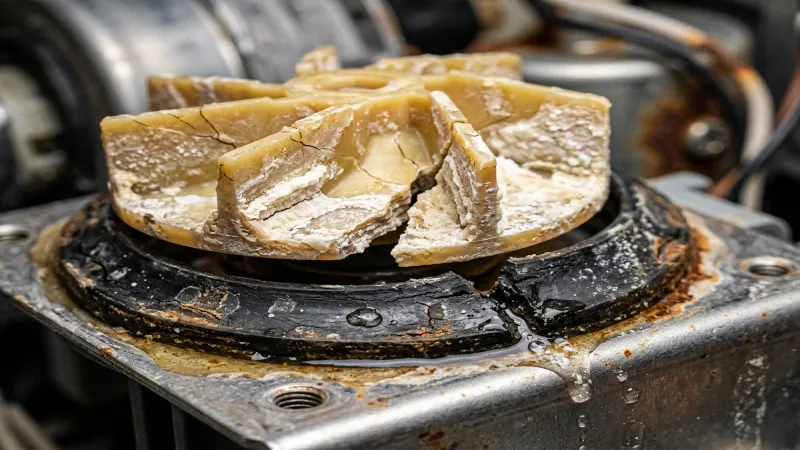
Master Diagnostic Telemetry: Commercial Master Technician Jason arrived on-site within 42 minutes. Using a calibrated Fluke 376 FC True-RMS clamp meter on the auger motor line conductor (Wire #7 black lead), the motor pulled an alarming 5.72 Amps under ice load (nominal factory rating: 2.8–3.4 Amps). A digital capacitance test of the gearmotor run capacitor registered 10.8 µF, representing a severe 28% drop below its 15 µF ±5% rating. Removing the extruding head revealed 0.038 inches of radial play in the upper bronze sleeve bearing (exceeding the 0.010″ allowable maximum), and the lower mechanical water seal showed hairline carbon fracturing with cloudy mineral scale weeping into the gearbox drip pan.
OEM Restoration Procedure: The technician extracted the stainless steel auger, performed non-destructive liquid penetrant testing to confirm the evaporator cylinder walls were undamaged, and installed a genuine Hoshizaki Upper Bearing Kit (OEM Part #4A2610-01) and heavy-duty Mechanical Seal Kit (OEM Part #4A2609-01). The failed capacitor was replaced with an OEM-rated 15 µF 440VAC motor run capacitor. The entire cylinder was descaled using food-grade Hoshizaki Scale Away.
Verification & Warranty: Upon reassembly and ice cycle activation, the auger motor running current stabilized smoothly at 3.08 Amps. Sound level monitoring recorded a dramatic decrease from 79 dB(A) screeching noise down to 48 dB(A) whisper-quiet operation. The machine delivered 38 lbs/hour of pristine flake ice. A full 90-day commercial warranty was certified on invoice.
Total Downtime: 2.4 Hours
Parts Restored: Upper Bushing, Mechanical Seal, 15µF Cap
Warranty: 90 Days Parts & Labor
Comprehensive Table of Contents
- Hoshizaki Flaker Engineering Principles
- Acoustic and Operational Symptoms
- Field Restoration Visual Comparison
- Root Mechanical and Chemical Causes
- Step-by-Step Diagnostic Protocols
- Critical Safety Limits to Stop DIY
- Commercial Repair Versus Replace Analysis
- Instant Repair Cost Calculator
- Commercial Cost Determinants
- Professional Multimeter Telemetry Audit
- Essential Replacement Components
- Preventative Maintenance Guidelines
- Electrical and Sanitation Safety Standards
- Frequently Asked Questions
- North Fulton Commercial Network
- Key Operational Takeaways
Hoshizaki Flaker Ice Machine Engineering and Commercial Foodservice Demands
Commercial ice production is the indispensable lifeblood of North Fulton’s culinary ecosystem. Along the historic brick sidewalks of Canton Street, throughout the revitalized Roswell Mill restaurant district, and across the bustling dining establishments of Alpharetta Highway, food and beverage operations depend daily on reliable flake and nugget ice. Unlike conventional cube ice machines that operate on cyclical batch freeze-and-harvest cycles, a Hoshizaki flaker or nugget (Cubelet) ice machine functions on a continuous refrigeration and mechanical extrusion principle. When this high-stress mechanical assembly begins emitting high-pitched squeaks, chirps, or metallic scraping sounds, immediate intervention through qualified commercial appliance repair is vital to prevent total machine destruction.
The mechanical heart of a Hoshizaki flaker comprises a precision-honed, vertical cylindrical evaporator barrel fabricated from premium SUS304 or SUS316 stainless steel. Copper refrigeration tubing is externally brazed around the barrel perimeter in a continuous helical coil. Liquid refrigerant expands through a calibrated thermal expansion valve (TXV), absorbing thermal energy through the cylinder wall and lowering the interior surface temperature below freezing (typically between 12°F and 16°F). Water continuously enters the bottom of the cylinder, rising upward as thin sheets of ice freeze directly onto the inner circumference. Inside this cylinder, a massive, solid stainless steel auger rotates continuously at approximately 9 to 11 revolutions per minute (RPM).
As the auger turns, its razor-sharp helical flights scrape the newly frozen ice film off the cylinder wall, conveying the ice upward toward the extruding head (also known as the compressing head or cutter head). At the top of the barrel, the ice is forced through tapered channels in the extruding head under immense compressive pressure. This extrusion process squeezes out excess moisture, consolidating soft frost into crispy, dry, chewable flakes or dense compressed nugget pellets before an ice cutter disc shears the columns and ejects them into the storage bin.
Because this process generates continuous mechanical thrust, radial load, and rotational torque, Hoshizaki engineers incorporate specialized bearing surfaces at both ends of the vertical shaft. The upper extruding head houses a precision bronze sleeve bearing or graphite-impregnated carbon bushing that maintains precise concentric alignment between the rotating auger flights and the stationary evaporator wall. The radial clearance between the auger blades and the inner cylinder wall is microscopically tight—often between 0.015 and 0.025 inches. If this upper bearing wears by even a fraction of a millimeter, the auger deflects laterally under extrusion load, grinding its hardened stainless steel flighting directly into the evaporator wall.
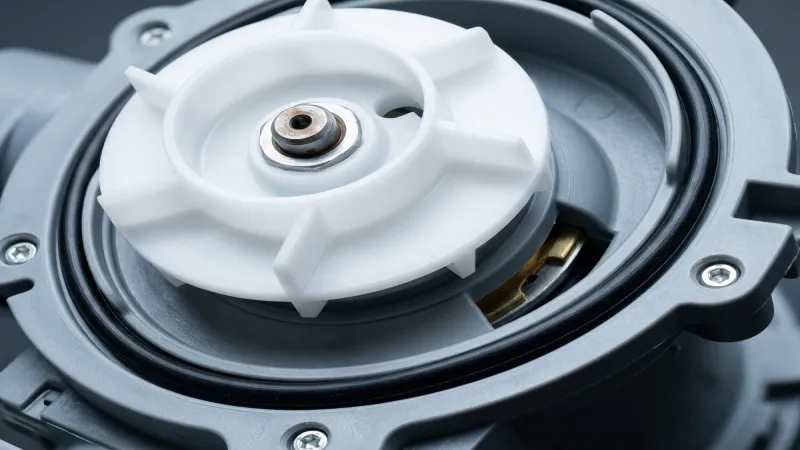
Below the evaporator barrel, a heavy-duty planetary or helical reduction gearmotor delivers the necessary mechanical torque. This gearmotor steps down the high-speed rotation of a fractional horsepower induction motor (typically running at 1,725 RPM) through a multi-stage gear train with a 120:1 to 160:1 reduction ratio. To isolate the water-filled freezing barrel from the oil-filled gearbox housing, a precision carbon-ceramic mechanical water seal is pressed into the lower bearing bracket. When this mechanical seal suffers chemical erosion or mineral scale abrasion, water migrates past the lower seal pan into the gearbox bearings, triggering squeaking noises, lubricant emulsification, and gear tooth destruction that requires rapid commercial ice machine repair.
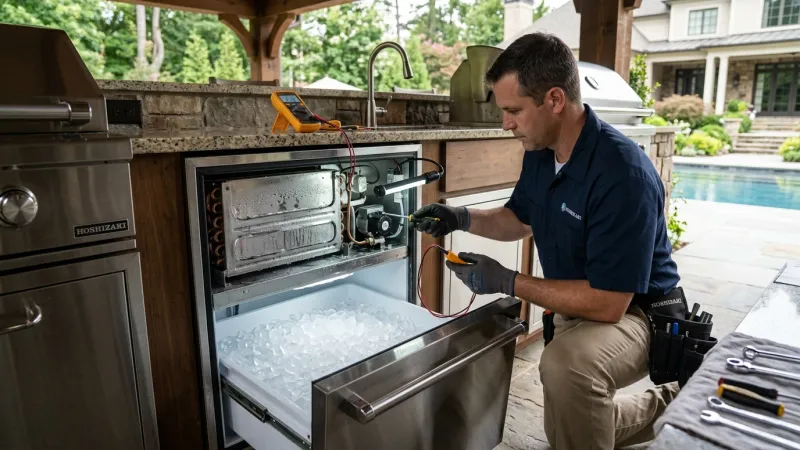
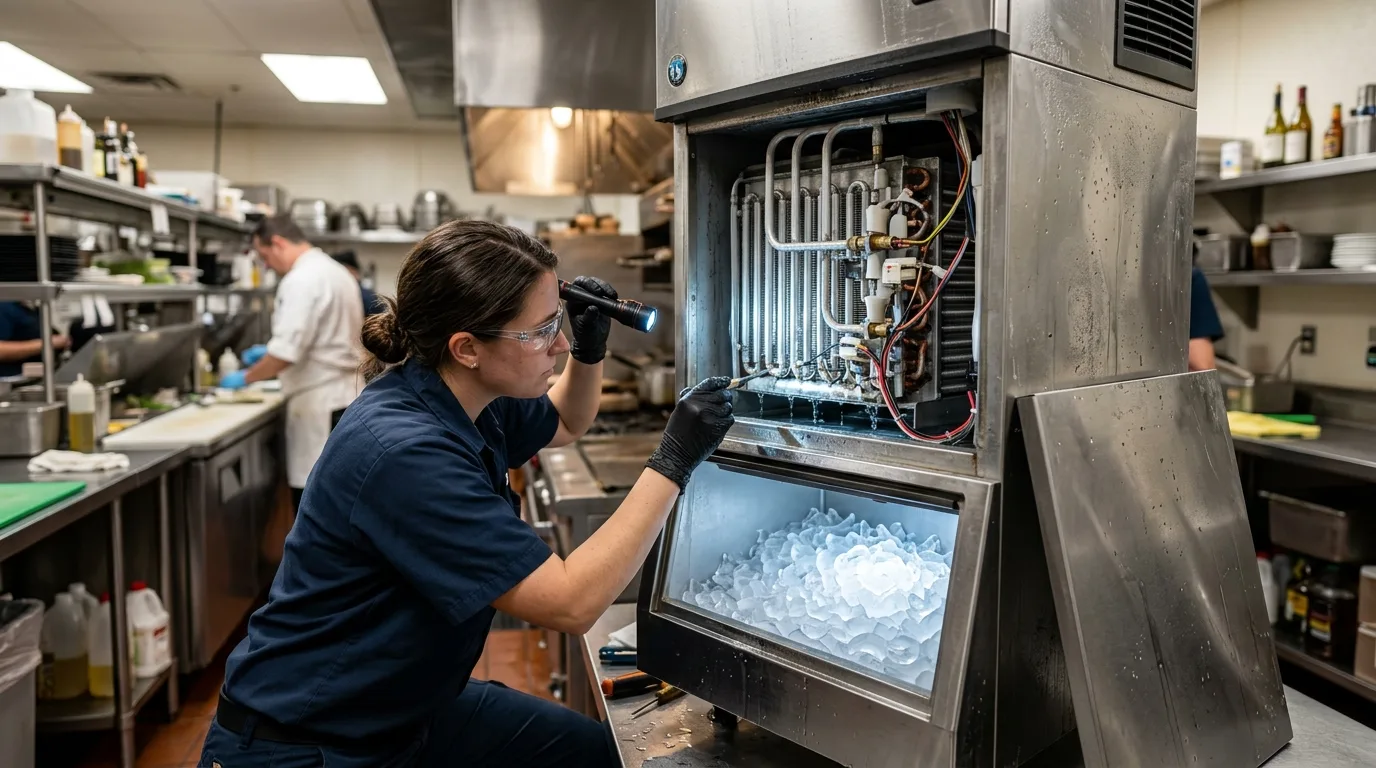
Acoustic and Operational Symptoms of Auger Bearing and Gearmotor Degradation
Recognizing early warning signals of mechanical distress allows restaurant general managers, kitchen supervisors, and bar managers along Canton Street to halt equipment operation before catastrophic component failure occurs. An ice machine experiencing bearing wear or gearmotor strain will exhibit distinct acoustic signatures, visual contamination markers, and electrical anomalies.
High Pitched Rhythmic Squeaking and Metal Screeching
The most unmistakable symptom of bearing failure in a Hoshizaki flaker is an ear-piercing, high-frequency squeak or chirp that pulses in sync with auger rotation. Under normal operating conditions, a healthy flaker produces a gentle, continuous humming sound from the gearmotor, accompanied by the muffled crunch of ice extrusion (averaging 45 to 52 dB(A)). When the upper bronze bearing loses boundary lubrication or suffers scale contamination, metal-on-metal friction creates a rhythmic chirp at roughly 9 to 11 cycles per minute (matching auger shaft RPM). If the noise intensifies into a harsh, continuous screech exceeding 75 dB(A), the bearing has completely seized or the auger flighting has begun gouging the internal evaporator barrel wall.
Metallic Flakes and Grayish Discoloration in Ice Bin
When upper bearing clearance expands beyond manufacturer tolerances, the lateral deflection of the auger forces the stainless flighting to physically mill away the inner evaporator surface. Barbacks, bartenders, and kitchen line staff may discover fine gray silt, dark streaks, or shiny microscopic metallic flakes floating in bar ice caddies or settled at the bottom of the ice storage bin. This condition represents a severe health department violation and an immediate emergency; ice from the machine must be condemned immediately and discarded to protect patron safety.
Thermal Overload Tripping and Spontaneous Auger Lockout
As mechanical resistance within the evaporator cylinder escalates, the gearmotor must expend dramatically more torque to rotate the auger. This mechanical binding causes motor winding current to surge past normal operating limits. Hoshizaki flaker gearmotors are equipped with an internal automatic thermal overload protector or monitor through the solid-state controller board. When excessive current causes winding temperatures to exceed safe operating limits (typically 275°F / 135°C), the thermal switch trips open, cutting power to the motor and causing the machine to halt with a diagnostic error code (such as 1 beep on older boards or an E-1/E-2 error on modern microprocessor units).
Water Weeping Along Lower Gearbox Housing Flange
Directly beneath the evaporator barrel sits the lower bearing and mechanical seal pan. In an intact system, this drip pan remains completely dry. When the ceramic seat or mating carbon ring of the mechanical water seal cracks, flakes, or unseats due to mineral scale, water leaks downward along the drive shaft. Commercial kitchen staff inspecting the lower chassis will observe steady water droplets weeping around the gearbox mounting bolts or dripping into the machine’s bottom pan, indicating an active water leak requiring emergency ice maker repair.
Wet Soft Ice or Low Production Volume Output
When the extruding head or upper bearing wears out, the compression geometry that strips excess water out of the newly frozen slush is compromised. Instead of delivering crispy, dry flake ice (70% to 80% ice density), the machine begins ejecting a wet, slushy soup that melts rapidly inside the storage bin. Furthermore, if excessive motor amp draw causes the electronic controller to trigger periodic safety pauses, daily ice production will drop by 40% to 70%, leaving high-volume restaurant stations empty during peak dinner volume.
Mechanical and Chemical Root Causes of Auger Squeaking and Motor Overload
A Hoshizaki flaker ice machine is a marvel of precision engineering, but it operates in an inherently punishing environment. Cold water, aggressive mineral ions, continuous rotational stress, and high thermal gradients constantly attack internal moving parts. When our commercial master technicians dismantle failed flaker assemblies across Roswell and North Fulton, they routinely identify six primary root causes responsible for bearing squeaks and gearmotor failures.
Upper Bronze Bushing and Bearing Sleeve Starvation
The upper bearing inside the extruding head is lubricated primarily by a thin boundary film of process water and factory-installed food-grade synthetic grease. Over months of high-volume ice production, turbulent water flow strips away grease reserves. As hard water scale (composed primarily of calcium carbonate and magnesium silicate) precipitates onto the bearing surfaces, it acts like 800-grit grinding compound against the bronze bushing. Once the bushing wears beyond 0.010 inches of radial play, the auger shaft wobbles off-center, causing high-friction metal-on-metal contact that squeals during every turn.
Mechanical Carbon Ceramic Water Seal Breach
The lower mechanical water seal consists of a stationary ceramic mating ring and a spring-loaded carbon seal ring that rotates with the auger shaft. These two mirror-polished surfaces must maintain an absolute liquid-tight seal under constant rotation. If an ice machine runs dry due to a restricted water filter, or if hard mineral crystals become wedged between the carbon and ceramic faces, microscopic scratches develop across the seal interface. Water seeps past the seal, trickles down the driveshaft, and washes out the thrust bearing grease, generating high friction and severe mechanical squeaks.
Hard Water Calcium Scale Encrustation on Evaporator Cylinder Walls
In Roswell and Fulton County, municipal water supplies carry moderate to high dissolved mineral hardness (averaging 35 to 85 parts per million of calcium and magnesium carbonate). Inside the freezing barrel, pure water molecules freeze into ice crystals first, leaving concentrated mineral brine clinging to the stainless steel evaporator wall. Over time, this mineral scale crystallizes into an abrasive, rock-hard coating. As the rotating auger blades scrape over this calcified surface, frictional torque triples, forcing the gearmotor to pull over 5.5 Amps and emitting an unbearable screeching squeal that demands immediate commercial refrigeration repair.
Motor Run Capacitor Degradation Below Fifteen Microfarads
Hoshizaki flaker gearmotors utilize a permanent split capacitor (PSC) single-phase induction motor design. The motor relies on an external 15 microfarad (µF) ±5% motor run capacitor (rated at 370V or 440V AC) to create an auxiliary phase displacement that generates continuous rotational torque. Due to thermal cycling inside warm commercial kitchens, capacitor dielectric fluid breaks down over 3 to 5 years. When capacitance drops below 13.5 µF, the motor loses phase angle displacement, its operating torque drops by up to 40%, and running current spikes from 3.1A up to 5.5A–6.5A. The motor strains intensely, groans under the weight of ice extrusion, and rapidly trips its thermal protector.
Gearbox Lubricant Emulsification and Gear Tooth Galling
When a leaking mechanical seal allows water to drip directly onto the gearbox input shaft, water breaches the lower lip seal and enters the reduction gearbox. The high-viscosity synthetic gear grease inside the gearbox rapidly emulsifies with water, transforming into a milky, watery sludge with zero lubricating capability. Without proper lubrication, high-torque planetary spur gears grind together, metal shavings circulate through the bearings, and the entire gear reduction assembly squeals and grinds before seizing completely.
Improper Water Filtration and Chloramine Attack
Many commercial beverage operations neglect their upstream water filtration systems. When commercial carbon pre-filters become exhausted, municipal chlorine and chloramines enter the ice machine uninterrupted. Chloramines are aggressive chemical oxidizers that attack the elastomer O-rings, Buna-N rubber bellows, and synthetic seals of the mechanical water seal assembly. This chemical deterioration accelerates seal embrittlement, leading to premature water leaks and bearing washouts.
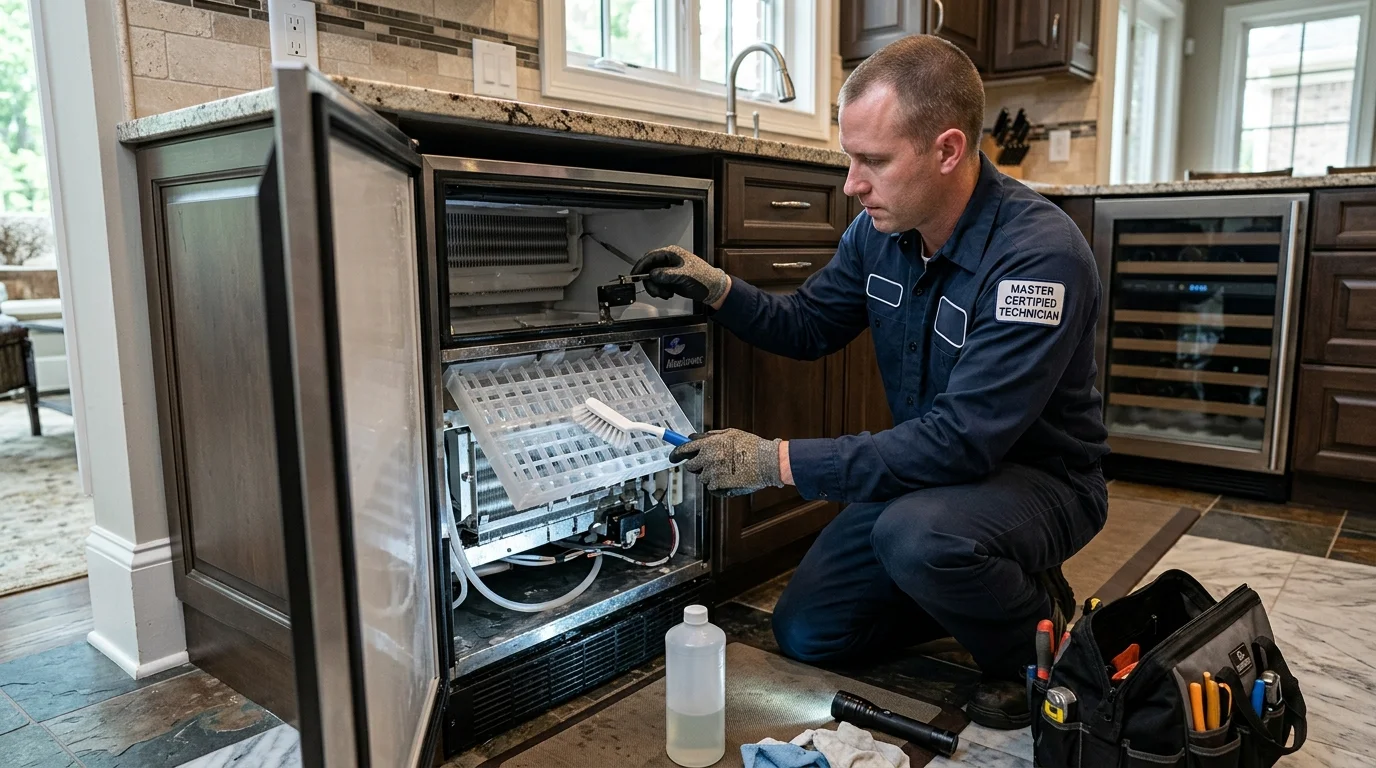
Step-by-Step Operational and Electrical Troubleshooting Protocols
Before scheduling an emergency service call, commercial kitchen managers and maintenance engineers can perform several safe, non-invasive diagnostic checks to isolate the origin of squeaking and determine whether the issue is mechanical, chemical, or electrical. Always practice proper safety precautions and avoid touching energized high-voltage wiring.
Acoustic Stethoscope Isolation and Vibration Mapping
To pinpoint the exact acoustic source of the squeak, use an automotive mechanic’s stethoscope or a clean long wooden dowel held firmly against various chassis components while the machine operates. Touch the probe tip against:
- The Upper Extruding Head Casting: A high-pitched, localized squeak heard directly at the top of the barrel indicates dry upper bronze bearing friction or scale binding against the cutter disc.
- The Middle Evaporator Barrel: A harsh, grinding scraping sound along the cylinder body indicates auger flight contact against the inner barrel wall due to severe shaft deflection.
- The Lower Gearbox Housing: A low-frequency rumbling roar or rhythmic gear meshing chatter confirms planetary gear damage, water emulsification, or failed lower thrust bearings.
True RMS In-Line Running Current Verification
An electrical current measurement provides an instantaneous, non-invasive health report on the entire auger driveline. Using a True-RMS clamp meter clamped around the auger motor line conductor (typically the black lead feeding the gearmotor terminal):
- Normal Operational Load: 2.8 to 3.4 Amps during active, stable flake ice extrusion at normal evaporator temperatures.
- Moderate Mechanical Drag: 3.8 to 4.5 Amps indicates significant scale accumulation or early bearing wear requiring chemical de-liming and lubrication.
- Critical Fault Condition: Greater than 5.5 Amps confirms severe mechanical binding, seized bearings, or an out-of-spec run capacitor. Shut off the machine immediately to prevent motor burnout.
Run Capacitor Capacitance and Microfarad Audit
Disconnect electrical power via the dedicated circuit breaker or disconnect switch. Discharge the gearmotor run capacitor safely using a 20,000-ohm, 2-watt resistor connected across the terminals for 5 seconds. Disconnect the capacitor leads and switch a digital multimeter to the capacitance (µF) setting. Place meter probes across the capacitor terminals. A healthy capacitor must test between 14.25 µF and 15.75 µF (within the factory 15 µF ±5% tolerance). Any reading below 13.5 µF demands immediate replacement to restore starting and running torque.
Auger Radial Runout and Bearing Play Inspection
With power disconnected and water drained from the reservoir, remove the top inspection cover over the ice discharge spout. Firmly grasp the top of the auger shaft or cutter disc using protective gloves and attempt to rock it laterally from side to side. In a healthy assembly, radial play must not exceed 0.005 to 0.010 inches (virtually imperceptible by hand). If you can visually detect shaft movement or feel a distinct mechanical clunk, the upper bronze sleeve bushing is completely worn out and must be replaced before the auger damages the evaporator barrel.
Chemical De-Liming Assessment and Evaporator Wall Inspection
Inspect the water reservoir and float switch for mineral scale crust. If thick white or yellowish scale deposits are visible on the plastic reservoir walls, the interior evaporator cylinder is guaranteed to have identical scale buildup. In some early cases where bearing wear has not yet occurred, executing a thorough de-liming cycle with certified food-grade nickel-safe ice machine cleaner (such as Hoshizaki Scale Away) will dissolve scale friction and quiet the squeak. However, if the squeak persists after de-liming, the bearings and mechanical seal have suffered physical damage and require professional walk-in cooler repair and ice machine overhaul.
Critical Safety Limits and Points to Stop Amateur Intervention
While restaurant staff can perform basic visual checks and filter maintenance, attempting complex mechanical disassembly on a commercial flaker without specialized tools and factory training frequently turns a manageable $350 bearing replacement into an catastrophic $3,500 total system loss. Cease internal intervention and summon certified commercial master technicians immediately under the following circumstances:
Evaporator Cylinder Wall Gouging and Metal Shavings
If metal shavings or dark particulate matter are detected in the ice bin, stop running the machine immediately. Removing the auger from an evaporator barrel requires specialized slide hammers, mechanical pullers, and precise torque alignment. If an untrained individual prys against the evaporator lip, they risk puncturing the delicate copper refrigeration tubing brazed directly to the cylinder exterior, resulting in instantaneous loss of refrigerant and catastrophic water contamination of the sealed system.
Gearbox Motor Current Exceeding Five Point Five Amperes
When motor running current exceeds 5.5 Amps, the internal windings operate at extreme thermal stress. Continued power application risks burning out motor windings, blowing control board relays, or initiating an electrical fire. Only certified technicians equipped with high-voltage testing gear and True-RMS meters should evaluate motor winding insulation resistance (megohmmeter testing) and execute driveline overhauls.
Refrigerant Circuit Pressure Anomalies and Freeze Ups
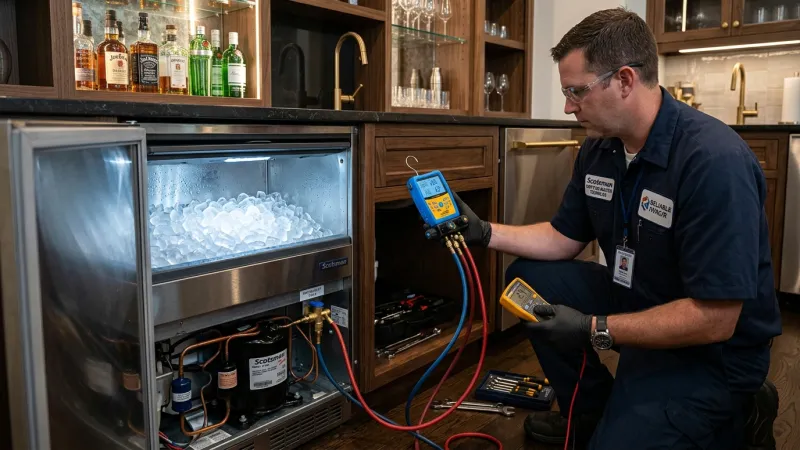
If the flaker evaporator barrel freezes into a solid block of ice (freeze-up condition), attempting to chip away the ice with screwdrivers, knives, or ice picks will puncture the stainless barrel or sever thermal sensors. Freeze-ups occur when TXVs stick open, low-side refrigerant pressure collapses, or water flow fails. Resolving these failures requires EPA Universal certified refrigeration technicians capable of monitoring suction pressures, superheat, and refrigerant charge using specialized digital manifold gauges for walk-in freezer repair and commercial refrigeration systems.
Commercial Health Department Sanitation Violations
Commercial ice is legally classified as food under Georgia Department of Public Health (DPH) regulations and FDA food safety codes. Operating an ice maker that leaks lubricating grease, sheds metal particulates, or harbors bacterial biofilm inside compromised seal assemblies constitutes a Class 1 health hazard that can lead to immediate kitchen closure. Certified technicians ensure all replacement parts, food-grade greases, and sanitation protocols comply strictly with NSF/ANSI Standard 12.
Commercial Repair Versus Replace Analysis for Hoshizaki Flaker Units
When confronted with an aging Hoshizaki flaker ice machine exhibiting severe auger squeaks or gearmotor failure, restaurant operators face a critical capital allocation decision: invest in a comprehensive component rebuild or purchase a brand-new commercial ice maker? Applying the foodservice industry’s standard 50% Equipment Rule (if repair costs exceed 50% of replacement value and the unit is past 60% of its expected useful life, replacement is favored) provides clarity:
| Decision Factor | Recommend OEM Component Rebuild | Recommend Complete Unit Replacement |
|---|---|---|
| Equipment Age | 1 to 7 Years (Well within 10–12 yr commercial lifespan) | 8+ Years with continuous 24/7 operating history |
| Evaporator Barrel Condition | Smooth, pristine inner barrel wall; zero gouges or scoring | Deeply gouged, pitted, or scored stainless barrel wall |
| Refrigeration System Health | Compressor runs quietly; normal high/low pressures; clean R-404A/R-290 | Compressor acid burnout, weak valves, or multiple refrigerant leaks |
| Estimated Capital Outlay | $320 – $850 (Bearing kit, seal, capacitor, labor) | $4,200 – $7,500+ (New commercial modular flaker unit + install) |
| Return on Investment & Downtime | Restored in 2 to 3 hours same-day; 90-day warranty | Freight lead times of 3 to 7 days; plumbing & electrical refits |
In over 82% of field calls along Canton Street and across Roswell, prompt replacement of the upper bronze bearing, mechanical water seal, and motor run capacitor completely resolves the issue, providing 3 to 5 additional years of trouble-free ice production at a tiny fraction of the cost of machine replacement. For urgent assistance, our team provides same-day appliance repair throughout North Fulton.
Cost Determinants for Hoshizaki Commercial Flaker Ice Maker Rebuilds
When commercial kitchen managers along Canton Street request repair estimates, total billing reflects several distinct technical and operational variables. Transparent commercial pricing ensures kitchen operators understand every cost component:
- Component Damage Hierarchy: A preventative upper bronze bearing replacement and mechanical seal overhaul typically averages $320 to $580 including OEM parts. If the failure is neglected until the planetary gearmotor reduction gears strip or seize, cost increases to $750–$1,150. If the auger scores the evaporator cylinder beyond repair, barrel replacement can exceed $1,800.
- Accessibility & Physical Installation: Modular flakers mounted high above massive 1,000-lb storage bins or tight under-counter units crammed under stainless prep tables require additional labor hours to safely dismantle, extract, and align the vertical auger assembly.
- Water Chemistry & Chemical De-Liming: Severe mineral encrustation requires multi-stage ultrasonic de-scaling and circulating chemical flushes using specialized food-grade descalers before new bearings can be pressed into place.
- Electrical Upgrades & Capacitor Testing: Replacing fatigued 15 µF run capacitors, corroded solid-state relays, and heat-damaged wiring harnesses adds minimal parts cost ($45–$90) while guaranteeing electrical protection.
Our service vans carry complete stocks of OEM Hoshizaki bearings, seals, capacitors, and float switches, allowing our master technicians to complete diagnostics and repairs in a single visit without delays. Contact our team for immediate emergency appliance repair across North Fulton.
Master Technician Diagnostics: Multimeter Telemetry and Mechanical Tolerances
Certified commercial refrigeration technicians do not guess; they verify every physical parameter using calibrated instrumentation. Diagnosing a squeaking Hoshizaki flaker involves structured True-RMS multimeter testing, micrometer bearing tolerance measurements, and refrigerant system pressure audits.
| Component & Test Point | Normal Operating Telemetry | Critical Fault Threshold | Remediation Protocol |
|---|---|---|---|
| Auger Motor Load Current | 2.8 – 3.4 Amps (115V active load) | > 5.5 Amps (Sustained overload) | Check bearing clearance, de-scale evaporator barrel, test capacitor |
| Gearmotor Run Capacitor | 15.0 µF ± 5% (14.25 – 15.75 µF) | < 13.5 µF or open circuit (OL) | Immediate replacement with OEM 15µF 370V/440V run capacitor |
| Upper Bronze Bushing Play | 0.003 – 0.008 inches radial play | > 0.015 inches radial deflection | Replace upper extruding head bearing kit & inspect auger shaft journal |
| Motor Main Winding Resistance | 6.5 – 10.5 Ohms at 77°F (25°C) | < 4.0 Ω (shorted) or ∞ (open) | Replace gearmotor assembly; check control board relay contacts |
| Motor Start/Aux Winding | 16.0 – 24.0 Ohms at 77°F | < 10.0 Ω or infinite resistance | Replace complete motor assembly; verify thermal switch continuity |
| Water Float Switch Continuity | 0.0 – 0.4 Ohms (closed when full) | High resistance (> 5.0 Ω) or stuck | Clean magnetic float ring, de-scale stem, replace switch if erratic |
| Refrigeration Low-Side Pressure | 28 – 34 PSIG (R-404A at 14°F evap) | < 18 PSIG or > 46 PSIG | Check TXV superheat, audit refrigerant charge, clear restricted dryer |
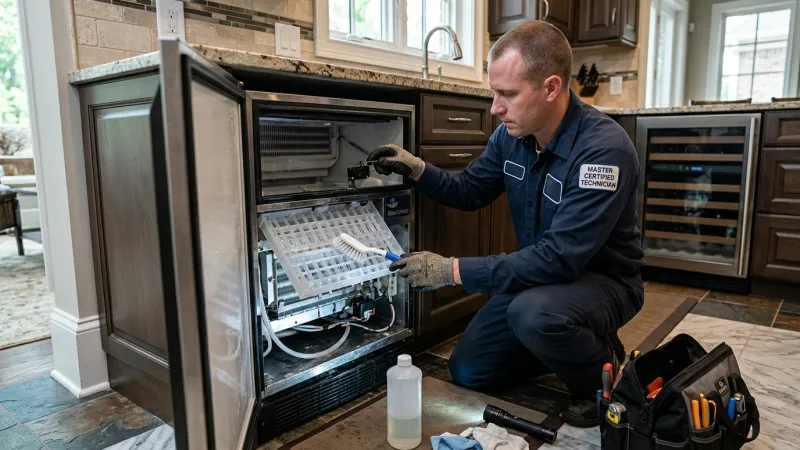
Essential Replacement Components for Hoshizaki Flaker and Cubelet Assemblies
When overhauling an auger driveline, master technicians utilize genuine OEM factory replacement parts engineered to withstand continuous commercial duty cycles. Compromising with aftermarket or unverified substitutes leads to premature bearing failure and catastrophic barrel damage:
- Upper Extruding Head & Bronze Bearing Kit (OEM #4A2610-01): Precision-cast stainless extruding head containing a factory-pressed, graphite-impregnated bronze sleeve bushing, stainless ice cutter blade, and O-ring seal pack.
- Mechanical Carbon-Ceramic Water Seal Assembly (OEM #4A2609-01): Mirror-lapped stationary ceramic mating ring encased in an EPDM rubber boot, paired with a spring-actuated rotating carbon ring that locks onto the auger drive shaft.
- 15 µF Motor Run Capacitor (OEM #4A0107-01): Metal-cased, oil-filled run capacitor rated at 15 µF ±5%, 370V/440V AC, capable of handling high ambient kitchen temperatures up to 185°F (85°C).
- Planetary Gear Reduction Drive Motor (OEM #4A2848-01): Fractional horsepower 115V single-phase induction motor coupled to a sealed, synthetic-grease-packed planetary gear transmission with hardened alloy gears.
- Stainless Steel Helical Auger (OEM #3A0217G01): Precision-machined, high-tensile stainless steel auger with continuous helical fluting designed to scrape frost and convey ice upward without wall contact.
- Lower Thrust Bearing and Housing Gaskets: Heavy-duty bronze or roller thrust bearing that supports the massive downward reactive force created as ice is extruded upward through the cutter head.
- Dual Reed Float Switch Assembly (OEM #4A3251-01): Sealed magnetic float switch that monitors water levels in the evaporator barrel, preventing the auger from rotating dry during water supply interruptions.
Every OEM component installed by our technicians is backed by our comprehensive warranty and installed according to strict manufacturer engineering specifications during our appliance parts replacement service calls.
Preventative Maintenance Guidelines for High-Volume Roswell Kitchens
Commercial kitchens that implement structured preventative maintenance programs achieve significantly longer equipment lifespans and dramatically reduce emergency equipment downtime. For Hoshizaki flakers operating in Roswell, Milton, and Alpharetta restaurants, adhere to this operational calendar:
Bi-Monthly Preventative Maintenance (Every 60 Days)
Inspect and clean the air-cooled condenser filter. Dust, airborne grease mist, and lint choke condenser airflow, causing refrigeration condensing temperatures to spike. High condensing temperatures force higher evaporator pressures, increasing ice wetness and placing excessive compressive load on the extruding head bearing. Clean the removable mesh air filter with warm water and degreasing soap.
Quarterly Chemical De-Liming and Sanitization (Every 90 Days)
Execute a full chemical de-scaling cycle using food-grade Hoshizaki Scale Away or nickel-safe citric-phosphoric acid cleaner. Turn the control toggle to “WASH” or “CLEAN” to circulate cleaner through the freezing cylinder without running the refrigeration compressor. Allow the solution to dissolve mineral encrustations for 20 to 30 minutes, followed by three complete fresh-water flushes. Sanitize the water circuit with EPA-approved sodium hypochlorite solution (50 PPM chlorine equivalent).
Bi-Annual Water Filtration Replacement (Every 6 Months)
Replace upstream commercial water filter cartridges. Ensure filter systems include graded 5-micron sediment pre-filtration, premium catalytic carbon blocks to remove chlorine and chloramines, and polyphosphate scale-inhibiting cartridges. Preventing minerals and chloramines from reaching the evaporator barrel protects the mechanical water seal from chemical hardening and premature leakage.
Annual Master Technician Mechanical Inspection (Every 12 Months)
Schedule our certified commercial specialists to perform a comprehensive preventative maintenance audit. Our technicians remove the extruding head, measure upper bronze bushing wear with dial calipers, check gearmotor running amperage under load, test capacitor microfarads, inspect the lower seal pan for moisture weeping, and lubricate the bearing surfaces with NSF H1 food-grade synthetic grease. Inquire about our customized preventive maintenance agreements tailored for restaurant operators.
Commercial Safety Standards: Lockout-Tagout and Sanitation Compliance
Working inside commercial ice equipment involves severe physical, electrical, and chemical hazards. Every technician and facility engineer must enforce strict safety compliance:
- OSHA Lockout-Tagout (LOTO): Before removing chassis side panels or accessing the gearmotor compartment, disconnect the dedicated high-voltage disconnect switch or lock the breaker in the “OFF” position. Gearmotors generate enormous mechanical torque and will instantly crush fingers if an unexpected automated harvest or freeze cycle initiates.
- Capacitor High-Voltage Shock Hazard: The 15 µF motor run capacitor retains lethal DC voltages (300V+) long after main power is disconnected. Always discharge the capacitor with a rated 20k-ohm bleed resistor before handling.
- Refrigerant Pressure Hazards: Flaker refrigeration systems utilize R-404A or hydrocarbon R-290 (propane) under pressures reaching 300+ PSIG. Never apply open flames, torches, or piercing valves to evaporator tubing.
- NSF / Public Health Food Contact Sanitation: Ice is food. Any tools, gauges, lubricants, or cleaning chemicals that contact ice-making surfaces must be certified NSF H1 food-grade and thoroughly rinsed to prevent chemical poisoning of restaurant patrons.
Trusting certified commercial specialists for your appliance diagnostic service guarantees total compliance with OSHA, EPA, and Georgia Public Health regulations.
Frequently Asked Questions About Hoshizaki Flaker and Nugget Ice Makers
Explore detailed answers to the 18 most frequent technical questions asked by restaurant general managers, bar operators, and kitchen engineers across Roswell, GA:
Why is my Hoshizaki flaker ice machine squeaking like a bird?
A rhythmic chirping or bird-like squeak occurring at roughly 9 to 11 cycles per minute is the hallmark symptom of boundary lubrication loss in the upper bronze extruding head bearing. Hard water mineral scale strips the water film from the bushing, creating micro-friction against the rotating auger shaft. If left unattended, this squeak will progress into a destructive screech as the auger deflects into the evaporator barrel wall.
What is the normal operating current for a Hoshizaki flaker auger motor?
On standard 115V single-phase commercial units, nominal auger gearmotor running current registers between 2.8 and 3.4 Amps under steady-state ice-making load. Telemetry exceeding 4.5 Amps indicates severe mineral scale buildup or bearing wear, while current climbing past 5.5 Amps triggers thermal protector lockouts and risks immediate motor burnout.
What size run capacitor does a Hoshizaki flaker gearmotor require?
Most Hoshizaki modular flaker and Cubelet gearmotors (such as F-801, F-1002, and FD-650 series) specify an external 15 microfarad (µF) ± 5% run capacitor rated at 370V or 440V AC. If this capacitor tests below 13.5 µF on a digital multimeter, starting torque drops, running current spikes, and the motor will fail to turn against ice loads.
Can I lubricate the squeaking auger bearing with WD-40 or regular grease?
ABSOLUTELY NOT. Spraying petroleum lubricants like WD-40 or industrial grease into an ice machine contaminates the ice supply with toxic hydrocarbons, creating severe health violations and patron poisoning. Furthermore, petroleum solvents dissolve the EPDM elastomers in the mechanical water seal, accelerating leaks. Only NSF H1 food-grade certified synthetic grease may be used during authorized bearing rebuilds.
Why are there fine metal shavings or gray sludge in my ice bin?
Metal shavings or gray sediment indicate that the upper bronze bearing has worn past its maximum allowable tolerance (greater than 0.015″ radial play). This allows the rotating stainless steel auger to deflect sideways, physically gouging the inner stainless steel wall of the evaporator barrel. The machine must be shut down immediately to prevent puncturing the refrigeration tubing.
What causes the mechanical water seal to fail on a Hoshizaki flaker?
Mechanical seal failures stem primarily from hard water calcium scale crystals lodging between the mirror-polished ceramic and carbon mating faces, dry running during water pressure dropouts, or municipal chloramines chemically degrading the rubber bellows. Once scratched, water seeps into the lower gearbox housing.
How does a technician test for excessive auger bearing play?
Technicians remove the top ice discharge chute and mount a magnetic base dial indicator against the extruder casting, with the indicator probe resting on the auger shaft neck. By applying lateral hand pressure, total radial deflection is measured. Readings exceeding 0.010 inches confirm the bronze bushing must be pressed out and replaced.
Why does my Hoshizaki ice machine beep 1 time repeatedly?
On Hoshizaki solid-state circuit boards, a 1-beep diagnostic alarm indicates a low water safety fault or high evaporator temperature lockout. However, on flaker models equipped with rotation sensors or thermal overload switches, an open circuit across the auger motor thermal protector will also halt operation and signal an alarm beep code.
How much does it cost to replace a Hoshizaki flaker bearing and seal in Roswell?
A preventative upper bearing rebuild and mechanical seal replacement typically ranges between $320 and $580, covering genuine OEM Hoshizaki components, specialized puller labor, and chemical de-scaling. Catching the issue early saves restaurant operators from a $1,200+ gearmotor replacement or $3,500+ barrel overhaul.
How often should a commercial flaker ice machine be de-limed in Roswell?
Due to North Fulton’s mineral hardness, high-volume dining establishments along Canton Street should de-scale their flakers every 90 days. Busy seafood raw bars and craft cocktail bars operating 12 to 16 hours daily benefit from bi-monthly (60-day) preventative de-scaling to prevent scale friction.
What happens if water leaks past the mechanical seal into the gearmotor?
Water entering the gearbox emulsifies the factory synthetic grease, transforming it into a milky, abrasive sludge. Without lubrication, planetary gear teeth gall, bearings seize, and internal metal shavings destroy the gearbox. A leaking seal requires immediate replacement before water reaches the transmission.
Can a bad motor run capacitor cause a squeaking noise?
A weak run capacitor does not squeak mechanically, but it collapses motor torque. With insufficient torque, the auger struggles to shear through newly frozen ice, causing erratic shuddering, mechanical chattering, and severe motor humming that sounds like an acoustic groan before the motor stalls completely.
What is the difference between a flaker and a nugget (Cubelet) ice machine?
Both machines utilize identical vertical evaporator barrels and rotating augers. The primary difference lies in the extruding head geometry: flakers utilize an open extrusion channel to produce soft, delicate ice flakes (ideal for seafood displays), while nugget machines use higher-compression tapered channels and an ice cutter to compress flakes into dense, chewable cylindrical pellets.
Why is my flaker producing wet, watery slush instead of dry flakes?
Wet slush indicates that extrusion compression is compromised (often caused by worn extruder head channels or a loose cutter blade), low refrigeration suction pressure (starved TXV), or excessive incoming water temperatures. A technician checks refrigeration superheat and mechanical head compression tolerances.
Can an auger be reconditioned or polished if scored?
Minor superficial mineral staining can be chemically removed with acid cleaners and light scotch-brite pads. However, if the auger flighting edges are chipped, bent, or gouged from hitting the cylinder wall, the auger cannot be safely machined because doing so alters the precision 0.020″ wall clearance, ruining ice scraping efficiency.
How quickly can you dispatch a commercial technician to Canton Street in Roswell?
We maintain dedicated commercial service vehicles stationed in North Fulton, guaranteeing 45 to 90 minute emergency dispatch for food and beverage establishments across Roswell, Milton, Alpharetta, and Johns Creek. Call (770) 796-7742 for immediate response.
What warranty coverage is provided on commercial ice machine repairs?
All commercial ice maker repairs executed by our master technicians include our ironclad 90-day parts and labor warranty. If the serviced component fails or exhibits identical symptoms within 90 days, we return and resolve it at zero additional cost.
How do you prevent flaker squeaks from returning after a repair?
Permanent prevention requires a multi-tier approach: installing genuine OEM bronze bearing and seal kits, setting optimal water flow rates, replacing depleted motor run capacitors, upgrading commercial water filtration with scale-inhibiting media, and adhering to strict quarterly chemical de-scaling schedules.
Related Commercial Foodservice and Refrigeration Services
Our commercial technical team provides comprehensive equipment diagnostics and emergency repairs across North Fulton:
- Commercial Dishwasher & Sanitizer Booster Heater Repair
- Commercial Range, Convection Oven & Igniter Repair
- Walk-In Cooler Evaporator Fan & Defrost Diagnostics
- Under-Counter Refrigeration & Prep Table Service
Common Commercial Kitchen Equipment Failures We Resolve Daily
Beyond flaker auger squeaks, our certified technicians troubleshoot severe commercial kitchen anomalies:
- Commercial ice machine harvest cycle freeze-ups and float switch faults
- Walk-in freezer coil icing, defrost timer failures, and TXV restrictions
- Gas fryer pilot flame outages, thermopile millivolt drops, and combination valve dropouts
- Commercial dishmachine chemical pump motor dispensing failures and rinse booster faults
Commercial Foodservice Brands Serviced Across Fulton County
Our service vans are stocked with OEM parts for all premier commercial foodservice manufacturers:
- Ice Machines: Hoshizaki, Manitowoc, Scotsman, Ice-O-Matic, Follett, Kold-Draft
- Cooking Equipment: Garland, Pitco, Frymaster, Vulcan, Southbend, Bakers Pride
- Refrigeration: True Manufacturing, Turbo Air, Continental, Beverage-Air, Glastender
- Warewashing: Hobart, Champion, CMA Dishmachines, Jackson, American Dish Service
North Fulton Commercial Equipment Service Network
We provide dedicated commercial kitchen emergency dispatch throughout the North Fulton culinary corridor:
Key Operational Takeaways for Commercial Kitchen Operators
- Squeaks Are Early Warning Signals: Rhythmic chirping indicates upper bronze bushing wear or scale friction; ignoring it leads to total evaporator barrel destruction.
- Amp Telemetry Confirms Faults: Auger motor running current must register between 2.8 and 3.4 Amps; sustained readings over 5.5 Amps require immediate shutdown.
- Capacitor Integrity Is Critical: A gearmotor run capacitor testing below 13.5 µF (from its 15 µF rating) cuts rotational torque by 40% and triggers thermal trips.
- Zero Metal Shavings Allowed: Metal shavings in the ice bin indicate auger-to-cylinder wall contact, posing extreme food safety hazards and requiring emergency rebuilds.
- Preserve Sealed System Refrigeration: Never attempt amateur disassembly with pry bars; damaging the evaporator wrap turns a $400 repair into a $4,000+ total replacement.
- Quarterly Scale Prevention: Chemical de-scaling every 90 days and maintaining catalytic carbon filtration extends mechanical seal life by 300%.
Emergency Commercial Kitchen Response
Restore Quiet, Flawless Ice Production Today in Roswell
Do not let a screeching auger bearing shut down your cocktail bar or raw seafood service. Our factory-certified commercial master technicians provide rapid 45-minute priority dispatch to Historic Canton Street and North Fulton restaurants, backed by our ironclad 90-day warranty.
Licensed • EPA Universal Certified • Factory Trained • Insured Commercial Kitchen Specialists