
When a commercial kitchen or fast-casual dining establishment along Alpharetta, GA encounters a sudden TurboChef high-speed oven Error F1 lockout, kitchen operations grind to a halt. Error F1 signifies a critical breakdown within the high-voltage magnetron microwave generation circuit, the solid-state inverter power supply, or the blower current feedback telemetry. Our master commercial technicians deliver rapid 45-minute priority dispatch, industrial True-RMS multimeter diagnostics, and same-day factory OEM component restorations backed by a 90-day parts and labor warranty across the Windward Parkway commercial district. Call our 24/7 commercial emergency dispatch desk at (770) 796-7742 for immediate technical service.
Quick Diagnostic Overview: TurboChef Error F1 Resolution
Quick Answer: TurboChef Error F1 indicates a failure in the microwave heating system or cooling air circulation circuit. In rapid-cook models (such as the Tornado, SOTA, i3, i5, Bullet, and Eco), Error F1 is triggered when the smart logic board detects open-circuit magnetron filament resistance, an internal IGBT short in the high-voltage inverter board, a shorted high-voltage rectifier diode, or stalled convection blower telemetry. Immediate field tests require verifying 240VAC line input under load, ensuring magnetron filament resistance measures strictly below 1.0Ω (0.2Ω to 0.4Ω nominal) with infinite resistance to ground, and testing the high-voltage diode forward voltage drop (>6V). For certified commercial high-voltage microwave repairs across North Fulton, contact our Alpharetta master technicians at (770) 796-7742.
Listen to 60-Second Diagnostic Summary
Narrated by Jason J. (Master Certified Commercial Specialist)
Check TurboChef Rapid Tech Availability in North Fulton
Verified North Fulton Commercial Case Study
Windward Pkwy Commercial Hub, Alpharetta, GA
Emergency Field Restoration: TurboChef SOTA Error F1 Magnetron Inverter Overhaul
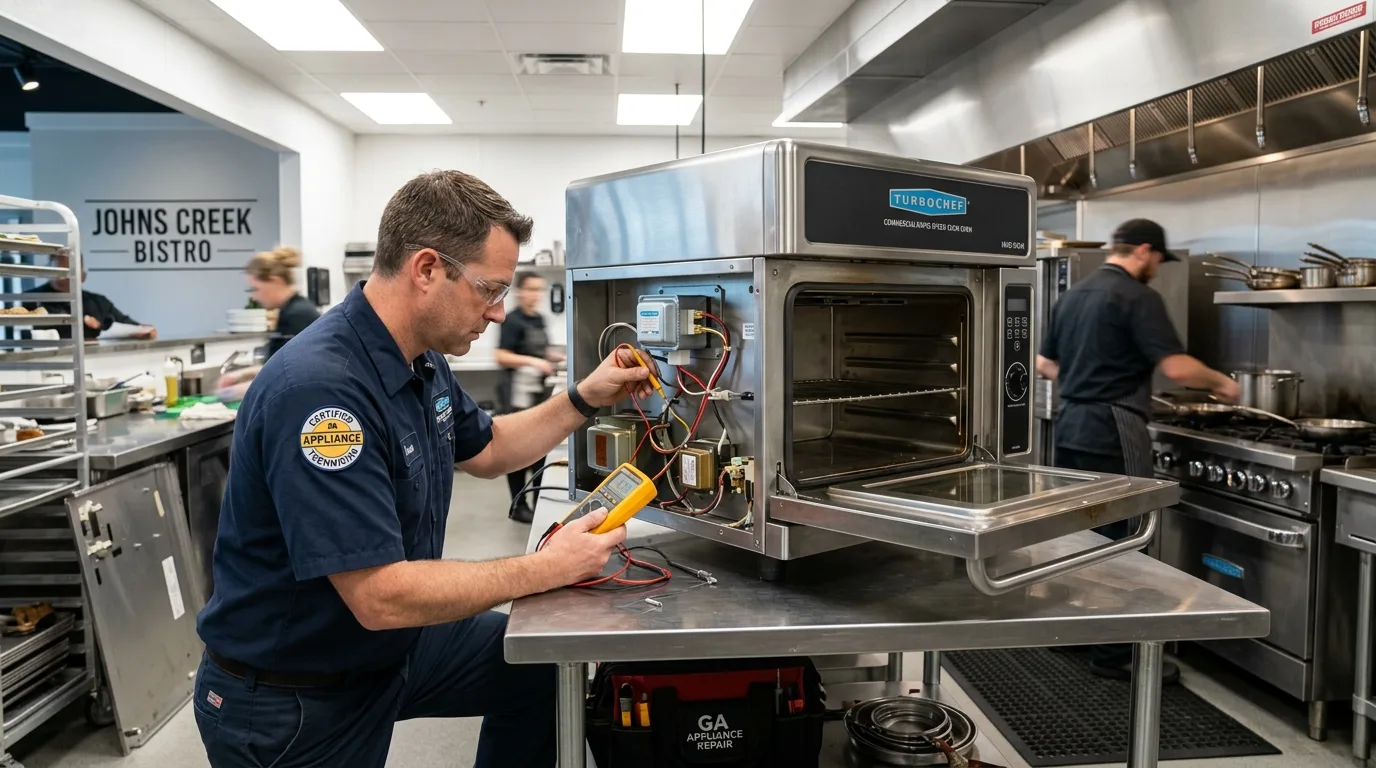
The Commercial Emergency: During intense lunch rush ticket volume at a high-volume gourmet sandwich cafe along Windward Parkway in Alpharetta, the primary TurboChef SOTA high-speed oven abruptly aborted a toast cycle, flashed error code “F1: Inverter/Magnetron Fault”, and tripped internal high-voltage secondary fuses. Ticket production halted instantly, causing a 25-minute backlog in hot sandwich orders.
Master Tech Rapid Dispatch: Master Commercial Specialist Jason J. was dispatched from our North Fulton mobile depot, reaching the facility in 34 minutes with a service van fully stocked with TurboChef OEM magnetron tubes (part #NGC-3061), high-voltage inverter modules (part #101273), 20A ceramic bus fuses, and industrial microwave leakage meters.
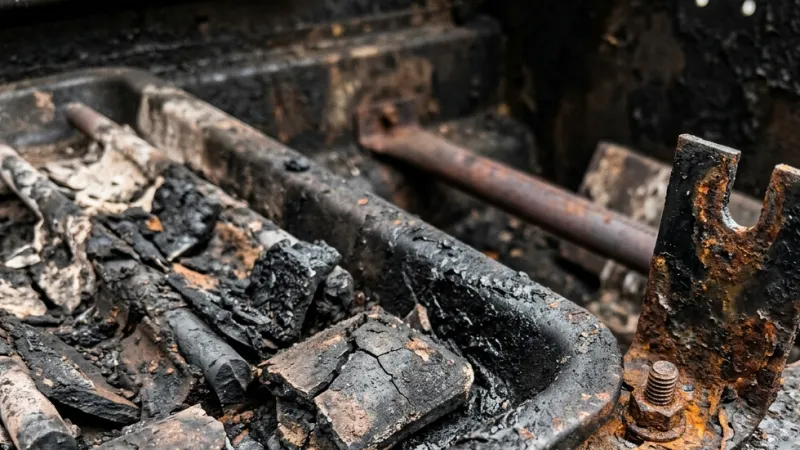
Diagnostic Telemetry & Root Cause Analysis: Following rigorous lock-out/tag-out (LOTO) and manual high-voltage capacitor bleeder grounding, the technician connected a Fluke 87V industrial multimeter. Telemetry revealed line voltage of 240VAC steady under load. Probing the magnetron filament showed open-circuit resistance (>500kΩ, exceeding the factory threshold of <1.0Ω). Simultaneously, the high-voltage inverter power board exhibited shorted gate-drive IGBT transistors and charred printed circuit traces caused by thermal stress from grease-clogged rear ventilation filters.
OEM Restoration & Field Calibration: The technician removed the failed magnetron and damaged inverter board, chemically sanitized the microwave launch waveguide, replaced scorched waveguide covers, and installed a brand-new factory OEM TurboChef magnetron and matching inverter assembly. After resetting internal fault counters, the unit completed 10 consecutive full-power burn-in cycles, maintaining zero RF radiation leakage (<0.05 mW/cm² against the 5.0 mW/cm² federal limit) and reaching target core sandwich temperatures in 45 seconds flat.
90-Day Commercial Parts & Labor Warranty Active
Stationed in North Fulton
Parts & Labor Guaranteed
100% Credited to Approved Fix
Stocked Commercial Van
Commercial Engineering Guide & Diagnostic Index
- TurboChef High-Speed Oven Architecture & Hybrid Microwave Aerodynamics
- Identifying Error F1 Symptoms & Microwave Generation Failure
- Root Causes of TurboChef Error F1 Magnetron & Inverter Breakdown
- Safe Initial Troubleshooting Steps for Kitchen Operators
- When to Cease DIY Checks: High-Voltage Safety Mandates
- Commercial Repair vs Replace Financial Matrix: The 50% Rule
- Interactive Instant TurboChef Repair Cost Calculator
- Key Commercial Factors Influencing High-Speed Oven Repair Costs
- Professional Multimeter Diagnostic Protocols & Telemetry Lookup
- Critical OEM Parts Involved in Error F1 Restoration
- Commercial Preventative Maintenance & Grease Mitigation Protocol
- Commercial Kitchen Safety Protocols & RF Radiation Containment
- Solid-State High-Voltage Inverter Electronics & Resonant Switching
- Microwave Physics, Anode Cavity Resonators & Filament Degradation
- Waveguide Aerodynamics, Launch Flange Tuning & VSWR Arc Mitigation
- Catalytic Converter Thermochemistry & Ventless Recirculation Dynamics
- PID Convection Loop Tuning & High-Velocity Jet Impingement Mechanics
- Commercial 208V/240V Transient Harmonics & Inverter Power Factor Correction
- Fulton County Health Regulations & High-Speed Culinary Safety Audits
- Frequently Asked Questions: TurboChef Error F1 Resolution
- North Fulton Commercial Appliance Service Network
- Summary Takeaways for Kitchen Operations
- Commercial Emergency Dispatch & Priority Booking
TurboChef High-Speed Oven Architecture & Hybrid Microwave Aerodynamics
In high-volume foodservice operations across North Fulton, ranging from busy coffee chains and artisan bakeries to corporate dining hubs along Windward Parkway, the TurboChef rapid-cook oven represents the pinnacle of commercial cooking velocity. By simultaneously pairing high-velocity convection air impingement (exceeding 50 to 60 miles per hour through precision orifice plates) with pulsed 2.45 GHz microwave RF energy, TurboChef platforms condense 15-minute conventional bake times into 50 to 90 seconds. Maintaining this extraordinary throughput requires seamless coordination between aerodynamic airflow fans and lethal high-voltage electrical sub-assemblies. When kitchen operators require specialized commercial appliance repair, understanding this underlying architecture is essential for rapid diagnosis.
Unlike domestic microwave ovens that utilize heavy 60 Hz laminated core transformers and passive half-wave voltage doubler circuits, commercial TurboChef ovens (including the SOTA, i3, i5, Tornado, Bullet, and Eco) employ advanced high-frequency solid-state inverter power boards. The inverter rectifies incoming 208V or 240VAC single-phase power into high-voltage direct current, which is then switched at 20 kHz to 50 kHz across pulse-width-modulated (PWM) insulated-gate bipolar transistors (IGBTs). This stepped-up high-frequency AC enters a compact, high-efficiency ferrite transformer, producing 2,000V to 4,200V DC pulsed anode potential that powers the magnetron tube.
When hardware deterioration strikes this high-voltage generation loop, the oven’s microprocessor supervisory system detects abnormal current draw or phase shifts and instantly locks out the heating cycle. Rather than permitting damaged components to draw excessive branch circuit amperage or create fire hazards, the control board displays Error F1. For restaurant managers along Windward Parkway, prompt resolution via certified commercial technicians restores revenue-generating ticket speed while protecting expensive cooking equipment from secondary catastrophic burnout.
Identifying Error F1 Symptoms & Microwave Generation Failure
Commercial kitchen supervisors and line cooks operating TurboChef equipment frequently observe distinct operational symptoms leading up to an Error F1 event. Recognizing these early warning indicators allows operators to schedule proactive same-day appliance repair before complete kitchen stoppage occurs:
- Digital Display Fault Code Lockout: The front control screen terminates the active recipe cycle and displays “Error F1: Blower/Magnetron Failure” or “F1 Inverter Fault”, refusing to start subsequent cooking programs until power is cycled.
- Cold Core Food Temperatures with Surface Browning: Sandwiches, burritos, or pastries emerge from the cavity with crisp, brown outer surfaces from convection heat, but remain icy or cold in the center due to complete absence of microwave RF excitation.
- Audible Transformer Buzzing or Popping Arcs: During microwave start intervals, the oven produces abnormal sharp snapping, arcing, or severe low-frequency hums as high-voltage energy discharges into chassis ground.
- Frequent 20A Ceramic Control Fuse Blown: Internal high-voltage secondary fuses (typically 20A ceramic fast-acting bus fuses located on the power distribution board) blow repeatedly upon cycle initiation.
- Excessive Cooking Cycle Duration: To compensate for lost microwave energy, staff mistakenly increase cook times by 300%, causing bottleneck delays on front-counter orders and customer dissatisfaction.
- Burnt Electrical Odor Near Rear Louvers: Overheating inverter bridge rectifiers, melting silicone high-voltage wire insulation, or arcing magnetron terminal boots emit an unmistakable ozone and scorched resin odor.
Root Causes of TurboChef Error F1 Magnetron & Inverter Breakdown
Exhaustive field diagnostics across high-volume commercial kitchens in emergency appliance repair scenarios identify five primary root failure mechanisms responsible for Error F1:
Magnetron Filament Burnout & Cathode Emission Degradation
The magnetron tube generates high-power microwave energy through thermionic electron emission from an internal thoriated tungsten filament cathode. Over hundreds of thousands of cooking cycles, intense filament thermal cycling (alternating between room temperature and 1,800°C) causes metallurgical fatigue, tungsten evaporation, and physical thinning. Eventually, the filament fractures, creating an electrical open circuit. When the logic board energizes the high-voltage circuit and detects zero anode current return through the current-sensing toroidal transformer, Error F1 is immediately triggered.
High-Voltage Inverter Board IGBT Transistor Punch-Through
The solid-state inverter board switches rectified line voltage at high frequencies using dual IGBT half-bridge or full-bridge configurations. These power semiconductors endure extreme thermal stress. In busy commercial kitchens where rear cooling air intake filters become clogged with airborne grease and dust, ambient temperatures inside the electronics bay exceed 75°C (167°F). Under elevated thermal stress, IGBT junction temperatures surpass rated limits, resulting in avalanche punch-through breakdown. The shorted transistor draws instantaneous overcurrent, vaporizing on-board trace fuses and generating an immediate inverter communications fault.
High-Voltage Rectifier Diode Avalanche Short Circuit
High-voltage diodes in TurboChef power supplies are multi-junction silicon stacks designed to withstand reverse breakdown voltages exceeding 12,000V to 15,000V peak inverse voltage (PIV). If the magnetron tube arcs internally due to impedance mismatch or antenna degradation, severe reverse voltage spikes reflect back into the diode stack. Repeated voltage transients punch through individual silicon junctions, shorting the diode. A shorted high-voltage diode collapses the secondary voltage doubler circuit, pulling massive current from the inverter board and blowing the primary protection fuses.
Grease Infiltration & Waveguide Antenna Arc Flash
TurboChef cavities operate under ventless recirculating air containing vaporized animal fats, cooking oils, and sugar caramelization. Mica waveguide covers and composite RF antenna windows protect the microwave launch chamber. Over months of heavy use, microscopic tears or grease saturation on the waveguide cover allow conductive carbonized food particles to enter the metallic waveguide. Microwave RF energy arcs across these carbon bridges, creating miniature plasma fireballs. This severe reflected RF energy causes standing wave ratio (VSWR) spikes that reflect destructive power straight back into the magnetron antenna dome, melting the copper launch tip and fracturing the vacuum seal.
Cooling Blower Motor RPM Feedback Tachometer Failure
In several TurboChef software revisions, Error F1 is programmed as an umbrella fault monitoring both high-voltage microwave generation and cooling blower airflow velocity. The convection blower wheel circulates heated air through catalytic converters and impingement plates, while secondary centrifugal fans cool the magnetron cooling fins. If the blower motor bearings begin binding, or if the Hall-effect tachometer sensor on the motor shaft fails to report expected pulses per second (typically 1,800 to 3,600 RPM depending on model), the supervisory board aborts the cycle to prevent magnetron meltdown, displaying Error F1.
Safe Initial Troubleshooting Steps for Kitchen Operators
Before calling for professional high-voltage dispatch, kitchen personnel can perform four non-invasive checks to determine if the issue is a temporary thermal lockout or an internal component failure:
- Step 1: Execute a Controlled Cold Power Cycle: Power off the oven using the front digital keypad, then switch off the dedicated 30A or 50A double-pole 240V circuit breaker at the building electrical panel. Allow the unit to rest completely de-energized for 10 full minutes. This permits microprocessors to clear volatile memory faults and allows high-voltage bleed resistors to discharge residual capacitor charges.
- Step 2: Inspect and Chemically Clean Air Intake Filters: Locate the removable stainless steel mesh air filters positioned beneath or behind the oven chassis. Remove grease filters and inspect them against backlighting. If grease or lint blocks the mesh, submerge filters in hot soapy water or commercial degreaser, thoroughly dry, and reinstall. Restricted airflow is the #1 cause of inverter board overheating.
- Step 3: Inspect Cavity Interior & Waveguide Cover Plates: With the oven cold, inspect the roof and side walls of the cooking chamber. Examine the rectangular mica or composite waveguide covers. If covers exhibit brown burn marks, holes, oil saturation, or carbon pitting, the oven must not be operated until covers are replaced to prevent catastrophic magnetron arcing.
- Step 4: Check Waveguide Interior Cleanliness & Air Orifice Plates: Ensure the lower jetplate and upper impingement plates are properly seated in their alignment pins. Misaligned jetplates disrupt cavity aerodynamic resonance and create localized microwave reflection hot spots.
When to Cease DIY Checks: High-Voltage Safety Mandates
Commercial high-speed ovens are among the most electrically hazardous appliances in foodservice. Internal operating voltages within the microwave circuit range from 2,000V to over 4,200V DC at currents exceeding 300 milliamps. This power level is more than fifty times the lethal shock threshold for the human heart.
High-Voltage Safety Danger: Do Not Remove Outer Enclosures
CRITICAL SAFETY WARNING: High-voltage capacitors in TurboChef ovens store lethal electrical charges even after the unit has been unplugged from the wall. Furthermore, damaged magnetron tubes can emit dangerous microwave radiofrequency (RF) radiation if energized without calibrated waveguide containment. Never remove the outer stainless steel side panels, bypass safety interlock microswitches, or probe interior wiring without certified commercial training, calibrated RF survey equipment, and factory high-voltage grounding probes.
If basic power resetting fails to clear Error F1, immediately shut off the breaker, tag the unit out of service, and contact our certified North Fulton commercial technicians. We maintain specialized high-voltage training and factory diagnostic tooling to resolve TurboChef faults safely and swiftly.
Commercial Repair vs Replace Financial Matrix: The 50% Rule
When commercial kitchen equipment experiences component breakdown, restaurant operators face a financial dilemma: should they invest in comprehensive OEM restoration or replace the entire machine? Brand-new commercial high-speed ovens (such as the TurboChef SOTA, i3, or Tornado) represent substantial capital investments ranging from $9,500 to $16,500, plus freight, installation, electrical conduit modifications, and staff retraining costs. Similar considerations apply when evaluating commercial oven repair across heavy conveyor and deck platforms.
Under the proven commercial 50% Rule, if the total cost of professional restoration—including factory OEM components and certified labor—is less than 50% of the replacement machine value, and the unit has completed less than 75% of its expected 10-year commercial service life, component repair delivers superior return on investment (ROI).
| Decision Criteria | OEM Component Repair | Full Unit Replacement |
|---|---|---|
| Capital Expenditure | $650 – $1,850 (Average) | $9,500 – $16,500+ |
| Operational Downtime | Same-Day (2 to 4 Hours) | 2 to 6 Weeks (Lead Times & Freight) |
| Electrical & Ventilation Rework | Zero Modifications (Direct Fit) | Often Requires Breaker / NEMA Receptacle Rework |
| Staff Operational Continuity | Immediate (Existing Recipe Profiles Retained) | Requires USB Programming & Crew Retraining |
| Warranty Coverage | 90-Day Parts & Labor Warranty | 1-Year Limited Manufacturer Warranty |
Key Commercial Factors Influencing High-Speed Oven Repair Costs
When calculating exact repair estimates for TurboChef equipment in commercial kitchens, four crucial variables dictate the final billing:
- Single vs. Dual Magnetron Configuration: Compact models like the SOTA and Eco utilize a single high-efficiency magnetron tube and inverter board, keeping replacement costs economical. Larger workhorses like the TurboChef i3, i5, and Double Batch feature dual magnetron tubes and dual inverter assemblies. If secondary arcing damages both circuits, parts expenses adjust accordingly.
- Collateral High-Voltage Damage: When a magnetron filament shorts, the high-voltage inverter board may absorb severe inductive flyback currents. If the inverter’s gate drive optocouplers and IGBTs survived, only the tube requires replacement. If the inverter sustained semiconductor punch-through, both components must be installed simultaneously to prevent immediate re-failure.
- Waveguide & Cavity Sanitation Requirements: Severe carbonization inside the microwave waveguide requires specialized ultrasonic cleaning, replacement of high-temperature RF gaskets, and new antenna covers to ensure clean microwave propagation and prevent immediate arc strikes.
- Priority Commercial Dispatch Timing: Emergency service calls requiring rapid 45-minute on-site arrival during peak weekend dinner or Sunday brunch service carry expedited technician priority scheduling compared to routine scheduled maintenance calls.
Professional Multimeter Diagnostic Protocols & Telemetry Lookup
Master commercial technicians do not guess or swap parts blindly. Pinpointing the root cause of an Error F1 requires methodical electrical telemetry testing using calibrated True-RMS multimeters, high-voltage test probes, and RF survey instruments. Similar high-precision standards govern our diagnostics on oven and range repair across residential and commercial culinary estates.
Use the interactive filter tool below to look up exact factory resistance benchmarks, operating voltage thresholds, and pass/fail criteria for TurboChef speed ovens:
| Component / Circuit | Test Method & Meter Scale | Factory Benchmark Telemetry | Failure Indication & Action |
|---|---|---|---|
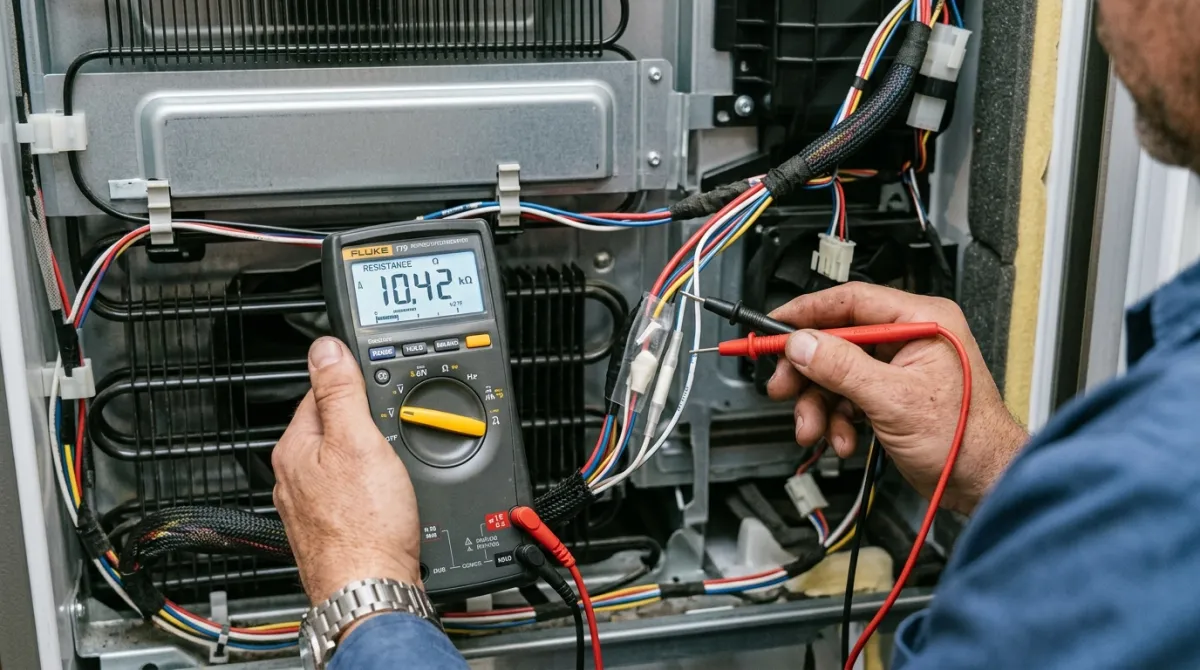
| Magnetron Filament (Heater) | Resistance (Ω) between F and FA terminals | < 1.0Ω (0.1Ω – 0.4Ω nominal) | Open circuit (OL / >1.0Ω) = Replace Magnetron |
| Filament to Ground (Chassis) | High-Resistance (MΩ) from F terminal to metal case | Infinite Resistance (∞ / OL) | Any measurable resistance (<50MΩ) = Internal short to ground |
| High-Voltage Rectifier Diode | Forward Drop using 9V DC battery in series with meter | Forward drop > 6V (5.5V – 7.2V) | 0V drop (shorted) or OL in both directions = Replace Diode |
| Primary AC Line Voltage Input | AC Voltage under live loaded cooking cycle | 208VAC – 240VAC ±5% | Voltage sag <195VAC = Building feeder / breaker issue |
| Inverter DC Bus Voltage | DC Volts across primary electrolytic filter capacitors | 290VDC – 340VDC Steady | <260VDC or heavy AC ripple = Blown bridge rectifier / capacitor |
| Waveguide Thermal Cutout Switch | Continuity (Ω) at room temperature (cold) | 0.0Ω – 0.2Ω (Normally Closed) | Open circuit (OL) when cold = Tripped/damaged thermal switch |
| Blower Hall Tachometer Pulse | Frequency (Hz) / DC Volts while blower spins | Square wave 30 Hz – 60 Hz (2.5VDC average) | 0 Hz or constant 5VDC = Failed sensor or seized blower motor |
| Microwave RF Radiation Leakage | Holaday / Narda calibrated survey meter at 2 inches | < 0.1 mW/cm² (Federal limit 5.0 mW/cm²) | > 1.0 mW/cm² = Damaged door choke or loose waveguide clamp |

Critical OEM Parts Involved in Error F1 Restoration
When completing TurboChef Error F1 restorations, using genuine OEM components is essential. Generic microwave components cannot withstand the intense duty cycles, high operating temperatures, and precise resonance impedance matching required by TurboChef engineering standards:
- TurboChef Factory Magnetron Tube (Part #NGC-3061 / ENC-3004 / 100014): High-power, continuous-duty 2.45 GHz microwave generator tube equipped with copper cooling fins, factory-aligned launch antenna, and ceramic high-voltage cathode isolators. Engineered specifically for resonant coupling with TurboChef waveguides.
- High-Voltage Solid-State Inverter Assembly (Part #101273 / NGC-3027): Advanced power electronic module incorporating fast-switching IGBT transistors, gate drive isolation optocouplers, input EMI filtering chokes, and microprocessor feedback communications circuitry.
- High-Voltage Rectifier Diode Assembly: Industrial multi-pellet silicon high-voltage diode stack rated for 15,000V PIV and 500mA forward current, equipped with factory ring lugs and quick-disconnect spade terminals.
- Waveguide Cover & Antenna Window Kit (Part #NGC-1123 / I1-9038): High-temperature composite or pure ruby mica window plates engineered to transmit 99.8% of microwave RF energy into the cavity while completely sealing grease mist, moisture, and cooking vapors out of the metallic waveguide.
- High-Voltage Ceramic Bus Fuses (20A / 250V / Fast-Acting): Sand-filled ceramic body safety fuses designed to quench high-energy electrical arcs instantly when inverter overcurrent is detected.
- Catalytic Converter Cartridge (Part #NGC-1014 / ENC-1014): Platinum-palladium coated ceramic honeycomb matrix responsible for oxidizing airborne grease aerosols into water vapor and carbon dioxide, enabling ventless commercial operation.
Commercial Preventative Maintenance & Grease Mitigation Protocol
Over 70% of premature TurboChef magnetron and inverter breakdowns originate from airborne grease buildup, clogged ventilation channels, and dirty waveguide covers. Similar preventative maintenance principles ensure longevity across commercial refrigerator repair platforms where clean coils preserve compressor life. Establish the following rigorous maintenance regimen:
- Daily Closing Cavity De-greasing & Wipe-Down: At the end of every business day, allow the oven to complete its automated cool-down cycle until the cavity reaches 150°F or below. Spray approved TurboChef cavity cleaner (never abrasive caustic oven cleaners) onto stainless walls, wipe thoroughly with damp non-scratch pads, and wipe dry. Never spray liquid chemicals directly onto the waveguide cover!
- Daily Inspection of Waveguide Covers: Visually inspect the microwave cover plate. If grease droplets or food splashes are observed, gently wipe with a damp microfiber cloth. If the cover appears cracked, warped, or pitted, replace it immediately before the morning prep shift.
- Weekly Air Intake Filter Sanitation: Remove rear and lower stainless mesh air filters weekly. Soak in hot commercial dish detergent or run through a commercial dishwasher cycle. Shake dry completely before re-installing. Never operate the oven without air filters installed!
- Monthly Airflow Velocity & Blower Inspection: Inspect the rear cooling fan impeller blades. Use compressed air or a soft brush to remove accumulated flour, lint, and dust particles from the motor cooling fins.
- Quarterly Professional Calibration & RF Radiation Audit: Schedule quarterly preventative maintenance with our Alpharetta technicians to verify line voltage stability, test high-voltage capacitor capacitance, inspect terminal tightness, and conduct an OSHA/FDA RF radiation safety survey.
Commercial Kitchen Safety Protocols & RF Radiation Containment
Operating high-power RF microwave machinery requires adherence to strict commercial safety standards established by OSHA and FDA 21 CFR 1030.10. Microwave energy at 2.45 GHz causes rapid molecular agitation of water dipoles, capable of inflicting severe thermal burns to human flesh within milliseconds if radiation escapes containment.
During every service call in Alpharetta, our technicians implement the following safety procedures:
- Two-Step Capacitor Discharge Procedure: Even if the power has been switched off for hours, the high-voltage capacitor may retain a charge if internal bleeder resistors opened. Our technicians attach an insulated grounding lead to chassis ground, then contact the capacitor terminals through a 20kΩ, 50W ceramic wire-wound bleed resistor for 5 seconds before shorting directly to ground.
- Beryllium Oxide Ceramic Insulator Caution: The pink or white ceramic insulator dome on the magnetron tube contains beryllium oxide (BeO). While completely safe and inert in solid form, beryllium oxide dust is extremely hazardous if inhaled. Technicians must never scrape, sand, fracture, or machine the ceramic insulator of a magnetron tube.
- Triple Door Safety Interlock Proving: TurboChef ovens incorporate primary, secondary, and monitor door interlock microswitches operated by mechanical door cams. If the door is opened during cooking, microwave energy must terminate within 10 milliseconds. Our technicians verify mechanical switch continuity and travel alignment to prevent RF leakage during opening.
- Calibrated RF Radiation Survey: Prior to releasing the oven back to the kitchen staff, the technician operates the oven under full microwave load with a 1,000ml water test vessel while sweeping the perimeter of the door seal, viewing window, and ventilation louvers with an industrial Narda or Holaday RF survey meter. Leakage must measure strictly below 0.2 mW/cm² (well below the federal regulatory limit of 5.0 mW/cm²).
Solid-State High-Voltage Inverter Electronics & Resonant Switching
The evolution from bulky iron-core line-frequency transformers to high-frequency resonant inverter power supplies represents one of the most critical engineering advancements in commercial rapid cooking. In older platforms, a 60 Hz transformer stepped up 240VAC to 2,100VAC, feeding a passive capacitor-diode voltage doubler. While robust, these transformers weighed over 35 pounds each, occupied massive interior volume, and offered zero modulation—they operated either at 100% full power or off.
Modern TurboChef high-speed ovens utilize resonant high-frequency inverter topologies operating at frequencies between 20 kHz and 45 kHz. Incoming 208V/240V AC line power passes through high-capacity common-mode and differential-mode line filters to suppress electromagnetic interference (EMI). The alternating voltage is rectified by a heavy-duty bridge rectifier into direct current, filtered by high-temperature aluminum electrolytic capacitors to produce a smooth 300V to 340V DC bus.
This DC bus feeds a resonant half-bridge or full-bridge inverter circuit driven by advanced insulated-gate bipolar transistors (IGBTs). By adjusting the switching frequency and duty cycle via pulse-width modulation (PWM) commands issued by the central microprocessor, the inverter can continuously modulate the output power delivered to the magnetron tube from 10% to 100% in 1% increments. This granular control allows delicate pastry browning without boiling moisture out of the dough, followed by burst power to melt cheese in seconds.
However, resonant high-frequency switching introduces unique failure points. If line voltage harmonics distort the sinusoidal input waveform, or if electrical noise from nearby heavy equipment—such as walk-in compressor contactors or walk-in cooler repair condensing units—creates voltage transients, the inverter’s gate-driver ICs can suffer latch-up. When both upper and lower IGBTs turn on simultaneously (shoot-through), a direct short circuit occurs across the 320V DC bus, resulting in instantaneous semiconductor destruction and Error F1 lockout.
Microwave Physics, Anode Cavity Resonators & Filament Degradation
At the core of the high-speed microwave generation circuit sits the magnetron tube—a precision thermionic crossed-field vacuum oscillator. Understanding how a magnetron functions illuminates why small deviations in multimeter telemetry signal impending component death.
Inside the evacuated copper envelope of the magnetron sits a central cylindrical cathode composed of thoriated tungsten wire. Surrounding the cathode is a massive copper anode block precision-machined with a series of resonant cavities—typically eight to twelve cylindrical or vane-type chambers arranged in a circle. Two powerful permanent toroidal ferrite or alnico magnets sandwich the anode block, creating an intense permanent magnetic field parallel to the cathode axis.
When the oven initiates a cook cycle, the inverter applies approximately 3.15VAC to 3.3VAC across the filament terminals (F and FA), drawing between 10A and 14A of filament current. This intense current heats the tungsten cathode to approximately 1,800°C, causing electrons to boil off the metallic surface into the vacuum through thermionic emission. Simultaneously, the inverter applies a massive negative high-voltage potential (typically -3,800V to -4,200V DC) to the cathode relative to the grounded anode block.
Under the combined influence of the radial electrostatic field pulling electrons outward and the axial magnetic field bending their trajectories, electrons spiral into curved cycloidal paths. As these rotating electron bunches sweep past the openings of the resonant cavities, they induce high-frequency alternating electrical charges along the cavity walls. When the rotational velocity of the electron cloud matches the natural resonant frequency of the cavities, self-sustaining electromagnetic oscillations develop at exactly 2,450 MHz (2.45 GHz).
An antenna coupling loop located inside one of the resonant cavities extracts this intense RF energy and routes it through an alumina ceramic output dome directly into the oven waveguide. Over thousands of hours of high-temperature service, tungsten atoms slowly evaporate from the cathode filament wire, redepositing as a thin conductive film across the ceramic insulators. When filament thinning exceeds structural tolerances, the wire fractures, creating an open-circuit failure where resistance rises from the nominal 0.2Ω to infinity (OL), immediately triggering TurboChef Error F1.
Waveguide Aerodynamics, Launch Flange Tuning & VSWR Arc Mitigation
Once generated by the magnetron, microwave RF energy must be efficiently transferred into the cooking chamber without reflecting back into the generator tube. This transfer occurs through a precision rectangular aluminum or stainless steel transmission duct known as a waveguide.
The dimensions of the TurboChef waveguide (typically conforming to WR-340 or WR-284 microwave standards) are precisely engineered to support the dominant $TE_{10}$ transverse electric wave propagation mode at 2.45 GHz. Within the waveguide, electric field vectors peak in the center of the broad wall and drop to zero at the side walls. To prevent standing waves from concentrating high electric fields at the magnetron antenna dome, inductive tuning posts and capacitive irises are welded into the waveguide channel to match complex electromagnetic impedances between the generator and the loaded cooking chamber.
The greatest threat to waveguide integrity is Voltage Standing Wave Ratio (VSWR) mismatch caused by empty cavity operation or grease contamination. When a kitchen operator starts a TurboChef cycle with no food in the chamber (or with food wrapped improperly in reflective aluminum foil), microwave energy cannot be absorbed. The electromagnetic waves reflect off the stainless steel cavity walls and travel directly back down the waveguide toward the magnetron.
The superposition of incident and reflected waves creates standing waves with localized voltage peaks exceeding 15,000 Volts per centimeter. At these extreme electrical potentials, the air inside the waveguide ionizes, creating an intense electric arc or plasma fireball. The plasma absorbs all incoming microwave energy, generating searing temperatures exceeding 1,200°C. If the arc reaches the magnetron antenna dome, the copper launch tip melts and the ceramic vacuum seal shatters with a loud pop, releasing the vacuum and permanently destroying the tube. Our technicians always inspect waveguide interiors for carbon tracks and replace compromised mica covers during every Error F1 restoration.
Catalytic Converter Thermochemistry & Ventless Recirculation Dynamics
One of the most revolutionary features of commercial TurboChef ovens is their UL 710B certified EPA 202 ventless operation capability. In high-rent commercial retail corridors like North Point Parkway and Windward Parkway, installing Type 1 commercial grease exhaust hoods and rooftop makeup air blowers can cost upwards of $35,000 to $65,000. Ventless rapid-cook ovens allow restaurants, cafes, and kiosks to operate anywhere with electrical access without external exhaust ducting.
This ventless capability is achieved through internal catalytic conversion combined with closed-loop aerodynamic recirculation. During rapid cooking, grease vapors, volatile organic compounds (VOCs), and aerosolized smoke particles are sucked from the cooking cavity by the high-velocity blower wheel and forced through an internal catalytic converter cartridge.
The catalytic converter consists of a dense ceramic honeycomb monolith coated with a washcoat containing microscopic particles of precious noble metals—primarily platinum (Pt) and palladium (Pd). When cavity air temperatures exceed 450°F (232°C), grease molecules striking the catalytic surface undergo heterogeneous catalytic oxidation. The heavy carbon chains of animal fats and vegetable oils chemically react with oxygen at the catalytic active sites, converting smoke and grease into harmless water vapor ($H_2O$) and carbon dioxide ($CO_2$).
However, if an oven operates for extended periods at lower temperatures, or if kitchen staff fail to perform regular high-temperature burn-in cycles, unoxidized grease condenses on the catalytic face, forming a thick layer of carbonized varnish. This varnish blinds the catalytic pores and restricts airflow. Restricted airflow causes cooling fan backpressure, elevating internal component bay temperatures and directly triggering high-voltage inverter overheating faults and Error F1 lockouts.
PID Convection Loop Tuning & High-Velocity Jet Impingement Mechanics
While the microwave circuit provides volumetric heating by oscillating water molecules deep within food items, convection air impingement provides surface dehydration, Maillard browning, and caramelization. Understanding how the impingement system interacts with the microwave system is vital for comprehensive TurboChef diagnostics.
In conventional commercial convection ovens, air circulates gently at velocities of 5 to 10 miles per hour, creating a stagnant boundary layer of cool, humid air surrounding food items that acts as an insulating thermal barrier. TurboChef ovens eliminate this boundary layer through jet impingement aerodynamics. A backward-curved centrifugal blower wheel accelerates air across a 3,000W to 5,000W Nichrome heating element, pressurizing upper and lower air plenums to high static pressures.
This pressurized hot air is forced through precision-punched jetplates featuring hundreds of tapered nozzle orifices. Air emerges from these nozzles as high-velocity columns of turbulent air traveling at 50 to 60 miles per hour. These air jets physically strip away the insulating thermal boundary layer, delivering thermal energy to the food surface up to ten times faster than conventional ovens.
Cavity temperature is controlled via a sophisticated proportional-integral-derivative (PID) loop programmed into the main supervisory board. A precision resistance temperature detector (RTD) sensor monitors cavity air temperature hundreds of times per second. If grease deposits insulate the RTD sensor or if the convection blower motor experiences bearing drag, the PID loop enters an unstable oscillation. The blower may draw elevated amperage, generating electrical ripple that corrupts communications between the main board and the high-voltage inverter board, manifesting as intermittent Error F1 shutdowns.
Commercial 208V/240V Transient Harmonics & Inverter Power Factor Correction
Commercial power distribution in dining establishments along Windward Parkway often presents unique power quality challenges that can trigger sensitive inverter faults. Commercial facilities operate on either 120/208V 3-phase wye systems or 120/240V delta systems. TurboChef rapid-cook ovens require dedicated single-phase 208V or 240V lines capable of supplying 30A to 50A peak current without significant voltage drop.
In high-density commercial kitchens, numerous heavy inductive loads—including ice machine compressors, walk-in refrigeration racks, grease trap exhaust blowers, and warewashers—cycle continuously. Rapid switching of these inductive loads generates significant transient voltage spikes, line sags, and harmonic distortion on the shared electrical distribution panels.
Modern TurboChef high-voltage inverters incorporate active Power Factor Correction (PFC) circuitry designed to shape input current waveforms and maintain power factor above 0.95. However, severe transient voltage spikes exceeding 1,000V peak can overwhelm on-board metal-oxide varistors (MOVs) and transient voltage suppressors (TVS). When high-voltage transients penetrate the DC bus, they can trigger over-voltage protection circuits or damage delicate surface-mount driver components, registering as Error F1 faults.
During professional diagnostics, our certified technicians measure line voltage stability under full load, verify phase balance, check ground-to-neutral voltage potential (which must remain strictly below 1.5VAC), and ensure dedicated commercial branch circuit breakers are properly torqued to manufacturer specifications.
Fulton County Health Regulations & High-Speed Culinary Safety Audits
In Alpharetta, Milton, Roswell, and Johns Creek, commercial dining operations operate under stringent food safety regulations enforced by the Fulton County Board of Health and the Georgia Department of Public Health. Because TurboChef ovens are utilized to cook raw poultry, pork, ground meats, and reheat potentially hazardous foods (TCS/PHF), equipment performance directly impacts public health compliance:
- Critical Core Temperature Cooking Compliance (165°F Mandate): Under Georgia Food Code Chapter 511-6-1, poultry and stuffed meats must achieve an internal core temperature of 165°F (74°C) for at least 15 seconds to eradicate Salmonella and Campylobacter. When a TurboChef suffers intermittent magnetron weakness prior to a full Error F1 shutdown, food items may look fully cooked on the outside while harbor dangerous pathogens internally.
- Reheating of Prepared TCS Foods (165°F within 2 Hours): Cooked foods prepared off-site and reheated in a speed oven must reach 165°F throughout the food mass within two hours. If microwave generation fails, convection heat alone may fail to meet this legal time-temperature window.
- Equipment Sanitation & Surface Cleanliness Standards: Health inspectors thoroughly examine commercial speed oven interiors. Heavily carbonized cavities, peeling mica waveguide covers, or grease-clogged louvers result in critical health inspection demerit points.
- Signed Commercial Service Tickets: Technicians from Appliance Repair Alpharetta provide full digital service documentation detailing diagnostic steps, component part numbers, and calibration temperatures, satisfying health inspector compliance reviews.
Frequently Asked Questions: TurboChef Error F1 Resolution
Explore our comprehensive diagnostic knowledge base for TurboChef high-speed oven troubleshooting:
What exactly does Error F1 mean on a TurboChef high-speed oven?
Error F1 on TurboChef ovens indicates a critical failure in the microwave generation circuit or blower current feedback loop. The supervisory logic board triggers Error F1 when it detects an open-circuit magnetron filament, shorted high-voltage inverter board IGBT transistors, a failed high-voltage diode, blown secondary safety bus fuses, or restricted convection blower RPM telemetry.
Can I clear an Error F1 code by pressing a reset button on the oven?
While cycling main breaker power for 10 minutes can clear a transient microprocessor communication glitch, a true Error F1 code caused by a shorted inverter board or burnt magnetron filament cannot be reset via software. The supervisory board continuously tests high-voltage circuit continuity upon recipe start, immediately re-triggering Error F1 until failed physical hardware is replaced.
What are the exact multimeter ohms readings for a healthy TurboChef magnetron?
When testing with a calibrated True-RMS multimeter, filament resistance across the F and FA terminals must read strictly below 1.0Ω, typically between 0.1Ω and 0.4Ω. Testing from either filament terminal to the metallic chassis case must show infinite resistance (∞ or OL on a 50MΩ scale). Any measurable resistance to ground indicates an internal cathode breakdown requiring magnetron replacement.
How does an inverter board differ from a traditional microwave transformer?
A traditional microwave transformer uses heavy iron laminations to convert 60 Hz AC into fixed high voltage with no power modulation. A solid-state inverter board rectifies line voltage to DC and uses high-speed IGBT transistors switching at 20 kHz to 50 kHz to modulate microwave output power from 10% to 100% smoothly, reducing weight while delivering precise culinary heat control.
Is it safe for kitchen staff to remove the side panels to inspect wiring?
No. Kitchen staff must never remove side panels. TurboChef internal circuits operate at 2,000V to over 4,200V DC at lethal current levels. High-voltage capacitors store energy even after the unit is unplugged. Only certified commercial technicians equipped with high-voltage grounding probes and RF radiation meters should access internal components.
Why did my TurboChef oven blow its 20A ceramic bus fuse?
The 20A ceramic fuse blows when a severe short circuit occurs in the high-voltage circuit—most frequently an IGBT semiconductor short on the inverter board, a shorted high-voltage diode, or an internal magnetron anode flashover. Replacing the fuse without diagnosing the shorted sub-component will cause the new fuse to blow instantaneously upon cycle start.
What models of TurboChef speed ovens are prone to Error F1?
Error F1 occurs across all TurboChef high-speed oven families utilizing inverter and magnetron architectures, including the TurboChef SOTA, i3, i5, Tornado, Bullet, Eco, and Double Batch commercial ovens. While firmware error descriptions vary slightly between software versions, F1 consistently flags microwave circuit or blower current faults.
Can a damaged waveguide cover cause an Error F1 code?
Yes. If the mica or composite waveguide cover cracks or becomes saturated with grease, microwave RF energy arcs across the carbon deposits. This arcing reflects destructive high-energy standing waves back into the magnetron antenna, which can melt the antenna tip, destroy the vacuum seal, and damage the inverter board, resulting in Error F1.
How long does a commercial TurboChef magnetron replacement take?
A certified master technician can complete a magnetron and inverter diagnostic overhaul in approximately 90 to 120 minutes on-site. This includes high-voltage safety discharge, component mechanical replacement, waveguide cleaning, fault memory clearing, dynamic power burn-in, and calibrated RF radiation safety testing.
Are aftermarket or generic magnetrons acceptable for TurboChef ovens?
No. Generic microwave magnetrons lack the specific antenna length, mounting flange geometry, thermal transfer rating, and resonant impedance matching required by TurboChef waveguides. Installing non-OEM tubes results in severe RF reflections, immediate inverter destruction, uneven cooking, and voided UL ventless certifications.
How do you test a high-voltage diode when standard multimeter diode mode fails?
Standard multimeters output only 2V to 3V in diode mode, which cannot overcome the internal forward junction voltage threshold of a multi-pellet high-voltage diode stack (typically 6V to 7V). Our technicians test HV diodes by wiring a 9V DC battery in series with the multimeter on DC voltage scale, verifying a forward drop between 5.5V and 7.2V and zero conduction in reverse.
Can dirty air filters really cause an Error F1 magnetron failure?
Yes. Grease-clogged air filters starve the electronics bay of vital cooling airflow. High-voltage inverter boards and magnetron cooling fins rely on forced ambient air. When temperatures inside the electronics bay exceed 75°C, inverter IGBT transistors suffer thermal avalanche breakdown, resulting in immediate Error F1 failure.
How does voltage unbalance in commercial kitchens impact TurboChef inverters?
When line voltage drops below 200VAC under heavy kitchen loads, the inverter board draws elevated current to deliver required microwave wattage. This elevated current overheats DC bus traces and stresses switching semiconductors. Ensuring voltage balance within 1.0% is essential for commercial equipment longevity.
What warranty is provided on TurboChef commercial restorations?
Appliance Repair Alpharetta provides a full 90-day parts and labor warranty on all commercial TurboChef component restorations. If an installed OEM magnetron, inverter board, or high-voltage diode fails within 90 days of service, our technicians return and replace it with zero additional labor or part charges.
Does an Error F1 mean my TurboChef oven must be replaced?
In over 92% of field cases, no replacement is necessary. Installing a brand-new factory OEM magnetron and inverter board completely restores factory performance at a fraction of the $10,000+ cost of a new commercial machine, keeping capital expenditures low and preserving kitchen operational cash flow.
How fast can a technician arrive at our restaurant on Windward Parkway?
Our dedicated North Fulton commercial mobile units are stationed along major commercial arteries including Windward Parkway, Old Milton Parkway, and GA-400. Average priority emergency response arrival time is between 35 and 60 minutes from initial dispatch call.
Why is microwave RF leakage testing required after every service call?
Federal FDA regulations (21 CFR 1030.10) mandate that commercial microwave cooking appliances emit less than 5.0 mW/cm² of RF leakage throughout their operating life. After servicing the magnetron, waveguide, or door assembly, our technicians verify emissions with a calibrated survey meter to guarantee 100% staff safety.
Do you service other commercial appliance brands in North Fulton?
Yes. In addition to TurboChef, our certified technicians repair Lincoln Impinger, Middleby Marshall, Rational combi ovens, Hatco, Alto-Shaam, Pitco fryers, CMA dishwashers, and True commercial refrigeration throughout Alpharetta, Milton, Roswell, and Johns Creek.
North Fulton Commercial Appliance Service Network
Connect directly with our specialized service divisions, error code guides, brand specialists, and local dispatch depots across North Fulton County:
Primary Service Hubs
Related Equipment Problems
Major Commercial & Luxury Brands
Summary Takeaways for Kitchen Operations
- TurboChef Error F1 is an electrical protection lockout: Signifying failure in the magnetron microwave circuit, solid-state inverter board, high-voltage diode, or convection blower speed feedback.
- Multimeter verification is definitive: A healthy magnetron filament measures < 1.0Ω (0.1Ω–0.4Ω nominal) between terminals with infinite resistance to ground; high-voltage diodes must exhibit forward voltage drop > 6V.
- Restricted ventilation is the prime catalyst: Grease-saturated air filters cause internal electronics bay temperatures to exceed 75°C, triggering catastrophic inverter IGBT transistor punch-through.
- Lethal high-voltage warning: Internal circuits store 2,000V to 4,200V DC. Never allow unauthorized kitchen personnel to disassemble outer panels.
- The 50% Rule proves repair value: OEM component overhaul costs between $750 and $1,350 on average, saving restaurants over $10,000 compared to full unit replacement.
- Rapid North Fulton emergency dispatch: Certified technicians stationed on Windward Parkway arrive within 45 to 90 minutes equipped with OEM parts and backed by a 90-day warranty.
Restore Your TurboChef Cooking Velocity Today
Don’t let Error F1 compromise your kitchen service throughput or trigger customer complaints. Our master certified commercial technicians provide same-day priority dispatch across Alpharetta, Milton, Roswell, and Johns Creek with genuine factory OEM parts and guaranteed 90-day warranty coverage.