
Hobart AM15 Dishwasher Fill Error Wash Tank Not Filling Repair Alpharetta GA
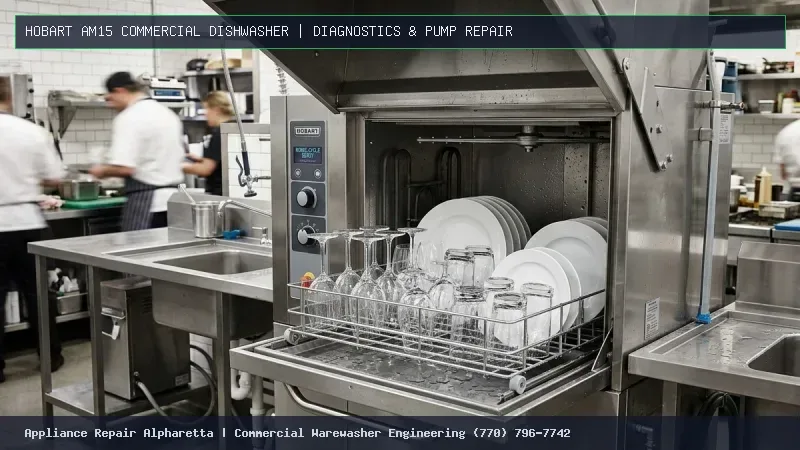
When a commercial Hobart AM15 door-style dishwasher displays an unyielding fill error or the wash tank refuses to fill with water during high-velocity service in Alpharetta, GA, warewashing throughput collapses immediately. Whether you manage a bustling dining room along the Old Alabama Road commercial plazas, an executive culinary kitchen off Haynes Bridge Road, or a banquet operation near Nesbit Ferry Road, an empty wash tank halts sanitization cycles, risks severe wash pump cavitation, and triggers serious health code violations. Our factory-trained commercial technicians deliver rapid same-day emergency dispatch equipped with genuine Hobart OEM 24VAC water inlet solenoid valves, dual stainless steel water level sensor probes, magnetic door reed switches, and calibrated True-RMS diagnostic equipment. Backed by our verified 90-day commercial warranty, we restore full warewashing capacity without delay. Call (770) 796-7742 for immediate priority commercial dispatch.
Quick Answer: Resolving Hobart AM15 Dishwasher Fill Errors & Wash Tank Not Filling
Quick Answer: When your Hobart AM15 dishwasher fill error wash tank not filling repair issue occurs, the root failure is typically triggered by one of five electro-mechanical faults: (1) a burned-out or open 24VAC water inlet solenoid valve coil (nominal specification is 12 to 18 Ohms; an open circuit reads OL / infinite resistance), (2) heavy mineral limescale buildup coating the stainless steel water level sensor probes inside the wash tank, which tricks the solid-state controller into registering water presence prematurely, (3) a misaligned or failed magnetic door interlock reed switch reading infinite resistance (OL) instead of 0 Ohms closed, preventing the control board from initiating the fill sequence, (4) a stuck or calcified pilot diaphragm inside the water valve assembly restricting flow below the mandatory 20 to 25 PSI dynamic flow pressure, or (5) a timed fill safety timeout on the main microprocessor relay board. Verify that the building water isolation valve is open, ensure the wash tank scrap screens and standpipe are seated tightly, clean the level probes with a scotch-brite pad, and perform a 3-minute control power cycle. If the fill error persists, call our master commercial technicians at (770) 796-7742 for same-day diagnostic service and factory OEM restoration.
Listen to 60-Second Commercial Diagnostic Summary
Narrated by Jason J. (Master Certified Commercial Warewashing Specialist)
Check Same-Day Hobart Commercial Dishwasher Tech Availability in Alpharetta & North Fulton
Verified Commercial Service
Recently Serviced in Old Alabama Road Commercial Plazas
Hobart AM15 Door-Type Warewasher 24VAC Dual Water Solenoid & Stainless Probe De-Liming • ★★★★★ Verified Commercial Client 5.0 Star
Hyperlocal Commercial Field Case Study
Verified Field Case Study: Hobart AM15 Fill Error Restoration on Old Alabama Road
Client Location: High-Volume Casual Dining Restaurant, Old Alabama Road Commercial Plaza, Alpharetta, GA 30022 (Intersection of Old Alabama Rd & Haynes Bridge Rd).
Appliance Inspected: Hobart AM15-VL Ventless Hood-Type Commercial Dishwasher (208V/60Hz/3-Phase).
Reported Issue: During peak Sunday brunch turnover, the dishmachine aborted startup. The wash tank remained bone-dry, the wash pump cavitated with loud acoustic groaning, and the digital control console triggered a persistent “FILL ERROR / dr” alarm, forcing dishwashers to stack hundreds of soiled plates in pre-scrape sinks.
Master Field Diagnostics: Master technician Jason J. verified building supply line static pressure at 48 PSI and 140°F inlet water. Testing the secondary 24VAC step-down transformer revealed proper 24.2VAC output. Probing terminal block TB1 to the water inlet solenoid valve revealed 24VAC energization during the fill cycle call, but zero water flow through the internal vacuum breaker. Disconnecting the spade terminals and applying True-RMS multimeter telemetry across the solenoid coil yielded an Open Loop (OL / infinite resistance) reading, indicating catastrophic internal coil dielectric breakdown from chronic heat and mineral dampness. Additionally, visual inspection of the wash tank interior revealed thick calcium carbonate encrustation across the dual stainless steel water level sensor probes, creating partial parasitic conductance.
Corrective Restoration: Disconnected incoming water union, installed a genuine factory OEM Hobart 24VAC dual water inlet solenoid valve assembly (part #00-893043-00001), descaled the stainless steel probe rods using precision food-grade de-liming solvent, calibrated the magnetic door reed interlock switch to 0.1 Ohms closed contact resistance, and flushed the pilot line strainer. Multimeter re-testing confirmed fresh solenoid coil resistance at 14.6 Ohms (within factory 12-18Ω spec).
Final Outcome: The Hobart AM15 executed an automated fill cycle in 124 seconds, achieving exact water level height 1/2 inch below the overflow tube. Booster heater reached 181.4°F sanitizing temperature, verified via thermal test strips. A 90-day parts and labor commercial warranty was registered, and kitchen operations resumed smoothly with zero food safety downtime.
Comprehensive Commercial Technical Directory
- Hobart AM15 Engineering Architecture & Wash Tank Fluid Dynamics
- Diagnostic Symptoms & Error Signals of Hobart AM15 Fill Failure
- Visual Before & After Restoration Showcase
- Primary Electrical & Mechanical Root Causes of Hobart AM15 Fill Failure
- Step-by-Step Safe Kitchen Troubleshooting Protocols for Operators
- Critical Safety Limits & Commercial Kitchen Compliance: When to Stop DIY
- Commercial Kitchen Economics: Repair vs. Replace Hobart AM15 Warewasher
- Interactive Hobart AM15 Commercial Repair Cost Estimator
- Commercial Warewasher Repair Cost Drivers & Expense Breakdown
- Master Technician Diagnostic Protocols & Filterable Multimeter Telemetry Lookup
- Fluid Dynamics & Water Inlet Valve Hydraulic Theory
- Water Level Conductance Sensor Electrochemistry & Logic
- Microprocessor Controller State Machines & Relay Sequencing
- Magnetic Door Reed Interlock Alignment & Safety Circuitry
- Sense-A-Temp Booster Heater Interlocks & Thermal Sanitization
- North Fulton Municipal Water Hardness & Mineral Calcification Dynamics
- Comprehensive 8-Stage Commercial Warewasher Overhaul Standards
- Georgia Food Code & NSF Warewashing Sanitation Regulations
- Genuine Hobart OEM AM15 Fill & Level Control Components
- Preventative Maintenance & De-Liming Regimen for Commercial Dishwashers
- Comprehensive Commercial Warewashing Safety, Electrical & Sanitization Protocols
- Frequently Asked Commercial Technical Questions
- Specialized Commercial Kitchen Services & North Fulton Coverage
- Key Operational Takeaways for Kitchen Managers & Operators
- Schedule Same-Day Hobart Commercial Dishwasher Service in Alpharetta GA
Hobart AM15 Commercial Warewasher Engineering Architecture & Wash Tank Fluid Dynamics
In high-volume commercial kitchens, banquets, healthcare dining halls, and upscale bistros across Alpharetta, GA, the Hobart AM15 series stands as an industry benchmark for heavy-duty door-type warewashing. Designed to cycle up to 58 to 65 dish racks per hour under brutal culinary conditions, the Hobart AM15 relies on a precisely calibrated balance of fluid mechanics, high-temperature thermal dynamics, and low-voltage solid-state logic. When operating at peak efficiency, this machine cleanses and sanitizes glassware, china, and cookware using a scant 0.74 gallons of fresh water per rack, meeting the rigorous standards of NSF/ANSI Standard 3 and ENERGY STAR benchmarks.
Unlike conventional residential dishwashers that rely on intermittent drain-and-fill cycles for every wash step, the commercial Hobart AM15 employs a stationary wash tank reservoir system holding approximately 14 gallons of water maintained continuously at 150°F to 160°F by an electric immersion heater (typically 5 kW) or a steam coil. High-pressure wash water is circulated through revolving upper and lower stainless steel wash arms driven by a heavy-duty 2-horsepower wash pump motor delivering hundreds of gallons per minute of scrubbing action. The final fresh-water rinse, delivered at 180°F through separate revolving rinse arms, is supplied by an integrated or external Sense-A-Temp electric booster heater. As the fresh 180°F sanitizing rinse runs for 10 seconds, that water cascades down into the wash tank, refreshing the detergent reservoir while excess soiled water spills harmlessly over the central standpipe overflow.
However, the entire hydraulic cycle depends fundamentally upon the initial and sustained presence of water in the wash tank. When a facility supervisor or line cook arrives in the morning, turns on the master power switch, and closes the spring-assisted wrap-around hood, the machine must initiate an automated wash tank fill cycle. If that fill cycle is aborted, interrupted, or fails to initiate, the machine cannot proceed to heat the tank or run wash cycles. If your commercial kitchen is experiencing unexpected downtime, calling for commercial appliance repair immediately prevents backup at the dish landing and protects costly heating elements from dry firing.
The fill architecture of the Hobart AM15 relies on four interdependent electro-mechanical subsystems: the municipal water supply train governed by a 24VAC pilot-operated dual solenoid valve, an atmospheric vacuum breaker assembly preventing backflow siphoning, a dual stainless steel water level sensor probe cluster communicating conductive signals to the solid-state controller, and a magnetic door reed interlock circuit verifying hood closure. A breakdown in any single component halts the fill sequence and triggers an automated fill error routine within the microprocessor.
Culinary managers operating along the busy Old Alabama Road dining corridor know that dinner service cannot wait for slow diagnostic guesswork. Partnering with certified master specialists for dedicated commercial dishwasher repair ensures that complex hydraulic errors, micro-relay stalls, and sensor failures are isolated using True-RMS instrumentation and repaired to factory OEM specifications.
Diagnostic Symptoms & Error Signals of Hobart AM15 Fill Failure
A wash tank fill malfunction in a Hobart AM15 warewasher manifests through several distinct operational, acoustic, and visual symptoms. Recognizing these early warning indicators allows kitchen managers to intervene before pump impellers burn or dishware backs up into food preparation zones:
- Alphanumeric Digital Display “FILL ERROR” or “dr” Code: On Hobart AM15 models equipped with microcomputer digital controls, if the wash tank does not fill to the high water probe within the factory programmed timeout window (typically 3.5 to 5 minutes), the control locks out all heating and wash operations, sounding an audible alert and displaying “FILL ERROR”, “dr”, or flashing the door icon.
- Complete Hydraulic Silence Upon Hood Closure: Under normal conditions, closing the hood with the power on immediately actuates the 24VAC water inlet solenoid, producing a distinct hydraulic hiss as water flows past the vacuum breaker into the tank. If total silence follows hood closure, the electrical control loop to the solenoid coil is broken or the door interlock switch is not closing.
- Wash Pump Dry Cavitation & Violent Acoustic Groaning: If a faulty level sensor falsely signals that the tank is full when it is completely dry or only partially filled, the machine may attempt to start a wash cycle. The 2-horsepower wash pump draws in air instead of pressurized water, generating an intense rattling cavitation noise that can rapidly score the mechanical ceramic shaft seal.
- Water Trickling Extremely Slowly (Extended Fill Cycle): The wash tank receives incoming water, but the flow rate is restricted to a fraction of a gallon per minute. The fill cycle times out before reaching the probe level, caused by a calcified valve strainer screen, low building water pressure, or a deteriorated internal rubber pilot diaphragm.
- Wash Tank Heater Not Energizing: As a fail-safe measure, the Hobart AM15 solid-state control board locks out the 5 kW wash tank immersion heater until the low-water stainless steel probe confirms full water coverage. An unfulfilled fill cycle leaves the wash water freezing cold or fails to initiate heating entirely.
- Water Continuously Siphoning Down the Drain: Water enters the wash tank vigorously, but the water level never rises to the sensor probe. This mechanical symptom indicates a dislodged, cracked, or improperly seated drain standpipe or a worn O-ring at the sump drain seat, letting water escape straight into the kitchen grease interceptor.
When kitchen teams face persistent machine alarms during morning prep, scheduling prompt same-day appliance repair prevents lunch shift cancellations and safeguards high-value culinary equipment from electrical surge damage.
Primary Electrical & Mechanical Root Causes of Hobart AM15 Wash Tank Not Filling
Decades of empirical commercial kitchen field service throughout Fulton County indicate that Hobart AM15 wash tank fill failures stem from six primary mechanical and electronic breakdowns. Diagnosing these root causes demands an exact understanding of commercial warewasher circuitry:
Water Inlet Solenoid Valve Coil Burnout & Diaphragm Calcification
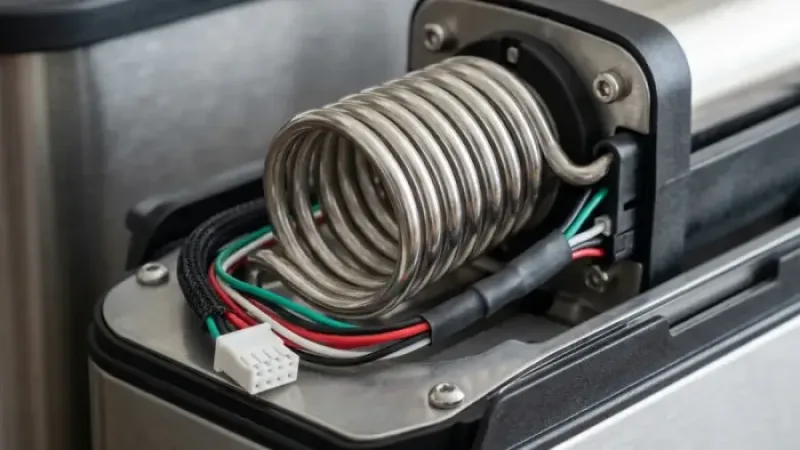
The water inlet solenoid valve is the mechanical gatekeeper of the dishmachine. The Hobart AM15 utilizes a 24VAC pilot-operated diaphragm valve. Unlike direct-acting solenoids, a pilot-operated valve utilizes line water pressure to assist in opening and sealing the main elastomeric diaphragm. When the control board energizes the magnetic coil, an internal stainless steel plunger lifts from a microscopic bleed orifice, releasing pressure above the diaphragm and allowing water to surge into the wash tank.
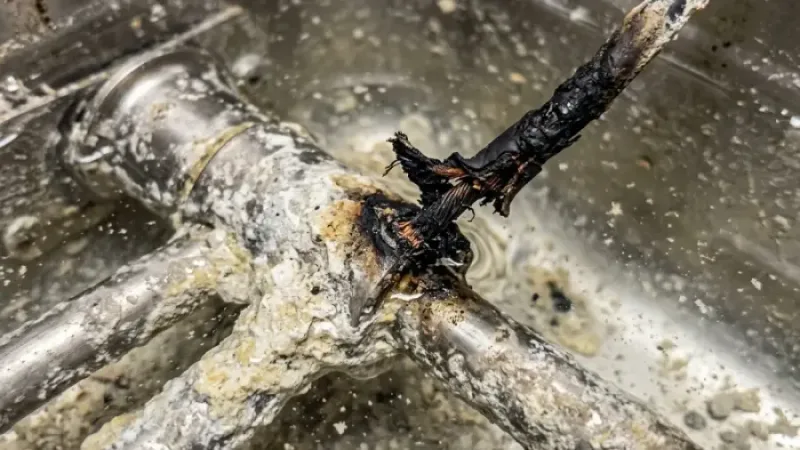
In high-volume restaurant kitchens, this valve cycles dozens of times per hour. Continuous energization under high ambient wash temperatures (frequently exceeding 120°F in dishmachine pits) causes the copper wire insulation inside the 24VAC coil to degrade, resulting in an open circuit burnout. Additionally, dissolved calcium and magnesium ions in the municipal water supply precipitate inside the valve housing. Hard mineral scale blocks the 0.030-inch pilot bleed hole, preventing pressure relief across the diaphragm and trapping the valve firmly shut even when the solenoid coil receives full 24VAC excitation.
Stainless Steel Liquid Level Sensor Probe Scale Buildup & Conductance Failure
Hobart AM15 warewashers do not utilize mechanical float balls that can jam with food scraps. Instead, they incorporate a sophisticated solid-state liquid level sensing assembly featuring dual stainless steel electrode probes suspended inside the wash tank chamber. The lower probe monitors low-water protection, while the upper probe establishes full wash tank level. The machine applies a low-voltage DC or AC sensing signal across the probe tips using the stainless steel tank chassis as the electrical ground reference.
When mineral-bearing tap water reaches the probe tip, electrical current conducts through the liquid to ground, signaling the microprocessor that water has arrived. However, severe mineral scaling, grease films, and detergent residue coat the probe rods over time, forming an electrical insulator. Conversely, if wet calcified scale bridges the gap between the probe tip and the grounded tank wall, the circuit registers continuous parasitic conductance. The microprocessor is falsely tricked into believing the wash tank is already completely filled with water, refusing to open the water inlet solenoid and leaving the tank dry.
Magnetic Door Interlock Reed Switch Misalignment & Open Contact Faults
For operator safety, the Hobart AM15 prevents automated water fill and wash pump operation whenever the three-sided wrap-around hood is open. A permanent magnet is mounted to the hood linkage, while a hermetically sealed magnetic reed switch is mounted within the stationary frame. When the hood closes fully, the magnetic field pulls the internal ferrous reeds together, closing the circuit with 0 Ohms resistance.
Continuous slamming of the dishmachine hood during rapid kitchen rushes frequently shifts the magnetic bracket out of alignment. If the gap between the magnet and the reed switch exceeds 3/16 inch, the magnetic field fails to close the switch contacts. With the control board reading an open circuit (infinite Ohms / OL), the machine remains in an idle state, ignoring fill commands and displaying a flashing door symbol.
Microprocessor Control Board Fill Relay Stalling & Timer Sequence Errors
The electronic command center of the Hobart AM15 is its solid-state control board. This circuit board utilizes miniature electromechanical relays to switch 24VAC power to the water inlet solenoid, drain valve, and chemical dispensers. Inductive electrical arcing across relay contacts during thousands of fill cycles gradually pits and burns the silver-cadmium contact points. Once contact resistance rises or contacts weld shut, the relay fails to deliver 24VAC to terminal TB1, halting the fill sequence entirely.
External Plumbing Water Pressure Deficits & Clogged Line Strainer Baskets
The Hobart AM15 requires a dynamic flow pressure of 20 to 25 PSI (pounds per square inch) delivered at a minimum flow rate of 8 to 10 gallons per minute. Ahead of the water inlet solenoid valve, plumbing codes mandate an inline Y-strainer with a fine mesh bronze screen to trap pipe scale and sediment. If municipal plumbing repairs or line turbulence send rust particles into the incoming feed, the strainer screen clogs solid. Water pressure drops to zero downstream, preventing the pilot diaphragm from lifting regardless of electrical status.
Atmospheric Vacuum Breaker Air-Gap Sticking & Backflow Valve Choking
Plumbing regulations require an atmospheric vacuum breaker (AVB) positioned at least 6 inches above the overflow rim of the wash tank to prevent toxic wash water from siphoning backward into potable drinking supplies. When water enters, an internal brass poppet floats upward, sealing the atmospheric air vent and directing water into the wash tank. If mineral scale or chemical fumes corrode the poppet shaft, the poppet can seize midway. Water either spews uncontrollably out of the atmospheric relief vent onto the top of the machine or restricts flow below the volume required to satisfy the fill timer.
Step-by-Step Safe Kitchen Troubleshooting Protocols for Operators
Before requesting emergency field service, restaurant managers and kitchen supervisors in Alpharetta can safely execute this standardized non-invasive 6-step diagnostic protocol to verify whether external utility locks or minor mechanical oversights are blocking wash tank fill:
- Verify Building Water Supply Ball Valve Position: Inspect the primary 3/4-inch hot water supply pipe feeding the dishmachine. Ensure the brass manual ball valve handle is oriented strictly parallel to the pipe run. If cleaning crews or maintenance staff bumped the valve into a perpendicular or partial position, the machine will suffer complete water starvation.
- Inspect Wash Tank Scrap Baskets & Standpipe Seating: Lift the dishmachine hood and inspect the wash tank sump. Remove the stainless scrap screens and verify that the vertical drain standpipe (or drain ball valve assembly) is seated squarely into the cast sump outlet. If grease or bone fragments prevent the standpipe O-ring from sealing, water will drain as quickly as it fills, triggering a fill timeout.
- Clean Stainless Steel Water Level Sensor Probes: Locate the dual stainless steel probe cluster mounted inside the rear tank wall. Using a non-metallic scotch-brite scrubbing pad and clean hot water, scrub mineral scale, grease film, and chemical build-up from the probe shafts and insulating ceramic collars. Dry thoroughly and retest.
- Inspect Magnetic Hood Interlock Alignment: Lower the hood firmly. Inspect the left or right side linkage where the rectangular magnet meets the stationary reed sensor. Ensure no debris or physical denting holds the hood ajar. Listen for the distinct audible click of the internal relays when the hood reaches its lowest travel point.
- Execute a Hard System Power Reset: Turn the front power rocker switch to the OFF position. Navigate to the commercial electrical distribution subpanel and switch off the dedicated 3-phase circuit breaker feeding the machine. Wait 3 full minutes to discharge onboard electrolytic filter capacitors and clear volatile memory registers, then restore power.
- Acoustic and Hydraulic Evaluation: Close the hood and listen closely at the rear plumbing manifold: (a) Does the 24VAC transformer emit a low 60Hz hum? (b) Does the water solenoid valve produce an audible mechanical click? (c) Does water rush through the vacuum breaker? Noting these specific observations allows our dispatch technicians to arrive with the exact replacement components on board.
Should these safe manual checks fail to restore wash tank fill, contacting our specialized team for emergency appliance repair guarantees rapid recovery before dinner rush volume peaks.
Critical Safety Limits & Commercial Kitchen Compliance: When to Stop DIY
Commercial door-type warewashers operate under extreme electrical currents, high hydraulic pressures, and scalding water temperatures. Attempting uncertified internal disassembly violates OSHA workplace standards and risks catastrophic kitchen hazards:
Immediate Hazard Stop Line — Cease Internal Access Immediately:
- High-Voltage 208V/240V/480V 3-Phase Arc Flash Hazards: The primary electrical control enclosure of the Hobart AM15 houses 3-phase line voltage feeding 5 kW to 13 kW electric booster heating elements and wash pump contactors. Probing live circuits without NFPA 70E certified personal protective equipment (PPE) and CAT III/IV True-RMS meters risks lethal electrocution and arc flash blasts.
- Scalding 180°F Booster Water Pressure Bursts: The hot water supply train and internal booster tank operate at temperatures between 140°F and 185°F under 20 to 50 PSI pressure. Disassembling brass solenoid valve fittings or vacuum breaker couplings without certified isolation and depressurization can cause severe third-degree thermal burns.
- Cross-Contamination & Backflow Siphoning Risks: Improperly altering the atmospheric vacuum breaker or installing unapproved non-OEM check valves can create illegal cross-connections between toxic detergent-laden dishwater and municipal drinking water, violating Georgia plumbing codes and EPA Clean Water standards.
- Dry-Fire Immersion Element Catastrophe: Forcing wash tank heating circuits to energize while the tank is dry or underfilled causes Incoloy electric heating elements to vaporize internally within seconds, destroying the heating sheath and causing severe structural tank damage.
Protecting your kitchen staff and maintaining sanitation compliance requires certified commercial specialists. Our factory-trained technicians provide comprehensive appliance repair in Alpharetta, GA, ensuring that all commercial warewashing equipment meets strict OSHA and local health department standards.
Commercial Kitchen Economics: Repair vs. Replace Hobart AM15 Warewasher
A commercial Hobart AM15 represents a substantial capital investment, typically commanding between $12,000 and $18,000 for brand-new replacement units including freight, installation, booster plumbing, and ventilation hood integration. When evaluating whether to overhaul a malfunctioning machine or invest in replacement, food service operators in Alpharetta rely on the commercial 50% Rule and lifetime duty-cycle calculations.
If the cumulative cost of restorative repairs is less than 50% of the cost of a comparable replacement dishmachine, and the unit has completed fewer than 500,000 wash cycles, professional overhaul using genuine Hobart OEM components is the economically optimal decision. The rugged 304 stainless steel frame, robust wash manifold, and cast pump volute of the Hobart AM15 are engineered to endure 15 to 20 years of continuous commercial operation when maintained diligently.
| Decision Factor | Overhaul & Component Repair | Complete Machine Replacement |
|---|---|---|
| Capital Outlay | Low: $280 – $950 (Solenoid / Sensor / Relays) | High: $12,500 – $18,000+ New Equipment |
| Operational Downtime | Minimal: 2 – 4 Hours Same-Day Restoration | Severe: 2 – 3 Weeks Freight & Rough-in Plumbing |
| Plumbing & Electrical Modifications | Zero: Direct OEM Drop-in Replacement | Substantial: Utility Re-configurations & Permits |
| Machine Age Threshold | Ideal for Machines 1 – 12 Years Old | Recommended for 15+ Years with Structural Pitting |
| Warranty Protection | 90-Day Parts & Labor Commercial Warranty | 1-Year Standard Factory Limited Warranty |
Commercial Warewasher Repair Cost Drivers & Expense Breakdown
The total financial expenditure required to resolve a Hobart AM15 fill error is governed by several transparent commercial cost variables. Understanding these factors allows facility directors to budget accurately and make informed operational decisions:
- Component Architecture & OEM Sourcing: Genuine Hobart factory components are manufactured from premium 304 stainless steel, brass, and industrial-grade elastomers designed to withstand 180°F chemical wash environments. A factory OEM 24VAC dual water inlet valve (part #00-893043-00001) typically ranges between $180 and $320 in parts cost, whereas solid-state microprocessor control boards (part #00-893021) command $650 to $1,100. Using genuine OEM parts guarantees exact fitment and prevents premature repeat breakdowns.
- Labor Complexity & Hydraulic Disassembly: Replacing an external water inlet valve or cleaning accessible level probes requires approximately 1.5 to 2.5 hours of precision technician labor. In contrast, tracing intermittent wire harness degradation within the inner stainless chassis or rewiring control relays requires advanced electrical troubleshooting and extended load testing.
- Mineral Hardness & Chemical De-Liming Requirements: If the dishmachine exhibits severe limescale encrustation throughout the internal booster tank, vacuum breaker assembly, and wash tank walls, a comprehensive chemical de-liming flush using food-grade sulfamic or phosphoric acid solutions is mandatory. This process dissolves mineral scale, restoring heat transfer rates and probe conductivity.
- Emergency After-Hours or Peak Turnaround Scheduling: Emergency commercial dishmachine service requested during Friday or Saturday dinner rushes carries priority dispatch premiums. However, our rapid response prevents hundreds of dollars in manual dishwashing overtime and shields restaurants from costly operational closures.
When commercial operators throughout Milton, GA commercial kitchens encounter sudden dishmachine errors, our transparent flat-rate commercial billing ensures there are never hidden fees or unexpected surcharges.
Master Technician Diagnostic Protocols & Filterable Multimeter Telemetry Lookup
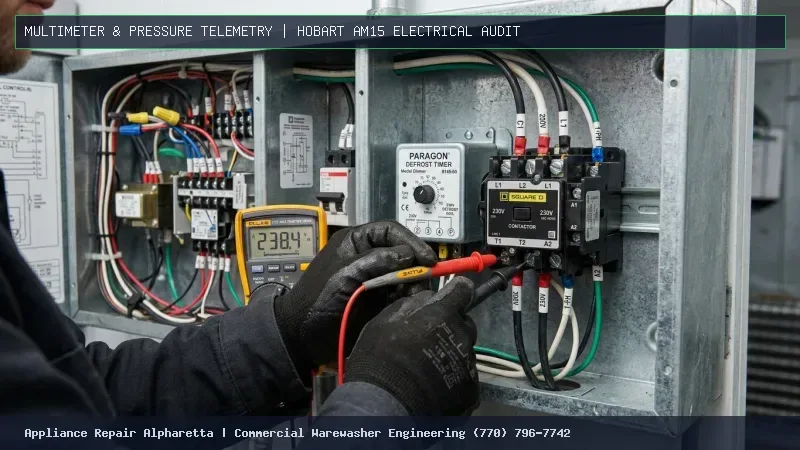
Master commercial appliance technicians do not rely on trial-and-error part swapping. Pinpointing the root cause of a Hobart AM15 fill timeout requires methodical True-RMS electrical testing across low-voltage control circuits, sensor lines, and line-voltage components. By testing resistance, voltage drop, and ground reference conductance at specific terminal blocks, our technicians isolate failing components within minutes.
Before taking resistance measurements, always disconnect main electrical power to prevent damaging multimeter shunts or introducing false voltage loops. Use this interactive telemetry lookup tool to inspect exact factory baseline parameters for the Hobart AM15 control architecture:
| Component / Subsystem | Test Terminals / Pins | Test Condition | Nominal Specification | Failure Indication |
|---|---|---|---|---|
| Water Inlet Solenoid Valve Coil | Valve Spade Terminals (Wires Off) | De-energized Ohms Mode | 12 – 18 Ω Resistance | OL (Open Burnout) or <5Ω (Shorted Coil) |
| Control Transformer Secondary | Transformer Terminals X1 & X2 | Powered Energized AC Volts | 23.5 – 26.5 VAC Line Output | 0 VAC (Blown 3A Fuse or Dead Secondary) |
| Stainless Water Level Probe (Dry) | Probe Tip to Tank Ground | Empty Tank, Ohms Mode | OL (>1,000,000 Ω Infinite) | <50 kΩ (Scale Short Falsely Tricking Board) |
| Stainless Water Level Probe (Wet) | Probe Tip to Tank Ground | Water Submerged, Ohms Mode | 10 kΩ – 50 kΩ Conductance | OL (Heavy Scale Insulating Probe Rod) |
| Magnetic Door Reed Switch (Closed) | Switch Harness Wire Leads | Hood Completely Lowered | 0.0 – 0.2 Ω (Dead Short Continuity) | >1.0 Ω or OL (Reeds Pitted or Misaligned) |
| Magnetic Door Reed Switch (Open) | Switch Harness Wire Leads | Hood Raised / Open Position | OL (Infinite Open Circuit) | 0 Ω (Short Circuit Welding Reeds Closed) |
| Timer Control Fill Relay Output | Board Output K1/K2 to Common | Active Fill Cycle Calling | 24 VAC Active Supply Output | 0 VAC (Defective Relay Contact on Board) |
| Wash Tank Immersion Heater Element | Element Terminals (3-Phase Delta) | De-energized Ohms Mode | 22 – 28 Ω Per Phase Winding | OL (Burned Open from Dry Firing) |
| Booster Thermistor Temperature Sensor | Thermistor 2-Pin Plug | Ambient 77°F (25°C) Static | 9.8 kΩ – 10.2 kΩ (NTC Curve) | OL or <500 Ω (Drifted Thermistor) |
When dealing with intricate electrical issues, professional facilities rely on experienced commercial technicians. In addition to commercial dishmachines, our master specialists provide factory-certified commercial warewasher service in Roswell, GA, ensuring culinary hardware runs seamlessly without unexpected downtime.
Fluid Dynamics & Water Inlet Valve Hydraulic Theory in Hobart Warewashers
To understand why a Hobart AM15 water inlet solenoid valve fails to open even when receiving 24VAC control power, one must analyze the fluid mechanics of pilot-operated diaphragm valves. A direct-acting solenoid valve pulls a seal disc directly off an orifice using magnetic solenoid force alone. However, pulling a seal against 50 PSI municipal water pressure across a 3/4-inch opening would require an enormous, power-hungry electromagnet generating prohibitive electrical heat.
Instead, Hobart engineers employ an energy-efficient pilot-operated diaphragm architecture. The valve features a flexible molded rubber diaphragm dividing the valve body into two pressure chambers: the lower inlet fluid chamber and the upper pilot bonnet cavity. Above the diaphragm lies a minute pilot bleed channel (approximately 0.030 inches in diameter). When the valve is closed and the solenoid coil is de-energized, municipal line water pressure bleeds slowly through this tiny hole into the upper bonnet chamber. Because the surface area on top of the diaphragm is roughly 25% larger than the surface area underneath, the resulting hydraulic force presses the diaphragm downward against the valve seat, creating a leak-free seal.
When the dishmachine controller energizes the 24VAC solenoid coil, the magnetic flux pulls an internal spring-loaded stainless steel plunger upward. This uncovers a pilot exhaust port that is significantly larger than the bleed channel. Trapped water in the upper bonnet chamber immediately dumps through the exhaust port toward the valve discharge. This sudden pressure drop unbalances the diaphragm: high static pressure in the inlet chamber easily overcomes the reduced pressure above, forcing the diaphragm to bow upward off its brass seat. Water surges past at 8 to 10 gallons per minute into the dishmachine.
This hydraulic balance explains why mineral accumulation causes total valve failure. When hard water calcium carbonate deposits occlude the microscopic bleed orifice, hydraulic equalizing ceases. Alternatively, if fine sand or pipe scale jams the stainless steel plunger in its downward seat, pilot venting cannot occur. Even with an electrically intact coil measuring exactly 15 Ohms, the valve remains mechanically locked shut.
Water Level Conductance Sensor Electrochemistry & Solid-State Logic
Commercial warewashers operate in punishing wash chemistry environments characterized by alkaline detergents, chlorinated sanitizers, and suspended fats. Mechanical float balls, float switches, and pivoting arms inevitably jam with food debris, toothpicks, and coagulated grease. The Hobart AM15 eliminates mechanical failure points by using liquid electrical conductance sensing.
Pure deionized water is an electrical insulator, but municipal tap water contains dissolved ionic minerals—calcium, magnesium, chloride, and sodium ions—that readily conduct electrical current. The Hobart water level probe assembly utilizes high-grade 304/316 stainless steel probe rods mounted through insulated Teflon or ceramic threaded sleeves into the wash tank. The machine’s solid-state controller feeds a low-current sensing signal (typically 12VDC or 5VAC high frequency to prevent galvanic metal electrolysis) to each probe rod.
As water fills the wash tank:
- Low Water Probe Submersion (Safety Threshold): The water level first reaches the lower stainless rod (situated approximately 2 inches above the wash tank heater sheath). Electrical current flows from the probe tip through the water to the grounded stainless steel tank body, dropping circuit resistance from infinite (OL) to approximately 10,000 to 50,000 Ohms. The microprocessor recognizes this low-water threshold and arms the wash tank heater contactor, enabling safe water heating.
- High Water Probe Submersion (Fill Cutoff Threshold): Water continues to enter the tank until it reaches the upper probe tip (located just beneath the top lip of the overflow standpipe). Current conducts through the liquid to ground, creating a high-level logic signal. The microprocessor de-energizes the 24VAC fill relay, closing the water solenoid valve.
The fatal failure mode in conductance sensing is parasitic bridging. If splashing wash water containing heavy detergent concentrates leaves a mineral crust across the probe rod’s insulating Teflon insulator, electrical current leaks continuously to the chassis ground even when the wash tank is empty. The microcontroller perceives a continuous high-water signal, refuses to energize the water solenoid, and triggers a premature fill cutoff. Scrubbing the probes clean with non-metallic abrasive media completely restores original circuit conductivity.
Microprocessor Controller State Machines & Relay Sequencing
The electronic architecture of the modern Hobart AM15 is driven by an onboard microcomputer programmed with a deterministic state-machine control loop. The microprocessor continuously executes real-time polling cycles across digital inputs (magnetic door switch, cycle button, float/probe signals) and analog inputs (tank thermistor, booster thermistor).
The state sequence for the automated fill cycle proceeds through the following deterministic phases:
- State 0: Power-On Initialization: Master switch closed; microcontroller executes internal self-test routines, verifies EEPROM calibration parameters, and illuminates display LEDs.
- State 1: Interlock Verification: Microprocessor interrogates the magnetic door reed switch circuit. If circuit resistance is 0 Ohms, hood closure is confirmed. If open (OL), state machine transitions to Door Open idle mode.
- State 2: Tank Level Interrogation: Controller reads conductance across the high-water sensor probe. If dry (OL resistance), the controller flags an underfill condition and triggers State 3.
- State 3: Fill Cycle Initiation & Timer Arming: The microprocessor energizes output relay K1, completing the 24VAC circuit to the water inlet solenoid valve. Simultaneously, an internal digital countdown timer (programmed to 210 to 300 seconds) starts running.
- State 4: Normal Fill Termination: When water rises to contact the high-water probe, conductive signal confirms tank capacity. Relay K1 de-energizes, closing the water valve. State machine transitions to Heating Standby.
- State 5: Fill Error Fault Routine: If the internal countdown timer expires before the high-water probe confirms water arrival, the state machine enters a safety lockout. The controller de-energizes relay K1, locks out the wash pump contactor, disables heating elements, sounds the onboard piezo buzzer, and flashes “FILL ERROR” on the front alphanumeric screen.
Understanding this state sequence enables certified technicians to determine whether an error is caused by a failed sensor input (the controller never knows it is calling for fill) or a failed relay output (the controller is calling, but the physical relay contacts have burned open).
Magnetic Door Reed Interlock Alignment & Safety Circuitry
Commercial door-type dishmachines require instantaneous spray shutdown whenever the hood is lifted to protect operators from 160°F caustic detergent wash water sprayed at high velocity. The Hobart AM15 achieves this through a magnetic reed switch safety interlock rather than mechanical push-button switches that degrade from steam intrusion.
A magnetic reed switch consists of two thin, ferromagnetic metal reeds hermetically sealed within a glass capsule filled with inert nitrogen gas. The contacts are plated with precious metals (such as ruthenium or rhodium) to resist electrical contact pitting. A molded permanent neodymium magnet is bolted to the counterbalanced hood bracket. When the hood closes, the magnetic field penetrates the stainless steel frame, inducing opposite magnetic polarities in the reeds and pulling them together into direct physical contact (0 Ohms).
Over years of high-volume kitchen use, the door counterbalance springs, stainless steel lift rods, and plastic glide blocks wear down. The hood begins to sit slightly askew. If the distance between the permanent magnet and the reed switch expands beyond the critical 4mm (0.157 inch) magnetic activation boundary, the magnetic field strength drops below the reed pull-in threshold. The switch remains open. Because the microprocessor considers an open door an immediate stop condition, it blocks the 24VAC fill valve circuit indefinitely. Inspecting hinge geometry and testing reed continuity using True-RMS multimeter leads resolves this common field issue without requiring expensive board replacements.
Sense-A-Temp Booster Heater Interlocks & Thermal Sanitization
A cornerstone innovation of the Hobart AM15 warewasher is its integrated Sense-A-Temp electric booster heater. Standard municipal water enters commercial kitchens at approximately 120°F to 140°F. To achieve certified chemical-free sanitization under NSF guidelines, final rinse water must spray over dishware at a minimum of 180°F (82°C) at the dishmachine manifold, creating an instantaneous thermal kill of bacterial pathogens.
The Sense-A-Temp system incorporates an internal or external 8.5 kW to 13 kW electric booster holding tank. High-precision negative temperature coefficient (NTC) thermistors monitor booster water temperature in real time. If incoming building water drops unexpectedly, the Hobart controller initiates a cycle-extend routine: the wash cycle continues scrubbing until the booster heater confirms full 180°F temperature before releasing the final fresh-water rinse.
Critically, the booster heater and the wash tank fill system share the incoming water distribution manifold. In certain Hobart AM15 configurations, fresh water fills the wash tank directly through the booster heater chamber during initial startup. If heavy scale blankets the booster immersion heating elements, water flow resistance increases, creating hydraulic backpressure that impedes the water inlet solenoid valve and triggers fill errors.
North Fulton Municipal Water Hardness & Mineral Calcification Dynamics
Water quality across North Fulton County—including Alpharetta, Milton, Roswell, and Johns Creek—originates primarily from the Chattahoochee River water basin treated by Fulton County and Atlanta municipal water systems. While North Fulton water is generally classified as moderately soft to moderately hard (typically ranging from 2.0 to 4.5 grains per gallon, or 35 to 75 ppm CaCO3), commercial kitchen dishmachines concentrate dissolved minerals rapidly.
In a commercial warewasher heating water to 160°F in the wash tank and 180°F in the booster heater, calcium bicarbonate undergoes thermal decomposition into insoluble calcium carbonate (CaCO3):
Ca(HCO3)2 + Heat → CaCO3 ↓ (Scale) + CO2 ↑ + H2O
Because calcium carbonate possesses retrograde solubility (it becomes less soluble as water temperature increases), mineral crystals precipitate directly onto the hottest surfaces: immersion heating element sheaths, vacuum breaker poppets, solenoid valve diaphragms, and water level sensor probes. Without commercial water softeners or strict automated de-liming schedules, a 1/16-inch crust of insulating scale develops within months, reducing heating efficiency by up to 20% and creating sensor conductivity faults.
Culinary facilities across the region benefit from integrated equipment care. For comprehensive facility support, our master technicians also deliver precision Johns Creek commercial kitchen maintenance, safeguarding commercial dishwashers, ice makers, and cooking equipment from mineral fouling.
Comprehensive 8-Stage Commercial Warewasher Overhaul Standards
When our master technicians resolve a Hobart AM15 fill malfunction, we execute a standardized 8-stage commercial restoration protocol that addresses both the immediate electrical failure and underlying system stressors:
- Utility Isolation & Lockout/Tagout (LOTO): De-energize 3-phase electrical disconnect and close incoming water shutoff valves according to OSHA Standard 1910.147.
- Hydraulic Pressure & Line Strainer Service: Disassemble the 3/4-inch inline Y-strainer, remove accumulated debris, inspect brass line threads, and verify static line pressure with a calibrated test gauge.
- Solenoid Valve Disassembly & Replacement: Extract the failed water inlet valve, inspect internal pilot passages, and install an authentic factory OEM Hobart 24VAC dual water valve assembly with fresh silicone seals.
- Level Sensor Probe Extraction & Chemical De-Liming: Remove the stainless probe rods from the tank wall, soak in food-grade descaling acid, scrub grounding threads, and torque back to factory specifications.
- Magnetic Door Reed Switch Re-Calibration: Measure reed switch contact resistance, adjust hood hinge brackets, and verify 0.0 to 0.2 Ohms closed resistance throughout hood travel.
- True-RMS Electrical Circuit Verification: Inspect 24VAC transformer secondary voltage under load, verify relay board switching logic, and measure wash tank heating element winding resistance.
- Automated Fill & Flow Calibration: Restore utilities and execute automated fill cycle, timing water arrival against factory 2-minute baseline and checking vacuum breaker for zero leakage.
- NSF Sanitization & High-Temp Thermal Strip Validation: Run complete wash and rinse cycles with certified Thermo-Kleen temperature test strips to verify 180°F final rinse sanitization.
Georgia Food Code & NSF Warewashing Sanitation Regulations
In Fulton County, commercial food establishments are strictly regulated under Georgia Department of Public Health (DPH) Chapter 511-6-1 (Rules and Regulations for Food Service) and the FDA Model Food Code. Under Section 511-6-1-.05(7), all mechanical warewashing machines must achieve mandatory thermal or chemical sanitization thresholds on all food-contact surfaces.
For high-temperature machines like the Hobart AM15:
- Wash Tank Temperature: Must maintain a minimum temperature of 150°F (66°C) to emulsify food grease and activate commercial alkaline detergents.
- Sanitizing Final Rinse Temperature: Must reach a minimum of 180°F (82°C) at the manifold, delivering water across dishware to achieve an irreversible plate surface temperature of at least 160°F (71°C) to eliminate pathogenic bacteria (such as Salmonella and Listeria).
- Water Pressure: Final rinse dynamic flow pressure must remain between 15 and 25 PSI to ensure full spray pattern coverage without atomizing hot water into cooling mist.
When a dishmachine experiences a fill error or wash tank starvation, sanitization cannot occur. Health inspectors observing inoperable warewashers will issue immediate critical health inspection demerits or mandate an emergency facility shutdown. Maintaining commercial warewashers in peak operating condition protects both restaurant guests and operational licenses.
Genuine Hobart OEM AM15 Fill & Level Control Components
Maintaining factory reliability in high-temperature commercial warewashers requires authentic OEM components engineered for 180°F chemical environments. Aftermarket generic parts often suffer premature coil failure or plastic fitting fractures under line surges. Here is an overview of core factory components frequently utilized during Hobart AM15 fill restoration:
| Component Description | Factory OEM Part Number | Operating Voltage / Spec | Primary Function in Fill Circuit |
|---|---|---|---|
| Dual Water Inlet Solenoid Valve | 00-893043-00001 | 24 VAC, 12 – 18 Ω Coil | Directs fresh incoming hot water to fill tank and booster manifold |
| Water Level Sensor Dual Probe Assembly | 00-294678-00001 | 304 Stainless, Teflon Insulated | Senses liquid conductance to ground for low-water safety and fill cutoff |
| Magnetic Door Reed Interlock Switch | 00-919107-00001 | Hermetic Reed, 0 Ω Closed | Verifies hood closure before enabling automated fill and wash cycles |
| Microprocessor Relay Control Board | 00-893021-00001 | 24 VAC Solid-State Microcomputer | Executes cycle timing state machines and controls 24V fill relays |
| Step-Down Control Transformer | 00-475249-00001 | 208/240V Primary to 24VAC Secondary | Steps down line voltage to safe 24VAC for solenoids and control board |
| Atmospheric Vacuum Breaker (AVB) Kit | 00-087711-00263 | 3/4-Inch NPT Brass Body | Prevents backsiphonage of wash water into potable water supply line |
| Wash Tank Immersion Heating Element | 00-893035-00001 | 5.0 kW / 208V Incoloy Sheath | Maintains 150°F to 160°F wash tank water reservoir temperature |
Enrolling your commercial kitchen in an ongoing preventative maintenance program helps detect valve coil heat degradation, scale formation, and contact pitting before critical components fail during peak operations.
Preventative Maintenance & De-Liming Regimen for Commercial Dishwashers
A strict preventative maintenance routine is the most effective safeguard against Hobart AM15 fill errors and chronic limescale encrustation. Facility supervisors should enforce the following structured maintenance schedule:
- Daily Shift Shutdown Care: Turn master power OFF, remove drain standpipe to drain wash tank, remove and empty upper and lower scrap basket screens, and spray down interior tank walls with clean hot water. Wipe clean the stainless steel level sensor probes to remove residual chemical films. Leave the hood open overnight to air-dry the wash chamber.
- Weekly Deep De-Liming Flush: Drain dishmachine and refill with fresh water. Add 1 quart of approved commercial food-grade de-limer acid (phosphoric or sulfamic base). Close hood and run an extended de-lime cycle for 15 to 20 minutes to dissolve mineral scale from tank walls, heating elements, and probe rods. Drain, flush twice with fresh water, and inspect probe clarity.
- Monthly Line Strainer & Arm Inspection: Isolate incoming water supply, remove the bronze plug from the inline Y-strainer, and clear sediment or rust flakes from the internal mesh basket. Remove upper and lower wash arms and rinse arms; clear any seeds or debris occluding spray nozzles, and verify smooth bearing rotation.
- Quarterly Professional Electrical & Mechanical Audit: Have a certified technician measure solenoid coil resistance (12-18Ω), check door reed switch travel tolerances, verify 24VAC transformer output voltage under load, inspect heating element contactors for electrical pitting, and test final rinse water pressure (20-25 PSI dynamic).
In complex hospitality operations, kitchen success requires synchronizing all refrigeration and cooking hardware. For back-of-house cold storage, our master team also specializes in rapid commercial refrigeration repair to safeguard perishable ingredients alongside sparkling warewashing.
Comprehensive Commercial Warewashing Safety, Electrical & Sanitization Protocols
Servicing commercial warewashers involves high line voltages, high-pressure scalding water, and aggressive chemicals. Facility teams must strictly adhere to industry safety protocols:
- OSHA 1910.147 Lockout/Tagout Compliance: Before opening the lower mechanical control compartment or servicing 3-phase wiring, apply a dedicated lockout padlock and danger tag to the electrical disconnect box. Never trust digital touchscreens or rocker switches as positive electrical isolations.
- NFPA 70E Arc Flash Safety: Line voltage terminals feeding 208V/240V/480V 3-phase power remain live at the top of the main circuit breaker even when the dishmachine is turned off. Technicians must utilize NFPA 70E compliant protective eyewear, insulating gloves, and rated test equipment.
- Chemical Protective Equipment (PPE): When handling commercial liquid de-liming acids or caustic alkaline detergents, personnel must wear chemical splash goggles, neoprene gloves, and heavy aprons. Mixing chlorine sanitizers with acidic de-liming chemicals generates toxic chlorine gas—never mix chemicals inside the dishmachine tank.
- Thermal Scald Mitigation: Allow booster tanks and wash tank immersion heaters to cool for at least 45 minutes before servicing drain valves, immersion heaters, or solenoid plumbing. Verify zero line pressure by opening manual test petcocks.
Culinary managers overseeing walk-in cold rooms can also rely on our prompt field specialists for walk-in cooler repair and cooling diagnostics throughout North Fulton County.
Frequently Asked Commercial Technical Questions
Why is my Hobart AM15 commercial dishwasher displaying a fill error?
A fill error on a Hobart AM15 warewasher indicates that the solid-state controller timed out (typically after 3.5 to 5 minutes) before the high-water stainless steel sensor probe detected water in the wash tank. Common causes include a burned-out 24VAC water inlet solenoid valve coil, severe limescale encrustation on the sensor probes causing false conductivity readings, a misaligned magnetic door interlock reed switch preventing the fill signal, or closed building water shutoff valves.
What multimeter resistance should a Hobart AM15 water inlet solenoid valve coil read?
A functional factory OEM 24VAC water inlet solenoid coil for a Hobart AM15 measures between 12 and 18 Ohms of resistance at room temperature. A reading of Open Loop (OL / infinite Ohms) indicates an open winding burnout requiring coil or valve replacement. A reading below 5 Ohms indicates an internal winding short that will blow the secondary 3A transformer fuse.
How do stainless steel water level sensor probes work in the Hobart AM15?
The Hobart AM15 utilizes conductive liquid sensing rather than mechanical floats. Two stainless steel probe rods penetrate the wash tank: a lower probe for low-water heater safety and an upper probe for fill cutoff. When mineral-containing water contacts a probe, a small electrical current flows through the liquid to the grounded tank wall (10kΩ to 50kΩ conductance), notifying the microprocessor that water has reached that exact height.
Can limescale buildup trick the dishmachine into thinking it is full when it is empty?
Yes. If damp mineral scale, detergent paste, or food grease coats the Teflon insulator around the water level probes, it forms a parasitic conductive bridge to the chassis ground. The microcontroller falsely detects high water even when the tank is bone-dry, blocking water inlet solenoid energization and resulting in an empty tank.
How does the magnetic door reed switch affect the wash tank fill cycle?
The magnetic door reed interlock switch must measure 0.0 to 0.2 Ohms (closed continuity) when the dishmachine hood is fully lowered. If the hood springs wear, the alignment bracket bends, or the internal reed switch contacts pit open, the control board perceives an open hood. In this state, it locks out the fill sequence for safety, preventing 160°F wash water from spraying into the kitchen.
What dynamic water pressure is required for the Hobart AM15 to fill properly?
The Hobart AM15 requires a dynamic flow pressure of 20 to 25 PSI (pounds per square inch) delivered through a minimum 3/4-inch NPT incoming line. Dynamic pressure is measured while water is actively flowing through the solenoid valve. If dynamic pressure drops below 15 PSI due to clogged strainers or building pipe restrictions, the machine will fill too slowly and trigger an error.
What happens if the drain standpipe O-ring is worn or unseated?
If the wash tank standpipe is not firmly seated in the sump drain casting, or if its rubber O-ring seal is torn or missing, incoming water will bypass the reservoir and flow directly down the drain. Because water escapes as quickly as it enters, the liquid level never reaches the upper probe, causing the timer to reach its limit and display a fill error.
What is the purpose of the atmospheric vacuum breaker (AVB) on the fill line?
The atmospheric vacuum breaker is a plumbing safety device mounted at least 6 inches above the flood rim of the wash tank. It prevents backsiphonage of contaminated, detergent-laden wash water into the facility’s potable drinking water system if building water pressure drops unexpectedly. If its internal poppet seizes from mineral scale, water may leak onto the floor or flow will be severely restricted.
How does the Hobart AM15 protect the wash tank heater from dry firing?
The solid-state control board incorporates a low-water safety interlock. The 5.0 kW wash tank electric immersion heater contactor cannot receive 24VAC coil power until the lower stainless steel level sensor probe confirms full water submersion. If the tank fails to fill, the heating circuit remains physically disconnected, preventing catastrophic burnout of the Incoloy heater sheath.
Can a faulty wash pump cause a fill error on the Hobart AM15?
Not directly during initial fill, because the wash pump does not run until the tank is full. However, if the wash pump ceramic shaft seal is leaking severely, water can drain into the machine subframe as fast as it enters the sump, prolonging fill times. Furthermore, if a false probe signal activates the pump while dry, intense impeller cavitation can cause motor overload tripping.
What should kitchen operators do if the fill error persists after cleaning the probes?
If thoroughly descaling the probe tips and verifying building water supply valves does not clear the error, the problem lies in the electrical control loop (such as a burned solenoid coil, failed control transformer, or stuck relay on the main circuit board). Shut off electrical power at the circuit breaker and contact certified commercial technicians immediately.
How often should a commercial Hobart dishmachine be chemically de-limed?
In North Fulton County, high-volume commercial kitchens should perform a complete de-liming cycle at least once every 7 to 14 days, depending on daily rack volume and whether building water softening is installed. Regular de-liming prevents insulating calcium build-up on heating elements and keeps water level sensor probes free of parasitic mineral paths.
What is the difference between Hobart AM15 standard and Hobart AM15-VL ventless models?
The standard Hobart AM15 requires an overhead Type II dedicated commercial exhaust hood to evacuate steam. The AM15-VL (Ventless) incorporates an internal fan and heat recovery condenser coil that captures steam, condenses moisture, and uses that latent thermal energy to preheat incoming cold water for the next cycle, eliminating the need for expensive rooftop ventilation.
Why does my dishmachine fill with water but water remains lukewarm?
If water fills successfully but never heats to the required 150°F wash temperature, common causes include an open high-limit thermostat safety switch, a burned-out wash tank immersion heating element (reading OL resistance), a tripped 3-phase circuit breaker, or a defective heater contactor that fails to pull in when energized.
Can low building water temperature cause fill and sanitizing errors?
Yes. The Hobart AM15 requires incoming water supplied at a minimum of 110°F to 140°F (depending on whether a 70°F or 40°F rise booster is installed). If building hot water heaters fail and incoming water drops to 60°F, the Sense-A-Temp system will extend cycle times dramatically, causing the dishmachine to stall during cycles while trying to heat water.
Are replacement water inlet valves interchangeable between different commercial dishmachine brands?
No. While many commercial dishmachines use 24VAC control circuits, mounting bracket configurations, NPT pipe port sizes, flow rate orifice diameters, and pilot diaphragm spring ratings are tailored strictly to each brand’s hydraulic engineering. Installing an unapproved generic valve can cause water hammer, incorrect fill volumes, or electrical shorts.
How fast can a certified technician arrive for emergency Hobart dishmachine repair in Alpharetta?
Our emergency commercial repair trucks are mobile throughout North Fulton County, including the Old Alabama Road corridor, North Point Parkway, and Windward Parkway. We maintain a standard arrival ETA of 45 to 90 minutes for priority commercial dishmachine service calls, fully equipped with genuine factory Hobart OEM valves, probes, and diagnostic tools.
Specialized Commercial Kitchen Services & North Fulton Coverage
Beyond commercial warewashing restoration, our master technicians support commercial foodservice establishments, country clubs, bakeries, and fine dining venues with complete equipment service:
Primary Commercial Services
Related Warewashing Diagnostics
Commercial Brands Serviced
In fast-paced restaurant operations, preserving walk-in refrigeration and ice production is equally critical. When frozen storage falters, our team provides emergency walk-in freezer diagnostics to protect thousands of dollars in high-value meats and seafood.
For busy commercial food preparation facilities utilizing high-capacity baking equipment, we also deliver comprehensive commercial oven and range repair across Fulton County dining districts.
When kitchen laundry stations or banquet towel facilities require attention, our field crew also manages laundry washing machine repair and on-premises commercial dryer repair to ensure continuous back-of-house utility.
We also service premium institutional and residential kitchen suites, providing factory-certified Sub-Zero appliance repair across executive hospitality properties.
Additionally, our certified specialists support prep stations with dedicated KitchenAid appliance repair for high-demand commercial kitchen mixers and appliances.
For European dishwashing technology, our technicians deliver precision Bosch appliance repair to keep specialized wash suites running flawlessly.
Key Operational Takeaways for Kitchen Managers & Operators
Maintaining uninterrupted warewashing productivity and preventing costly dinner rush shutdowns boils down to these core technical insights:
- Fill Errors Are Sensor and Valve Driven: The overwhelming majority of Hobart AM15 fill errors stem from a burned-out 24VAC water inlet solenoid coil (normal: 12-18 Ohms) or mineral encrustation across the dual stainless steel water level sensor probes.
- Conductance Probes Demand Clean Insulators: Damp limescale bridges between the level probe tip and grounded stainless steel tank walls trick the microprocessor into registering a full tank when it is empty, cutting off the fill valve prematurely.
- Hood Reed Switch Interlocks Rule the System: If the magnetic reed switch reads open loop (OL) instead of 0 Ohms when the hood is down, the machine refuses to fill or wash. Checking hood spring tension and alignment resolves persistent door faults.
- Dynamic Water Pressure Must Reach 20–25 PSI: Low building water pressure or clogged inline line strainers starve the dishmachine of water, causing fill cycles to exceed the 3.5 to 5-minute timeout window.
- Sanitization Demands Full Water Volume: Georgia Department of Public Health Chapter 511-6-1 mandates 150°F wash and 180°F final rinse sanitization. Without a full wash tank, immersion heaters are automatically locked out to prevent dry fire destruction.
- Professional Overhaul Protects Capital Investments: Replacing faulty 24VAC solenoids and descaling sensor probes restores original Hobart reliability at a fraction of the $14,000+ cost of machine replacement, backed by our ironclad 90-day commercial warranty.
Schedule Same-Day Hobart Commercial Dishwasher Service in Alpharetta GA
Priority Commercial Dispatch: Restore Your Warewasher Today
Do not let a Hobart AM15 fill error or empty wash tank halt your restaurant’s service. Our master certified commercial kitchen technicians carry genuine Hobart OEM water inlet valves, stainless steel level probes, magnetic reed switches, and control transformers directly on our fully stocked mobile service vans across North Fulton County. Backed by our verified 90-day parts and labor commercial warranty, we restore full warewashing capacity quickly, safely, and cleanly.
Call (770) 796-7742 for Same-Day Dispatch
45–90 Min Arrival ETA Across Alpharetta & Old Alabama Road Plazas