
When a commercial kitchen, gourmet cafe, medical clinic, or bustling country club across the prestigious Crabapple Market commercial corridors or along Heritage Walk in Milton experiences an ear-piercing screech from their beverage station, kitchen staff and managers face an immediate operational crisis. Follett commercial ice and water dispensers—celebrated worldwide for their proprietary chewable Chewblet ice and high-volume continuous extrusion technology—rely on an intricately balanced electro-mechanical assembly comprised of a heavy-duty 115VAC drive gearmotor, a precision-machined stainless steel auger, and micro-tolerance brass sleeve bearings. When that smooth hum turns into a high-pitched metal-on-metal squeal, aggressive shudder, or rhythmic screech, you are hearing severe mechanical distress that signals imminent catastrophic seizure. Securing prompt, certified Follett commercial ice dispenser gearmotor auger squeal repair is essential to protect the stainless evaporator barrel from irreparable scoring, prevent food contamination from metallic wear particles, and maintain uninterrupted customer service. Trust our seasoned master technicians for specialized commercial appliance repair throughout Milton and North Fulton County. Call our dedicated commercial dispatch desk directly at (770) 796-7742 for priority same-day diagnostic response.
Quick Answer: Why Is My Follett Ice Dispenser Squealing and Screeching?
A Follett commercial ice dispenser emits a loud squeal or grinding noise due to four primary failures: severe wear on the lower brass journal bearing (radial clearance exceeding 0.008 inches), heavy calcium limescale encrustation inside the evaporator barrel forcing the auger to scrape against the cylinder wall, a degraded 15μF motor run capacitor causing phase-lag and weak torque, or dry extrusion caused by a calcified evaporator water sensor probe failing to detect low water levels. Measuring gearmotor 115VAC operating current draw (normal 2.8–3.4A) isolates electrical overload from mechanical seizing.
Listen to 60-Second Follett Ice Dispenser Diagnostic Summary
Narrated by Jason J. (Master Certified Commercial Refrigeration Technician)
Check Same-Day Commercial Ice Machine Tech Availability in Milton
Verified Local Service
Recently Serviced in Crabapple Market / Milton Commercial Corridor
Follett Symphony Plus 12CI Chewblet Dispenser Gearmotor & Lower Brass Bearing Overhaul • Verified 5.0 ★★★★★
Verified Field Service Case Study #FL-9184
Location: Heritage Walk near Crabapple Rd, Milton, GA 30004
Catastrophic High-Pitch Auger Squeal & Over-Current Trip on Follett Symphony Plus 25HI Countertop Dispenser
Commercial Facility: Upscale artisan coffee lounge and boutique pastry shop operating a continuous-demand Follett Symphony Plus 25HI Chewblet ice and water dispenser during peak morning and midday rush.
Reported Symptom: The ice dispenser began emitting an intermittent, piercing high-frequency squeal whenever the freeze cycle engaged. Over forty-eight hours, the squeal progressed into a violent screech accompanied by rhythmic shuddering through the stainless steel chassis. The unit finally locked out completely on an internal safety fault, displaying a flashing service LED and halting ice production while beverage lines backed up into the dining area.
Master Technician Multimeter & Mechanical Diagnostic Telemetry:
- Line Voltage Verification: Measured 118.2 VAC stable at primary power entry block across L1 and Neutral terminals under full operational load.
- Gearmotor Operating Amperage: Fluke 376 FC True-RMS clamp meter recorded 4.25 Amps during initial freeze agitation (Follett OEM factory specification: 2.8 to 3.4 Amps under load). Over-amperage condition triggered the motor’s internal thermal overload bimetal switch after 4 minutes of run time.
- Motor Run Capacitor Testing: Discharged and isolated the 115VAC gearmotor run capacitor; measured 10.8 μF on capacitance mode (Factory specification: 15.0 μF ±5%, minimum allowable threshold 14.25 μF). Weak phase-shift torque caused motor winding saturation.
- Evaporator Water Sensor Conductivity: Stainless steel water level sensor probe showed heavy white calcium scale encrustation, measuring 240 kΩ across water bridge terminals (normal submerged reading < 5 kΩ), causing intermittent low-water dry extrusion cycles.
- Mechanical Brass Bearing Clearance: Dial bore gauge inspection of the lower brass journal bearing revealed 0.0115 inches of radial clearance (Factory OEM specification: 0.0020 to 0.0040 inches). Excessive bearing slop permitted the hardened stainless steel auger flight tips to deflect radially and physically gall against the inner copper-plated evaporator cylinder wall.
Resolution & Verification: Technician executed a complete evaporator teardown, safely evacuating scale using food-grade Nu-Calgon SafeCLEAN solution. Replaced the scored lower brass bearing assembly and mechanical face seal with genuine Follett OEM Kit (Part #00100255), replaced the degraded 15μF motor run capacitor (Part #00130922), polished the auger journals, and cleaned water level conductivity probes. Post-repair telemetry verified 115VAC current draw stable at 2.92 Amps under full Chewblet compaction, zero acoustic resonance, and a factory 90-day commercial warranty issued to the owner.
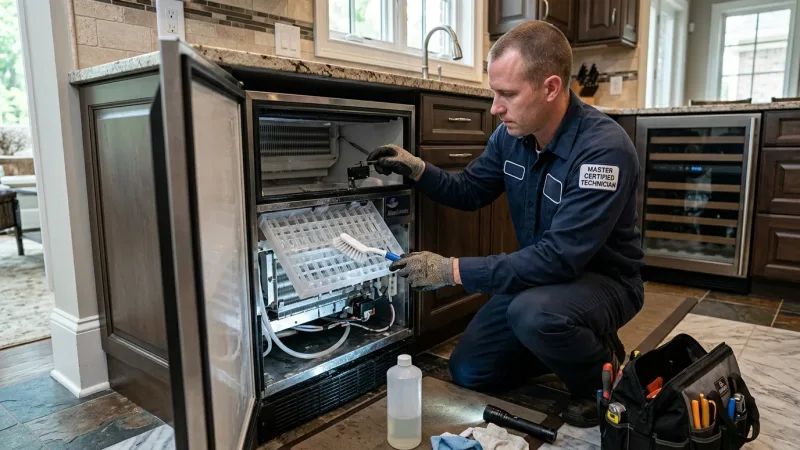
Technical Diagnostic Table of Contents
- Understanding Follett Chewblet Extrusion Architecture
- Acoustic and Mechanical Symptoms of Auger and Gearmotor Failure
- Visual Before & After Gearmotor and Bearing Restoration Showcase
- Root Engineering Causes of Follett Ice Machine Auger Squeal
- Safe Operator Diagnostic Protocols for Restaurant & Facility Managers
- High-Voltage and Refrigerant Hazards: When to Cease DIY Interventions
- Economic Decision Matrix: Component Rebuild vs. Ice Machine Replacement
- Interactive Follett Ice Dispenser Repair Cost Estimator
- Commercial Ice Machine Repair Cost Factors & Labor Dynamics
- Master Technician Multimeter Diagnostics & Ohms Telemetry
- Critical Follett Ice Machine Components Subject to Mechanical Stress
- Commercial Preventative Maintenance & De-Scaling Protocols
- Electrical Lockout, Food Hygiene & Mechanical Safety Protocols
- Frequently Asked Questions: Follett Ice Dispenser Drive Systems
- Commercial Refrigeration Service Network & Related Solutions
- Key Technical Takeaways for Commercial Facility Operators
- Emergency Commercial Dispatch & Schedule Service
Understanding Follett Chewblet Extrusion Architecture
Follett ice and water dispensers represent the gold standard of continuous ice-making across North Fulton’s hospitality, corporate, and healthcare sectors. Unlike batch-style cuber machines—such as Scotsman or Manitowoc units that cycle through distinct freeze and hot-gas harvest stages—Follett machines, including the Symphony Plus, 7 Series, 15 Series, and Horizon Elite product families, operate on a continuous mechanical extrusion cycle. Water enters a refrigerated vertical or horizontal evaporator cylinder, where an intense refrigerant boiling process coats the inner wall with a micro-thin layer of flash-frozen ice slush. Inside this cylinder, a precision-cast, surgical-grade stainless steel auger rotates continuously, scraping frozen ice crystals from the evaporator wall and conveying them upward toward an extrusion head.
At the apex of the evaporator, the slush is forced through a compression nozzle or extruding head where immense mechanical pressure squeezes out residual liquid water, transforming wet slush into dense, chewable cylindrical nuggets known as Chewblet ice. This continuous extrusion process demands immense mechanical torque, flawless lubrication, and surgical concentricity. The prime mover powering this process is a high-torque 115VAC Permanent Split Capacitor (PSC) drive gearmotor, operating through a precision multi-stage planetary or helical gear reduction train. When servicing equipment across Milton, GA commercial appliance repair routes, our master refrigeration technicians frequently explain that this continuous extrusion design has virtually zero tolerance for mechanical deflection.
To maintain perfect axial and radial alignment within the evaporator cylinder, the rotating auger is supported at its base by a heavy-duty food-grade brass journal bearing and at its top by a stainless steel thrust bearing assembly. In a healthy Follett machine, water acts as both the medium of ice creation and a hydrodynamic lubricant between the rotating auger journals and the brass bearing surface. When mineral scale accumulates, when the water supply diminishes, or when mechanical clearances degrade beyond microscopic thresholds, the hydrodynamic fluid film collapses. The resulting metal-on-metal friction triggers a piercing acoustic squeal that reverberates through the entire dispenser chassis. If your commercial facility encounters this symptom, prompt consultation with our commercial ice maker repair specialists is essential to prevent permanent evaporator ruin.
Acoustic and Mechanical Symptoms of Auger and Gearmotor Failure
A failing Follett commercial ice dispenser does not fail silently. Because continuous extrusion involves high rotational force against compressive ice resistance, mechanical and electrical breakdowns generate distinct acoustic signatures, visual indicators, and operational anomalies. Recognizing these early symptoms allows restaurant operators, hospital nutrition directors, and cafe managers in Milton to intervene before a minor bearing rebuild escalates into a complete evaporator assembly replacement.
- High-Pitch Resonant Acoustic Squeal: The defining symptom of bearing and auger distress is a continuous or rhythmic high-frequency screech, often resembling dry automotive brake pads or a screaming belt. This noise occurs almost exclusively when the compressor and drive gearmotor are actively turning, intensifying as the evaporator reaches full freezing temperature and extrusion pressure peaks.
- Violent Mechanical Shudder & Chassis Vibration: When the auger experiences mechanical binding or brass bearing slop, the rotational travel becomes erratic. Kitchen staff will observe the entire stainless steel dispenser cabinet vibrating violently, accompanied by a rhythmic low-frequency chattering or knocking sound from the upper evaporator housing.
- Grey Streaking or Metallic Particulates in Ice: Inspecting freshly dispensed Chewblet ice inside a clear beverage cup reveals tiny grey specks, metallic flakes, or a dark greasy residue. This is a critical food safety hazard indicating that the brass lower bearing or the stainless steel auger flights are undergoing active galling, shedding microscopic metal debris directly into the potable ice stream.
- Slushy, Soft, or Hollow Chewblet Production: When the gearmotor struggles against mechanical resistance or a weak 15μF run capacitor causes motor slip, the auger cannot maintain adequate compressive extrusion force. Instead of crisp, compacted Chewblet nuggets, the machine dispenses wet, slushy, waterlogged ice that rapidly melts in customer drinks.
- Intermittent Gearmotor Thermal Lockout: The gearmotor runs for 3 to 7 minutes with an aggressive squeal, then abruptly halts while the cabinet remains powered. After a 20-to-30-minute cooldown period, the internal bimetal thermal protector resets and the motor restarts, only to repeat the cycle. This indicates that excessive current draw (exceeding 3.8 to 4.5A) is tripping the motor’s thermal safety limit.
- Control Board Diagnostic Error LEDs: On Follett Symphony Plus and Horizon Elite series, the internal microprocessor control board features diagnostic diagnostic LEDs. A flashing red “Service” LED or a specific fault flash code (such as “Gearmotor Over-Current” or “Auger Stall”) will illuminate, shutting down the refrigeration contactor to prevent freezing the evaporator into a solid block of ice.
Allowing a commercial ice dispenser to operate while squealing causes irreversible damage. When an auger bearing wears beyond spec, the hardened stainless steel flight tips flex outward and carve deep spiral grooves into the inner copper-plated evaporator barrel. Once the evaporator wall is breached or thinned, pressurized refrigerant escapes into the potable water path, necessitating thousands of dollars in repairs. Calling our same-day commercial appliance repair dispatch team at the first sign of acoustic squealing preserves the structural integrity of your machine.
Visual Before & After Gearmotor and Bearing Restoration Showcase
Continuous commercial ice extrusion subjects internal rotating journals and precision bearings to severe cyclic loads, hard water minerals, and aggressive thermal gradients. Review this real-world restoration completed by our commercial field refrigeration division at a high-volume hospitality facility in Milton:
Before: Calcified Evaporator & Ovalized Brass Bearing
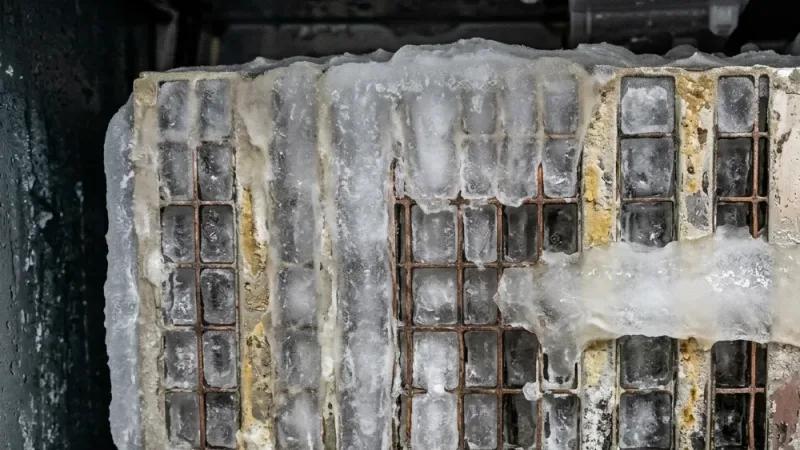
Field Diagnostic Finding: Heavy calcium carbonate scaling encrusting auger flights, lower brass journal bearing worn to 0.012-inch radial clearance (spec: 0.002–0.004″), failed ceramic mechanical seal weeping water into gearbox, and gearmotor drawing 4.3 Amps.
After: Restored OEM Gearmotor, Bearings & De-Scaled Cylinder
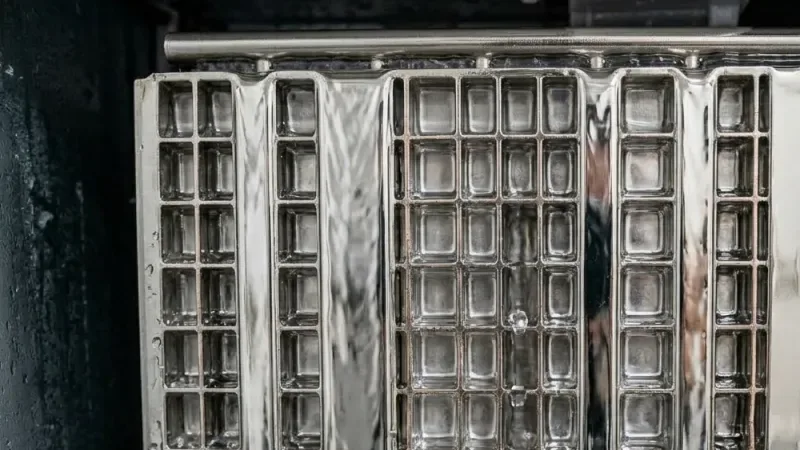
Post-Service Telemetry: Chemically de-scaled evaporator barrel, brand-new Follett OEM brass bearing and mechanical water seal kit installed, new 15μF run capacitor, auger radial play verified at 0.0025″, 115VAC current draw stable at 2.9A under full Chewblet compaction.
Root Engineering Causes of Follett Ice Machine Auger Squeal
Pinpointing the exact engineering cause behind an auger squeal on a Follett ice dispenser requires dissecting the intricate thermodynamic, hydraulic, and mechanical relationships within the continuous extrusion assembly. In our decades of servicing North Fulton commercial dining and medical facilities, our certified refrigeration technicians have isolated five primary root causes responsible for auger noise and gearmotor failure.
Mechanical Brass Bearing Wear and Radial Clearance Loss
The foundation of auger concentricity inside the evaporator is the lower brass journal bearing (often referred to as the water-end sleeve bushing). Follett precision-machines this component from a specialized lead-free, food-grade bronze/brass alloy engineered to maintain a strict factory radial clearance between 0.0020 and 0.0040 inches against the polished stainless steel auger shaft. Over millions of continuous revolutions, abrasive micro-particulates in municipal water combined with side-thrust from ice compaction gradually wear down the inner brass bore. Once radial clearance widens past 0.008 inches, the bearing loses its ability to hold the auger perfectly centered. Under high extrusion loads, the auger deflects laterally, causing the hardened stainless steel auger flights to make physical metal-on-metal contact with the evaporator barrel wall. This unlubricated contact generates an excruciating high-frequency squeal, rapidly carving irreparable spiral scoring into the cylinder wall.
Severe Mineral Limescale Calcification inside the Evaporator Barrel
Commercial kitchens in Milton and across North Fulton County draw water that contains dissolved calcium, magnesium, and silica minerals. As water freezes inside the Follett evaporator cylinder, pure water molecules crystallize into ice first, concentrating mineral salts along the freezing surface. Over months of continuous operation, this mineral precipitate bakes onto the stainless steel evaporator wall as hard calcium carbonate limescale. This scale creates a rough, sandpaper-like surface with extreme frictional resistance. As the auger rotates, its precision scraping edge drags violently across the mineral ridges rather than gliding over a smooth, microscopically thin water boundary layer. The resulting acoustic resonance manifests as a rhythmic, loud shrieking or chattering noise, while simultaneously increasing gearmotor torque loading by up to 60%.
Evaporator Water Sensor Conductivity Probe Fouling and Dry Extrusion
Continuous Chewblet extrusion requires an uninterrupted, hydrodynamically stable water reservoir. Follett ice dispensers monitor water levels using dual stainless steel conductivity sensor probes located in the float chamber or reservoir tank. The main control board applies a low-voltage sensing signal; when water bridges the probes, electrical conductivity (resistance < 5,000 ohms) signals the board that adequate water is present to support freezing. However, when hard water minerals coat the probe tips with an insulating layer of limescale, the electrical circuit fails to complete. The microprocessor erroneously assumes the reservoir is empty or, conversely, allows the compressor to continue running while water flow is restricted. When the evaporator runs dry, the auger attempts to extrude dry, super-cooled ice without liquid water lubrication—a condition known as “dry freeze-up.” Dry extrusion produces an immediate, deafening screech that can shear gear teeth or snap the auger drive shaft within minutes.
Degraded 15μF Motor Run Capacitor and Loss of Phase Shift
Follett continuous extrusion drive gearmotors are 115VAC Permanent Split Capacitor (PSC) single-phase motors. These motors rely upon an external 15μF ±5% run capacitor to create an electrical phase shift between the main run winding and the auxiliary start/run winding, generating the rotating magnetic field necessary for smooth, high-torque output. Operating inside hot dispenser cabinets where ambient temperatures often exceed 110°F causes the capacitor’s internal metallized polypropylene dielectric film to degrade over time. As capacitance drops below 14.25μF (frequently dropping to 8–11μF in failing units), the auxiliary winding phase angle collapses. The motor suffers a dramatic loss of rotational torque, begins cogging, draws excessive operational current (surging from normal 2.8–3.4A up to 4.2A+), and emits an aggressive electrical and mechanical harmonic groan that resonates throughout the auger assembly.
Internal Gearbox Lubricant Breakdown and Gear Tooth Spalling
Connecting the electric motor to the auger is a sealed planetary or multi-stage reduction gearbox designed to reduce motor speed (typically 1,725 RPM) down to roughly 9 to 11 RPM at the auger shaft while multiplying torque by a factor of over 150:1. The gearbox is separated from the water-filled evaporator cylinder by a precision ceramic/carbon mechanical face seal. If scale or worn bearings allow water to weep past this seal, moisture penetrates the gearbox cavity. Water emulsifies the specialized synthetic high-pressure gear grease, converting it into a milky, abrasive sludge. Deprived of boundary lubrication, the hardened steel and bronze gears experience metal-to-metal spalling, pitting, and tooth micro-fractures. The resulting acoustic signature is a deep, rhythmic mechanical whine or harsh metallic grinding that escalates under ice compression loads.
Safe Operator Diagnostic Protocols for Restaurant & Facility Managers
When a Follett ice dispenser begins squealing or shuddering during busy meal service, kitchen supervisors in Milton can perform several non-invasive, safe operational checks before requesting commercial emergency dispatch. These diagnostic steps help isolate whether the issue stems from external water supply starvation or internal mechanical failure without exposing staff to electrical or mechanical hazards.
Operator Step 1: Immediate Safety Shutdown & Visual Ice Inspection
As soon as an aggressive squeal or screech is detected, immediately switch the ice machine’s power toggle switch (located behind the front service panel or on the lower chassis) to the OFF or CLEAN position. Do not allow the unit to run while squealing; every minute of unlubricated rotation risks irreparable evaporator gouging. Collect a clean glass of ice from the dispenser chute and inspect it under bright light. If you notice grey discoloration, metallic specks, or brass flakes, immediately condemn the ice bin, tape the dispense levers shut, and discard all ice to prevent consumer ingestion of metallic wear debris.
Operator Step 2: Incoming Water Supply & Filtration Pressure Audit
Verify that the primary water isolation valve supplying the Follett dispenser is fully open. Inspect the commercial water filtration manifold (such as Everpure or 3M commercial filter systems) typically installed beneath or behind the dispenser. Check the differential pressure gauges on the filter head. If incoming dynamic water pressure drops below 20 PSI when the dispenser calls for water, the filter cartridges are severely fouled. Water starvation starves the evaporator cylinder of liquid water, forcing the auger into a dry freeze-up squeal. If pressure is below 20 PSI, replacing clogged filter cartridges can often restore normal hydrodynamic lubrication.
Operator Step 3: Water Reservoir Float Chamber Level Inspection
Remove the front decorative fascia panel to observe the translucent water reservoir tank. The water level in the reservoir should stand roughly 1 to 2 inches below the overflow standpipe when the machine is idle. If the reservoir is completely dry despite water pressure at the inlet, check whether the mechanical float valve or internal water solenoid inlet strainer is plugged with pipe sediment or rust flakes. If the reservoir is full of cloudy, scale-laden water, mineral buildup is the likely cause of auger drag.
Operator Step 4: Dispenser Bin Sensor & Ice Chute Shuttle Switch Audit
Check the ice transport tube and compression nozzle connecting the evaporator to the storage bin. In Follett Symphony Plus units, a mechanical shuttle sensor or optical bin sensor monitors ice flow through the tube. If ice bridges or jams in the transport tube because of poor bin agitation, the auger continues pushing ice against an immovable blockage, creating immense backpressure that forces the gearmotor into acoustic groaning. Clear any compacted ice clumps from the discharge head using warm potable water (never metal ice picks), and check whether the bin agitator paddle spins freely by hand.
High-Voltage and Refrigerant Hazards: When to Cease DIY Interventions
Commercial ice dispensers are complex thermodynamic machines that combine 115V or 208/230V electrical systems, high-torque planetary mechanical gearing, and hermetically sealed R404A or R449A refrigeration circuits operating at pressures exceeding 350 PSI. While checking water filters and cleaning external bins is standard kitchen protocol, unbolting mechanical assemblies or opening electrical enclosures introduces life-threatening safety risks and regulatory violations. Commercial operators must stop internal troubleshooting immediately and call certified professionals under the following conditions:
- 115VAC Line Voltage & Charged Run Capacitor Hazards: Inside the dispenser side service compartment, exposed terminal blocks, motor relays, and the 15μF run capacitor carry lethal electrical charges. Even when the front switch is turned off, line power remains active on the main contactor. Furthermore, a charged 15μF capacitor can discharge several hundred volts into fingers or uninsulated screwdrivers, causing severe burns and cardiac shock.
- Sealed Planetary Gearbox Teardown Hazards: Attempting to unbolt the gearmotor reduction housing on a kitchen work table risks releasing high-pressure synthetic lubricants and damaging internal planetary gear tooth alignment. Without specialized hydraulic bearing pullers and press tooling, forcing gear assemblies invariably fractures the aluminum housing or strips the output shaft splines.
- Refrigerant Copper Tubing Proximity & Rupture Risk: The evaporator cylinder is surrounded by coiled copper refrigeration tubing insulated with thick polyurethane foam. Attempting to pry out a seized auger with pry bars or hammer on the top thrust head can kink or puncture the copper tubing. Breaching the sealed system releases pressurized refrigerant gas, creating instant frostbite hazards, EPA Clean Air Act violations, and turning a $450 bearing repair into a $3,500 total system loss.
- FDA Food Code & NSF Sanitation Compliance: Ice is legally classified as food under FDA Food Code 21 CFR Part 110. Disassembling evaporator food-contact surfaces using non-food-grade lubricants, dirty workshop tools, or improper sealants contaminates the potable water system, exposing commercial facilities to health department shutdowns and severe legal liability.
Protect your staff, customers, and expensive capital equipment by relying on our certified emergency appliance repair specialists for safe, OSHA-compliant technical service across Milton.
Economic Decision Matrix: Component Rebuild vs. Ice Machine Replacement
Commercial Follett ice dispensers represent a substantial capital investment, with new countertop Symphony Plus or 7 Series units retailing between $5,500 and $11,500, and larger Horizon Elite high-capacity storage bin combinations exceeding $16,000 fully installed. When faced with a severe squeal or gearmotor fault, business owners and facility managers in Milton must weigh component rebuilding against total machine replacement. Applying the commercial 50% Rule—which recommends repairing any unit if the repair cost is under 50% of the cost of replacement and the chassis has remaining useful lifespan—reveals that component overhauls deliver exceptional return on investment.
| Diagnostic Condition | Recommended Service Action | Estimated Investment | Operational Lifespan Added | Strategic ROI Assessment |
|---|---|---|---|---|
| Worn Lower Brass Bearing & Mechanical Seal Kit | Evaporator Teardown & OEM Bearing Kit Rebuild | $380 – $620 | 3 to 5 Years | Outstanding ROI. Restores perfect 0.0025″ clearance and eliminates squeal at ~5% of replacement machine cost. |
| Failed 15μF Run Capacitor & Calcified Water Sensor | Capacitor Replacement & Acid Bath De-Scaling | $240 – $420 | 2 to 4 Years | Immediate payback. Restores full motor phase shift and eliminates dry extrusion without dismantling evaporator. |
| Stripped Gearbox or Burnt PSC Gearmotor Assembly | Install Factory OEM Follett Gearmotor Assembly | $680 – $1,150 | 5 to 8 Years | High financial return. Restores industrial continuous-extrusion torque with full 90-day commercial warranty. |
| Gouged Evaporator Barrel, Ruptured Refrigerant Coil, 12+ Yrs Old | Complete Ice Dispenser Unit Replacement | $5,500 – $11,500+ | 10+ Years (New Unit) | Advised only when the cylinder wall is breached or multiple major components (compressor + evaporator) have failed concurrently. |
Commercial Ice Machine Repair Cost Factors & Labor Dynamics
Commercial food-service and healthcare facility operators budgeting for Follett dispenser maintenance require transparent insight into what drives service estimates. Commercial ice machine repair demands specialized master technician certifications, precision micrometer measurement tools, food-grade chemical de-scaling capabilities, and factory-authorized OEM replacement components. Several key factors influence the total repair investment:
- Genuine Follett OEM Components vs. Uncertified Aftermarket Parts: Follett brass bearings and mechanical seals are engineered to withstand continuous rotational friction under strict food contact standards. Installing generic bronze bushings or universal seals leads to rapid water leaks into the gearbox, premature bearing galling, and catastrophic evaporator gouging. Factory OEM parts carry a higher component cost but guarantee multi-year operational reliability.
- Countertop Compact Accessibility vs. Remote Bin Installations: Servicing an under-counter 7 Series or a crowded countertop Symphony Plus unit requires meticulous disassembly of compact sheet metal cowlings, electrical harnesses, and water tubing. In contrast, freestanding or remote Horizon Elite installations allow broader mechanical access but often involve long ice transport tubing runs requiring specialized clearing.
- Emergency Commercial Priority Dispatch: A squealing ice dispenser in a hospital trauma unit or a bustling Milton sports bar during Friday peak hours requires instant emergency dispatch. After-hours, weekend, and holiday emergency dispatches carry premium commercial labor rates compared to pre-scheduled weekday maintenance visits.
- Extent of Collateral Evaporator Wear: If the squealing issue was caught early, replacing only the lower brass bearing, mechanical seal, and run capacitor resolves the failure economically. If the unit was allowed to run for weeks while screeching, the technician must evaluate whether the stainless steel auger shaft requires precision machine shop polishing or complete replacement alongside the gearmotor.
For an exhaustive breakdown of commercial refrigeration labor rates and preventative maintenance plans across North Fulton County, consult our comprehensive commercial appliance repair cost guide.
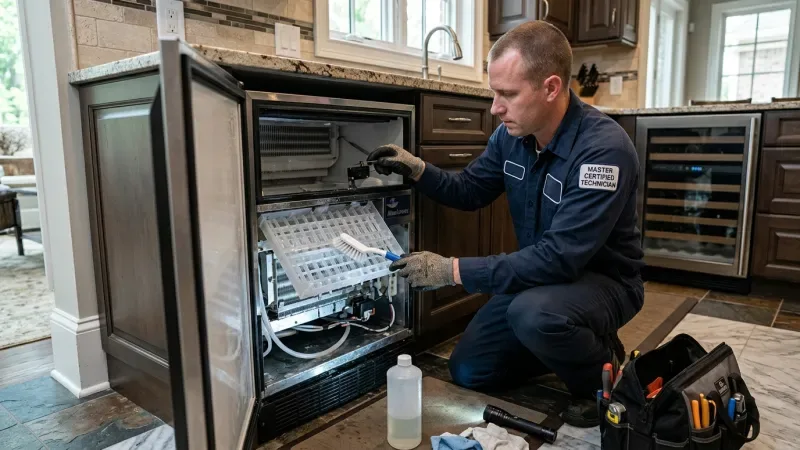
Master Technician Multimeter Diagnostics & Ohms Telemetry
Commercial refrigeration professionals do not guess or perform trial-and-error part replacements. Our technicians utilize calibrated True-RMS digital clamp multimeters (Fluke 376 FC or 87V) and precision mechanical dial bore gauges to capture concrete electrical and mechanical telemetry. By comparing real-time operational data against Follett factory engineering specifications, we identify the exact root failure node within minutes.
| Component / Test Node | Measurement Metric | OEM Factory Specification | Failure Threshold / Diagnostic Reading | Diagnostic Interpretation |
|---|---|---|---|---|
| Auger Drive Gearmotor Run Current | True-RMS AC Amperage (Clamp) | 2.80 – 3.40 Amps AC @ 115VAC | > 3.85 Amps (Thermal trip > 4.5A) | Severe mechanical binding in evaporator, calcified barrel, worn brass bearing, or bad capacitor. |
| Gearmotor Run Capacitor | Capacitance (μF) | 15.0 μF ±5% (14.25 – 15.75 μF) | < 14.0 μF or 0.0 μF (Open) | Loss of phase-shift angle causing weak starting/running torque, motor groaning, and thermal overload. |
| Evaporator Water Sensor Probes | Electrical Resistance / Continuity | Submerged: < 5.0 kΩ / Dry: > 500 kΩ | > 50 kΩ when submerged in water | Probe tip coated in insulating calcium scale; board misinterprets reservoir level, causing dry extrusion squeal. |
| Lower Brass Journal Bearing | Radial Bore Clearance (Inches) | 0.0020 – 0.0040 Inches (Dial Gauge) | > 0.0080 Inches (Ovalized Bore) | Bearing bore elongated; auger flight tips flex radially and grind against inner evaporator wall. |
| Gearmotor Main Stator Winding | DC Resistance (Ω) | 4.8 – 7.2 Ω (Terminal L to N) | Infinite (∞ Open) or < 1.5 Ω (Short) | Thermal burnout of motor copper windings; locked rotor or complete refusal to rotate. |
| Gearmotor Auxiliary / Start Winding | DC Resistance (Ω) | 8.5 – 12.0 Ω (Capacitor Leads) | Infinite (∞ Open Circuit) | Auxiliary winding failure prevents motor starting; hums loudly without turning auger. |
| Ice Transport Shuttle Sensor Switch | Switch Continuity (Ohms) | Actuated: 0.1 Ω / Released: ∞ Ω | Stuck closed or open regardless of ice | Defective microswitch fails to halt auger during bin freeze-up, overloading drive train. |
tr[i].style.display = match ? “” : “none”;
Critical Follett Ice Machine Components Subject to Mechanical Stress
Maintaining seamless Chewblet ice extrusion requires complete mechanical cohesion across multiple interconnected sub-assemblies. When our certified commercial technicians overhaul a squealing Follett dispenser, we inspect, measure, and replace critical wear items to restore factory tolerances:
- Stainless Steel Auger Assembly: Precision-cast from hardened 304 or 316 stainless steel with specialized flight geometry. It carries ice crystals upward while bearing both torsional twisting forces and axial thrust loads. If auger journals exhibit circumferential grooves deeper than 0.003 inches, the auger must be polished or replaced.
- Lower Brass Journal Bearing (Water-End Bushing): Positioned at the base of the evaporator cylinder beneath the mechanical seal. Manufactured from high-density lead-free brass to provide rigid radial stability for the rotating auger. Factory specification requires 0.0020 to 0.0040 inches clearance.
- Upper Thrust Bearing & Compression Ring Assembly: Located at the top of the evaporator cylinder inside the compression nozzle. Absorbs the tremendous downward thrust reaction generated as ice is compacted and extruded through the extrusion head orifices.
- Ceramic & Carbon Mechanical Water Seal: A spring-loaded dual-face rotating seal that prevents pressurized water in the evaporator cylinder from leaking down into the gearmotor reduction housing. A weeping mechanical seal rapidly contaminates gearbox lubricants, destroying gear teeth.
- 115VAC Permanent Split Capacitor (PSC) Drive Gearmotor: The industrial heart of the dispenser, delivering roughly 1/3 HP to 1/2 HP through internal multi-stage gear reduction. Equipped with an internal automatic-reset bimetal thermal protector calibrated to open if internal stator temperature exceeds 135°C.
- 15μF ±5% Motor Run Capacitor: Supplies continuous phase displacement to the gearmotor auxiliary winding. Encased in a rugged aluminum or plastic housing and mounted adjacent to the compressor compartment.
- Dual-Probe Evaporator Water Level Sensor: Stainless steel conductivity sensing pins mounted in the float reservoir. Communicates real-time water bridge conductivity to the micro-controller board to prevent dry freeze-up conditions.
- Extrusion Nozzle & Ice Transport Shuttle Switch: The stationary orifice head that shapes Chewblet nuggets, equipped with a spring-loaded mechanical shuttle flapper and magnetic reed switch that interrupts auger operation if ice backs up in the transport tube.
Commercial Preventative Maintenance & De-Scaling Protocols
The overwhelming majority of Follett auger squeals, bearing failures, and gearmotor burnouts in Milton stem directly from deferred preventative maintenance and mineral scale accumulation. Establishing a rigorous, multi-tiered preventative maintenance schedule ensures quiet continuous extrusion, protects expensive components, and guarantees compliance with local health safety standards:
Daily Protocol: Dispenser Chute & Splash Pan Sanitization
Wipe down the external ice dispense chute, water nozzle, and drain basin daily using an EPA-approved foodservice sanitizer solution. Clear the drain basin grating of any accumulated ice melt or airborne debris. Inspect dispensed Chewblet ice for clarity and verify that the dispense wheel or paddle operates smoothly without mechanical resistance.
Monthly Protocol: Water Filtration Pressure & Reservoir Flush
Inspect the dynamic water pressure gauges on the incoming commercial filtration system. If pressure drop exceeds 15 PSI under flow, immediately replace the primary sediment and carbon block cartridges. Open the manual reservoir drain tube to purge accumulated mineral silt from the float tank. Inspect the water sensor probes for early calcium crusting and wipe them clean with a scotch-brite pad.
Semi-Annual Protocol: Chemical De-Scaling with Follett SafeCLEAN
Every six months (or every 90 days in heavy hard-water zones across Milton), execute a comprehensive chemical de-scaling cycle. Isolate incoming water, switch the machine to CLEAN mode, and introduce factory-authorized Follett SafeCLEAN or nickel-safe citric acid de-scaler into the evaporator reservoir. Circulate the solution for 30 minutes to dissolve mineral scale encrusting the evaporator cylinder and auger flights before flushing thoroughly with fresh potable water.
Annual Protocol: Master Technician Mechanical & Telemetry Audit
Have a certified commercial technician remove the evaporator top assembly to physically measure lower brass bearing radial clearance using dial bore gauges. Test the 15μF run capacitor under load, measure running 115VAC motor amperage, inspect mechanical water seal weeping ports, and verify that the shuttle safety switch interrupts power within 1.5 seconds of transport tube blockage.
Electrical Lockout, Food Hygiene & Mechanical Safety Protocols
Commercial ice machine maintenance takes place at the critical intersection of high-voltage electrical power, high-pressure refrigeration gases, powerful mechanical gearing, and potable food safety. Strict adherence to safety protocols protects employees, service personnel, and consumers:
- OSHA Lockout / Tagout (LOTO) Compliance: Prior to opening mechanical covers or electrical service access panels, disconnect primary electrical power at the dedicated wall circuit breaker or equipment disconnect switch. Apply a physical lockout padlock and danger tag. Never rely on the front toggle switch or electronic display to de-energize internal components.
- Capacitor Stored Energy Discharge: Always discharge the 15μF motor run capacitor before touching electrical terminals. Use a 20,000-ohm, 5-watt wirewound ceramic resistor bridged across the capacitor terminals for 5 seconds, followed by DC voltage multimeter verification to confirm zero stored electrical potential.
- Auger Flight Mechanical Pinch Hazards: Never insert fingers, tools, or scrapers into the ice transport tube, compression nozzle, or evaporator cylinder while the machine is energized. The multi-stage planetary gearbox produces over 150 foot-pounds of rotational torque; rotating auger flights will instantly crush or amputate fingers.
- NSF Food-Grade Lubricant Mandate: Any lubricant applied to mechanical seals, O-rings, or drive couplings must carry NSF H1 certification for incidental food contact. Using standard petroleum greases, WD-40, or industrial machine oils contaminates the ice supply and violates federal food safety regulations.
Frequently Asked Questions: Follett Ice Dispenser Drive Systems
Browse answers to the most common technical questions raised by Milton restaurant owners, executive chefs, and facility managers regarding Follett commercial ice dispensers:
Why does my Follett ice dispenser make a loud squealing or screeching noise?
A loud squeal or screech indicates that the rotating stainless steel auger is making unlubricated contact inside the evaporator assembly. This occurs when the lower brass journal bearing wears beyond 0.008 inches radial clearance (permitting auger deflection against the cylinder wall), when heavy limescale buildup coats the evaporator cylinder, or when a dry extrusion event occurs because mineral scale has fouled the water level sensor probes.
What is the normal operating current draw for a Follett 115VAC auger gearmotor?
Under normal operational load during active Chewblet ice extrusion, a healthy Follett 115VAC drive gearmotor draws between 2.80 and 3.40 Amps AC. Current readings exceeding 3.85 Amps indicate severe mechanical drag, bearing failure, or capacitor degradation, while currents above 4.5 Amps will trip the motor’s internal bimetal thermal overload protector.
Can I keep running my Follett ice machine while it is squealing?
No. Operating a Follett dispenser while it is squealing will rapidly cause catastrophic, irreparable damage. The deflected auger flights will gouge deep grooves into the inner copper evaporator barrel wall, shedding toxic brass and metal shavings into your potable ice stream and risking a complete refrigerant breach that destroys the machine.
What role does the 15μF run capacitor play in gearmotor operation?
The 15μF ±5% run capacitor creates an essential electrical phase displacement between the PSC motor’s main and auxiliary stator windings. This phase shift produces the rotating magnetic field necessary for high extrusion torque. If capacitance degrades below 14.25μF, the motor loses torque, draws excessive current, groans acoustically, and stalls under ice compaction pressure.
What is the factory radial clearance specification for Follett brass bearings?
Follett factory engineering specifications dictate a tight radial clearance between 0.0020 and 0.0040 inches between the lower brass journal bearing and the polished stainless steel auger shaft. Any clearance exceeding 0.0080 inches represents a failed bearing that must be replaced immediately to prevent auger-to-cylinder wall collision.
How does hard water limescale cause auger squealing?
Dissolved calcium and magnesium minerals precipitate onto the cold evaporator wall as hard mineral scale. This converts the normally smooth cylindrical surface into an abrasive, sandpaper-like texture. As the auger rotates, its scraping edges vibrate violently against the mineral ridges, creating intense acoustic screeching and increasing gearmotor load by over 50%.
Why are grey or metallic specks appearing in my Chewblet ice?
Grey or metallic specks are metal shavings shed directly from the brass lower journal bearing or the stainless steel auger flights grinding against the evaporator wall. This indicates active bearing failure and severe galling. If observed, condemn the ice bin immediately, discard all ice, and schedule professional service before resuming operation.
How does the evaporator water sensor probe trigger dry extrusion?
The control board monitors electrical resistance between two stainless steel water probe pins. Submerged probes show low resistance ( 50 kΩ), causing the board to miscalculate reservoir levels or run the freezing cycle with inadequate water. Extruding dry, sub-zero ice without water lubrication generates a deafening screech.
Can a worn Follett brass bearing be replaced without replacing the entire evaporator?
Yes. If the issue is diagnosed early before the auger flights score the inner cylinder wall, our technicians can disassemble the evaporator, press out the failed brass bearing, and install a brand-new factory OEM Follett bearing, O-ring, and mechanical water seal kit, saving thousands over a full evaporator replacement.
How much does it cost to fix a squealing Follett ice dispenser in Milton, GA?
A standard bearing rebuild, mechanical seal replacement, chemical de-scaling, and capacitor renewal typically ranges from $380 to $620 including parts and commercial labor. If the drive gearmotor assembly has stripped internal planetary gears or suffered thermal burnout, replacement costs range from $680 to $1,150.
How quickly can a technician respond to an emergency ice machine failure in Milton?
Our priority commercial dispatch provides fast response times for active restaurants, medical offices, and country clubs in Milton, arriving on-site within 45 to 90 minutes. Our fully stocked service vehicles carry genuine Follett OEM bearings, capacitors, seals, and gearmotors for same-day resolution.
What chemical de-scaler is safe for Follett continuous ice evaporators?
Only use factory-authorized Follett SafeCLEAN or NSF-approved nickel-safe citric acid de-scaling solutions. Never use harsh hydrochloric or muriatic acids, as they attack the copper plating and brass bearing surfaces inside the evaporator, destroying seals and voiding manufacturer warranties.
How does the shuttle sensor switch protect the auger gearmotor from damage?
The shuttle switch is located at the evaporator discharge head. If ice backs up in the transport tube because the bin is overflowing, the compacted ice pushes against a spring-loaded shuttle plate. This actuates a microswitch that instantly cuts power to the gearmotor, preventing the auger from continuing to drive against an immovable ice plug.
How frequently should commercial Follett ice dispensers be de-scaled in Milton?
Due to the mineral hardness in North Fulton County tap water, Follett dispensers should undergo a thorough chemical de-scaling and sanitization cycle at least every 90 to 180 days. High-volume dining establishments or coffee shops running high ice volumes benefit from quarterly maintenance cycles.
Why is my Follett machine producing wet, slushy Chewblet ice instead of firm nuggets?
Wet or slushy ice occurs when the extrusion pressure inside the compression nozzle is compromised. Common causes include a degraded 15μF run capacitor reducing gearmotor torque, a worn upper thrust bearing allowing the auger to back away from the compression ring, or low refrigerant charge causing inadequate freezing temperatures.
What warranty coverage is included with Follett ice machine repairs?
Every commercial Follett repair executed by Appliance Repair Alpharetta includes our comprehensive 90-day parts and labor commercial warranty. If any installed factory OEM component fails or malfunctions within the warranty window, warranty service is dispatched immediately at zero additional expense.
Do you service other commercial nugget and flaker ice machine brands in Milton?
Yes. In addition to Follett Symphony Plus, 7 Series, 15 Series, and Horizon Elite units, our certified commercial technicians service Scotsman, Hoshizaki, Manitowoc, Ice-O-Matic, and Koolaire commercial ice machines throughout Milton, Alpharetta, Roswell, and Johns Creek.
Commercial Refrigeration Service Network & Related Solutions
Appliance Repair Alpharetta provides comprehensive commercial kitchen and beverage equipment maintenance across North Fulton County. Explore our specialized commercial refrigeration divisions and related diagnostic guides:
Commercial Ice & Cold Equipment
Emergency diagnostics, auger bearing overhauls, and factory OEM part replacements for restaurant ice makers.
Explore our specialized commercial refrigeration repair solutions across North Fulton.
Commercial Freezers & Coolers
Certified EPA Universal technicians servicing reach-in coolers, walk-in blast freezers, and prep tables.
Reach-In Commercial Freezer Repair •
Commercial Refrigerator Service •
Chewblet & Cube Ice Maker Repair
Local Service Corridors
Dedicated mobile commercial repair units stationed across North Fulton municipalities for sub-90-minute arrival.
Milton, GA Service •
Alpharetta, GA Service •
Roswell, GA Service •
Johns Creek, GA Service
Diagnostic Technical Guides
Explore in-depth engineering walkthroughs for common commercial food-service equipment failures and sensor errors.
Scotsman Bin Sensor Fault •
Walk-In Cooler High Temp Alarm •
Commercial Cost Guide
Our technicians also provide comprehensive culinary equipment support for restaurant dishwashing lines via our dedicated commercial dishwasher repair team, commercial kitchen baking equipment through our commercial oven range repair technicians, and laundry facilities through our washing machine repair and dryer repair specialists.
Key Technical Takeaways for Commercial Facility Operators
- Squealing Demands Immediate Power Shutdown: Continuing to operate a squealing Follett ice machine will score the stainless evaporator barrel wall, causing irreparable damage and releasing toxic metal shavings into potable ice.
- Brass Bearing Clearances Must Stay Below 0.004 Inches: Factory OEM lower brass journal bearing clearance is 0.0020 to 0.0040 inches; wear exceeding 0.008 inches causes auger deflection and cylinder wall collision.
- 115VAC Motor Current Draw Isolates Drag vs. Electrical Fault: Normal run current under load is 2.80 to 3.40 Amps AC; readings above 3.85 Amps signal heavy mechanical binding, scale buildup, or thermal overload trips.
- The 15μF Run Capacitor Directly Governs Extrusion Torque: Capacitance degradation below 14.25μF causes loss of motor phase shift, resulting in low torque, motor groaning, and slushy Chewblet production.
- Evaporator Water Probes Require Periodic De-Scaling: Mineral buildup on conductivity probe pins creates false dry-reservoir readings, triggering catastrophic dry extrusion freeze-ups.
- Only Use NSF-Certified Nickel-Safe Cleaners: Harsh muriatic or hydrochloric acids corrode internal copper plating and brass bearings; only use Follett SafeCLEAN or approved citric solutions.
- Fast Priority Commercial Dispatch Is Accessible: Appliance Repair Alpharetta provides same-day emergency dispatch throughout Milton commercial districts with a 90-day parts and labor warranty.
Emergency Commercial Dispatch & Schedule Service
Priority Commercial Ice Equipment Service • Milton & North Fulton
Eliminate Follett Ice Dispenser Squeals & Restore Smooth Production Today
Do not allow an auger squeal, failing brass bearing, or overloaded gearmotor to ruin your ice supply or destroy an expensive evaporator barrel. Our factory-trained master commercial technicians arrive equipped with genuine Follett OEM bearings, capacitors, and seals to restore quiet, high-volume Chewblet production immediately.
Serving Milton, Crabapple Market, Alpharetta, Roswell, Johns Creek • Certified EPA Universal & Commercial Refrigeration Specialists • 90-Day Comprehensive Warranty