
When a commercial Hatco heated holding cabinet begins experiencing erratic temperature fluctuations along the bustling Medlock Bridge Road culinary corridor in Johns Creek, kitchen operations face immediate health inspection violations and compromised food quality. Stagnant air stratification, failing shaded-pole convection blower motors, or drifting 3000W heating elements disrupt steady thermal equilibrium across interior food pans. Our factory-trained master technicians provide same-day commercial diagnostics, True-RMS multimeter telemetry, and OEM hardware restoration across Johns Creek and North Fulton County commercial kitchens. Call (770) 796-7742 for rapid emergency foodservice dispatch backed by comprehensive parts and labor warranty protection.
Quick Answer: Why Does a Hatco Holding Cabinet Temperature Fluctuate?
Temperature fluctuations in Hatco heated holding cabinets are predominantly caused by an airflow convection failure triggered by a failing shaded-pole blower motor or compromised 3000W heating element circuitry. When the shaded-pole convection blower motor develops bearing drag or winding insulation breakdown (shifting outside its normal 22–28 Ω baseline), static air pressure inside the cabinet collapses. This causes severe thermal stratification where top pans overheat while bottom pans fall dangerously below Georgia Department of Public Health holding thresholds (<135°F). Secondary causes include drifting solid-state thermistor probes (10kΩ NTC sensors), degraded mercury or solid-state relays, and calcified air ducts obstructing laminar circulation.
Listen to 60-Second Diagnostic Summary
Narrated by Jason J. (Master Certified Commercial Foodservice Specialist)
Check Same-Day Commercial Tech Availability in Johns Creek & North Fulton
Recently Serviced on Medlock Bridge Road, Johns Creek, GA
Hatco Flav-R-Hold Holding Cabinet • Shaded-Pole Convection Blower Motor Replacement • Verified 5.0 ★★★★★
Verified Field Service: Medlock Bridge Rd & Johns Creek Tech Corridor
Field Case Study: Hatco Flav-R-Savor Holding Cabinet Severe Thermal Hunting Repair
Upscale Bistro, Medlock Bridge Rd Corridor, Johns Creek GA 30097
Chamber temp cycling 115°F to 195°F, bottom trays cold, blower humming intermittently
Blower motor winding: 8.4 Ω (Shorted turns / nominal 24.5 Ω), pulling 2.4A on 115V line
Installed OEM Hatco shaded-pole convection blower assembly & high-temp silicone wiring harness
Field Outcome: Master technician verified laminar convection airflow throughout all six holding tiers. Digital datalogger confirmed temperature stability locked at 165°F (±2°F variance) across a 4-hour commercial test run. 100% compliant with Fulton County Environmental Health food safety standards.
Technical Diagnostic & Field Restoration Index
- Commercial Architecture & Thermodynamic Principles in Hatco Cabinets
- Identifying Breakdown Symptoms & Thermal Stratification Warnings
- Visual Field Restoration Showcase: Before vs. After
- Root Mechanical & Electrical Failure Causes in Convection Warmers
- Safe Kitchen Staff Verification & Inspection Protocols
- Critical Safety Limits: When to Halt Kitchen Staff Intervention
- Economic Decision Matrix: Commercial Blower Repair vs. Unit Replacement
- Instant Commercial Hatco Repair Cost Estimator
- Regional North Fulton Commercial Foodservice Repair Cost Variables
- True-RMS Multimeter Telemetry & Component Ohms Lookup Protocols
- Essential OEM Replacement Hardware Catalog for Hatco Equipment
- Commercial Foodservice Preventative Maintenance & Airflow Care
- OSHA & Fulton County Commercial Health Code Regulatory Standards
- Frequently Asked Technical Engineering Questions
- Commercial Service Corridors & Regional Support Across North Fulton
- Executive Technical Takeaways for Foodservice Managers
Commercial Architecture & Thermodynamic Principles in Hatco Cabinets
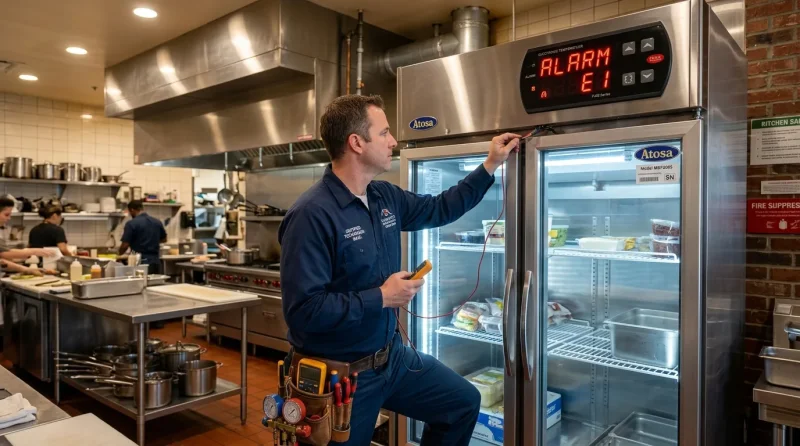
Hatco heated holding cabinets represent the gold standard of thermal food preservation across high-volume commercial kitchens, catering halls, and quick-service operations throughout Georgia. Whether installed in busy restaurant hubs along the Medlock Bridge Road corridor or institutional dining facilities in the Johns Creek Tech Corridor, these specialized appliances rely on precise thermodynamic equilibrium. Unlike simple domestic ovens that radiate heat from passive static coils, commercial holding equipment depends entirely on active laminar convective air circulation to prevent moisture loss, preserve crust integrity, and inhibit bacterial colonization within the critical danger zone (40°F to 135°F).
At the core of every Hatco Flav-R-Savor and Flav-R-Hold cabinet is a closed-loop thermal propulsion network. Ambient air is drawn into an internal plenum chamber by a continuous-duty shaded-pole convection blower motor operating on standard 115 VAC single-phase power. This pressurized airstream is driven across a heavy-duty, coiled Incoloy 3000W electric heating rod. As the air passes over the sheath of the calrod element, it absorbs thermal energy through rapid conductive heat transfer before being discharged through precision-punched side-wall duct louvers. In modern commercial operations, failure of this convection current instantly compromises temperature uniformity, requiring prompt commercial appliance repair to protect thousands of dollars in stored product.
The physics governing this heating cabinet relies on the avoidance of thermal stratification. Naturally, heated air expands, becomes buoyant, and rises toward the top of any enclosed volume, while colder, denser air sinks to the cabinet floor. Without the continuous mechanical displacement generated by the shaded-pole convection blower, a static temperature gradient exceeding 45°F rapidly forms between the top and bottom pan slides. Food items placed on upper tiers scorch and dry out as temperatures spike past 190°F, while poultry, beef, and prepared sides held on lower shelves plunge below 130°F, triggering severe public health infractions during routine Fulton County environmental inspections.
Maintaining active convective velocity is therefore not merely a matter of food quality, but an absolute regulatory mandate under local food safety codes. When mechanical or electrical degradation strikes the blower motor or solid-state control loop, understanding the underlying electromechanical engineering is crucial for restaurant managers seeking same-day appliance repair to resume kitchen workflow without costly food spoilage.
Identifying Breakdown Symptoms & Thermal Stratification Warnings
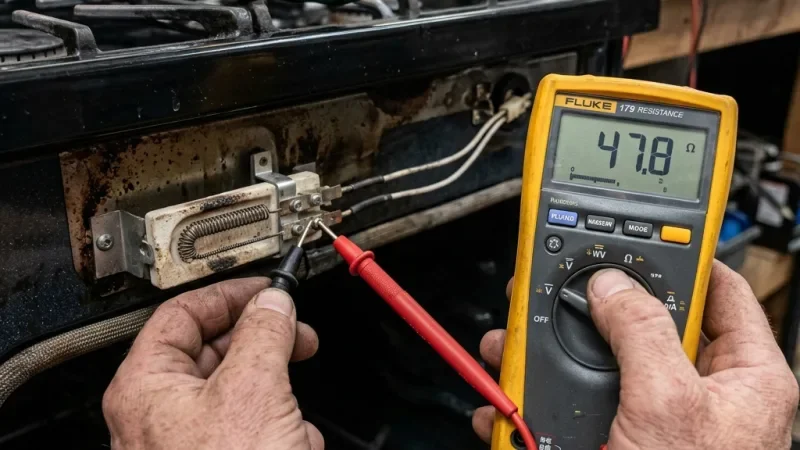
Early detection of holding cabinet degradation prevents catastrophic mid-shift breakdowns during peak dinner services along State Bridge Road and Medlock Bridge Road. Kitchen managers and culinary staff should monitor subtle operational indicators before the internal cabinet temperature drops completely. The most prevalent symptom of blower motor distress is audible acoustic change: a healthy Hatco cabinet emits a quiet, aerodynamic hum, whereas a failing shaded-pole motor with dried sintered bronze sleeve bearings produces a high-pitched metallic squeal, deep vibrational rumbling, or rhythmic chattering as rotor eccentricity develops.
A second critical warning is wild temperature hunting observed on digital temperature displays or analog door thermometers. If the temperature readout swings between 120°F and 185°F over a 30-minute interval without doors being opened, the internal thermostatic control loop is unable to maintain equilibrium. This occurs when the convection blower motor suffers intermittent winding cutouts due to internal thermal overload protectors opening under excessive heat, or when solid-state relays chatter rapidly due to coil degradation. When this occurs, kitchen teams often seek emergency diagnostic assistance from our emergency appliance repair team.
Thermal pan variance is a physical symptom directly detectable by kitchen line cooks. When pans of roasted chicken on upper slide rails measure 175°F while identical pans on lower tiers measure 128°F upon probing with an NSF-calibrated needle thermometer, laminar air circulation has completely ceased. In forced-air holding cabinets, air distribution channels require continuous static pressure. When the blower fails, convective velocity drops to zero, and radiant heat from the bottom-mounted or plenum-mounted 3000W heating rod concentrates into localized hot spots while perimeter boundaries cool rapidly.
External electrical symptoms provide further definitive proof of system distress. Nuisance tripping of commercial GFCI or 20-amp single-phase circuit breakers often indicates that the shaded-pole motor windings have suffered insulation breakdown, creating an electrical short-to-ground path through the motor chassis. Similarly, acrid burnt electrical varnish odors emanating from the top ventilation louvers confirm that motor winding enamels have pyrolyzed due to rotor stall currents exceeding normal run ratings. In such emergencies, commercial kitchens across Johns Creek, GA rely on precision multimeter field analysis.
Visual Field Restoration Showcase: Before vs. After
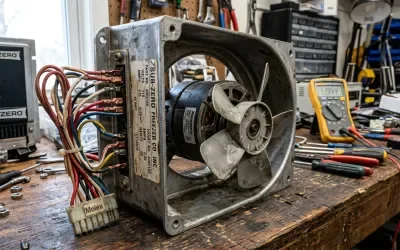
Root Mechanical & Electrical Failure Causes in Convection Warmers
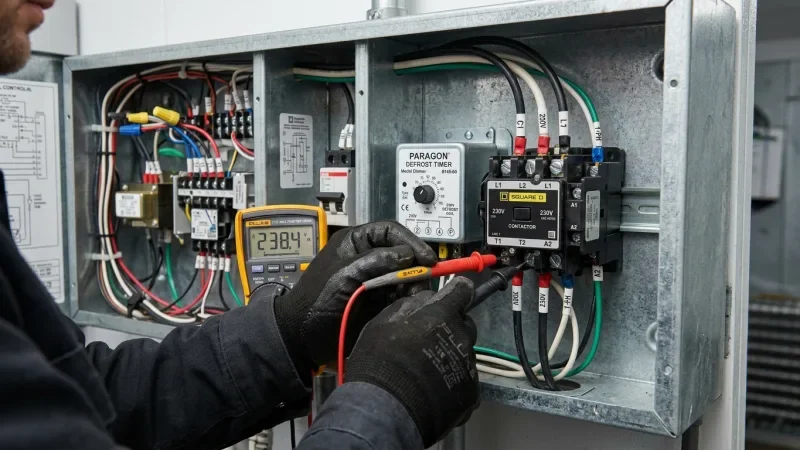
Evaluating the root causes of holding cabinet failures requires examining the demanding conditions present in commercial kitchens. Ambient temperatures near hot cook lines frequently reach 105°F, while airborne vaporized cooking oils, moisture droplets, and airborne flour dust continuously circulate through equipment ventilation ports. Over months of uninterrupted kitchen operation, this hostile environment systematically attacks electromechanical components.
Shaded-Pole Blower Motor Bearing Lubrication Breakdown
Shaded-pole induction motors utilized in Hatco holding cabinets are engineered with porous sintered bronze sleeve bearings infused with synthetic lubricant under vacuum during manufacturing. In high-heat holding cabinet plenums where ambient air exceeds 160°F, bearing operating temperatures often surpass 210°F. This sustained thermal exposure accelerates lubricant volatilization and oxidation. As the lubricating oil degrades into a gummy varnish, friction between the hardened steel rotor shaft and bronze sleeve spikes exponentially. The motor experiences mechanical drag, draws elevated amperage, and eventually locks completely, generating severe thermal hunting. This mechanical breakdown parallels issues we address in refrigerator repair evaporator fan motors.
Thermal Degradation of 3000W Incoloy Calrod Heating Rods
The primary heating element in Hatco holding cabinets is a 3000W Incoloy-sheathed calrod rod. Inside this outer metal sheath, a coiled nickel-chromium (NiCr) resistance wire is surrounded by compacted magnesium oxide (MgO) dielectric powder. Thermal cycling—expanding during duty cycles and contracting during idle periods—causes microscopic fissures in the outer Incoloy sheath. Moisture and cooking oils penetrate these microscopic fractures, contaminating the hygroscopic MgO insulation. As dielectric strength degrades, leakage current flows to ground, causing breaker tripping or uneven heating cycles that mimic thermostat failure. Similar element breakdowns occur during intensive oven and range repair field services.
Solid-State Control Potentiometer & NTC Thermistor Drift
Accurate cabinet regulation relies on a negative temperature coefficient (NTC) thermistor probe reading cavity air and transmitting resistive signals to the solid-state temperature controller. The standard Hatco sensor utilizes a 10,000 Ω (10k) NTC thermistor calibrated at 77°F (25°C). Continued exposure to high-humidity commercial holding environments causes sensor probe seal degradation. Moisture ingress corrodes internal semiconductor connections, shifting resistance curves so that the controller interprets a 130°F cabinet as 170°F, cutting off power to the 3000W heating element prematurely.
Contact Pitting on Mercury and Solid-State Relays
To regulate power to the heavy 3000W heating rod (drawing roughly 26 amps at 115V or 13 amps at 230V), Hatco incorporates heavy-duty power relays or solid-state relays (SSRs). Mechanical and mercury relays cycle thousands of times per week. Arc discharge during contact separation causes contact material transfer, pitting, and oxidation. Pitted relay contacts develop high contact resistance, dropping operating voltage across the heating element and generating localized scorching in the cabinet control cavity. In neighboring Fulton County markets like Alpharetta, GA, our certified technicians frequently replace scorched relays during comprehensive equipment overhauls.
Safe Kitchen Staff Verification & Inspection Protocols
When holding cabinet temperatures fluctuate during active food preparation, restaurant staff can execute four non-invasive verification procedures without opening electrical enclosures or violating OSHA guidelines:
| Verification Stage | Kitchen Staff Procedure | Expected Normal Benchmark | Failure Indicator |
|---|---|---|---|
| Airflow Vent Check | Hold a thin paper receipt 1 inch from side-wall interior discharge louvers | Receipt deflects briskly outward under positive air pressure | Receipt hangs vertically; zero airflow or slight backdraft suction |
| Door Gasket Seal Audit | Perform dollar-bill resistance test around full perimeter of silicone magnetic gasket | Firm, uniform drag required to slide bill out across all four edges | Bill slides freely through gaps; visible condensation weeping from frame |
| Acoustic Listen Test | Listen directly adjacent to top blower plenum while cabinet is energized | Smooth, continuous, low-pitched aerodynamic fan sound | Grinding, buzzing, cyclic squealing, or complete silence while heat light is on |
| Digital Reset Cycle | Power down unit at dedicated wall disconnect switch for exactly 10 minutes | Controller boots cleanly, temperature ramps steadily to setpoint | Display flashes error code, temperature surges wildly past 200°F |
If these non-invasive kitchen checks confirm zero airflow, loud motor screeching, or persistent thermal drift, kitchen staff must halt operational adjustments immediately. Continued forced operation will burn out internal solid-state boards or trigger the high-limit safety cutoffs. Operators in neighboring culinary districts like Milton, GA contact our certified technicians at the first sign of airflow collapse.
Critical Safety Limits: When to Halt Kitchen Staff Intervention
Commercial foodservice equipment operates under significantly higher electrical voltages and thermal demands than domestic household appliances. Hatco holding cabinets utilize 115 VAC to 240 VAC circuits carrying currents exceeding 25 amps. Untrained personnel attempting to disassemble top electrical plenums face severe electrical arc flash risks and thermal burn hazards.
Immediate shutdown of the cabinet at the circuit breaker is mandatory under any of the following circumstances:
- Scent of Burning Electrical Varnish or Melting Insulation: Indicates that motor coil insulation or wiring harness sleeves are actively melting, creating an imminent risk of cabinet fire or electrical chassis shorting.
- Tingling Sensation Upon Touching Cabinet Exterior: Signals an ungrounded leakage current fault through the stainless steel chassis. The unit is dangerously energized and must be de-energized instantly.
- Audible High-Frequency Electrical Buzzing: Indicates contactor chatter or arcing across failing relay terminals inside the control enclosure.
- Internal Cabinet Temperature Exceeding 210°F: Proves that the solid-state controller or safety high-limit switch has failed closed, allowing runaway element heating that can ignite pan liners.
Under OSHA standard 29 CFR 1910.333, internal electrical diagnostic troubleshooting must be performed exclusively by qualified personnel equipped with calibrated PPE and True-RMS measurement instruments. Similar electrical rigor applies when servicing complex commercial warewashers during dishwasher repair emergency calls.
Economic Decision Matrix: Commercial Blower Repair vs. Unit Replacement
Commercial kitchen operators frequently debate whether repairing a malfunctioning Hatco holding cabinet is cost-effective compared to purchasing a new commercial unit. Commercial-grade Hatco holding cabinets represent substantial capital investments, typically retailing between $3,200 and $7,800 depending on pan capacity, insulation grade, and humidity management features.
To assist restaurant owners and corporate food service directors throughout North Fulton County, our master technicians employ the industry-standard 50% Commercial Lifecycle Rule: If the total cost of the required repair (parts and certified commercial labor) is less than 50% of the cost of a replacement unit, and the cabinet chassis and structural insulation remain sound, professional component restoration is the financially prudent course of action.
| Equipment Parameter | Repair & Overhaul Recommended | Complete Replacement Advised |
|---|---|---|
| Cabinet Operating Age | Under 8–10 Years (Heavy-duty Hatco chassis rated 15–20 yrs) | Exceeding 14+ Years with extensive thermal fatigue |
| Cabinet Structural Integrity | Stainless steel interior uncompromised, insulation intact | Punctured liner, warped frame, deteriorated insulation foam |
| Component Failure Scope | Isolated blower motor, 3000W element, or relay failure ($280–$550) | Multiple simultaneous failures: board, harness, blower, and doors |
| Capital Expenditure Comparison | Repair cost represents 8% to 15% of replacement value | Repair cost exceeds 55% of brand new equipment cost |
| Kitchen Downtime Impact | Restored same-day within 2 hours using truck-stocked OEM parts | 3 to 6-week factory freight lead times for new units |
Because Hatco holding cabinets feature robust 304 stainless steel cabinetry that resists rust and physical abuse, replacing isolated electromechanical components like shaded-pole blowers or heating elements is by far the most economical choice. Operators in Roswell, GA frequently save over $4,000 by opting for OEM parts replacement over premature equipment retirement.
Instant Commercial Hatco Repair Cost Estimator
Regional North Fulton Commercial Foodservice Repair Cost Variables
Transparent commercial repair pricing is vital for foodservice operators maintaining disciplined budget targets. Repair investments for Hatco heated holding equipment in North Fulton County are governed by several key variables:
- OEM Component Sourcing vs. Aftermarket Substitutes: Factory-authorized Hatco shaded-pole motors, engineered specifically for high-temperature thermal plenums with Class H insulation (rated to 356°F/180°C), cost slightly more than generic HVAC fan motors. However, generic motors fail within weeks in 170°F environments, making genuine OEM parts far more cost-effective over time.
- Accessibility & Installation Geometry: Undercounter holding cabinets installed beneath heavy butcher blocks or tight line configurations require additional technician labor to slide out and access the rear or top plenum assemblies.
- Electrical Supply Configuration: Single-phase 115V configurations feature higher amp draws and heavier gauge wiring than 208/240V versions. Units that have suffered thermal arcing often require replacement of the high-temperature wiring harness alongside the failed blower or heating rod.
- Comprehensive Diagnostic Testing: Thorough commercial service goes beyond swapping a component; it includes full thermal datalogging, True-RMS amperage verification, and door gasket compression testing to guarantee health inspection compliance. This rigorous approach mirrors our standards for Sub-Zero appliance repair systems.
True-RMS Multimeter Telemetry & Component Ohms Lookup Protocols
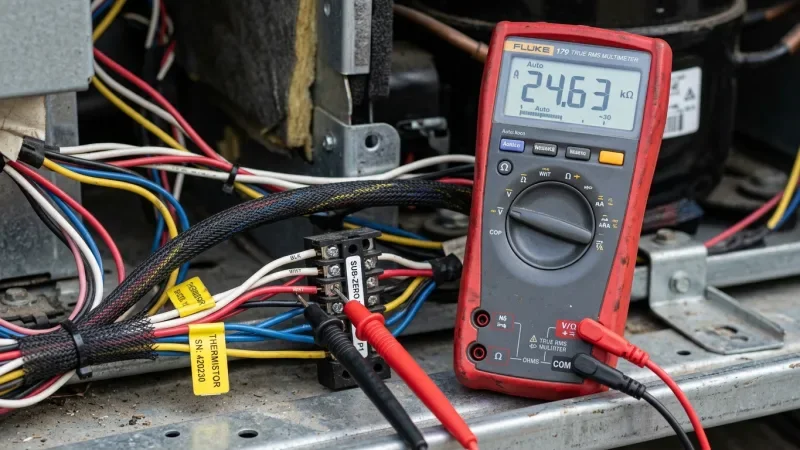
Precision troubleshooting of commercial holding equipment requires True-RMS multimeter telemetry. Guesswork and visual inspections cannot identify internal stator turn shorts or insulation dielectric breakdown. Below is our master technician electrical reference telemetry lookup table for Hatco holding equipment:
| Component & Test Point | Operating Voltage | Expected Ohms / Telemetry | Failure Threshold | Diagnostic Implication |
|---|---|---|---|---|
| Shaded-Pole Convection Blower Motor | 115 VAC, 60 Hz | 22.0 – 28.0 Ω (at 70°F) | < 18 Ω (Short) or ∞ Ω (Open) | Internal stator winding failure or open thermal fuse. Motor seized or humming. |
| 3000W Incoloy Calrod Heating Rod | 208 / 240 VAC (or 115V) | 18.4 – 19.2 Ω (240V rating) | ∞ Ω (Burnout) or < 50 MΩ to ground | Calrod element burnout or dielectric breakdown to chassis sheath. Tripping breaker. |
| NTC Cavity Temperature Thermistor | 5 VDC Control Signal | 10,000 Ω (at 77°F) / 1,250 Ω (at 160°F) | > 25k Ω or shorted at operating temp | Resistance curve drift causing solid-state board to shut off heat prematurely. |
| Manual-Reset High-Limit Safety Switch | Pass-through Line | 0.1 – 0.3 Ω (Continuity closed) | ∞ Ω (Open contact) | Internal thermal runaway tripped switch at 250°F. Element disconnected from line. |
| Solid-State Power Relay (SSR) Output | 120–240 VAC Line | ∞ Ω unenergized / < 0.5V drop active | 0 Ω unenergized (Short) | SSR triac shorted closed causing runaway heating, or open circuit failing to heat. |
| Blower Motor Megohmmeter Insulation | 500 VDC Test Pulse | > 100 Megohms (MΩ) to ground | < 5 Megohms (MΩ) | Degraded stator winding insulation leaking current to frame. Commercial GFCI trips. |
Essential OEM Replacement Hardware Catalog for Hatco Equipment
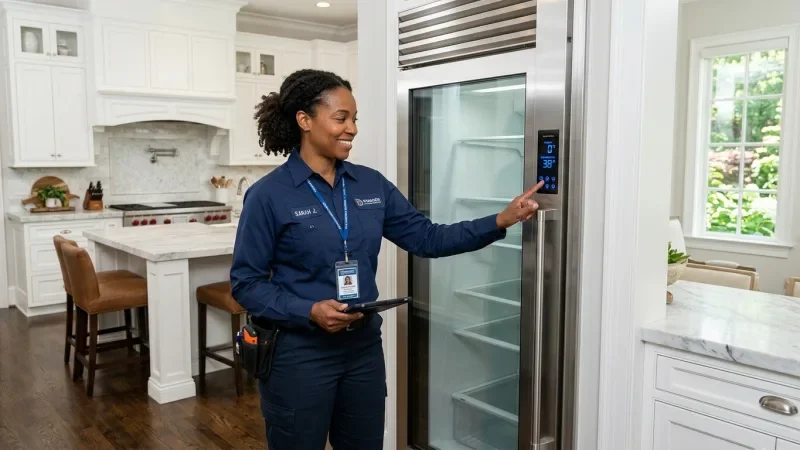
Installing genuine factory OEM replacement parts is essential for commercial equipment longevity and maintaining UL/NSF sanitation certifications. Aftermarket or non-rated hardware compromises cabinet performance and voids equipment insurance warranties. Key OEM parts carried on our Johns Creek service vehicles include:
- Hatco OEM Shaded-Pole Convection Blower Motor Assembly (P/N 02.12.013.00 / 02.12.045.00): Precision-balanced, high-temperature continuous duty motor with enclosed sleeve bearings, Class H thermal winding insulation, and matched centrifugal aluminum squirrel-cage impeller wheel.
- Hatco 3000W Incoloy Calrod Heating Element (P/N 02.05.018.00 / R02.05.022.00): Factory-formed tubular Incoloy 800 alloy heating rod designed for maximum thermal dissipation without hot-spot oxidation under high continuous watt densities.
- Hatco Solid-State Digital Temperature Controller Board (P/N 02.01.214.00): Microprocessor-driven temperature control module featuring PID self-tuning algorithms, LED temperature display output, and sensor fail-safe logic.
- Hatco High-Limit Safety Cutout Thermostat (P/N 02.16.024.00): Bimetallic snap-action manual reset switch set to trip at 250°F (±7°F) to prevent catastrophic equipment over-temperature conditions.
- High-Temperature Silicone Perimeter Door Gasket (P/N 03.40.012.00): NSF-certified food-grade molded silicone extrusion with embedded magnetic latch core, rated for continuous operational temperatures up to 300°F.
Using authentic factory parts ensures that commercial foodservice equipment functions within manufacturer-specified operational envelopes, identical to our protocols for Viking appliance repair and luxury commercial cooking ranges.
Commercial Foodservice Preventative Maintenance & Airflow Care
Preventative maintenance is the cornerstone of commercial kitchen reliability. Holding cabinets operate 12 to 18 hours per day, processing thousands of pounds of hot food each month. Implementing our structured preventative maintenance protocol extends blower motor lifespans and guarantees consistent holding temperatures:
| Maintenance Cadence | Kitchen Task & Cleaning Action | Technical Objective |
|---|---|---|
| Daily Sanitation Routine | Wipe down interior pan slides and cabinet floor with warm soapy water and food-safe sanitizer. Avoid spraying water into blower intake louvers. | Eliminates food debris, acid sauce spills, and crust grease buildup before caramelization occurs. |
| Weekly Airflow De-Greasing | Inspect side wall duct louvers and top intake grilles. Clean airflow passages using a nylon brush and non-corrosive commercial degreaser. | Prevents grease vapor accumulation from choking convection static pressure and overheating the blower. |
| Monthly Gasket & Seal Care | Clean silicone magnetic door gaskets with mild detergent. Wipe dry and inspect for tears, hardening, or corner gaps. | Maintains airtight thermal perimeter, preventing ambient air infiltration and heat loss. |
| Quarterly Technical Service | Professional field audit by certified master technician. Disassemble blower plenum, inspect motor sleeve bearings, test winding ohms, and check heating rod amperage. | Identifies winding degradation (shifting from 22–28 Ω) and bearing wear before mid-shift kitchen failure strikes. |
Adhering to this maintenance schedule reduces unexpected service emergencies by over 70%, ensuring uninterrupted kitchen operations during heavy banquet and lunch rushes across Johns Creek commercial dining venues. Similar preventative maintenance routines protect heavy appliances during dryer repair commercial laundry maintenance.
OSHA & Fulton County Commercial Health Code Regulatory Standards
Operating commercial heated holding equipment involves strict adherence to local and federal health and safety mandates. The Georgia Department of Public Health (DPH Chapter 511-6-1) and Fulton County Board of Health mandate that all hot time/temperature control for safety (TCS) foods be held at or above 135°F (57°C) at all times.
When a Hatco holding cabinet suffers blower motor degradation, thermal stratification causes food pans on lower shelves to drop below 135°F into the bacterial danger zone. In commercial kitchens, food held below 135°F for more than 2 hours must be discarded immediately, resulting in substantial financial loss and critical health inspection score deductions. Furthermore, repeated temperature violations can lead to mandatory kitchen closures under local health department enforcement.
From an electrical and workplace safety standpoint, OSHA regulation 1910.303 dictates that all commercial food service equipment must be maintained free from recognized electrical hazards. Exposed frayed wires, ungrounded heating elements, or makeshift repairs violate commercial kitchen compliance. Our master certified technicians perform comprehensive electrical safety tests and provide documented inspection certificates following every repair, aligning with the exacting standards applied during Thermador appliance repair and premium commercial kitchen projects.
Frequently Asked Technical Engineering Questions
What causes a Hatco heated holding cabinet temperature to fluctuate wildly?
The primary cause of temperature fluctuation is convective airflow failure triggered by a deteriorating shaded-pole blower motor or compromised 3000W heating element circuitry. When the blower motor develops bearing friction or partial winding shorts (shifting outside its normal 22–28 Ω range), internal air stratification develops. Heated air stagnates at the top of the cabinet while bottom shelves cool below 130°F. Secondary causes include drifting 10k NTC thermistor sensors, pitted relay contacts, or compromised silicone door gaskets.
What is the normal multimeter resistance reading for a Hatco shaded-pole blower motor?
A factory-standard 115 VAC Hatco shaded-pole convection blower motor measures between 22.0 Ω and 28.0 Ω across its stator winding terminals at room temperature (70°F). A reading below 18 Ω indicates shorted internal winding turns that pull excessive amperage and trip breakers, while an infinite reading (∞ Ω) indicates a blown internal thermal fuse or severed copper coil wire requiring complete motor assembly replacement.
How do I test the 3000W Incoloy heating rod in a commercial Hatco cabinet?
Disconnect power to the cabinet, remove lead wires from both element terminals, and set your digital multimeter to ohms (Ω). A 3000W heating rod configured for 240V operation should measure approximately 18.4 Ω to 19.2 Ω. Additionally, perform an insulation resistance test from each terminal to the outer metal sheath; a reading under 50 MΩ on a 500V megohmmeter indicates dielectric breakdown that will trip commercial ground-fault circuits.
Why is the bottom of my Hatco holding cabinet cold while the top is burning hot?
This is classic thermal stratification caused by blower motor failure. Natural convection causes hot air to rise to the top cavity while denser, cooler air sinks to the bottom. Without active forced circulation from the shaded-pole convection blower to redistribute air through side louvers, a 40°F to 60°F temperature differential develops across vertical pan positions.
Can I lubricate a squealing Hatco blower motor bearing instead of replacing it?
No. Hatco blower motors utilize sintered bronze sleeve bearings vacuum-impregnated with high-temperature synthetic oil during manufacture. Once the bearing squeals, the bronze pores have collapsed and the rotor shaft is physically grooved. Surface lubrication burns off within hours in the 170°F plenum environment, resulting in complete motor seizure.
How does the NTC thermistor temperature sensor work in Hatco holding cabinets?
The NTC (Negative Temperature Coefficient) thermistor sensor decreases in electrical resistance as temperature rises. At 77°F (25°C), the sensor reads 10,000 Ω (10kΩ). At normal holding temperatures (160°F/71°C), resistance drops to approximately 1,200 Ω to 1,300 Ω. If moisture ingress corrodes the sensor, its resistance curve shifts, causing erratic controller cycling.
What is the function of the manual-reset high-limit switch in a Hatco cabinet?
The high-limit switch is a critical thermal safety fail-safe wired in series with the 3000W heating element. If the primary solid-state controller or power relay fails in the closed position, allowing uncontrolled thermal runaway, the high-limit switch mechanically opens at 250°F (121°C), disconnecting line voltage to prevent equipment fire.
What food holding temperature is legally mandated by Fulton County health codes?
Fulton County Board of Health and Georgia Department of Public Health Chapter 511-6-1 mandate that all hot time/temperature control for safety (TCS) foods be held at or above 135°F (57°C) continuously. Holding food below this threshold for more than two hours violates food safety regulations and mandates immediate product disposal.
How long does a commercial Hatco blower motor replacement take?
A factory-trained master technician can complete a full Hatco blower motor replacement, airflow plenum degreasing, and thermal verification within 60 to 90 minutes on-site. Our service vehicles carry genuine OEM Hatco blower motors, wire harnesses, and solid-state boards for immediate same-day completion.
Why does my Hatco holding cabinet trip the commercial circuit breaker?
Breaker tripping indicates a short circuit or ground-fault leakage current. Common culprits include moisture or grease penetrating the magnesium oxide dielectric insulation of the 3000W heating element, or a seized blower motor drawing high locked-rotor amperage that exceeds the circuit’s 20A or 30A threshold.
Can generic HVAC fan motors be installed in a Hatco holding cabinet?
Never install generic HVAC fan motors. Standard fan motors feature Class B insulation rated only to 266°F (130°C) and generic bearing lubricants that decompose in food warmer plenums. Hatco OEM motors feature Class H insulation (356°F/180°C) and NSF-certified construction specifically designed to endure commercial foodservice demands.
What causes door gasket condensation and perimeter heat leakage?
Hardened, torn, or food-grease-impregnated silicone gaskets lose magnetic flexibility and elasticity. When warm, humid air leaks out past the damaged seal, it contacts cold kitchen ambient air, producing condensation and allowing internal cabinet temperatures to plummet near the front edge of food pans.
How does humidity affect holding cabinet temperature performance?
Moist holding cabinets (like the Hatco Flav-R-Savor) incorporate a water reservoir with a separate immersion element to maintain relative humidity. Water vapor carries more latent heat than dry air, stabilizing temperatures. If the water element fails or mineral scale calcifies the tank, the cabinet operates in dry mode, accelerating food desiccation.
How do I know if the solid-state relay (SSR) has failed?
A solid-state relay typically fails in one of two modes: shorted closed (continuous runaway heating even when the thermostat demands heat cutoff) or open circuit (the 3000W heating element never energizes despite active 5VDC or 12VDC control signal input from the main board). Multimeter voltage drop testing verifies relay performance.
What warranty coverage is provided on Hatco commercial holding cabinet repairs?
Every commercial Hatco repair completed by our master certified technicians includes an ironclad 90-day parts and labor warranty. If the replaced OEM blower motor, heating element, or control board exhibits any operational defect during this window, warranty service is dispatched with zero diagnostic fees.
How quickly can emergency technician dispatch reach our Johns Creek kitchen?
Our commercial emergency service vehicles operate throughout Johns Creek, Alpharetta, Milton, and Roswell daily. For active culinary breakdowns along Medlock Bridge Road or the Johns Creek Tech Corridor, our average arrival window is between 45 and 90 minutes from initial dispatch call.
Commercial Service Corridors & Regional Support Across North Fulton
Our commercial food equipment repair division provides dedicated emergency field services across North Fulton County and surrounding Greater Atlanta culinary hubs. Explore our comprehensive appliance service categories and regional service coverage:
- Core Commercial Equipment Capabilities: Specialized field repair for commercial appliance repair, rapid response same-day appliance repair, and critical 24/7 emergency appliance repair.
- Commercial Kitchen Cooking & Warewashing Systems: Factory-authorized diagnostic service for high-volume oven and range repair and continuous-flight dishwasher repair booster heaters.
- Commercial Cold-Side & Laundry Systems: Emergency repair for walk-in coolers, reach-in freezers, and prep tables during refrigerator repair calls, alongside commercial laundromat washing machine repair and high-capacity dryer repair.
- Hyperlocal Regional Service Coverage: Dedicated rapid-dispatch corridors in Johns Creek, GA, the downtown commercial district of Alpharetta, GA, historic Canton Street in Roswell, GA, and horse country dining venues in Milton, GA.
- Commercial Brand Specialties: Authorized repair experience on industry-leading commercial and luxury lines including Sub-Zero commercial refrigeration, heavy-duty Viking ranges, precision culinary Thermador cooking appliances, and German-engineered Bosch commercial installations.
Executive Technical Takeaways for Foodservice Managers
- Convection Airflow Dictates Temperature Stability: In Hatco holding cabinets, temperature stability depends directly on laminar air velocity. A failing shaded-pole blower immediately triggers thermal stratification where top pans overheat (>190°F) while bottom tiers drop dangerously below 135°F.
- Multimeter Telemetry Is Decisive: True-RMS measurement across shaded-pole motor winding terminals must read strictly between 22.0 Ω and 28.0 Ω. Readings below 18 Ω confirm shorted turns, while open circuits indicate blown internal thermal fuses.
- Health Code Compliance Is Non-Negotiable: Fulton County environmental health mandates that all TCS hot foods remain at or above 135°F continuously. Blower motor failures that permit thermal drops risk mandatory food disposal and health inspection score reductions.
- Factory OEM Hardware Is Mandatory: Never install unrated generic fan motors. Only OEM Hatco shaded-pole motors engineered with Class H thermal insulation (rated to 356°F) can endure commercial kitchen plenum temperatures.
- Repair Over Replacement Delivers Massive ROI: Restoring an isolated blower motor ($320–$580) preserves heavy 304-grade stainless steel cabinetry and saves commercial foodservice operators between $3,000 and $6,000 compared to premature cabinet replacement.
- Emergency Local Support Is Available: Certified master commercial technicians provide rapid dispatch (45–90 minute ETA) along Medlock Bridge Road and the Johns Creek Tech Corridor, complete with truck-stocked OEM parts and 90-day warranty backing.