
KitchenAid Dishwasher KDTE334GPS Not Draining — E24 Error Standing Water Fix Guide Alpharetta GA
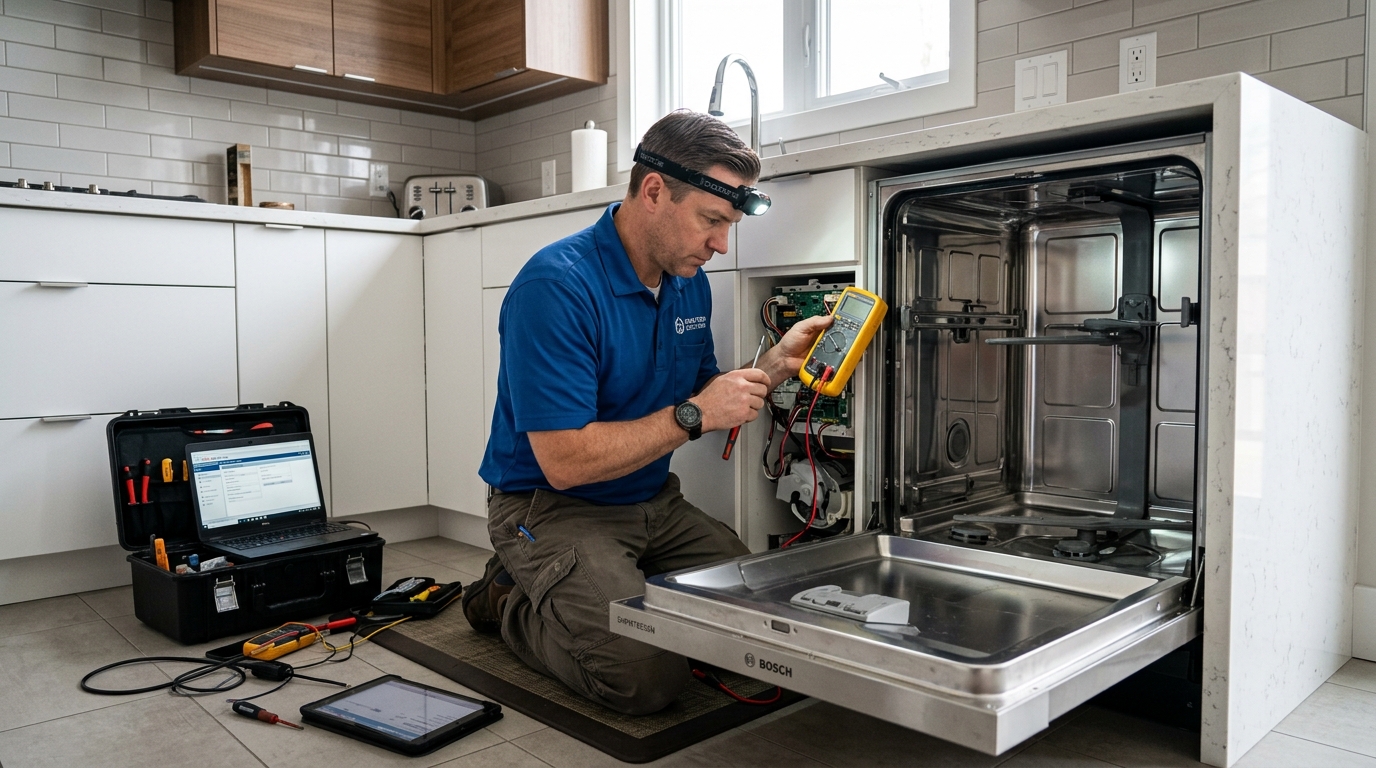
Dealing with a KitchenAid dishwasher not draining properly can completely disrupt your kitchen routine, leaving you with stagnant, foul-smelling water and dirty dishes. Our comprehensive guide helps you resolve the E24 error code, clear clogs, and test the drain pump on your KDTE334GPS model to restore optimal performance.
Table of Contents
- Introduction to KitchenAid Drainage Issues
- Recognizing the Symptoms of a Drain Failure
- Common Causes for Standing Water
- Step-by-Step Troubleshooting Guide
- When to Stop DIY and Call a Pro
- Repair vs. Replace Decision Matrix
- Estimated Cost Factors for Drain Repairs
- How Professionals Diagnose the KDTE334GPS
- Common Parts Involved in Drainage
- Preventative Maintenance Tips
- Crucial Safety Tips
- Frequently Asked Questions (FAQs)
- Related Services in Alpharetta
- Related Problems
- Related Brand Pages
- Related Location Pages
- Key Takeaways
- Schedule Your Appliance Repair
Introduction to KitchenAid Drainage Issues
When you open your KitchenAid KDTE334GPS dishwasher after a cycle only to find a pool of murky, standing water at the bottom, it is an immediate cause for concern. Not only does this prevent your dishes from getting completely clean, but stagnant water can rapidly breed bacteria and cause unpleasant odors throughout your kitchen. The KDTE334GPS is a premium appliance known for its quiet operation and thorough cleaning, but like all modern dishwashers, it relies on a delicate balance of water inlet, circulation, and drainage systems.

In Alpharetta, GA, where many homes feature these high-end appliances, encountering a KitchenAid dishwasher not draining is one of the most frequent service calls we receive. This issue is typically accompanied by the dreaded E24 error code, which indicates that the dishwasher’s control board has detected a failure to evacuate water within the programmed time limit. Understanding the root cause of this failure requires a systematic approach, examining everything from the simple 3-part ultra-fine filter system to the complex internal drain pump motor and its operating voltage of 120VAC.
This comprehensive guide is designed to empower homeowners with the knowledge to perform safe, effective DIY troubleshooting while recognizing the boundaries of their expertise. Whether you’re dealing with a simple food clog or a catastrophic pump failure, we’ll walk you through the diagnostics and repair procedures, ensuring your kitchen returns to its functional, sanitary state as quickly as possible. Remember, resolving drainage issues promptly is critical to extending the lifespan of your appliance and protecting your kitchen flooring from potential water damage.
It’s important to recognize that the drainage process isn’t just about water leaving the tub. It’s a synchronized event controlled by the main electronic control board. When the wash or rinse cycle concludes, the board sends 120VAC to the drain pump. The pump, which should measure between 5 and 15 ohms of resistance, engages its impeller to push water at a rate of up to 20 gallons per minute. This water travels through the corrugated drain hose, past a check valve, and ultimately out through your sink’s plumbing or garbage disposal. Any interruption in this electrical or mechanical chain leads directly to standing water.
Furthermore, local water quality in Alpharetta and surrounding areas can play a role. Hard water deposits can build up inside the pump housing and hoses over time, narrowing the pathway and making clogs more likely. Regular maintenance is key, but when a failure occurs, having a detailed, model-specific guide is invaluable. We will explore every facet of the KDTE334GPS drainage system in this article.
Diving deeper into the mechanics of the KitchenAid KDTE334GPS, it is crucial to understand the function of the turbidity sensor. This component constantly monitors the clarity of the water during the wash cycle. If the water is excessively dirty, the control board will extend the cycle or call for an additional drain and fill sequence. However, if the sensor itself becomes coated in a film of grease or hard water minerals, it can send false signals to the main board. This miscommunication can sometimes result in the machine halting a cycle prematurely, leaving water in the tub and leading users to mistakenly assume the drain pump has failed. Regular cleaning with a dedicated dishwasher tablet helps maintain the accuracy of this vital sensor.
The design of the 3-part ultra-fine filter is a marvel of modern appliance engineering. It consists of a coarse outer mesh to catch large debris like bones and toothpicks, a finer inner cylinder for smaller food particles, and an ultra-fine micro-mesh plate at the base to trap tiny grit. This multi-stage approach ensures that nothing large enough to damage the drain pump impeller can pass through. But this efficiency is a double-edged sword. If homeowners consistently fail to scrape their dishes, the micro-mesh quickly becomes blinded by a paste of pulverized food and grease. When this happens, the pump simply cannot draw water through the barrier, resulting in a classic E24 drain timeout error.
Let’s address the electrical complexities involving the 120VAC drain pump. The motor relies on a magnetic field generated by copper windings to turn the impeller. If moisture manages to breach the pump’s seal, it can cause the copper windings to short circuit. A short circuit reduces the resistance below the specified 5-15 ohms, causing the motor to draw excess current. The main control board is designed to detect this overcurrent condition and will immediately cut power to the pump to prevent a fire, subsequently displaying an E23 relay error. This safety mechanism is critical, but it highlights why keeping the area under your dishwasher dry is so important.
Another frequent installation error we encounter in Alpharetta involves the routing of the corrugated drain hose. To prevent back-siphoning of dirty sink water, the hose must be elevated higher than the sink drain before connecting to the disposal. This ‘high loop’ acts as a physical barrier. If the hose sags or is routed along the baseboards, dirty water from a full sink can easily flow backward into the dishwasher. Homeowners often wake up to find standing water in a machine that hasn’t even been run, purely due to this plumbing oversight.
The check valve, a simple rubber flapper located near the drain pump outlet, is another critical point of failure. Its job is to open under the pressure of the draining water and snap shut the moment the pump stops. This prevents the column of water remaining in the elevated drain hose from rushing back into the tub. Over time, harsh detergents and hot water can cause this rubber to warp or become brittle. When it fails to close properly, the pump completes its job, but a cup or two of water immediately flows back into the machine, giving the false impression of a drainage issue.
Beyond these primary systems, it’s essential to recognize how loading habits influence drainage efficiency over the long term. Many users unintentionally place tall or wide objects in a way that blocks the lower wash arm from rotating properly. While this immediately causes poor cleaning results, the long-term effect is that large food soils aren’t broken down by the water jets. These larger pieces then fall directly onto the ultra-fine filter, accelerating the blinding process. A jammed wash arm is often the root cause of a subsequent drainage failure, creating a cascade of issues simply from improper loading.
When considering the environmental factors specific to Alpharetta, the impact of ambient temperature and humidity in the kitchen cannot be ignored. In homes where the dishwasher is installed against an uninsulated exterior wall, the cold winter months can significantly lower the temperature of the internal tub and hoses between cycles. This chilling effect causes residual grease to harden much faster into impenetrable blocks within the corrugated drain hose. Running the hot water tap at the adjacent sink before starting the cycle is not just a suggestion; it’s a critical preventative measure against this specific environmental challenge.
The role of the detergent dispenser itself is surprisingly intertwined with drainage health. If the dispenser door fails to open at the correct time due to a faulty actuator or physical blockage, the concentrated detergent is released too late in the cycle. This means the chemical breakdown of fats and oils happens right before the drain cycle initiates, rather than during the main wash. The resulting emulsion is often too thick for the drain pump to evacuate efficiently within its programmed time limit, leading to an E24 error and a tub full of sudsy, greasy water.
It’s also worth delving into the software logic of the KDTE334GPS control board. KitchenAid engineers designed the board to perform a brief drain sequence immediately upon starting a new cycle. This is a safety feature intended to clear any leftover water from a previous interrupted cycle or backflow from the sink. If this initial ‘pre-drain’ fails, the machine will refuse to fill and immediately throw an error code. This is why you might experience a failure right after pressing ‘Start,’ even if the tub appears mostly empty to the naked eye.
The materials used in modern dishwashers are chosen for durability, but they are not invincible. The sump basin, where the filter assembly sits, is molded from high-impact plastic. However, dropping heavy items like cast iron skillets or large ceramic plates can cause hairline cracks in this basin. While a crack might initially seem like a leak issue rather than a drain issue, it can disrupt the vacuum seal required by the drain pump to pull water effectively. Diagnosing a cracked sump requires a meticulous visual inspection and is often the culprit behind mysterious, intermittent drainage problems.
For homeowners who rely on well water in the more rural areas surrounding Alpharetta, the challenges are compounded. Well water often contains higher levels of iron and manganese, which can form a sticky, rust-colored sludge inside the dishwasher’s internal plumbing. This sludge binds with food grease to create a formidable blockage that standard dishwasher cleaners cannot easily dissolve. In these situations, specialized iron-removing treatments are necessary to maintain the 20 gallons/minute flow rate of the drain pump.
The connection point between the dishwasher drain hose and the garbage disposal is a frequent site of catastrophic failure. The vibration of the garbage disposal, combined with the hot water from the dishwasher, can cause the hose clamp to loosen over time. Even a tiny gap will allow air to enter the hose, breaking the siphon effect created by the high loop. When this happens, the pump must work exponentially harder, leading to overheating, increased resistance readings across the 5-15 ohm motor windings, and eventual E23 relay failure on the control board.
Understanding the acoustic signature of your KDTE334GPS is a vital diagnostic skill. A healthy drain pump emits a steady, low-pitched hum as it moves water. A high-pitched squeal indicates bearing failure. A rhythmic clicking suggests the impeller is striking a foreign object with every rotation. Complete silence during the drain phase, accompanied by an E23 error, almost always points to a severed electrical connection or a blown relay on the control board. Learning to ‘listen’ to your appliance can save hours of physical troubleshooting.
The design of the impeller blades themselves is a study in fluid dynamics. They are curved specifically to maximize suction while minimizing cavitation (the formation of air bubbles). If a hard object chips even a tiny piece off one of these blades, the balance of the impeller is destroyed. This imbalance causes severe vibration, which quickly destroys the motor bearings and degrades the pump’s seal, turning a minor debris issue into a major component failure requiring full pump replacement.
Finally, it’s critical to understand the warranty implications of DIY repairs on premium appliances like the KitchenAid KDTE334GPS. While clearing a clogged filter is expected user maintenance, disassembling the sump housing, testing live 120VAC circuits, or modifying the control board wiring can instantly void the manufacturer’s warranty. This is a significant consideration when evaluating the repair vs. replace matrix, making professional diagnosis by a certified technician an economically sound choice for complex issues.
Recognizing the Symptoms of a Drain Failure
Identifying the exact symptoms your dishwasher is exhibiting can significantly narrow down the potential causes of a drainage failure. Here are the most detailed signs that your KitchenAid KDTE334GPS is struggling to drain:
1. Persistent Standing Water
The most obvious symptom is a pool of water remaining in the tub after the cycle completes. While a small amount (about a cup) under the filter is normal to keep the pump seals moist, anything covering the filter screen or spilling out onto the door is a clear indication of a severe drainage blockage or pump failure. This water often appears cloudy, greasy, or contains visible food particles. If the water level is extremely high, it might even trigger the float switch, preventing the dishwasher from starting a new cycle entirely.
2. The E24 Error Code
Modern KitchenAid dishwashers communicate issues through their digital displays. The E24 error code specifically indicates a drain error. This means the electronic control board monitored the drain sequence and determined that the water was not removed within the allotted time limit (usually a couple of minutes). This code is a primary diagnostic tool for technicians and is the most common code associated with standing water on the KDTE334GPS.
3. Unusual Noises During the Drain Cycle
If you hear loud grinding, humming, or clicking noises when the dishwasher attempts to drain, it strongly suggests a mechanical issue. Grinding often points to a hard object (like broken glass, a popcorn kernel, or a bone fragment) caught in the drain pump impeller. A low humming sound typically indicates that the pump motor is receiving power (120VAC) but is physically jammed or has internally failed, preventing it from turning. Clicking might indicate a relay on the control board attempting to engage the pump repeatedly.
4. Unpleasant Odors and Dirty Dishes
Stagnant water combined with food debris creates a perfect environment for bacterial growth. If your dishwasher emits a foul, swampy odor when opened, it’s a strong sign that water is not fully draining after each cycle. This odor can permeate your kitchen. Additionally, if the water doesn’t drain properly between the wash and rinse cycles, you’ll end up with dishes that have dried, gritty residue baked onto them.
5. The E23 Error Code
While less common than E24, the E23 error code is equally important. This code points to a drain pump relay error on the main control board. It means the board is failing to send the necessary voltage to the pump, or it detects an electrical short. This symptom usually dictates a more complex electrical repair rather than a simple unclogging procedure. It requires checking the continuity of the wiring harness and potentially replacing the main board.
When diagnosing sounds, context is everything. A high-pitched squeal during the drain cycle on a KDTE334GPS often indicates a failing bearing within the drain pump motor itself. As the bearing loses lubrication due to age or water intrusion, the friction increases exponentially. This not only produces a terrible noise but also slows the pump down, preventing it from reaching its target 20 gallons/minute flow rate, which will eventually trigger an E24 code. Replacing the entire pump assembly is the only reliable fix for a bad bearing.
The visual inspection of standing water can also provide clues. If the water is exceptionally sudsy, it suggests the use of improper detergent, such as regular dish soap. Excessive suds cause a condition known as ‘cavitation’ within the pump. The impeller spins rapidly, but because it’s surrounded by foam rather than dense liquid water, it fails to create suction. The pump essentially free-wheels, the water doesn’t move, and the control board registers a drain failure. Clearing a suds lock often requires manually scooping out the foam and running a rinse cycle with a cup of white vinegar to break down the remaining bubbles.
It is also important to verify the operation of the float switch assembly. Located in the front corner of the tub, this small plastic float rises with the water level. If it gets stuck in the ‘up’ position due to accumulated grease or a stray piece of silverware, the control board believes the tub is already full. While this usually prevents the dishwasher from filling, in some logic sequences, a stuck float can also disrupt the drain cycle, as the board receives conflicting signals about the actual water level inside the machine.
The control board logic for the E24 error is quite specific. The board doesn’t actually ‘see’ the water level drop; it infers it based on the current drawn by the pump and the time elapsed. If the pump runs for its maximum allotted time (usually 2-3 minutes) and the board hasn’t seen the expected drop in current that indicates the pump is finally pulling air (meaning the tub is empty), it triggers the error. This is why a partial clog that slows drainage can still result in an E24, even if the tub eventually empties completely after an hour.
When addressing odors associated with standing water, simply running a cycle is rarely enough. The bacteria that thrive in these warm, dark, moist environments form biofilms on the internal plastic surfaces and inside the corrugated hoses. These biofilms are incredibly resistant to standard detergents. To truly eliminate the odor, you must manually clean the filter, run a heavy cycle with a specialized citric acid-based dishwasher cleaner, and ensure that the drain hose configuration is correct to prevent future stagnation.
Observing the timing of the symptoms is a crucial diagnostic step often missed by homeowners. If the standing water is cold when you discover it, the failure likely occurred during the final rinse and drain cycle hours ago. Conversely, if the water is hot and steamy, the machine failed mid-cycle, suggesting a thermal overload of the pump motor or a sudden electrical fault that tripped the E23 relay protection on the control board.
Another subtle symptom to watch for is the condition of the detergent dispenser at the end of the cycle. If the dispenser door is open but a hardened lump of detergent remains inside, it indicates that the circulation pump failed to spray water effectively. This is often tied to a severe drainage issue where the tub is so full of stagnant, sudsy water that the circulation pump cannot draw clean water from the sump to operate the wash arms. This ‘suds lock’ effectively paralyzes both the wash and drain systems simultaneously.
The appearance of the dishes themselves can tell a story. If the glassware is covered in a gritty, sand-like residue, it strongly suggests that the 3-part ultra-fine filter is compromised or missing its micro-mesh layer. This allows pulverized food to bypass the filter, circulate through the wash arms, and bake onto the dishes during the heated dry cycle. This grit will eventually find its way into the drain pump impeller, causing mechanical binding and triggering the E24 error.
When dealing with unusual noises, pay attention to the transition periods between cycles. The KDTE334GPS relies on a diverter valve to switch water flow between the upper and lower wash arms. If this valve is failing or jammed with debris, it can emit a loud buzzing sound that is easily mistaken for a failing drain pump. Accurately pinpointing the source of the noise is essential to avoid purchasing and installing the wrong replacement parts.
It’s also important to differentiate between an E24 error caused by a physical blockage and one caused by a control board malfunction. A failing control board might randomly display an E24 error even when the tub is bone dry. This ‘phantom’ error is typically caused by degraded capacitors on the logic board itself, which send erratic voltage signals to the microprocessor. Diagnosing this requires verifying the integrity of the board’s power supply and is a task strictly for a certified technician.
The presence of grease in the standing water is a major red flag. If the water has a thick, oily slick on the surface, it indicates a severe failure in the homeowner’s pre-scraping habits. This volume of grease will quickly coat the internal sensors, blinding the turbidity sensor and confusing the float switch. More critically, it will solidify in the cooler sections of the corrugated drain hose, creating an impenetrable plug that will completely halt the 20 gallons/minute flow rate.
A particularly frustrating symptom is intermittent drainage. The dishwasher might drain perfectly for three cycles, only to fail with an E24 error on the fourth. This usually points to a small, loose object like a toothpick or piece of hard plastic wrapping that is floating within the sump. Occasionally, the pump’s suction pulls this object squarely across the inlet, causing a complete blockage. On the next cycle, the object might float away, restoring normal function. Finding and removing these ‘floating clogs’ requires a thorough manual inspection of the entire sump housing.
If you notice water pooling around the base of the dishwasher on the floor, in addition to standing water inside the tub, you are dealing with a catastrophic failure. This often means the pressure of a severe drain clog has forced water past the pump’s O-ring seals, or the corrugated drain hose itself has ruptured. This situation requires immediate attention to prevent severe structural damage to the cabinetry and subflooring of your Alpharetta home.
Finally, the interplay between the E23 and E24 codes must be understood. It is entirely possible for a severe mechanical blockage (E24) to cause the drain pump motor to overheat and short circuit. This short circuit then blows the relay on the control board, subsequently triggering an E23 error. In these complex scenarios, the technician must replace both the drain pump and the main control board to fully resolve the issue, emphasizing the danger of ignoring early warning signs.
Common Causes for Standing Water
Understanding why your dishwasher isn’t draining requires looking at the entire drainage pathway. The KDTE334GPS system pumps water at a rate of roughly 20 gallons per minute, pushing it through a series of components. A failure or blockage anywhere in this line will cause standing water.

1. Clogged 3-Part Ultra-Fine Filter Assembly
The most frequent culprit is a lack of maintenance on the filter system. The KDTE334GPS features a 3-part ultra-fine filter designed to trap debris and prevent it from entering the pump. Over time, grease, paper labels from jars, and hard food remnants can completely seal this filter, blocking all water flow to the pump inlet. This is the first and easiest component to check and clean. If this filter is blinded, the pump will run dry, and the E24 error will trigger.
2. Blocked Drain Hose
The corrugated plastic drain hose carries water from the pump to your sink’s plumbing. This hose can become kinked if the dishwasher was pushed too far back during installation, or it can develop clogs from accumulated grease and debris. Additionally, if the hose does not have a proper “high loop” installed under the sink, wastewater from the sink can backflow into the dishwasher, causing it to appear as though it’s not draining.
3. Garbage Disposal Knockout Plug Intact
If you recently installed a new garbage disposal in your Alpharetta home, this is a highly likely cause. Disposals come with a plastic knockout plug in the dishwasher drain port. If this plug is not removed during installation with a hammer and screwdriver, the dishwasher has absolutely nowhere to pump the water, resulting in an immediate backup, standing water, and an E24 error on the very first cycle.
4. Air Gap Blockage
If your kitchen plumbing includes an air gap (the small chrome cylinder mounted on the sink deck), it serves as a backflow preventer. Debris from the dishwasher can travel up the hose and clog the air gap. When this happens, water usually spills out of the air gap onto the counter, and the dishwasher fails to drain completely. Cleaning the air gap is a simple maintenance task that resolves many drainage complaints.
5. Failed Drain Pump Motor or Impeller
The drain pump is a mechanical device subject to wear and tear. The internal motor windings can short out or degrade, failing to produce the necessary torque. Alternatively, the plastic impeller (the fan-like blade that moves the water) can strip on the motor shaft or break entirely due to impact from hard debris. A healthy pump should read between 5-15 ohms of resistance when tested with a multimeter. If the impeller is jammed, the motor will hum and draw excess current.
A less common, but entirely possible cause for drainage failure involves the air pressure within the plumbing system itself. If your home’s main plumbing vent stack is clogged (perhaps by leaves or a bird’s nest on the roof), the water trying to drain from the dishwasher will struggle against a vacuum. This is similar to trying to pour liquid quickly from a sealed can with only one small hole. The pump may run flawlessly, but the water simply cannot push past the air lock in the pipes, leading to an E24 error that has nothing to do with the appliance itself.
Consider the impact of the pump’s O-ring seal. The drain pump on the KDTE334GPS is secured to the main sump housing with a twist-lock mechanism that compresses a thick rubber O-ring. If this O-ring degrades due to harsh chemicals or simple aging, it can allow air to be sucked into the pump chamber along with the water. This aeration severely reduces the pumping efficiency, dropping the flow rate well below the required 20 gallons/minute, and can cause intermittent E24 errors that are notoriously difficult to track down.
The physical structure of the corrugated drain hose also presents unique challenges. The ridges that give the hose its flexibility also create hundreds of tiny traps for grease and small particulate matter. Over the years, these ridges can fill with a sludge that slowly restricts the inner diameter of the hose. This restriction increases the back pressure on the drain pump, forcing it to work harder and hotter, eventually leading to a premature electrical failure of the motor windings.
When replacing a failed drain pump, it is crucial to verify the integrity of the wiring harness connector. The vibrations from a struggling pump can sometimes cause the metal terminals within the plastic connector to loosen. If a new pump is installed but the loose connection is not addressed, the new pump may operate intermittently or not at all, mimicking an E23 control board error. Technicians always apply dielectric grease and ensure a tight physical connection during reassembly.
Finally, the temperature of the water plays a hidden role in drainage efficiency. KitchenAid dishwashers rely on hot water to break down animal fats and vegetable oils. If your home’s water heater is set too low, or if you run the dishwasher without first purging the cold water from the line at the sink, these fats will solidify much faster as they hit the cooler pump and drain hose, rapidly accelerating the formation of clogs.
The role of the diverter motor is often misunderstood in drainage diagnostics. While its primary function is to direct water to the upper or lower wash arms, a failed diverter can indirectly cause standing water. If the diverter is stuck in a position that blocks water from reaching the main sump during the drain phase, the pump will starve for water and trigger an E24 error, even though the pump itself is perfectly functional. This highlights the interconnected nature of the KDTE334GPS’s internal systems.
Chemical interactions between different brands of detergents and rinse aids can also create unexpected blockages. Some combinations react to form a gelatinous substance that coats the inside of the 3-part ultra-fine filter and the check valve. This chemical sludge is highly resistant to hot water and requires manual scrubbing to remove. Sticking to a single, high-quality brand for both detergent and rinse aid can prevent these bizarre chemical reactions.
The physical installation of the dishwasher within the cabinetry is a surprisingly common source of trouble. If the leveling legs are not adjusted properly and the dishwasher leans backward, water will pool in the rear of the tub, away from the sump and pump inlet. This means the pump will suck air long before the tub is actually empty, leading to persistent standing water at the back of the machine and chronic foul odors.
In older Alpharetta homes with original cast iron plumbing, the connection point beneath the sink is a prime suspect. Cast iron rusts and scales internally over decades, drastically reducing the inner diameter of the drain pipe. The dishwasher’s drain pump might be pushing its rated 20 gallons/minute, but if the house plumbing can only accept 10 gallons/minute, the water will back up. This plumbing restriction will inevitably cause E24 errors and requires a plumber, not an appliance technician, to resolve.
The integrity of the wash arm bearings is another hidden factor. If the plastic bearings on the lower wash arm wear out, the arm can droop and drag against the bottom of the tub or the filter housing. The friction not only slows the arm’s rotation, reducing cleaning performance, but the physical grinding creates fine plastic shavings. These shavings bypass the filter and accumulate in the drain pump impeller housing, eventually causing it to bind and fail.
The main electronic control board itself is subject to environmental degradation. In kitchens with high humidity or poor ventilation, condensation can form on the delicate circuitry of the board. Over time, this moisture causes corrosion across the copper traces, particularly those controlling the high-voltage 120VAC circuits like the drain pump relay. This corrosion can lead to intermittent E23 errors or complete board failure, rendering the dishwasher totally unresponsive.
It’s vital to consider the impact of ‘hard food disposers’ found in some older KitchenAid models, though less common in the KDTE334GPS line. If a model is equipped with a macerator blade meant to chop soft food, this blade can break or dull. When it fails, larger food particles pass into the drain pump chamber, instantly jamming the delicate impeller and causing a catastrophic stoppage.
The routing of the wiring harness beneath the dishwasher is a critical vulnerability. If the harness is not properly secured with zip ties during installation or a previous repair, it can sag and rest against the hot motor casing of the circulation pump. The heat will eventually melt the insulation, exposing the bare wires. If the wire controlling the drain pump shorts to the chassis, it will immediately blow the control board relay, resulting in a complex and expensive E23 repair scenario.
The composition of the local water supply can also affect the rubber components. High levels of chlorine or chloramines in municipal water can cause the rubber check valve and O-rings to harden, crack, and lose their flexibility. A hardened check valve will not seal properly against backflow, while cracked O-rings will introduce air into the pump, severely diminishing its ability to push water up the corrugated drain hose.
Step-by-Step Troubleshooting Guide
Follow these DIY-safe steps to diagnose and potentially fix your KitchenAid KDTE334GPS drainage issue. Always proceed with caution and prioritize safety.
Before starting any work, completely disconnect power to the dishwasher. Locate your home’s electrical panel and switch off the breaker dedicated to the dishwasher. This is a critical safety step to prevent electrical shock, as the appliance operates on 120VAC. Verify the power is off by checking the display panel.
Open the dishwasher and use a wet/dry shop vacuum, sponges, or old towels to remove as much standing water as possible. This will give you clear access to the filter assembly and prevent a massive spill when you begin disassembling components. A shop vac is the most efficient method.

Locate the filter assembly at the bottom center of the tub. Twist the upper cylinder counterclockwise to unlock it, then lift it out. Remove the flat lower mesh plate. Wash all components thoroughly under warm running water in your sink, using a soft brush to scrub away embedded grease or debris. Do not use wire brushes, as they can tear the fine mesh. Reinstall the filters securely.
Run the hot water in your sink and turn on the garbage disposal to ensure the main house plumbing is clear. A clogged sink will prevent the dishwasher from draining. If you recently installed a new disposal, verify that the dishwasher drain knockout plug was completely removed by looking inside the disposal port.
If you have an air gap on your sink, remove its chrome cover and unscrew the plastic cap underneath. Inspect the inner tube for any clogs caused by food debris. Use a small bottle brush or a toothpick to clear any blockages, then reassemble the unit. If water shoots out of the air gap, the clog is in the hose between the air gap and the disposal.
Check the corrugated drain hose where it connects to the disposal or sink plumbing. Look for sharp kinks that might restrict flow. Disconnect the hose from the plumbing (have a bucket ready to catch water) and inspect the opening for grease blockages or debris. Use a wire coat hanger to gently probe the end of the hose.

This step requires removing the lower kick panel of the dishwasher. Once removed, you can visually inspect the drain pump. Squeeze the wire clamp on the black rubber hose connecting the tub sump to the pump, pull the hose off, and check for large blockages like glass or plastic wrapping that may have bypassed the filter.
After reassembling all components, turn the breaker back on. Start a short rinse cycle and then press the ‘Cancel/Drain’ button. Listen closely to the pump. If you hear it running smoothly and the water evacuates, you have successfully cleared the blockage. If the E24 error returns, further professional diagnostics are required.
When performing these troubleshooting steps, patience and observation are key. If you reach Step 6 and disconnect the drain hose from the garbage disposal, perform a simple flow test. Direct the end of the hose into a large bucket and force a drain cycle. If water blasts out into the bucket at a high volume, but fails to drain when connected to the disposal, you have absolutely isolated the problem to the disposal itself or the sink plumbing, ruling out any expensive repairs to the KitchenAid unit.
During Step 7, dealing with the pump inlet hose, be aware of the check valve’s location. On the KDTE334GPS, it is often integrated into the rubber boot that connects the pump to the drain hose. When you pull this boot off, inspect the small rubber flap carefully. If it appears deformed, chewed up, or is stuck open with a piece of debris, it must be replaced. A faulty check valve will defeat a perfectly good pump.
It is also highly recommended to use a wet/dry vacuum not just for water removal, but for clearing the hoses. If you suspect a clog deep within the corrugated drain hose, pressing the nozzle of a shop vac firmly against the end of the hose at the sink connection can often suck the blockage out backwards, saving you the immense hassle of pulling the dishwasher out to replace the entire hose.
If you are attempting to clear a hard clog from the drain pump impeller, never use excessive force. The impeller blades are plastic and can snap easily. If a piece of glass is wedged tightly between the blade and the housing, use needle-nose pliers to gently extract it. If the impeller will not spin freely by hand after the debris is removed, the motor shaft is bent or the internal bearings are seized, and pump replacement is mandatory.
After any DIY intervention, the test cycle is non-negotiable. Do not load dishes immediately. Run a quick wash cycle on empty, keeping a close eye on the floor beneath the unit with a flashlight. Any improperly seated hose clamp or twisted O-ring will present itself as a slow drip during this test. Catching a leak during a supervised test run prevents massive water damage later.
When executing Step 3, the cleaning of the 3-part ultra-fine filter, it is imperative to inspect the seating area within the sump basin. Even if the filter itself is perfectly clean, if a small piece of hard debris—like a popcorn kernel or a fragment of bone—is resting on the ledge where the filter seats, the O-ring will not create a perfect seal. This microscopic gap allows sandy grit to bypass the filtration system entirely, entering the pump housing and scoring the impeller blades, inevitably leading to an E24 error down the line.
If you find yourself frequently performing Step 5 to clear the air gap, the issue is likely not with the dishwasher, but with the hose routing between the air gap and the garbage disposal. This section of hose often sags or becomes partially kinked, creating a restriction. Because water always takes the path of least resistance, when the KDTE334GPS attempts to push 20 gallons/minute through a restricted hose, the water will simply blast out of the top of the air gap onto your counter.
During Step 7, if you successfully remove the drain pump from the sump housing, pay close attention to the condition of the motor windings if they are visible, or smell the component. A burned-out 120VAC motor emits a very distinct, acrid smell of melted varnish and scorched copper. If you detect this odor, testing the resistance (which should be 5-15 ohms) is merely a formality; the pump has suffered a catastrophic electrical failure and must be replaced entirely.
A crucial part of Step 8 involves monitoring the control panel display closely. If you initiate the test cycle and the machine immediately throws an E23 error before you even hear a click or a hum, you are dealing with a hard electrical fault on the control board. The microprocessor has instantly detected an open circuit or a short in the drain pump relay circuit and halted the sequence to prevent a fire hazard. DIY troubleshooting generally ends here.
It is worth noting that some modern garbage disposals feature internal baffles designed to reduce noise. These baffles can sometimes restrict the flow of water coming from the dishwasher’s drain hose. If you have recently upgraded to a high-end, ultra-quiet disposal and suddenly experience E24 errors, the disposal’s internal design may be throttling the necessary flow rate. Bypassing the disposal and plumbing the dishwasher directly into the sink drain (with a proper high loop) may be necessary.
When to Stop DIY and Call a Pro
While clearing filters and checking hoses are safe DIY tasks, there are distinct boundaries where amateur intervention can cause more harm than good, or pose significant safety risks.
If you have confirmed that the plumbing is clear but the pump does not activate, hums loudly, or throws an E23 error (drain pump relay failure), stop immediately. Accessing the control board or testing live voltage requires specialized training. The KDTE334GPS operates on potentially lethal 120VAC.
You should call a certified technician in Alpharetta, GA, if you experience any of the following:
- The drain pump needs to be removed from the sump housing. The twist-lock mechanism and O-ring seals must be perfectly aligned to prevent catastrophic leaks under your cabinetry. Incorrect installation can flood your kitchen.
- You suspect a failure in the main electronic control board. Diagnosing board-level faults requires interpreting complex schematics and testing logic circuits to confirm the E23 error is indeed a faulty relay and not a wiring harness issue.
- The dishwasher needs to be completely uninstalled and pulled out from under the counter to access hidden components or crushed hoses at the rear of the machine. This often requires adjusting leveling legs and managing tight water and electrical connections.
- You are uncomfortable using a multimeter to check the 5-15 ohms resistance specification on the pump motor windings, or you don’t have the appropriate tools to safely probe electrical connectors.

The decision to halt DIY efforts often hinges on liability and potential property damage. A KitchenAid dishwasher is connected directly to your home’s pressurized water supply. If an amateur repair inadvertently damages the water inlet valve while attempting to access the drain pump, the machine could flood your kitchen continuously, even when powered off. Certified technicians carry insurance and assume the liability for the repairs they perform, providing peace of mind.
Furthermore, interpreting multimeter readings requires nuance. A reading of 8 ohms across the pump motor windings falls within the acceptable 5-15 ohms range, but if the meter fluctuates wildly when the pump shaft is wiggled, it indicates an intermittent internal short that a novice might miss. A professional knows how to perform ‘wiggle tests’ and dynamic voltage drops to uncover hidden faults that standard static testing overlooks.
Handling the electronic control board requires strict electrostatic discharge (ESD) protocols. The microprocessors on the KDTE334GPS board are incredibly sensitive. A static shock from a finger, completely imperceptible to a human, can instantly destroy the board’s memory or logic circuits, turning a $50 pump repair into a $300 board replacement. Technicians utilize grounding straps and anti-static mats when handling these delicate components.
Extracting the dishwasher from tight cabinetry presents significant ergonomic and mechanical challenges. The leveling legs are often rusted or seized, and the copper water supply line is easily kinked. Forcing the unit out can gouge expensive hardwood flooring or tear vinyl linoleum. We utilize specialized appliance glides, air sleds, and protective mats to ensure the appliance is extracted safely without leaving a trace of damage in your Alpharetta home.
Finally, understanding the intricate diagnostic mode of the KDTE334GPS is a skill honed through rigorous factory training. The sequences to enter the mode, navigate the sub-menus, and interpret the multi-digit error codes are not intuitive. Attempting to force the machine into diagnostic mode without proper documentation can inadvertently wipe the fault history or lock the control board in a factory test loop, requiring professional intervention to reset.
Repair vs. Replace Decision Matrix
When facing a significant drainage repair on your KitchenAid KDTE334GPS, it’s important to evaluate whether a repair makes financial sense compared to replacing the entire unit.
| Factor | Lean Toward Repair | Lean Toward Replace |
|---|---|---|
| Appliance Age | Under 7 years old | Over 10 years old |
| Nature of the Problem | Clogged filters, jammed pump, faulty hose | Failed control board + bad pump, rusted tub |
| Overall Condition | Racks are intact, interior is clean, cleans well otherwise | Rusted tines, broken door hinges, persistent leaks |
| Cost Rule of Thumb | Repair is less than 50% of the cost of a new comparable KitchenAid | Repair exceeds 50% of replacement cost |
The repair vs. replace calculation is deeply personal, but certain objective facts about the KDTE334GPS should guide your decision. This model features a premium stainless-steel tub, which offers superior sound dampening and heat retention compared to plastic-tub models. The inherent value of this stainless-steel chassis means that investing in a new 120VAC drain pump or even a new control board is often justified, as the core structure of the appliance will easily outlast multiple electronic components.
However, you must also evaluate the condition of the nylon racks and tines. If the vinyl coating on the racks has chipped, exposing the metal beneath, rust will quickly develop. This rust will eventually break off, circulate through the wash system, and permanently blind the 3-part ultra-fine filter, creating chronic drainage issues. If a pump replacement must also be accompanied by purchasing two new racks, the total cost rapidly approaches the 50% replacement threshold, shifting the matrix firmly toward replacing the entire unit.
Estimated Cost Factors for Drain Repairs
While we cannot provide exact quotes without a physical diagnosis, understanding the factors that influence repair costs can help you budget effectively. Our service fee in Alpharetta is just $79, which covers the professional diagnosis and is completely waived if you proceed with the repair.
- Labor Time: Simple fixes like clearing a severe clog in the air gap or drain hose take less time and incur lower labor charges. Complex jobs, such as pulling the dishwasher to replace a crushed drain hose or swapping a main control board due to an E23 error, require significantly more labor.
- Parts Required: OEM (Original Equipment Manufacturer) KitchenAid parts ensure longevity and compatibility but dictate the materials cost. A replacement drain pump is generally affordable, whereas replacing the electronic control board is a higher-tier expense.
- Accessibility: Dishwashers that are hard-wired, screwed into custom cabinetry, or installed under custom-height counters require extra time to safely extract and service, which can impact the final cost.
We provide transparent, flat-rate pricing after diagnosing the specific issue, and all our work is backed by a solid 90-day parts and labor warranty.

It’s crucial to understand why OEM parts are a necessary expense when repairing the drainage system. The KDTE334GPS relies on a very specific flow rate of 20 gallons per minute to evacuate water within the control board’s time limit. Cheap aftermarket pumps often have slightly different impeller geometries or weaker motor windings. While they might physically fit and read the correct 5-15 ohms initially, they frequently fail to achieve the required flow rate, leading to persistent, baffling E24 errors shortly after the repair.
The cost of labor is directly tied to the risk and complexity of the extraction. If the flooring in your Alpharetta home was laid after the dishwasher was installed, the unit is effectively trapped in a ‘well.’ Extracting it requires specialized tools and extreme care to avoid damaging the countertop or the floor. This added time and necessary caution are reflected in the final labor estimate, which is why transparent, upfront pricing following a physical inspection is our standard policy.
How Professionals Diagnose the KDTE334GPS
When our certified technicians, like Jason J. (EPA 608 Licensed Master Technician), arrive at your home, we utilize a precise methodology to diagnose the E24 error or standing water issues without guesswork.
- Diagnostic Mode Activation: We enter the dishwasher’s service diagnostic mode by pressing a specific sequence of buttons on the control panel. This forces the control board to run through a rapid cycle, checking each component and displaying any stored error codes (like E24 or E23) that may not be visible to the user.
- Electrical Testing: Using a calibrated digital multimeter, we test the electrical integrity of the drain system. We disconnect the drain pump harness and measure the resistance across the motor terminals. A healthy KDTE334GPS pump should read strictly between 5 and 15 ohms. A reading of “OL” (Open Line) indicates a burned-out motor winding, while a reading significantly lower than 5 ohms indicates a short circuit.
- Voltage Verification: If the pump resistance is good, but it still won’t run, we must verify that the control board is sending the required 120VAC to the pump during the drain cycle phase. We carefully measure voltage at the pump harness while the machine is energized. If 120V is absent, the issue lies in the wiring harness or the control board’s drain relay (often triggering an E23 code).
- Physical Inspection: We meticulously inspect the mechanical components. We remove the pump to check for stripped impellers or foreign objects (glass, zip ties, toothpicks) binding the motor shaft. We also perform a flow test on the drain hose to ensure the system can achieve its rated 20 gallons/minute flow rate.
The diagnostic mode is the technician’s most powerful tool. It allows us to isolate specific components without running a full two-hour cycle. When we trigger the drain pump test via the control board, we are listening for the distinct hum of the 120VAC motor engaging. If the motor hums but no water moves, and the 5-15 ohms reading is correct, we immediately know the issue is mechanical—either a stripped impeller or a severe physical blockage in the 3-part ultra-fine filter or corrugated hose.
Voltage verification is performed with extreme care. We use insulated probes to measure the live 120VAC at the pump harness connector. This test definitively proves whether the E23 error is a failure of the pump or a failure of the control board. If the board is outputting 120V, the board is good. If the meter reads 0V during the commanded drain phase, the board’s relay has failed, and a control board replacement is mandatory to restore function.
Common Parts Involved in Drainage
Several distinct components must work in perfect harmony to evacuate water from your KitchenAid dishwasher. Here is a breakdown of the key players:
- Drain Pump: The heart of the system. It uses an electric motor (120VAC, 5-15 ohms) to spin a small plastic impeller, generating the force needed to push water out of the tub and up the drain hose.
- 3-Part Ultra-Fine Filter Assembly: The first line of defense. It prevents large food debris, labels, and foreign objects from entering the delicate drain pump and causing damage or clogs.
- Drain Hose: A flexible, corrugated plastic tube that transports the wastewater from the pump to the household plumbing. It must have a “high loop” to prevent backflow.
- Check Valve (Flapper Valve): A small, one-way rubber flap located near the drain pump outlet or within the drain hose. It opens under pump pressure to let water out, but closes immediately when the pump stops to prevent wastewater from flowing back into the dishwasher tub.
- Electronic Control Board: The brain of the appliance. It controls the timing of the drain cycles and sends the necessary voltage to activate the drain pump. It also monitors the system and generates E23 or E24 error codes if faults are detected.

The drain pump on the KDTE334GPS is a synchronous AC motor. This design choice is important because it relies on the 60Hz frequency of the household electrical grid to maintain a constant rotational speed, ensuring the consistent 20 gallons/minute flow rate. If the voltage drops significantly (brownout) or the frequency fluctuates, the pump’s efficiency plummets, making it highly susceptible to stalling when encountering even minor resistance from a partially clogged filter.
The 3-part ultra-fine filter is not merely a screen; it’s a dynamic flow management device. The micro-mesh is designed to let water pass while trapping particles as small as grain of sand. This requires a specific water velocity across the mesh to continuously wash it clean during the cycle. If you habitually overload the dishwasher, obstructing the wash arms, this self-cleaning velocity is never achieved, guaranteeing that the filter will blind over rapidly and trigger an E24 error.
The check valve’s simplicity belies its critical importance. It relies entirely on the elasticity of the rubber compound. Hot water and caustic detergents leach the plasticizers out of this rubber over years of use. When it hardens and cracks, it allows the dirty water suspended in the corrugated drain hose to backwash into the tub. This backwash often carries the exact food soils the dishwasher just removed, depositing them back onto your supposedly clean dishes and causing foul odors.
Preventative Maintenance Tips
Preventing a drainage failure is always easier and cheaper than repairing one. Follow these five essential maintenance tips to keep your KitchenAid KDTE334GPS flowing freely:
- Scrape, Don’t Pre-Rinse: Modern dishwashers need some soil on the dishes for the detergent enzymes to work effectively. However, you must thoroughly scrape all solid food, bones, and large debris into the trash before loading.
- Clean the Filter Monthly: This is the most crucial step. Set a reminder to remove and wash the 3-part ultra-fine filter assembly under warm water at least once a month. If you wash particularly greasy loads, clean it more frequently.
- Remove Labels from Jars: If you wash glass jars to recycle or reuse them, completely remove the paper labels first. Hot water dissolves the glue, turning the paper into a mush that perfectly clogs the fine mesh filter.
- Run Hot Water Before Starting: Turn on the hot water tap at your kitchen sink until the water is hot before starting the dishwasher cycle. This ensures the first fill is hot, which dissolves grease better and prevents it from coagulating in the drain hose.
- Use a Dishwasher Cleaner: Once every few months, run a specialized dishwasher cleaning tablet (like Affresh) through an empty heavy-duty cycle. This helps dissolve hard water mineral buildup and lingering grease in the internal hoses and pump housing.
Deep cleaning the dishwasher involves more than just a tablet. To maintain peak drainage efficiency, you should periodically inspect the wash arms as well. If the tiny jets on the wash arms are clogged with hard water scale, the circulation pump will struggle, and this debris will eventually wash down into the ultra-fine filter. Cleaning these jets with a toothpick ensures optimal water flow and reduces the load on the filtration system, indirectly protecting your drain pump from excess strain.
Consider the chemistry of your chosen detergent. Gel detergents, while popular, often contain thickeners that can accumulate in the drain hose if not completely dissolved by very hot water. These accumulations act like cholesterol in an artery, slowly reducing the hose’s diameter and restricting the 20 gallons/minute flow. Switching to a high-quality powder or pod, which dissolves more completely, can prevent this insidious buildup and keep your KDTE334GPS draining smoothly.
If you are planning to leave your Alpharetta home for an extended vacation, proper appliance preparation is key. Leaving a small amount of standing water in the bottom of a dormant dishwasher for weeks can lead to severe bacterial growth and dried-out rubber seals. Before leaving, ensure the tub is completely empty, clean the filter, and consider leaving the dishwasher door propped open an inch to allow air circulation, preventing the stale odors that often greet returning homeowners.
When loading the dishwasher, be mindful of how items interact with the detergent dispenser and the sump area. Tall items placed in the front right corner can block the detergent door from opening fully, resulting in a poor wash. More importantly, fragile items placed unsecured on the bottom rack can easily shatter from the force of the water jets. Broken glass is the number one enemy of the plastic drain pump impeller, and a single shard can cause an immediate and catastrophic pump failure.
Routine maintenance is an investment. By dedicating just 15 minutes a month to cleaning the 3-part ultra-fine filter and inspecting the air gap, you can extend the life of your KitchenAid drain pump by years. It is the most cost-effective way to avoid the dreaded E24 error and the inconvenience of a flooded kitchen floor.
Another often overlooked maintenance tip concerns the door gasket. While it primarily prevents leaks during the wash cycle, a severely degraded gasket can allow steam to escape into the cabinetry. Over time, this escaping moisture can damage the control panel located at the top of the door, leading to erratic behavior, false error codes like E23 or E24, and ultimately, total board failure. Wiping the gasket down with a damp cloth monthly removes acidic food residue that accelerates its degradation.
The practice of using white vinegar as a rinse aid substitute or cleaning agent is a double-edged sword. While it excels at breaking down hard water scale, acetic acid is highly corrosive to the rubber seals within the drain pump and the check valve. Overuse of vinegar will rapidly age these components, causing leaks and loss of suction. We recommend using specialized, pH-balanced dishwasher cleaners designed explicitly for appliances rather than relying on harsh household acids.
Crucial Safety Tips
Appliance repair involves inherent risks. When dealing with a KitchenAid dishwasher not draining, you are confronting a combination of electricity, water, and mechanical parts. Please observe the following safety protocols:
Never attempt to service the drain pump, wiring harnesses, or control board without verifying that the power is completely disconnected at the breaker panel. Water and 120VAC electricity are a lethal combination. Use a non-contact voltage tester to confirm power is off before touching any internal wires.
- Slip Hazards: Working on a dishwasher full of standing water inevitably leads to spills. Keep plenty of highly absorbent towels on the floor and clean up any spills immediately to prevent slip and fall accidents.
- Sharp Edges: The interior chassis of the dishwasher, the edges of the access panels, and sometimes broken glass hidden in the sump area present severe laceration hazards. Wear heavy-duty cut-resistant work gloves when reaching blindly into standing water or handling internal sheet metal.
- Proper Lifting: If you must pull the dishwasher out from under the counter, be aware that they are heavy and awkward. Use a proper appliance mat to protect your flooring, and seek assistance if you need to lift or tilt the unit to access bottom components.

When working under the sink to check the corrugated drain hose or garbage disposal connections, safety glasses are non-negotiable. Disconnecting a clogged line often releases pent-up pressure, spraying stagnant, bacteria-laden water and harsh chemical detergents directly into your face. Protecting your eyes from this contaminated spray is a fundamental safety requirement during any plumbing-related troubleshooting.
Always respect the kinetic energy stored in the door springs. When the dishwasher is pulled out from the counter, opening the door shifts the center of gravity drastically. If the unit is not secured, the heavy stainless-steel door can cause the entire machine to tip forward violently, crushing hands or feet. Never leave the door open on an unanchored dishwasher while you are working underneath or behind it.
Frequently Asked Questions (FAQs)
1. Why is my KitchenAid dishwasher flashing E24?
The E24 error specifically means the control board detected a drain failure. The water was not pumped out within the expected time frame, usually due to a clogged filter, kinked drain hose, or a failing drain pump.
2. Is it normal to have a little water at the bottom of my dishwasher?
Yes. A small amount of clean water (about one cup) remaining beneath the filter assembly is completely normal. It keeps the rubber seals in the pump from drying out and cracking. However, water should never cover the filter screen.
3. Can a bad garbage disposal cause my dishwasher not to drain?
Absolutely. The dishwasher often drains through the garbage disposal. If the disposal is clogged with food, or if a newly installed disposal still has the knockout plug in place, the dishwasher cannot drain.
4. How do I force my KitchenAid dishwasher to drain?
You can usually force a drain cycle by pressing the “Cancel/Drain” button once. The dishwasher will pause, and then you should hear the drain pump engage for about 2 minutes to clear the tub.
5. What is the E23 error code?
The E23 error points to an electrical issue, specifically a drain pump relay failure on the main control board, or an electrical short in the pump wiring itself. This usually requires professional repair.
6. How do I clean the ultra-fine filter on my KDTE334GPS?
Twist the top cylindrical section counterclockwise to release it, lift it out, and then remove the lower flat mesh plate. Wash both thoroughly under warm running water with a soft brush.
7. What should the resistance of the drain pump be?
When tested with a multimeter, a healthy KitchenAid KDTE334GPS drain pump should measure between 5 and 15 ohms of resistance.
8. Can I use a chemical drain cleaner in my dishwasher?
No. Never use harsh chemical drain cleaners (like Drano) in your dishwasher. They can severely damage the internal rubber seals, plastic hoses, and the pump mechanism, leading to catastrophic leaks.
9. Why does my dishwasher smell so bad?
A foul odor is almost always caused by food debris trapped in the filter or standing water failing to drain completely, which allows bacteria to thrive in the warm, moist environment.
10. Where is the drain pump located?
The drain pump is located underneath the dishwasher tub, attached to the side of the main sump assembly. It is typically accessed by removing the lower front kick panel.
11. How much does it cost to fix a draining issue?
Costs vary widely. A simple clog removal might just cost the labor fee, while replacing a drain pump or control board involves parts costs. Our initial service call fee is $79, which is waived if we complete the repair.
12. Do I need to pull the dishwasher out to fix a drain issue?
Not always. Cleaning the filter and checking the sink plumbing is done from the front. However, if the drain hose is crushed behind the unit, or if the pump needs replacement and access is tight, the unit must be pulled out.
13. What is an air gap, and do I need one?
An air gap is a backflow prevention device mounted on your sink. Plumbing codes in some areas require it to prevent dirty sink water from siphoning back into the dishwasher. If it clogs, the dishwasher won’t drain.
14. How long does a KitchenAid drain pump last?
Under normal usage conditions and with proper filter maintenance, a KitchenAid drain pump should last between 7 and 10 years.
15. Is a clogged drain hose covered under warranty?
Generally, clogs caused by food debris or improper installation (like failing to remove the disposal knockout plug) are not covered by the manufacturer’s warranty, as they are considered maintenance or installation issues, not manufacturing defects.
16. What voltage does the drain pump require?
The drain pump on the KitchenAid KDTE334GPS requires 120VAC to operate. This voltage is supplied by the main electronic control board during the drain phase of the cycle.
17. Why does water come out of the air gap on the sink?
If water is overflowing from the air gap onto your sink deck, it means there is a blockage in the hose running from the air gap down to the garbage disposal or sink drain. The dishwasher is pumping water up, but it can’t flow down.
18. Will a clogged air gap cause an E24 error?
Yes, if the air gap is clogged enough to prevent the dishwasher from successfully evacuating water in the allotted time limit, the control board will trigger an E24 code.
19. Can a power surge cause drainage issues?
Yes. A power surge can damage the control board, particularly the relays that govern the drain pump. If the relay is fried, the board won’t send the 120VAC required to start the pump, often resulting in an E23 error.
20. Why does my dishwasher run for a long time but not drain?
A failing pump that is struggling to push the required 20 gallons/minute, or a partial clog in the ultra-fine filter, can extend the drain cycle. If it exceeds the control board’s timeout limit, it will eventually stop and show E24.

Related Services in Alpharetta
Beyond resolving KitchenAid dishwasher draining issues, our expert technicians offer a full suite of appliance repair services to keep your household running smoothly. Explore our specialized service areas:
- Comprehensive Dishwasher Repair Services
- Expert Refrigerator Diagnostics and Repair
- Washing Machine and Dryer Servicing
- Oven, Range, and Stove Repairs
- Professional Dryer Vent Cleaning
Related Problems We Fix
Standing water isn’t the only issue that can plague your appliances. We are highly trained to resolve a variety of complex faults, including:
Brands We Specialize In
While this guide focuses on KitchenAid, our expertise spans across all major premium and standard appliance brands available in the market today. We utilize brand-specific diagnostic tools for:
- Whirlpool Appliance Repair
- Samsung Home Appliances
- LG Electronics Repair
- GE Appliance Repair
- Bosch Appliance Repair
- KitchenAid Appliance Repair
Our Service Areas
We provide prompt, professional, in-home appliance repair services across the northern Atlanta suburbs. If you are experiencing the E24 error, we are ready to dispatch a technician to your location:
- Appliance Repair in Alpharetta, GA
- Appliance Repair in Roswell, GA
- Appliance Repair in Milton, GA
- Appliance Repair in Johns Creek, GA

Key Takeaways
- Check the Filter First: The 3-part ultra-fine filter is the most common cause of standing water and should be cleaned monthly.
- Understand the Codes: E24 indicates a general drain timeout, while E23 points specifically to an electrical relay issue on the board.
- Verify the Plumbing: Ensure your garbage disposal knockout plug is removed and the sink drain is clear before suspecting the dishwasher.
- Test the Pump Properly: A healthy KDTE334GPS drain pump must test between 5-15 ohms resistance and receive 120VAC.
- Safety is Paramount: Always disconnect the 120VAC power supply before opening panels or testing internal components to prevent severe injury.
- Know When to Call a Pro: Electrical issues, control board diagnostics, and difficult installations are best handled by certified technicians to prevent further damage.
- Routine Maintenance Saves Money: Scraping dishes and using dishwasher cleaners can significantly extend the life of your drain pump and hoses.
- Flow Rate matters: The pump requires up to 20 gallons/minute flow rate, any restriction can lead to errors.
When dissecting the intricacies of the KitchenAid KDTE334GPS dishwasher, it becomes clear that preventing standing water is heavily dependent on maintaining optimal thermal conditions. The water entering the tub must be sufficiently hot to dissolve grease and detergent effectively. If the water is tepid, fats from the dishes will coagulate much faster inside the 20 gallons/minute drain pump assembly and the corrugated hoses. This coagulation acts as a sticky trap for other debris, quickly blinding the 3-part ultra-fine filter and causing the control board to register an E24 timeout error. Ensuring your home’s water heater is set correctly, and purging cold water from the adjacent sink line before starting a cycle, is a critical preventative measure that reduces the workload on the 120VAC motor, preserving its 5-15 ohms resistance profile and avoiding the dreaded E23 relay failure.
Furthermore, recognizing the long-term impact of these failures is essential for any homeowner in the Alpharetta area. Repeated E24 errors are not just a nuisance; they are a sign of progressive component degradation. Each time the pump struggles against a blockage, the internal temperature of the motor windings spikes. Over time, this thermal cycling breaks down the insulation on the copper wires, inevitably leading to a dead short. A proactive approach to maintenance, focusing on the 3-part ultra-fine filter and ensuring the high loop is correctly installed, is the only way to safeguard this premium appliance.
The complexity of the KDTE334GPS is a testament to modern engineering, but it demands respect. The interplay between the turbidity sensor, the control board, the diverter valve, and the drain pump creates a highly sensitive ecosystem. A failure in one area, such as a dirty sensor misreading the water clarity, can easily trigger a cascade of events resulting in standing water. Treating the dishwasher not just as a mechanical basin, but as a complex electro-mechanical system, changes how we approach daily use and long-term care.
The importance of utilizing OEM parts cannot be overstated when a failure does occur. The engineering tolerances on the KitchenAid drain pump, specifically its ability to push 20 gallons per minute at 120VAC, are stringent. Generic aftermarket pumps often prioritize cost over performance, resulting in weaker impellers or substandard motor windings. These inferior parts might temporarily resolve an E24 code, only to fail spectacularly a few months later, often causing collateral damage to the control board’s E23 relay circuit. Insisting on genuine parts ensures the repair restores the appliance to its factory specifications.
Finally, the value of professional diagnostics is clear when dealing with intermittent faults. An E24 error that appears randomly, perhaps once a week, is the hallmark of a failing check valve or a floating piece of debris in the sump. Tracking down these elusive issues requires patience, specialized tools, and a deep understanding of the machine’s diagnostic mode. Our certified technicians have the experience to interpret these subtle clues, ensuring the root cause is addressed rather than simply throwing parts at the symptoms.
As we conclude this comprehensive guide, remember that your KitchenAid KDTE334GPS is a significant investment in your home’s functionality. It was designed to provide years of quiet, efficient service. By adhering to the maintenance schedules, understanding the meaning behind the E24 and E23 error codes, and recognizing when to call in professional support, you can ensure that standing water becomes a thing of the past. Protect your investment, safeguard your kitchen from water damage, and enjoy the convenience of truly clean dishes.
Schedule Your Appliance Repair Today
If you’ve followed this guide and your KitchenAid dishwasher is still refusing to drain, or if you simply prefer to have an expert handle the repair safely and efficiently, we are here to help. Our certified master technicians possess the specialized tools and OEM parts needed to get your appliance running perfectly again.
Need Professional Appliance Repair?
Don’t let standing water disrupt your home. Call today to schedule service with Jason J., Certified Master Technician.
Service Fee: $79 (Waived completely when you proceed with the repair!)
Backed by our 90-day parts and labor warranty.
Need Certified Appliance Repair Today?
Skip the phone line — book direct local priority dispatch across Alpharetta, Milton, Roswell & Johns Creek.