
Traulsen Commercial Refrigerator Condenser High Pressure Alarm & Overheating in Milton, GA
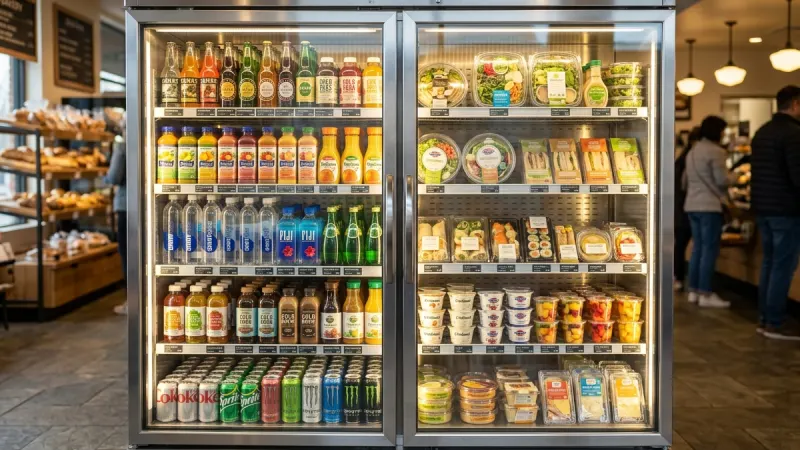
When a Traulsen commercial reach-in or roll-in refrigerator triggers a condenser high pressure alarm and begins overheating in a Milton, GA commercial kitchen, executive chefs and facility directors face an immediate operational crisis. Operating under demanding culinary schedules in North Fulton County, commercial refrigeration systems must maintain internal cabinet holding temperatures strictly below 41°F to comply with FDA Food Code Section 3-501.16 and Georgia Department of Public Health standards. When condensing pressures spike above safety thresholds, the electronic microprocessor control or mechanical high-pressure cut-out (HPCO) switch automatically shuts down the Copeland compressor to prevent catastrophic motor winding burnout or ruptured discharge tubing. Our EPA Universal-certified technicians provide 24/7 priority emergency dispatch throughout Milton, Crabapple, and Birmingham Crossroads, equipped with factory-calibrated digital manifold gauges, true-RMS telemetry meters, and genuine OEM Traulsen components. For immediate emergency dispatch, call our dedicated commercial response desk at (770) 796-7742.
Quick Answer: Resolving Traulsen Commercial Refrigerator High Pressure Alarms
Quick Answer: A Traulsen high pressure alarm (displaying “HI-P”, “COND”, or blinking amber service indicators) occurs when refrigeration discharge head pressure exceeds 380–450 PSI on R-404A or R-134a systems. The primary causes are severely matted grease on the StayClear or finned condenser coil, a failed ECM condenser fan motor, or non-condensable gases in the sealed system. Inspect and clean the top-mounted coil immediately. If the fan has failed or the manual reset HPCO switch trips repeatedly, contact our EPA-certified commercial technicians at (770) 796-7742 for same-day pressure telemetry diagnostics.
Listen to 90-Second Commercial Refrigeration Technical Brief
Narrated by Master Certified Commercial Refrigeration Engineer Greg Henderson
Check Commercial Traulsen Tech Dispatch in Milton & Surrounding ZIPs
Verified Commercial Job in Milton, GA
Traulsen G20010 Reach-In Refrigerator Condenser High-Pressure Overhaul
Location: Restaurant on Birmingham Hwy, Milton, GA • Replaced Seized ECM Fan Motor & Cleared Severe Grease Encrustation • ★★★★★ Verified Commercial Client
Technical Diagnostic Directory: Traulsen High Pressure Alarms
- 1. Commercial Refrigeration Architecture & Regulatory Stakes
- 2. Recognizing Operational Symptoms & Control Board Codes
- 3. Visual Before & After Condenser Coil Restoration
- 4. Root Mechanical, Electrical & Environmental Causes
- 5. Safe Facility Operations Troubleshooting Protocols
- 6. Critical OSHA, 3-Phase & EPA Section 608 Stop Thresholds
- 7. Capital Investment: Commercial Repair vs. Replace Matrix
- 8. Interactive Commercial Repair Cost Estimator
- 9. Milton Commercial Refrigeration Pricing Breakdown
- 10. Professional Refrigerant Telemetry & Ohms Testing Table
- 11. Critical Traulsen OEM Replacement Components
- 12. Preventive Commercial Kitchen Maintenance Protocols
- 13. Industrial Refrigeration Safety & HACCP Compliance
- 14. Frequently Asked Technical Questions
- 15. Related Commercial Refrigeration Services
- 16. Related Commercial Cooling Problems
- 17. Related Commercial Appliance Brands
- 18. Related North Fulton Service Locations
- 19. Key Operational Takeaways for Milton Kitchens
- 20. Emergency Commercial Dispatch & Service Contact
1. Commercial Refrigeration Architecture & Regulatory Stakes
In high-volume commercial dining, equestrian club banquet halls, and artisanal bakeries throughout Milton, GA, a Traulsen commercial refrigerator functions as the foundational cornerstone of cold food storage operations. Engineered with heavy-duty stainless steel cabinet construction, balanced top-mounted refrigeration systems, and microprocessor-based INTELA-TRAUL or Smart Control temperature regulation, Traulsen units are specified where thermal stability cannot be compromised. However, when the condenser coil encounters excessive heat accumulation and discharge vapor pressure exceeds factory safety thresholds, the control board halts normal refrigeration and triggers an urgent high pressure alarm. Understanding how to manage this critical condition is essential for commercial facility operators across North Fulton County.
From an operational and regulatory perspective, a high pressure shutdown represents an immediate commercial emergency. Under the United States Food and Drug Administration (FDA) Model Food Code Section 3-501.16, all time/temperature control for safety (TCS) foods—including raw poultry, prime beef, dairy products, prepared sauces, and cut leafy greens—must be continuously maintained at or below 41°F (5°C). When a high pressure alarm trips the compressor off-line, internal cabinet temperatures can surge from 36°F to dangerous ambient levels exceeding 65°F in less than 90 minutes. Georgia Department of Public Health environmental health inspectors strictly enforce these rules; an uncorrected refrigeration temperature violation can result in mandatory food disposal, severe health inspection point deductions, or immediate temporary permit suspension.
The thermodynamic architecture of a commercial vapor-compression refrigeration cycle relies on a delicate balance of pressure, temperature, and refrigerant mass flow. As superheated vapor leaves the cylinder heads of the Copeland compressor, it enters the condenser at high pressure and high temperature. The fundamental purpose of the condenser is to desuperheat the vapor, condense it into a subcooled high-pressure liquid, and reject both the heat absorbed in the evaporator and the electrical heat of compression into the ambient kitchen air. When convective airflow across the condenser is compromised by grease accumulation, fan motor failure, or elevated ceiling temperatures, the condensing process breaks down. The refrigerant cannot shed its latent heat of vaporization, leaving vapor backed up into the discharge line and drastically increasing operating head pressure.
The financial ramifications of an unexpected refrigeration failure in Milton are substantial. A standard two-section Traulsen G-Series or R-Series reach-in refrigerator routinely stores between $4,500 and $12,000 in perishable culinary inventory. Beyond direct food spoilage, unaddressed high condensing pressures impose immense mechanical stress on the Copeland hermetic or semi-hermetic compressor. As condensing temperatures climb past 130°F (54.4°C), discharge vapor temperatures leaving the cylinder heads can exceed 250°F (121°C). At these extreme temperatures, the polyolester (POE) or alkylbenzene refrigeration oil undergoes severe thermal degradation, carbonizing on the discharge reed valves, scouring bearing surfaces, and precipitating acid formation throughout the copper tubing circuit. Timely intervention with commercial appliance repair prevents costly compressor burnouts and keeps facilities fully compliant with environmental food standards.
In high-end dining venues across Milton, such as those along Birmingham Highway and around the historic Crabapple district, refrigeration systems operate under severe peak load conditions. During intense dinner rushes, reach-in refrigerator doors are opened dozens of times per hour, introducing massive thermal and humidity loads into the refrigerated cabinet. If the condensing unit is already operating at marginal efficiency due to partial fin fouling, the sudden influx of warm kitchen air drives suction pressure up, which in turn forces mass flow and discharge pressure past the high-pressure switch cut-out limit. This cascade failure mechanism underscores why commercial equipment requires far more rigorous diagnostic analysis than standard residential appliances experiencing refrigerator warming up while cooling components fail.
2. Recognizing Operational Symptoms & Control Board Codes
Commercial kitchen managers and culinary staff in Milton should be trained to identify the progressive stages of condenser overheating before a total system lockout occurs. Modern Traulsen refrigerators equipped with INTELA-TRAUL or Smart Control electronic modules communicate refrigeration anomalies through distinct visual alphanumeric codes, audible beepers, and physical operational symptoms:
- Alphanumeric Control Display Codes: The microprocessor flashes
HI-P,HP, orCONDalternately with the cabinet temperature. On units with visual status LEDs, an amber or red warning wrench icon will illuminate continuously or pulse rapidly alongside an audible 80 dB warning beeper. - Compressor Short-Cycling or Silent Stoppage: The compressor attempts to start, runs for 15 to 90 seconds under intense labored humming, and abruptly cuts out with a sharp mechanical metallic “click” as the internal thermal overload or the high-pressure cut-out (HPCO) switch interrupts the contactor control circuit.
- Extreme Top Shroud Temperature: The exterior top mechanical cabinet, louvered front hood, and discharge copper line become scalding to the touch, frequently radiating surface temperatures well above 160°F into the kitchen air.
- Condenser Fan Failure or Reverse Airflow: The electronically commutated (ECM) or shaded-pole condenser fan motor is either completely stationary, vibrating erratically without turning, or spinning backwards due to internal capacitor breakdown or windmilling against heavy kitchen exhaust drafts.
- Evaporator Coil Thermal Stagnation: Because refrigerant cannot liquefy efficiently in the overheated condenser, the thermostatic expansion valve (TXV) starves the evaporator. The evaporator fan continues to circulate air across warm coils, blowing tepid 55°F–65°F air across the cabinet shelves rather than chilled refrigeration air.
- Elevated Manifold Gauge Telemetry: When service technicians attach calibrated refrigeration gauges to the high-side Schrader or process valve, discharge pressures register between 380 and 460 PSI on R-404A systems (normal operating head pressure is 240–290 PSI at 85°F ambient), accompanied by erratic needle flutter indicating vapor bubbling in the liquid line.
- Audible Acoustic Flutter and Valve Chattering: Under excessive head pressure conditions, the compressor discharge reed valves flex beyond their mechanical design limits, producing a characteristic high-pitched chattering or buzzing noise that reverberates through the stainless steel cabinet walls.
- Electronic Expansion Valve (EEV) or TXV Hunting: As condensing pressure surges and drops violently during intermittent fan operation, the expansion valve continuously hunts for equilibrium, creating rapid thermal fluctuations across the evaporator surface and preventing stable cabinet pull-down.
If your walk-in cooler or reach-in cabinet exhibits these warning signs, ignoring the alarm will lead to severe mechanical damage. When standard reach-in units struggle, seeking timely emergency same-day appliance repair ensures that trained professionals can attach test manifolds, read electrical draw, and stabilize system pressures before the compressor motor winding insulation breaks down completely.
Early detection can mean the difference between a simple 45-minute coil decontamination procedure and a complete sealed-system replacement. When commercial operators notice that the top louvered panel feels significantly hotter than usual or hear the condenser fan motor pulsing, scheduling immediate maintenance resolves issues before reaching the threshold of fan motor noise and thermal fault diagnostics.
3. Visual Before & After Condenser Coil Restoration
The vast majority of Traulsen commercial high pressure alarms in Milton food service establishments originate from severe atmospheric fouling of the condenser coil. Traulsen units feature either micro-fin copper tube-and-aluminum fin coils or anodized StayClear finless condenser assemblies. In high-volume kitchen environments near fryers and flat-top grills, aerosolized cooking greases act as an aggressive adhesive, capturing airborne flour dust, lint, and cardboard particulate. Within months, an impenetrable insulating blanket encapsulates the heat exchanger.
Traulsen Commercial Condenser Coil: Milton GA Case Study
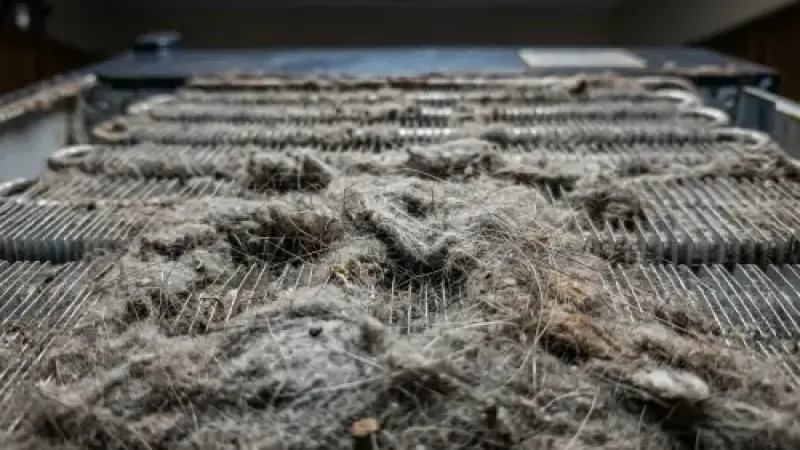
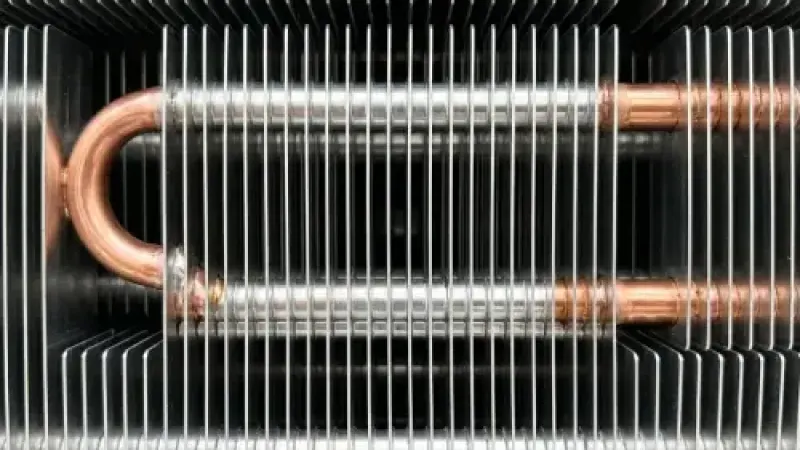
Diagnostic Summary: The before condition demonstrated zero convective airflow through the center 70% of the coil face. The thermal blanket prevented superheated discharge gas from shedding latent heat, escalating saturated condensing temperatures to 138°F. Following professional chemical decontamination and mechanical fin combing, air velocity through the core rose from 85 FPM to 480 FPM, immediately resolving the high pressure alarm and restoring target 36°F cabinet performance. Similar maintenance methodologies are detailed in our technical study on commercial condenser cleaning and error resolution.
4. Root Mechanical, Electrical & Environmental Causes
Troubleshooting a Traulsen high pressure alarm requires understanding the thermodynamic cycle of commercial vapor-compression refrigeration. High head pressure occurs whenever the refrigeration system cannot reject heat from the high-pressure superheated vapor into the surrounding air at the rate the compressor pumps it out. Our field diagnostics in Milton commercial facilities identify several primary root causes:
1. Severe Atmospheric Condenser Coil Matting
In restaurant cooking lines across Crabapple and Highway 9, commercial range hoods cannot capture 100% of vaporized cooking fats. Microscopic oil droplets travel through ceiling convection currents and adhere to the cold aluminum fins of the Traulsen condenser coil. As airborne flour dust, lint, and dust particles pass through the fan shroud, they become permanently cemented into the fin matrix. This creates an impermeable thermal boundary layer. Because air cannot contact the copper tubes, the sensible heat of compression cannot be rejected, causing condensing pressure to skyrocket rapidly until the safety cut-out terminates the cycle.
The microscopic physics of coil matting are particularly severe in bakeries and pizzerias throughout Milton. Airborne flour dust contains starches that, when combined with kitchen humidity and ambient grease vapors, form a dense papier-mâché consistency between the coil fins. Standard dry vacuuming cannot dislodge this gummy residue; it requires specialized industrial emulsifying chemical degreasers that break the hydrocarbon bonds without etching the delicate aluminum heat-exchange fins.
2. Defective or Binding ECM Condenser Fan Motor
Traulsen relies on high-efficiency Electronically Commutated Motors (ECM) or heavy-duty shaded pole fan motors to force between 350 and 600 CFM of ambient air across the condenser core. Over continuous 24/7 service, heat, humidity, and airborne flour dust penetrate the motor bearing assemblies, seizing the rotor shaft. Alternatively, internal solid-state electronic control boards inside ECM motors can suffer thermal failure due to North Fulton electrical surges. When the fan stops or slows below rated RPM, condensing capacity collapses to near zero within seconds, causing head pressure to spike above 400 PSI in under two minutes of compressor runtime. Regular refrigerator maintenance helps detect early bearing drag before a catastrophic motor lockup occurs.
ECM fan motors are particularly sensitive to high ambient operating temperatures. Unlike traditional induction motors that tolerate elevated heat with simple insulation derating, ECM motors house internal power inverters, rectifier diodes, and microprocessor microchips encapsulated within the rear motor housing. When ceiling ambient temperatures in Milton commercial kitchens surpass 115°F during midsummer operations, the internal thermal sensors of the ECM motor can shut down the drive circuitry, inducing an unexpected airflow failure even if the mechanical bearings spin freely.
3. Restricted Kitchen Ceiling Clearance and Thermal Recirculation
Commercial reach-in refrigerators require a minimum vertical clearance of 12 to 18 inches above the top-mounted mechanical housing for unobstructed air exhaust. In many Milton restaurant back-of-house layouts, prep tables, cardboard storage boxes, dry food ingredient bins, or drop-ceiling bulkheads are placed directly on top of or immediately adjacent to the condenser shroud. This physical blockage traps the expelled 120°F exhaust air, forcing the condenser fan to draw in superheated exhaust air in a continuous thermal loop. Saturated condensing temperatures spiral upward until the high-pressure sensor trips.
Thermal recirculation acts as an insidious multiplier of condensing pressure. Under normal conditions with an 80°F ambient intake, an R-404A condenser discharges air at roughly 100°F to 105°F. However, when exhaust air is recirculated directly back into the intake grille, intake temperatures can rise to 125°F within 20 minutes. At this elevated intake temperature, the thermodynamic temperature difference (ΔT) across the coil narrows, collapsing heat transfer efficiency and forcing head pressure into the high-pressure safety trip zone, a phenomenon we also observe in condenser airflow and humming diagnostics.
4. Non-Condensable Gases (Air and Moisture) Inside the Sealed System
If the sealed refrigeration system was previously serviced by an untrained technician without proper deep evacuation to 500 microns, atmospheric air and moisture may remain trapped inside the copper lines. Unlike pure refrigerants like R-404A, R-134a, or R-290, atmospheric nitrogen and oxygen do not condense into a liquid at commercial condensing temperatures. Instead, non-condensables collect at the top of the condenser coil and receiver tank, reducing the effective condensing surface area. Dalton’s Law of Partial Pressures dictates that total system pressure equals the sum of the refrigerant vapor pressure plus the partial pressure of the trapped air, causing extreme head pressure and erratic gauge needle pulsation.
Trapped moisture inside a sealed system creates secondary chemical degradation. When moisture mixes with POE refrigeration oils under high discharge temperatures (exceeding 220°F), it triggers a chemical hydrolysis reaction that produces hydrofluoric and organic acids. These acids attack copper tubing and dissolve motor winding varnish, leading directly to motor insulation breakdown, acidic sludge accumulation, and mechanical compressor seizure.
5. Refrigerant Overcharge From Previous Inaccurate Field Service
Commercial refrigeration systems equipped with thermostatic expansion valves (TXV) and liquid receivers must be charged with extreme precision using calibrated digital scales to factory nameplate specifications (often measured down to the quarter ounce). If an inexperienced technician attempted to resolve a low-side cooling problem by blindly adding refrigerant gas until the suction pressure rose, the condenser coil becomes flooded with excess liquid refrigerant. Liquid takes up valuable volume designed for vapor desuperheating and condensation, drastically raising head pressure under high kitchen ambient conditions.
In systems with excess refrigerant, liquid backs up through the bottom passes of the condenser coil into the receiver. Because liquid refrigerant has a significantly lower specific heat capacity than condensing vapor, the effective heat transfer coefficient of the coil plumlites. Under low heat load, the unit may appear to function, but as soon as the kitchen reaches peak lunch or dinner temperature, the excess liquid causes an uncontrollable surge in discharge pressure, tripping the high-pressure switch.
6. Failed or Out-of-Calibration High-Pressure Cut-Out (HPCO) Switch
The HPCO switch is a critical electromechanical or solid-state transducer safety device designed to break the compressor contactor control circuit at approximately 425 PSI on R-404A systems (or 310 PSI on R-134a units). Over years of kitchen thermal cycling, the internal bellows, microswitch contacts, or electronic transducer calibration can drift. In some cases, a weakened spring mechanism will cause the switch to trip at normal operating pressures (e.g., 270 PSI), producing nuisance high pressure alarms when the refrigeration circuit is operating safely. Multimeter testing is mandatory to distinguish between a genuine hydraulic overpressure and an electrical sensor calibration failure, as standardized in commercial reach-in cooler repair protocols.
7. Thermostatic Expansion Valve (TXV) Restriction and Power Element Failure
When a commercial thermostatic expansion valve loses its thermostatic bulb charge or suffers from internal wax and varnish contamination, the valve orifice can restrict liquid refrigerant flow into the evaporator. This restriction creates an abnormal hydraulic bottleneck in the liquid line. Liquid refrigerant backs up into the receiver and condenser, while suction pressure plummets. The compressor pumps against an elevated head pressure while starving for cool suction return gas, resulting in extreme compressor head overheating and eventual high-pressure safety lockouts.
8. Discharge Line Vibration Fatigue and Damaged Hot Gas Loops
Many Traulsen reach-in models incorporate an integrated hot-gas condensate perimeter loop that routes superheated discharge vapor around the door frame to prevent condensation sweat. If this tubing develops internal carbon deposits from past overheated oil, or if discharge muffler baffles become partially restricted due to mechanical vibration fatigue, discharge gas flow is restricted. The backpressure directly elevates cylinder head pressures, leading to recurrent high pressure alarms and high running amperage.
5. Step-by-Step Safe Facility Operations Troubleshooting Protocols
When a Traulsen commercial refrigerator high pressure alarm sounds during prep or dinner service in Milton, culinary managers can perform initial non-invasive verification steps to diagnose basic airflow obstructions. These checks must be conducted safely without opening pressurized sealed systems or exposing live high-voltage electrical connections:
Protocol Step 1: Verify External Shroud Clearance & Foreign Objects
Immediately inspect the top of the Traulsen cabinet. Ensure that kitchen staff have not stored sheet pans, cardboard delivery boxes, linen bags, or cleaning chemicals on top of the louvered condensing unit housing. Confirm at least 12 inches of open vertical clearance between the top exhaust grille and any ceiling joists or air ducts. Remove any items blocking airflow immediately.
Protocol Step 2: Perform Visual Condenser Fin Inspection
Unhook or lift open the front louvered access panel on the top mechanical section (most Traulsen R and G Series feature stay-open hinges or lift-off panels). Shine a bright LED inspection flashlight through the condenser coil fins. If you cannot clearly see the light passing between the aluminum fins, or if a dense grey or black blanket of greasy dust covers the face, the coil is severely obstructed. Use a soft nylon bristle condenser coil brush or a commercial shop vacuum with a brush attachment to gently pull loose lint from the face of the coil. Never bend the aluminum fins, and never use stiff wire brushes that can puncture the thin-walled copper tubing.
Protocol Step 3: Observe Condenser Fan Blade Rotation
With the front panel open, observe the condenser fan while the compressor calls for cooling. The fan blade should spin smoothly at high velocity (typically 1,300 to 1,550 RPM), pulling cool ambient air through the front louvers and discharging hot air across the coil out the top/rear. If the motor is silent, buzzing loudly without turning, or moving sluggishly, the fan motor or run capacitor has failed. If the blade is stationary, do not attempt to force-spin it with fingers or tools while power is energized.
Protocol Step 4: Perform a Logic Reset of the Electronic Controller
If the condenser coil has been thoroughly brushed clean and airflow is clear, attempt a single control logic reset. Turn off the main power switch located behind the front louvered panel, or switch off the dedicated circuit breaker at the facility electrical panel for 5 minutes. This discharges the microprocessor logic capacitors and resets temporary nuisance alarm codes in EEPROM memory. Restore power. If the alarm recurs within 3 to 15 minutes, a hard sealed-system or electrical component failure is active. Discontinue operation immediately to protect the compressor motor. When coolers display persistent faults, review our comprehensive analysis on why commercial refrigerators stop cooling.
Protocol Step 5: Check Door Gaskets and Door Closure Alignment
Inspect the perimeter magnetic door gaskets on all refrigerator doors. Perform the standard dollar-bill test: close the door on a bill along the top, side, and bottom edges. If the bill pulls out freely without magnetic resistance, warm kitchen humidity is leaking into the cabinet, overworking the refrigeration system. Clean soiled gaskets with warm water and mild soap. If gaskets are torn, brittle, or deformed, schedule commercial maintenance through our Milton commercial kitchen appliance service team.
6. Critical OSHA, 3-Phase & EPA Section 608 Stop Thresholds
While restaurant line cooks and facility handymen can clear surface lint and remove storage boxes from top mechanical panels, deeper technical intervention on commercial Traulsen refrigeration requires strict compliance with federal occupational safety standards and environmental regulations. Attempting unlicensed repairs on commercial refrigeration introduces extreme hazards:
- OSHA 208/230V Electrical Arc Flash & Electrocution: Commercial Traulsen units operate on dedicated 115V 20A, 208V, or 230V single/three-phase electrical circuits. Unlike residential appliances, commercial condensing units incorporate heavy-duty industrial starting relays, run capacitors storing high microfarad charges, and potential relays. Opening electrical control enclosures while energized presents severe arc flash and electrocution hazards under OSHA Standard 29 CFR 1910.303. Work on electrical control panels must only be performed by technicians utilizing NFPA 70E-compliant personal protective equipment (PPE) and Lockout/Tagout (LOTO) protocols.
- EPA Section 608 Federal Clean Air Act Violations: Commercial refrigeration systems utilize hydrofluorocarbon (HFC) refrigerants such as R-404A and R-134a, or flammable hydrocarbon (A3) refrigerants like R-290 (propane). Under Section 608 of the Clean Air Act, it is a federal crime punishable by severe fines (exceeding $44,500 per day per violation) for any uncertified individual to connect manifold gauges, puncture process tubes, or vent fluorinated refrigerants into the atmosphere. Only technicians holding valid EPA Universal Certification are legally permitted to access and service pressurized sealed refrigeration loops.
- Hydrocarbon R-290 Flammability Risks: Newer Traulsen commercial models utilize ultra-low global warming potential (GWP) R-290 refrigerant. While environmentally friendly, R-290 is high-purity propane. Servicing an R-290 system requires spark-proof recovery equipment, explosion-proof electronic vacuum pumps, nitrogen purges, and specialized solderless mechanical swaging (such as ZoomLock or Lokring fittings) to eliminate all open flames in commercial kitchens. An errant spark near a refrigerant leak can cause an instant kitchen explosion.
- Hydraulic Rupture & Severe Cryogenic Burns: High head pressure exceeding 450 PSI turns liquid refrigerant into a hazardous projectile if an unrated service manifold hose bursts or a corroded high-side line fails. Liquid refrigerant escaping at high velocity boils at -40°F, causing instantaneous full-thickness cryogenic freeze burns to skin and permanent blindness upon corneal contact.
- AIM Act Mandatory Leak Rate Thresholds: Under the American Innovation and Manufacturing (AIM) Act and EPA regulations, commercial refrigeration equipment with 50 or more pounds of refrigerant must adhere to strict leak repair requirements if annual leak rates exceed 20% for commercial refrigeration or 30% for industrial process cooling. Even on self-contained reach-in equipment with smaller charges, EPA rules require certified recovery and forbid venting under all circumstances.
Whenever basic surface cleaning fails to clear the alarm, cease internal troubleshooting and contact EPA-certified professionals immediately. For multi-brand kitchens experiencing simultaneous refrigeration failures, our technicians also handle Sub-Zero high-end commercial and residential units across the greater Milton area.
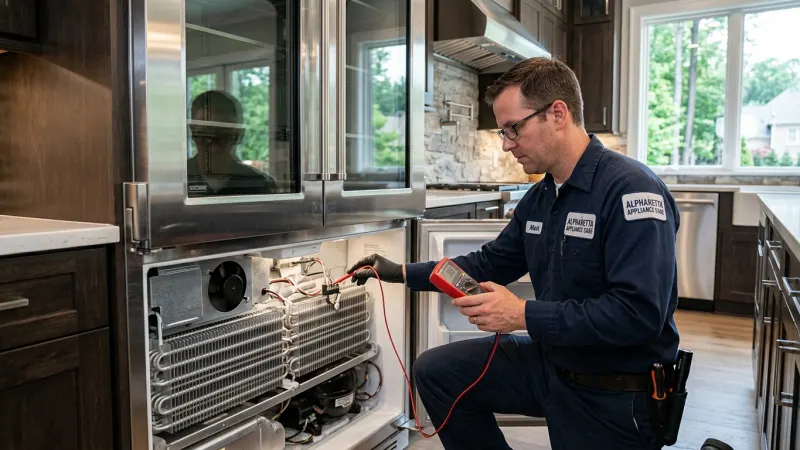
7. Capital Investment: Commercial Repair vs. Replace Matrix
When facing a high-pressure failure on a commercial Traulsen refrigerator, restaurant owners and food service directors must weigh immediate repair expenditures against long-term equipment replacement costs. Traulsen commercial refrigerators are capital-grade culinary assets engineered for 15 to 25 years of continuous commercial duty. In contrast to light-duty commercial equipment, repairing a Traulsen is almost always the economically superior decision when core cabinet integrity remains sound, safeguarding your commercial-grade refrigeration investments.
| Assessment Factor | Candidate for Commercial Repair | Candidate for Equipment Replacement |
|---|---|---|
| Equipment Age | Under 12 years (cabinet structure, door hinges, and wiring intact). | Exceeding 18–20 years with multiple prior sealed system overhauls. |
| Nature of Failure | ECM fan motor failure, blocked coil, HPCO switch trip, or failed relay. | Severe internal compressor burnout accompanied by pervasive acid and cabinet liner corrosion. |
| Repair Investment Ratio | Repair cost represents less than 35% of a comparable new Traulsen ($6,500–$11,000+). | Cumulative repair estimate exceeds 50% of the replacement price. |
| Refrigerant Type | Standard R-404A, R-134a, or modern low-GWP R-290. | Obsolete, phased-out R-12 or R-502 systems requiring extensive retrofit conversions. |
| Operational Downtime | Same-day restoration (2 to 4 hours) utilizing fully stocked emergency service vans. | 4 to 8 week factory lead times for custom stainless reach-in delivery and installation. |
| Cabinet & Insulation Status | High-density foamed-in-place polyurethane insulation with pristine magnetic door gaskets. | Delaminated exterior panels, waterlogged foam core, or cracked internal liner frames. |
8. Interactive Commercial Repair Cost Estimator
Calculate your estimated investment for commercial Traulsen refrigerator high pressure repairs in Milton, GA. This interactive tool provides transparent commercial budgeting estimates based on current OEM component costs and commercial HVAC/R labor rates across North Fulton County.
9. Milton Commercial Refrigeration Pricing Breakdown
Commercial refrigeration repair pricing in Milton and North Fulton County is determined by the diagnostic complexity of commercial equipment, component availability, and stringent EPA compliance procedures. Unlike simple residential repairs, working on pressurized commercial Traulsen reach-ins requires dedicated vacuum pumps, recovery cylinders, electronic scales, and industrial safety procedures:
- Commercial Diagnostic Evaluation Fee ($125 – $195): Covers immediate on-site dispatch of an EPA Universal-certified commercial technician, mechanical housing access, digital manifold pressure testing, electrical circuit amp-draw logging, and micro-controller error code extraction. This diagnostic fee is credited directly toward completed repairs.
- Condenser Coil Chemical Remediation ($185 – $320): Heavy grease binding in commercial kitchens requires professional foaming citrus or alkaline non-acid coil cleaners, protective drape placement, high-volume wet-extraction, and mechanical fin combing. This restores vital heat transfer without damaging sensitive copper joints.
- ECM Condenser Fan Motor Replacement ($380 – $680): Replaces a seized or electrically failed ECM motor with genuine Traulsen OEM parts (Part #338-60100-00 or equivalent), including balanced aluminum fan blades, mounting isolation bushings, and sealed moisture-resistant wiring harness connections.
- High-Pressure Cut-Out Switch Replacement ($320 – $495): Involves brazing or Schrader-mounting a replacement OEM mechanical or transducer-type HPCO switch, pressure-testing the fitting with dry nitrogen to 350 PSI, and testing automated or manual trip safety thresholds.
- Thermostatic Expansion Valve (TXV) & Filter Drier Replacement ($750 – $1,250): Requires recovering the existing refrigerant charge to 0 PSIG per EPA regulations, unbrazing the restricted TXV and liquid line drier with oxy-acetylene torches under continuous dry nitrogen purging to prevent internal copper oxidation, deep triple-evacuating the system to 350 microns, and charging the system with virgin refrigerant by weight.
- Copeland Compressor Replacement ($1,400 – $2,400): Comprehensive hermetic or scroll compressor replacement including new rubber isolators, acid-scavenging liquid and suction line filter driers, start capacitors, potential relays, complete nitrogen leak decay testing, vacuum evacuation, and dynamic refrigerant balancing.
For multi-equipment kitchens in Milton looking to control maintenance costs, we also provide specialized service for commercial beverage units; explore our detailed guide on beverage cooler frost and cooling problems.
10. Professional Refrigerant Telemetry & Ohms Testing Table
Master commercial refrigeration technicians rely on rigorous scientific telemetry to distinguish between mechanical airflow blockages, electrical sensor drift, and sealed-system hydraulic restrictions. Guesswork has no place in commercial kitchen maintenance. Partnering with certified commercial appliance service ensures that diagnostics follow established engineering protocols. Below is our interactive technical telemetry lookup table used by field engineers in Milton to evaluate Traulsen systems.
| System Parameter | Test Instrument | Normal Operational Range | High Pressure Fault Condition | Root Corrective Action |
|---|---|---|---|---|
| R-404A Discharge Head Pressure | Digital Manifold Gauge | 240 – 290 PSIG @ 85°F Ambient | > 380 – 450 PSIG | Clean condenser coil; replace failed ECM fan; purge non-condensables. |
| R-134a Discharge Head Pressure | Digital Manifold Gauge | 145 – 185 PSIG @ 85°F Ambient | > 260 – 310 PSIG | Chemical coil degreasing; verify top shroud clearance >12 inches. |
| R-290 Discharge Head Pressure | Certified Spark-Proof Manifold | 150 – 195 PSIG @ 85°F Ambient | > 280 – 330 PSIG | Inspect micro-channel condenser; verify R-290 charge down to 0.1 oz. |
| Condenser Air Temperature Rise (ΔT) | Dual K-Type Bead Thermocouples | 15°F – 25°F Differential | < 5°F (stalled fan) or > 40°F (fouled fins) | Straighten bent fins with comb; replace slow ECM motor. |
| Liquid Line Subcooling | Pipe Clamp Thermocouple & Gauge | 8°F – 14°F Subcooling | > 25°F (overcharge/restriction) | Recover excess refrigerant; replace plugged liquid line filter drier. |
| ECM Condenser Fan Motor Resistance | True-RMS Digital Multimeter (Ω) | 18 – 45 Ω Across Main Windings | 0.0 Ω (Dead Short) or ∞ Ω (Open Circuit) | Replace ECM fan motor assembly and harness plug. |
| HPCO Switch Continuity Test | Digital Multimeter (Audible Continuity) | < 0.5 Ω Closed Circuit (Normal) | ∞ Ω Open Circuit @ Normal Pressure | Manually press red reset plunger; if still open, replace switch. |
| Compressor Running Amperage (RLA) | True-RMS Clamp Meter | Within Nameplate RLA ±10% | Exceeds Nameplate RLA by > 35% | De-energize immediately to prevent compressor winding breakdown. |
Thermodynamic Formulations: Calculating Saturated Condensing Temperature & Subcooling
When diagnosing Traulsen commercial refrigeration systems in Milton, certified technicians do not rely merely on raw pressure gauge numbers. Saturated Condensing Temperature (SCT) and Liquid Subcooling provide definitive thermodynamic insight into condenser heat exchange efficiency:
Saturated Condensing Temperature (SCT) = Pressure-to-Temperature Conversion (P-T Chart) of Discharge Pressure
Liquid Line Subcooling (ΔT_sub) = SCT – T_liquid_line
Evaporator Superheat (ΔT_sup) = T_suction_line – Saturated Evaporating Temperature (SET)
Under correct thermodynamic balance with R-404A at 85°F ambient entering air, a clean Traulsen condenser operates with an SCT of approximately 110°F (equivalent to 272 PSIG). If the actual liquid line temperature leaving the condenser measures 98°F, the calculated liquid subcooling is 12°F (110°F – 98°F). This indicates that the condenser is completely transforming superheated vapor into solid liquid before it reaches the expansion valve. If, however, SCT registers 135°F (365 PSIG) while subcooling drops below 3°F, it proves that the condenser cannot reject sufficient heat, delivering flash gas bubbles into the liquid line and choking the refrigeration cycle.
Copeland Compressor Motor Electrical Dielectric & Megohmmeter Testing
Repeated high-pressure cycling subjects the Copeland compressor motor to extreme thermal stress. When cylinder head temperatures exceed 250°F, the insulating varnish coating the copper motor windings begins to decompose chemically. To evaluate whether thermal overheating has permanently compromised the motor stator, master technicians perform insulation resistance testing using a 500VDC or 1000VDC megohmmeter (Megger):
- Above 100 Megohms (>100 MΩ): Pristine dielectric insulation; motor windings are fully intact with zero dielectric leakage to the compressor ground casing.
- Between 20 Megohms and 100 Megohms (20–100 MΩ): Moderate insulation degradation caused by elevated heat cycles or moisture contamination in the POE oil; requires immediate acid testing and drier replacement.
- Below 20 Megohms (<20 MΩ): Severe dielectric breakdown; the motor windings are in imminent danger of short-to-ground failure and require planned compressor replacement before catastrophic burnout contaminates the entire copper tubing network, following commercial compressor diagnostic standards.
11. Critical Traulsen OEM Replacement Components
Using generic aftermarket components on high-performance commercial Traulsen refrigerators frequently leads to premature failure, mismatched motor airflow, or improper safety cut-out thresholds. Our Milton emergency service inventory is stocked exclusively with authentic factory-engineered Traulsen, Copeland, and Danfoss OEM replacement parts:
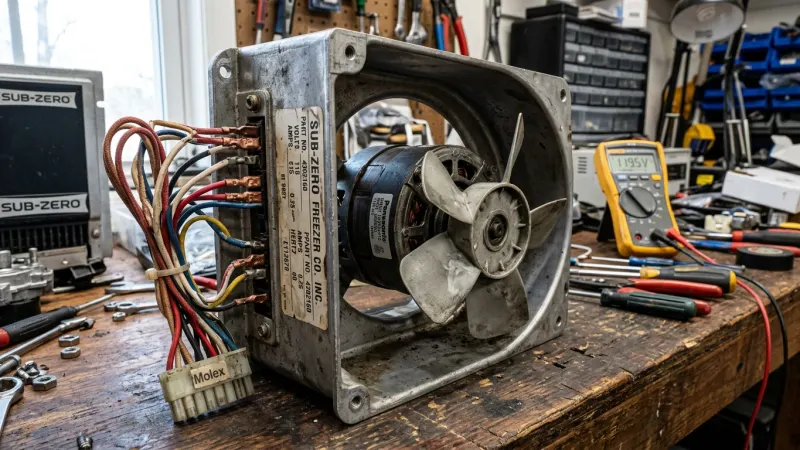
- Traulsen OEM High-Efficiency ECM Condenser Fan Motor (Part #338-60100-00 / #338-60012-00): A 115V / 208-230V 16W to 25W electronically commutated motor delivering high torque, low acoustic resonance, and integrated thermal-overload protection. Features reverse-pulsing logic on select Smart Control models to clear surface dust automatically.
- Traulsen Manual-Reset High-Pressure Cut-Out Switch (Part #325-60080-00): Precision-calibrated safety control designed to break the compressor contactor circuit at 425 ±10 PSIG on R-404A models. Equipped with a manual red reset plunger to prevent repetitive cycling under uncorrected high-pressure conditions.
- Danfoss / Sporlan Thermostatic Expansion Valve (TXV) (Part #325-60091-00): Balanced-port commercial expansion valve featuring an external equalizer line and internal check valve. Modulates liquid refrigerant flow into the evaporator coil with extreme thermal precision across shifting kitchen heat loads.
- Traulsen INTELA-TRAUL Temperature & High-Pressure Sensor Harness (Part #337-60130-00): Encapsulated NTC thermistor probe and pressure transducer harness assembly providing real-time data to the microprocessor logic board. High-temperature fluoropolymer jacketing resists kitchen grease degradation.
- Solid-Core Liquid Line Filter Drier (Part #325-60020-00): A 100% molecular sieve desiccant filter drier that removes microscopic moisture, flux residues, and acids from the liquid line, maintaining peak liquid subcooling and protecting expansion orifices.
- Copeland Commercial Hermetic & Scroll Compressors (Models RST45C1E, RRT64C1E, ZS Series): Heavy-duty commercial displacement compressors featuring internal pressure relief valves, hardened steel reed valves, and optimized POE oil charges engineered for continuous 24/7 commercial refrigeration cycles.
If your facility also operates commercial ice machines alongside reach-in refrigerators, discover our authorized local service options for Hoshizaki commercial ice machines in Milton.
We also stock specialized commercial ice maker augers, bearings, and water pumps, including complete repair procedures for Scotsman nugget ice maker repair throughout the greater Milton and Alpharetta regions.
12. Preventive Commercial Kitchen Maintenance Protocols
Preventing unexpected high pressure alarms requires a disciplined, scheduled preventative maintenance protocol executed by both kitchen personnel and certified commercial refrigeration contractors. In the aggressive atmospheric environment of Milton commercial kitchens, proactive servicing dramatically extends compressor lifespan and reduces energy consumption by up to 30%:
Many regional facilities pair reach-in refrigerator service with comprehensive ice machine maintenance; learn more about scheduling through our commercial ice and cooling equipment maintenance program.
- Weekly Kitchen Staff Inspection: Inspect the top mechanical louvered panel for foreign objects, cardboard debris, or plastic wrap. Ensure that ambient kitchen air can circulate freely around the cabinet perimeter. Wipe down exterior louvers with a clean, dry microfiber cloth.
- Monthly Deep Coil Brushing & Vacuuming: Turn off power to the unit at the disconnect switch. Unlatch the front mechanical cover and use a specialized curved commercial coil vacuum attachment to pull dry dust and lint from the intake face of the condenser fins. Work strictly in the direction of the aluminum fins to avoid bending them.
- Quarterly Professional Chemical De-Greasing: Have an EPA-certified commercial contractor apply non-acid, self-rinsing foaming citrus cleaner to liquefy cooking greases trapped deep within the coil core. Low-pressure water rinsing and vacuum extraction eliminate stubborn residues without splashing water onto sensitive electrical components.
- Quarterly Condenser Fan Motor Amp & Bearing Check: Measure the running amperage of the ECM condenser fan motor using a calibrated true-RMS clamp meter. Verify that the motor shaft spins with zero axial play or bearing roughness. Lubricate mechanical bearings if equipped with oil ports.
- Biannual Operating Pressure & Subcooling Certification: A certified technician attaches digital manifold gauges to verify suction and head pressure under full culinary heat loads. Calculating liquid subcooling (condenser saturation temperature minus liquid line temperature) and evaporator superheat ensures that the refrigerant charge remains at factory nameplate specifications.
- Annual Magnetic Door Gasket & Door Closer Calibration: Inspect vinyl magnetic door gaskets for tears, stiffened corners, or food residue. Defective door gaskets allow warm, humid kitchen air to infiltrate the cabinet continuously, forcing the compressor to run 100% of the time and accelerating condenser fouling.
- Semi-Annual Electrical Terminal Torque Verification: Heat cycling in commercial kitchens causes electrical terminal screw lugs on contactors, relays, and terminal blocks to loosen over time. Loose connections create micro-arcing, voltage drops, and localized overheating that can damage expensive electronic microprocessor boards.
13. Industrial Refrigeration Safety & HACCP Compliance
Maintaining a safe culinary operation in Milton requires adherence to strict industrial electrical safety, mechanical precautions, and Hazard Analysis Critical Control Point (HACCP) food sanitation standards:
- Electrical Safety (NFPA 70E): Always de-energize the primary circuit breaker and execute Lockout/Tagout procedures before opening the top mechanical housing. Even when the compressor is idle, control board capacitors and starter relays carry lethal residual voltage. Never bypass the high-pressure cut-out switch with a jumper wire; bypassing this critical safety switch can cause the compressor head to rupture under catastrophic hydraulic pressure.
- Mechanical Protection: Keep hands, fingers, and loose culinary clothing well clear of the condenser fan blades. Commercial fan motors can start automatically without warning whenever the temperature controller calls for cooling. Aluminum condenser coil fins are razor-sharp; always wear cut-resistant gloves during inspection.
- Chemical & Refrigerant Handling: Never use corrosive acidic coil cleaners containing hydrofluoric acid inside commercial kitchens. Acid fumes damage stainless steel cabinetry and create toxic vapors in enclosed food prep areas. Only utilize biodegradable, non-toxic, alkaline or citrus-based commercial formulations.
- HACCP Food Safety Protocols: If a high pressure alarm halts cooling and cabinet temperatures exceed 41°F, immediately begin active temperature monitoring using calibrated probe thermometers. If food temperatures remain between 41°F and 70°F for under 2 hours, rapidly transfer products into an adjacent walk-in cooler or secondary reach-in. If TCS foods have resided above 41°F for more than 4 hours, condemn and discard the inventory per FDA and Georgia DPH guidelines to prevent foodborne illness outbreaks.
- Refrigerant Asphyxiation Awareness: Modern fluorinated refrigerants are heavier than air. In cramped basements or poorly ventilated kitchen storage closets, a major high-pressure blowout can displace oxygen rapidly, creating an invisible asphyxiation hazard. Ensure that commercial kitchen mechanical spaces comply with ASHRAE Standard 15 ventilation requirements.
<!– 22. Frequently Asked Questions (16 rich FAQs inside
, first 2 open) –>
14. Frequently Asked Technical Questions
Below are detailed technical answers to the most common questions Milton executive chefs, restaurant general managers, and facility engineers ask regarding Traulsen commercial refrigerator high pressure alarms and condenser overheating.
What causes the “HI-P” or “COND” alarm on my Traulsen commercial refrigerator?
The “HI-P” or “COND” display alarm is triggered when the high-side refrigeration head pressure exceeds factory safety thresholds (typically 425 PSI on R-404A systems or 310 PSI on R-134a models). The primary causes are a severely grease-matted or dust-clogged condenser coil, an ECM condenser fan motor that has seized or lost RPM, restricted airflow clearance above the top-mounted mechanical cabinet, or non-condensable air trapped in the sealed refrigerant loop.
Where is the manual reset button for the Traulsen high pressure switch located?
On most Traulsen G-Series, R-Series, and commercial reach-ins, the manual high-pressure cut-out (HPCO) reset is located in the top mechanical compartment next to the compressor or attached to the discharge copper tubing near the condenser. It features a prominent red or black reset plunger button on top of a brass or galvanized pressure switch body. De-energize power, allow the condenser to cool for 15 minutes, and press firmly until you hear a mechanical click.
Why does my Traulsen compressor short cycle after running for only 30 to 60 seconds?
Short cycling under high-pressure conditions occurs because head pressure builds rapidly the moment the compressor starts pumping. If the condenser fan is not moving air or the coil is completely blocked, pressure spikes from 200 PSI to over 400 PSI in under a minute. The HPCO switch or internal thermal overload immediately trips to protect the compressor motor windings, shutting down the unit.
Is it safe to bypass the Traulsen high pressure switch to keep cooling during dinner rush?
Never bypass the high-pressure cut-out switch. Bypassing this vital safety device allows hydraulic head pressures to escalate past 550 PSI. This can cause catastrophic compressor valve plate blowout, rupture brazed copper joints, spray hot oil and refrigerant into the kitchen, or burn out the compressor motor windings, converting a simple $350 repair into a $2,500 compressor replacement.
How often should commercial Traulsen condenser coils be professionally cleaned in Milton?
In standard culinary environments, condenser coils should be vacuumed monthly and chemically degreased quarterly. If the Traulsen unit is positioned near deep-fat fryers, charbroilers, or commercial woks, bi-monthly chemical cleaning is strongly recommended to prevent aerosolized grease from permanently bonding to the aluminum fins.
What is the normal operating head pressure for a Traulsen R-404A commercial refrigerator?
At a standard room ambient temperature of 75°F to 85°F, normal R-404A condensing head pressure ranges between 235 and 285 PSIG, with a condensing saturation temperature of approximately 105°F to 115°F. Any operating head pressure consistently exceeding 325 PSIG indicates restricted airflow, high kitchen ambient temperatures, or sealed system anomalies requiring professional intervention.
How does a failed condenser fan motor cause high pressure alarms?
The condenser fan provides convective airflow to strip sensible and latent heat from the hot refrigerant vapor circulating inside the coil. Without continuous 350+ CFM airflow, heat cannot transfer to ambient air. Heat rapidly accumulates, the refrigerant cannot condense into a high-pressure liquid, and head pressure climbs vertically until the safety cut-out switch interrupts compressor power.
Can an overcharged commercial refrigeration system trigger a high pressure alarm?
Yes. If refrigerant was added without precision digital scales, excess liquid refrigerant backs up into the condenser coil tubes. This reduces the available surface area for vapor desuperheating and condensation. The reduced condensing volume creates severe hydraulic backpressure, causing head pressures to spike rapidly, especially during hot Georgia summer afternoons.
What are non-condensables, and how do they enter my Traulsen sealed system?
Non-condensables consist of atmospheric air, nitrogen, or moisture that entered the sealed system through a low-side suction leak operating in a vacuum, or through improper field servicing without adequate vacuum pump evacuation (below 500 microns). Trapped air collects at the top of the condenser, cannot liquefy, and dramatically increases total system pressure per Dalton’s Law.
How much vertical clearance does a top-mounted Traulsen refrigerator require?
Traulsen factory installation manuals mandate a minimum vertical ceiling clearance of 12 inches, with 18 inches strongly recommended in commercial kitchens. Storing boxes, trays, or installing drop-ceiling soffits directly above the condenser shroud traps exhaust heat, causing thermal recirculation and recurrent high-pressure trips.
Can I use a pressure washer to clean my Traulsen condenser coil?
No, never use a high-pressure pressure washer on a commercial reach-in condenser coil. The intense water force will permanently flatten and crush the thin aluminum fins, completely destroying convective airflow. Furthermore, pressurized water will flood electrical contactors, ECM motor electronics, and the main micro-controller, creating severe short circuits.
How long can perishable foods remain safely inside an unpowered Traulsen refrigerator?
With doors kept tightly closed, Traulsen’s high-density foamed-in-place polyurethane insulation will maintain temperatures below 41°F for approximately 3 to 4 hours under moderate ambient conditions. Once internal temperatures exceed 41°F, FDA rules mandate that time-sensitive TCS foods must be relocated or used within 2 hours, and discarded if exposed above 41°F for over 4 hours.
What is the difference between an ECM and shaded-pole condenser fan motor?
Electronically Commutated Motors (ECM) utilize brushless DC architecture with internal microprocessor controls, operating at 65% to 75% efficiency compared to only 20% to 25% for older shaded-pole motors. ECMs produce far less waste heat, maintain constant RPM under variable static pressure, and draw significantly less electrical wattage, dramatically lowering utility bills.
How does a technician test if a Traulsen high pressure switch is bad?
A technician connects a digital multimeter set to continuity or low resistance (Ω) across the switch terminals while reading actual line pressure with a digital manifold gauge. If the switch contacts are open (infinite resistance) while system head pressure is at a safe level (e.g. 250 PSI), the switch has drifted or failed mechanically and must be replaced.
What warranty coverage is provided on Traulsen commercial repairs in Milton?
All commercial Traulsen repairs performed by our certified technicians in Milton, GA come backed by a comprehensive 90-day parts and labor warranty. If the replaced component fails or the high pressure alarm returns under normal operating conditions within 90 days, our technicians return promptly to resolve the issue at zero additional charge.
How quickly can an emergency technician arrive at my restaurant in Milton, GA?
We maintain dedicated on-call commercial HVAC/R service trucks positioned throughout North Fulton County, providing emergency response times typically between 45 and 75 minutes for Milton restaurants, country clubs, and culinary facilities. Call our emergency dispatch line at (770) 796-7742 for immediate priority service.
15. Related Commercial Refrigeration Services
Our certified commercial service division delivers comprehensive electromechanical diagnostic, preventative maintenance, and emergency restoration solutions across North Fulton County:
- Commercial Appliance & Refrigeration Repair in Alpharetta & Milton — Master service for walk-in coolers, reach-in freezers, and industrial cooking lines.
- Emergency Same-Day Appliance Repair Services — Priority 24/7 rapid response for restaurant refrigeration failures and critical downtime.
- Commercial Refrigerator Maintenance & Coil Care Program — Scheduled chemical cleaning and telemetry inspections extending equipment lifespan.
- Local Certified Master Appliance Service & Diagnostics — Complete residential and commercial electromechanical diagnostic solutions.
16. Related Commercial Cooling Problems
Explore our in-depth diagnostic guides addressing common refrigeration cooling failures, air circulation issues, and error code resolutions:
- Why Your Refrigerator Stops Cooling: Complete Diagnostic Guide — Comprehensive analysis of compressor, relay, and sealed system failures.
- Refrigerator Warm While Freezer Operates: Airflow & Damper Fixes — Troubleshooting evaporator fan lockups and defrost drain freeze-ups.
- Beverage Cooler Frost & Ice Buildup on Rear Evaporator Wall — Diagnosing low suction pressure, thermistor drift, and air leakage.
17. Related Commercial Appliance Brands
In addition to factory Traulsen commercial refrigeration systems, our certified technicians carry advanced diagnostics for top premium and commercial brands:
- True Commercial & Residential Refrigerator Repair — Factory-grade diagnostics for True reach-ins, undercounter coolers, and display cases.
- Sub-Zero Premium Refrigerator Diagnostic & Vacuum Condenser Care — Dual-compressor sealed system diagnostics and microprocessor service.
- Manitowoc Commercial Ice Machine Repair & Cleaning — Harvest cycle diagnostics, water inlet valves, and evaporator plate restoration.
18. Related North Fulton Service Locations
We deploy fully stocked mobile emergency repair units across the following local communities in North Fulton and surrounding areas:
- Milton, GA Refrigeration Repair & Vacuum Condenser Service — Serving Crabapple, Birmingham Crossroads, and the equestrian corridor.
- Milton Commercial Condenser Cleaning & EC50 Error Service — Dedicated local emergency dispatch for Milton restaurants and food service operators.
- Milton, GA Local Commercial Kitchen Appliance Support — Comprehensive culinary facility repair coverage across ZIP code 30004.
- Milton Premium Commercial & Residential Appliance Repair — High-end commercial refrigeration, walk-ins, and kitchen range service.
19. Key Operational Takeaways for Milton Kitchens
- Immediate High-Pressure Protection: The Traulsen “HI-P” alarm indicates dangerous head pressure exceeding 380–425 PSI; the HPCO switch protects the Copeland compressor from winding burnout.
- Atmospheric Grease is Culprit #1: Over 80% of Milton commercial alarms stem from greasy culinary lint choking the top-mounted aluminum condenser fins, eliminating convective heat transfer.
- Verify ECM Fan Operation First: Inspect the top condenser fan motor; a seized rotor or open electronic winding triggers high pressure lockouts in less than two minutes of operation.
- Ensure 12–18 Inches Clearance: Never store sheet pans, boxes, or linen supplies on top of the reach-in refrigerator shroud, as trapped heat triggers continuous thermal recirculation.
- Never Bypass Safety HPCO Switches: Bypassing a high pressure safety switch risks hydraulic tubing blowouts, severe mechanical damage, and complete compressor destruction.
- Comply with FDA 41°F Mandate: Time-sensitive TCS foods must be monitored and maintained below 41°F to prevent costly food inventory condemnation and health code violations.
- Mandatory EPA Section 608 Protocol: Sealed refrigeration access, digital gauge readings, and refrigerant recovery require EPA Universal Certification to prevent Clean Air Act violations.
- Rely on Genuine Traulsen OEM Parts: Insist on factory OEM fan motors, switches, and TXVs backed by our written 90-day parts and labor warranty for verified commercial reliability.
20. Emergency Commercial Dispatch & Service Contact
What causes the “HI-P” or “COND” alarm on my Traulsen commercial refrigerator?
The “HI-P” or “COND” display alarm is triggered when the high-side refrigeration head pressure exceeds factory safety thresholds (typically 425 PSI on R-404A systems or 310 PSI on R-134a models). The primary causes are a severely grease-matted or dust-clogged condenser coil, an ECM condenser fan motor that has seized or lost RPM, restricted airflow clearance above the top-mounted mechanical cabinet, or non-condensable air trapped in the sealed refrigerant loop.
Where is the manual reset button for the Traulsen high pressure switch located?
On most Traulsen G-Series, R-Series, and commercial reach-ins, the manual high-pressure cut-out (HPCO) reset is located in the top mechanical compartment next to the compressor or attached to the discharge copper tubing near the condenser. It features a prominent red or black reset plunger button on top of a brass or galvanized pressure switch body. De-energize power, allow the condenser to cool for 15 minutes, and press firmly until you hear a mechanical click.
Why does my Traulsen compressor short cycle after running for only 30 to 60 seconds?
Short cycling under high-pressure conditions occurs because head pressure builds rapidly the moment the compressor starts pumping. If the condenser fan is not moving air or the coil is completely blocked, pressure spikes from 200 PSI to over 400 PSI in under a minute. The HPCO switch or internal thermal overload immediately trips to protect the compressor motor windings, shutting down the unit.
Is it safe to bypass the Traulsen high pressure switch to keep cooling during dinner rush?
Never bypass the high-pressure cut-out switch. Bypassing this vital safety device allows hydraulic head pressures to escalate past 550 PSI. This can cause catastrophic compressor valve plate blowout, rupture brazed copper joints, spray hot oil and refrigerant into the kitchen, or burn out the compressor motor windings, converting a simple $350 repair into a $2,500 compressor replacement.
How often should commercial Traulsen condenser coils be professionally cleaned in Milton?
In standard culinary environments, condenser coils should be vacuumed monthly and chemically degreased quarterly. If the Traulsen unit is positioned near deep-fat fryers, charbroilers, or commercial woks, bi-monthly chemical cleaning is strongly recommended to prevent aerosolized grease from permanently bonding to the aluminum fins.
What is the normal operating head pressure for a Traulsen R-404A commercial refrigerator?
At a standard room ambient temperature of 75°F to 85°F, normal R-404A condensing head pressure ranges between 235 and 285 PSIG, with a condensing saturation temperature of approximately 105°F to 115°F. Any operating head pressure consistently exceeding 325 PSIG indicates restricted airflow, high kitchen ambient temperatures, or sealed system anomalies requiring professional intervention.
How does a failed condenser fan motor cause high pressure alarms?
The condenser fan provides convective airflow to strip sensible and latent heat from the hot refrigerant vapor circulating inside the coil. Without continuous 350+ CFM airflow, heat cannot transfer to ambient air. Heat rapidly accumulates, the refrigerant cannot condense into a high-pressure liquid, and head pressure climbs vertically until the safety cut-out switch interrupts compressor power.
Can an overcharged commercial refrigeration system trigger a high pressure alarm?
Yes. If refrigerant was added without precision digital scales, excess liquid refrigerant backs up into the condenser coil tubes. This reduces the available surface area for vapor desuperheating and condensation. The reduced condensing volume creates severe hydraulic backpressure, causing head pressures to spike rapidly, especially during hot Georgia summer afternoons.
What are non-condensables, and how do they enter my Traulsen sealed system?
Non-condensables consist of atmospheric air, nitrogen, or moisture that entered the sealed system through a low-side suction leak operating in a vacuum, or through improper field servicing without adequate vacuum pump evacuation (below 500 microns). Trapped air collects at the top of the condenser, cannot liquefy, and dramatically increases total system pressure per Dalton’s Law.
How much vertical clearance does a top-mounted Traulsen refrigerator require?
Traulsen factory installation manuals mandate a minimum vertical ceiling clearance of 12 inches, with 18 inches strongly recommended in commercial kitchens. Storing boxes, trays, or installing drop-ceiling soffits directly above the condenser shroud traps exhaust heat, causing thermal recirculation and recurrent high-pressure trips.
Can I use a pressure washer to clean my Traulsen condenser coil?
No, never use a high-pressure pressure washer on a commercial reach-in condenser coil. The intense water force will permanently flatten and crush the thin aluminum fins, completely destroying convective airflow. Furthermore, pressurized water will flood electrical contactors, ECM motor electronics, and the main micro-controller, creating severe short circuits.
How long can perishable foods remain safely inside an unpowered Traulsen refrigerator?
With doors kept tightly closed, Traulsen’s high-density foamed-in-place polyurethane insulation will maintain temperatures below 41°F for approximately 3 to 4 hours under moderate ambient conditions. Once internal temperatures exceed 41°F, FDA rules mandate that time-sensitive TCS foods must be relocated or used within 2 hours, and discarded if exposed above 41°F for over 4 hours.
What is the difference between an ECM and shaded-pole condenser fan motor?
Electronically Commutated Motors (ECM) utilize brushless DC architecture with internal microprocessor controls, operating at 65% to 75% efficiency compared to only 20% to 25% for older shaded-pole motors. ECMs produce far less waste heat, maintain constant RPM under variable static pressure, and draw significantly less electrical wattage, dramatically lowering utility bills.
How does a technician test if a Traulsen high pressure switch is bad?
A technician connects a digital multimeter set to continuity or low resistance (Ω) across the switch terminals while reading actual line pressure with a digital manifold gauge. If the switch contacts are open (infinite resistance) while system head pressure is at a safe level (e.g. 250 PSI), the switch has drifted or failed mechanically and must be replaced.
What warranty coverage is provided on Traulsen commercial repairs in Milton?
All commercial Traulsen repairs performed by our certified technicians in Milton, GA come backed by a comprehensive 90-day parts and labor warranty. If the replaced component fails or the high pressure alarm returns under normal operating conditions within 90 days, our technicians return promptly to resolve the issue at zero additional charge.
How quickly can an emergency technician arrive at my restaurant in Milton, GA?
We maintain dedicated on-call commercial HVAC/R service trucks positioned throughout North Fulton County, providing emergency response times typically between 45 and 75 minutes for Milton restaurants, country clubs, and culinary facilities. Call our emergency dispatch line at (770) 796-7742 for immediate priority service.
- Immediate High-Pressure Protection: The Traulsen “HI-P” alarm indicates dangerous head pressure exceeding 380–425 PSI; the HPCO switch protects the Copeland compressor from winding burnout.
- Atmospheric Grease is Culprit #1: Over 80% of Milton commercial alarms stem from greasy culinary lint choking the top-mounted aluminum condenser fins, eliminating convective heat transfer.
- Verify ECM Fan Operation First: Inspect the top condenser fan motor; a seized rotor or open electronic winding triggers high pressure lockouts in less than two minutes of operation.
- Ensure 12–18 Inches Clearance: Never store sheet pans, boxes, or linen supplies on top of the reach-in refrigerator shroud, as trapped heat triggers continuous thermal recirculation.
- Never Bypass Safety HPCO Switches: Bypassing a high pressure safety switch risks hydraulic tubing blowouts, severe mechanical damage, and complete compressor destruction.
- Comply with FDA 41°F Mandate: Time-sensitive TCS foods must be monitored and maintained below 41°F to prevent costly food inventory condemnation and health code violations.
- Mandatory EPA Section 608 Protocol: Sealed refrigeration access, digital gauge readings, and refrigerant recovery require EPA Universal Certification to prevent Clean Air Act violations.
- Rely on Genuine Traulsen OEM Parts: Insist on factory OEM fan motors, switches, and TXVs backed by our written 90-day parts and labor warranty for verified commercial reliability.
Need Certified Appliance Repair Today?
Skip the phone line — book direct local priority dispatch across Alpharetta, Milton, Roswell & Johns Creek.