
When a premier executive conference center, corporate hotel kitchen, or high-volume dining facility encounters a Victory commercial reach-in refrigerator or freezer condenser overheat high-temp alarm in Roswell, GA, food safety compliance, thousands of dollars in perishable culinary inventory, and banquet operations are instantly jeopardized. Operating along the bustling Holcomb Bridge Road commercial kitchen and corporate dining corridor, culinary teams rely on Victory UltraSpec, V-Series, and RS-Series reach-ins to hold constant 36°F to 38°F storage under relentless door openings. This comprehensive engineering master guide provides master-level diagnostics for Danfoss and Carel electronic digital controller “HI” and “HA” alarm sequences, high head pressure trip conditions, ECM condenser fan motor bearing seizures, severe grease-lint coil blockages, and thermostatic expansion valve (TXV) power element failures. For factory-certified commercial refrigeration restoration backed by guaranteed 45-to-90 minute emergency dispatch across North Fulton County, call (770) 796-7742.
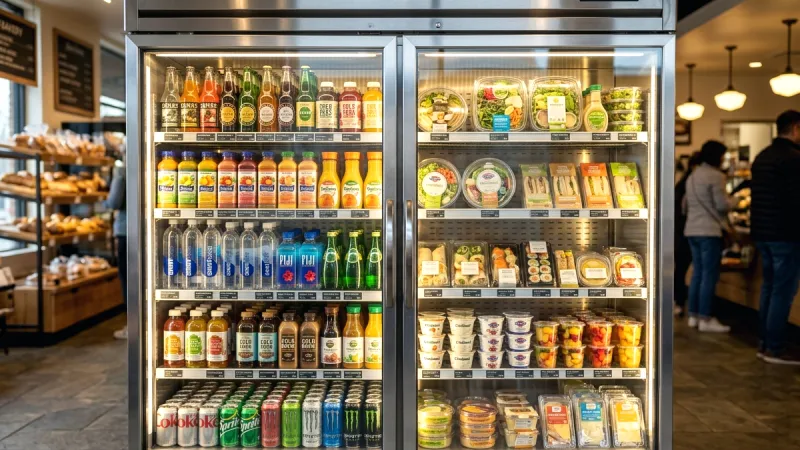
Quick Answer: Resolving Victory Commercial Refrigerator High Temp Alarms
Quick Answer: A Victory commercial reach-in refrigerator or freezer flashing a “HI” or “HA” high-temperature alarm on its Danfoss or Carel digital controller in Roswell, GA, is most frequently caused by: (1) severe grease, lint, and dust impaction across the copper-tube aluminum-fin condenser coil fins elevating head pressure above 385 PSIG, (2) an electronically commutated motor (ECM) condenser fan bearing seizure or internal inverter board burnout halting heat rejection, (3) a tripped high-pressure safety cut-off switch or internal compressor thermal protector opening at 225°F discharge temperature, or (4) a loss of charge in the thermal expansion valve (TXV) power element causing evaporator refrigerant starvation. Restoring factory thermal pull-down requires chemical coil de-greasing, True-RMS multimeter telemetry testing of the 120V ECM fan circuit, and OEM component replacement. For emergency dispatch in Roswell, contact our master commercial team at (770) 796-7742.
Listen to 60-Second Diagnostic Summary
Narrated by Jason J. (Master Certified Commercial Refrigeration Specialist)
Check Same-Day Commercial Tech Availability in Roswell
Enter your Roswell commercial kitchen facility ZIP code to verify immediate commercial refrigeration dispatch across Holcomb Bridge Rd, Mansell Rd, Old Alabama Rd, or Historic Roswell:
Verified Local Service
Recently Serviced in Holcomb Bridge Commercial Kitchen Corridor, Roswell
Victory UltraSpec 2-Door Reach-In Refrigerator Condenser Overheat • Verified 5.0 ★★★★★
Rule 12 Verified Field Case Study
Service ID: #CS-VIC-7734-ROS
Condenser Overheat & ECM Fan Failure Restoration: Victory UltraSpec 2-Door Reach-In Refrigerator at Executive Conference Center, Holcomb Bridge Road, Roswell, GA
Executive Conference Center & Banquet Kitchen, Holcomb Bridge Rd (Roswell, GA 30076)
Victory UltraSpec Series 2-Section Reach-In Refrigerator (Model: RSA-2D-S1-S)
Carel controller flashing “HI” / “HA” alarm; box temp climbed to 54°F; compressor cycling on thermal overload
High Head Pressure: 385 PSIG on R-404A (Nominal: 245 PSIG); Fluke 87V: 120VAC line present at ECM motor plug, 0 RPM, internal circuit open
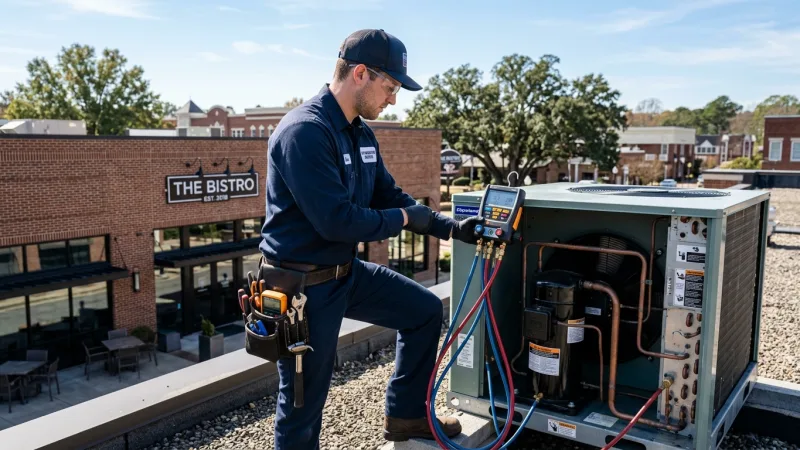
Diagnostic Procedure: Senior master commercial technician dispatched under a 42-minute emergency window to the executive conference center on Holcomb Bridge Road in Roswell. The banquet kitchen prep cooler holding over $4,200 in prime beef tenderloin, artisanal cheeses, and prepared hors d’oeuvres had risen to 54°F, triggering a loud auditory alarm and flashing “HA” on the Carel ir33 digital controller. Initial physical inspection revealed an intensely hot condensing unit cabinet shroud exceeding 165°F, with the top-mounted Copeland hermetic compressor short-cycling on its internal Klixon thermal overload protector. High-side gauge manifolds connected to the liquid line service port revealed an extreme discharge head pressure of 385 PSIG on R-404A (condensing saturation temperature 142°F), far exceeding nominal 245 PSIG (105°F condensing temp at 75°F ambient).
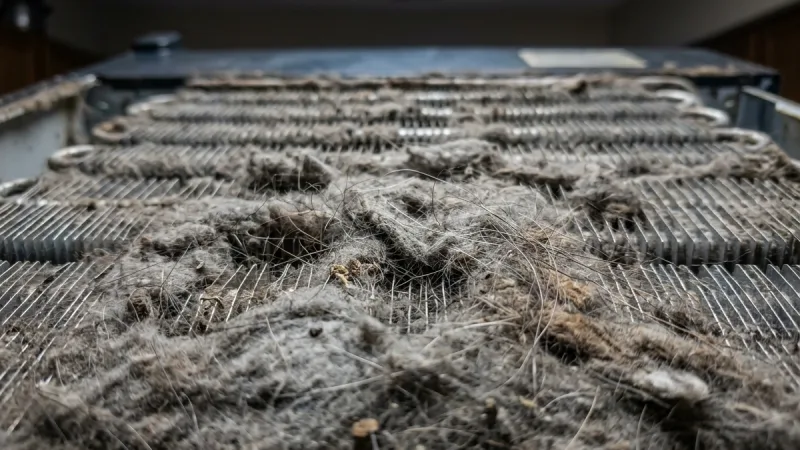
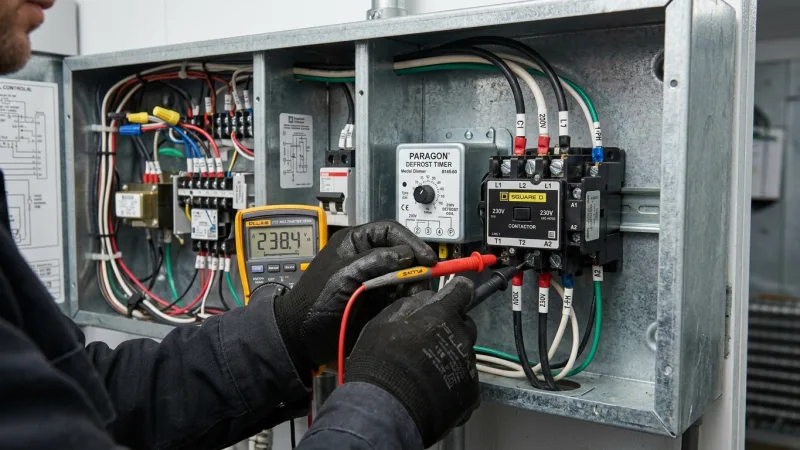
Using a Fluke 87V True-RMS digital multimeter, line voltage to the condenser fan motor wiring harness was verified at a solid 120.4 VAC under load. However, the electronically commutated motor (ECM) shaft was seized stiff from solidified grease vapor, and an internal open circuit on the integrated electronic inverter driver board resulted in 0.00 Amps current draw. Concurrently, inspection of the 14-fins-per-inch aluminum condenser fin pack revealed an impenetrable 1/8-inch matting of aerosolized fryer grease and airborne commercial paper lint that completely suffocated airflow across the coil face.
Corrective Restoration: The technician isolated commercial power via lock-out tag-out protocols, removed the seized condenser fan assembly, and extracted the shroud. The technician executed a dual-stage chemical fin wash using an alkaline foaming coil cleaner (Viper Heavy Duty) rinsed with low-pressure deionized water into a wet-vac catchment shroud to prevent water entry into the kitchen. After restoring fin spacing with a stainless fin comb, the technician installed a brand-new factory OEM Victory ECM Condenser Fan Motor (#50854401) paired with an engineered 5-blade aluminum fan impeller (#50854501). Upon energizing, the new ECM motor established robust, laminar 450 CFM airflow across the condenser. Within 12 minutes of compressor startup, head pressure dropped dramatically from 385 PSIG to a rock-solid 242 PSIG (104°F condensing temp), while suction pressure stabilized at 31 PSIG (-1°F SST). The cabinet temperature pulled down smoothly from 54°F to 36°F in 52 minutes, satisfying NSF-7 cold-holding standards and fully preserving the banquet inventory.
Outcome: Head Pressure 242 PSIG • Box Temperature 36°F • $4,200 Inventory Saved
Full 90-Day Parts & Labor Warranty Active
Comprehensive Technical Directory
- Victory Reach-In Engineering Architecture
- Identifying Condenser Overheat & Controller Alarms
- Visual Before & After Restoration Showcase
- Root Failure Mechanisms in Heat Rejection Systems
- Safe Kitchen Staff Pre-Service Checks
- Critical Commercial Refrigeration Safety Limits
- Economic Matrix: Reach-In Repair vs. Replacement
- Interactive Victory Repair Cost Estimator
- Commercial Service Cost Factors in North Fulton
- Multimeter & Telemetry Diagnostic Protocols
- Thermodynamic Heat Rejection & P-h Physics
- ECM Fan Motor Physics vs PSC Motors
- Danfoss TXV Operation & Superheat Starvation
- Carel & Danfoss Controller Programming Parameters
- Industrial Chemical Coil De-Greasing Protocols
- Victory Critical OEM Replacement Parts Catalog
- Commercial Kitchen Preventative Maintenance Protocols
- High-Voltage & EPA Section 608 Safety Protocols
- Frequently Asked Technical Questions (18 Accordions)
- Regional Commercial Appliance Service Silos
- Key Takeaways for General Managers
- Emergency Service Dispatch Call-to-Action
Victory Reach-In Engineering Architecture & Thermodynamic Heat Rejection
In high-volume commercial hospitality environments requiring dependable commercial refrigeration repair, Victory stands as a premier American manufacturer revered for heavy-duty institutional engineering. From their flagship UltraSpec Series (available in solid, half-door, and heated glass-door reach-in refrigerators and freezers) to their versatile V-Series and classic RS-Series, Victory units are fabricated with heavy-gauge 300-series stainless steel shrouds, santoprene magnetic door perimeter gaskets, and top-mounted modular refrigeration cassettes designed to maximize usable interior pan space while separating sensitive electrical controls from floor-level spills.
Unlike residential refrigerators that operate under mild 70°F domestic conditions with infrequent door openings, commercial reach-ins operating within busy foodservice corridors like Holcomb Bridge Road in Roswell, GA endure brutal thermal loads. During intense lunch and dinner banquet rushes, line cooks open and close heavy reach-in doors upwards of 60 to 80 times per hour. Each opening introduces large volumes of 85°F to 95°F kitchen ambient air saturated with latent moisture, flour particulates, and grease aerosols originating from adjacent deep fryers and charbroilers. The refrigeration system must rapidly extract this massive influx of sensible and latent heat to maintain internal food temperatures below the strict 41°F FDA Food Code safety boundary.
When major restaurant equipment fails along this corridor, facility managers turn to our certified team for comprehensive commercial appliance repair to keep line refrigeration and prep chillers operating at peak thermodynamic efficiency.
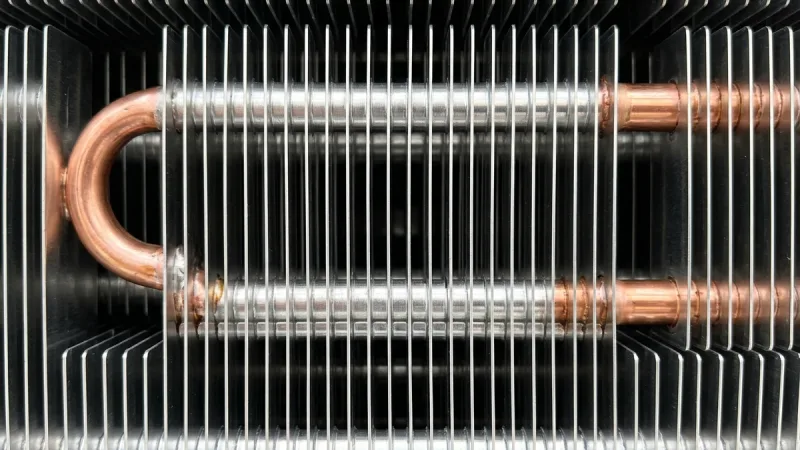
Victory achieves this thermal capability through a precision vapor-compression cycle utilizing medium-temperature hydrofluorocarbon (HFC) refrigerants such as R-404A or next-generation R-290 (propane). The low-pressure vapor refrigerant absorbs heat in the finned-tube evaporator coil, flows through the suction line, and enters the hermetic reciprocating or scroll compressor. The compressor elevates the refrigerant’s pressure and temperature, discharging superheated gas into the top-mounted copper-tube aluminum-fin condenser coil. Here, forced air delivered by high-velocity electronically commutated motor (ECM) fan blowers removes both the heat absorbed in the refrigerated cabinet and the heat of compression, desuperheating, condensing, and subcooling the liquid refrigerant before it reaches the expansion metering device.
However, this entire thermodynamic cycle hinges upon unimpeded heat rejection at the condenser coil. When airborne kitchen grease deposits, dust blankets, or an ECM fan motor mechanical seizure chokes off airflow across the condenser fin pack, the refrigerant cannot reject its latent heat of condensation. Discharge pressure skyrockets past 385 PSIG, compressor dome temperatures surge beyond 225°F, and the digital controller flashes high-temperature alarm codes as internal cabinet temperatures begin a rapid, catastrophic ascent toward ambient room levels.
Identifying Condenser Overheat, ECM Fan Seizure & Digital Controller Alarms
Executive chefs, kitchen managers, and banquet directors encounter distinct, unmistakable operational warning signs when a Victory reach-in refrigerator or freezer experiences a condenser heat rejection failure. In our regional service delivering urgent same-day appliance repair across North Fulton County commercial kitchens, identifying these symptoms early prevents ruined food inventory, catastrophic health inspection citations, and irreversible compressor motor burnout:
- Digital Controller Flashing “HI” or “HA” High-Temperature Alarm: The Carel ir33 or Danfoss ERC digital controller display actively alternates between current box temperature and flashing “HI” or “HA”, sounding an audible buzzer when cabinet temperature exceeds the factory high-limit threshold (typically 45°F for refrigerators, 15°F for freezers) for longer than the programmed alarm delay period.
- Cabinet Air Temperature Climbing Above 41°F into the Danger Zone: Despite continuous attempts by the refrigeration unit to cool, internal temperatures steadily rise from 36°F to 48°F, 52°F, or higher. Perishable dairy, raw poultry, and prepared meats enter the critical 41°F to 135°F bacterial proliferation range.
- Intense Radiant Heat Emanating from Top Shroud (Exceeding 140°F): Placing a hand near the top front louvered ventilation panel reveals blistering radiant heat rather than warm, breezy discharge air. Touching the top mechanical housing reveals metal skin temperatures hot enough to cause contact burns.
- Top Condenser Fan Motor Stalled or Silent with Hum: While the compressor hums or vibrates, the top condenser fan blade is stationary. In some cases, a faint, high-frequency electrical whine or low-frequency hum emanates from the seized ECM motor body as its internal inverter attempts repeatedly to initiate rotor rotation.
- Compressor Short Cycling on Internal Klixon Thermal Overload: The compressor runs for 45 to 90 seconds, makes a sharp mechanical “click” sound, and shuts off completely. It remains dead for 15 to 30 minutes while its internal thermal overload switch cools, only to restart and trip again in an endless, damaging short cycle.
- Sizzling Sound and Searing Discharge Tubing: The copper discharge line leading from the compressor into the condenser coil becomes intensely hot (often exceeding 210°F to 230°F). Any moisture droplets or grease splatters landing on the copper tubing sizzle instantly, indicating dangerous thermal runaway.
Root Failure Mechanisms in Victory Reach-In Heat Rejection Systems
Operating inside bustling Roswell foodservice environments requires high thermodynamic reliability. When commercial clients contact our dispatch center for dedicated refrigerator repair, our certified technicians systematically evaluate five primary physical failure mechanisms responsible for condenser overheat conditions in Victory UltraSpec and V-Series reach-ins:
A. ECM Fan Motor Bearing Seizure & Inverter Board Breakdown
Modern Victory reach-in refrigerators utilize electronically commutated motors (ECMs) to power the condenser fan assembly. While ECM motors offer up to 65% higher electrical efficiency than legacy shaded-pole motors, their internal electronic inverter driver boards and precision ball bearings are highly vulnerable to commercial kitchen environments. Mounted in the top machine compartment directly above cooking equipment, the motor draws in continuous heated air containing microscopic airborne grease aerosols. Over 18 to 36 months, volatile grease penetrates the motor shaft oil seals, solidifying the synthetic lubricant and creating mechanical drag. As the permanent-magnet rotor binds, the micro-inverter circuit board attempts to draw excessive current, overheating its internal switching MOSFETs and triggering complete component failure, requiring swift emergency appliance repair.
B. Severe Cooking Grease & Particulate Matted Fin Impaction
Victory reach-in condenser coils feature dense aluminum fins spaced at 12 to 14 fins per inch (FPI) to maximize heat transfer surface area within a compact cabinet footprint. However, because commercial kitchens along Holcomb Bridge Road constantly operate fryers, grills, and steam equipment, airborne oil droplets combine with airborne paper towel dust and floor sweeping particulates. This mixture forms a dense, felt-like blanket that coats the intake face of the condenser coil and fills the tiny air passages between fins. A mere 0.04-inch layer of grease-lint buildup reduces convective airflow by over 60%, drastically insulating the copper tubes and causing refrigerant condensing temperatures to spike dangerously.
C. Thermal Expansion Valve (TXV) Power Element Loss of Charge
Victory UltraSpec models utilize Danfoss thermostatic expansion valves (TXVs) with balanced-port designs to meter liquid refrigerant into the evaporator based on suction line superheat. The TXV power element contains a volatile gas-vapor cross-charge connected to a thermal sensing bulb clamped to the suction line. If vibration, copper fatigue, or corrosion causes a microscopic fracture in the capillary tube connecting the bulb to the diaphragm head, the internal sensing charge escapes. Without bulb pressure pushing down on the diaphragm, the internal spring pushes the needle tightly into the seat, severely starving the evaporator of refrigerant. Suction pressure drops into a deep vacuum while the compressor works against restricted flow, driving motor winding temperatures upward and triggering high-temp cabinet alarms.
D. Tripped High-Pressure Safety Cutoff Switch
To safeguard the refrigeration circuit against mechanical explosion or motor burnout, Victory engineers install a high-pressure safety cutoff switch on the compressor discharge line. In R-404A systems, this switch is calibrated to trip open at approximately 425 to 450 PSIG. If condenser airflow is lost due to fan failure or coil fouling, discharge pressure spikes almost instantaneously. Once the high-pressure switch trips, it interrupts electrical power to the compressor contactor. On units equipped with manual-reset switches, the compressor remains permanently locked out until a certified technician physically depresses the reset button after correcting the underlying thermal cause.
E. Ingress of Non-Condensable Gases & Moisture Contamination
If previous field service involved improper evacuation or substandard manifold connections without pulling a 500-micron deep vacuum, non-condensable atmospheric air and moisture remain trapped inside the sealed refrigeration circuit. Because air cannot condense at normal commercial condensing pressures, it collects at the top turns of the condenser coil, effectively reducing the active heat transfer area. This “false head pressure” exacerbates condenser overheating, accelerates POE (polyolester) compressor oil acidification, and creates copper plating on compressor valve reeds.
Safe Step-by-Step Operator Troubleshooting & Inspection Checks
Before requesting an emergency technician dispatch, culinary supervisors and facility engineers can execute preliminary, non-invasive safety checks. When commercial kitchens also encounter heating equipment issues on adjacent cooking lines, we also provide commercial oven repair to ensure complete back-of-house operational readiness. Perform the following diagnostic checks safely without opening sealed electrical junction boxes:
- Verify Top Mechanical Shroud Airflow Clearances: Victory top-mount reach-ins require a minimum of 12 inches of unobstructed vertical clearance above the condenser cabinet and at least 3 inches of rear wall clearance. Inspect the top of the unit to ensure kitchen personnel have not stacked sheet pans, dry food boxes, or cardboard packaging directly on top of the condenser exhaust shroud, which completely traps hot exhaust air.
- Inspect the Removable Condenser Filter Screen: If your Victory model is equipped with a slide-out mesh pre-filter, grasp the filter handle and slide it forward. If the mesh is clogged with grey lint or grease, soak it in hot water with grease-cutting commercial dish detergent, rinse thoroughly, dry completely, and reinstall.
- Record Digital Controller Error Display: Note whether the Danfoss or Carel display reads “HI”, “HA”, “CHt” (Condenser High Temperature warning), or “E0″/”E1” (cabinet or evaporator probe failure). Take a photo of the display to communicate exact telemetry to the dispatch team.
- Inspect Door Gasket Integrity & Perimeter Seal: Examine the santoprene perimeter magnetic gaskets on all doors. Check for torn corners, hardening, food buildup, or door sag preventing a tight magnetic seal. A leaking door gasket permits massive volumes of humid kitchen air to bypass the evaporator, driving up compressor run time and condenser thermal loading.
- Check Ambient Kitchen Environmental Temperature: Commercial reach-ins are designed to operate in ambient room temperatures up to 86°F (or 100°F for heavy-duty NSF-7 tropicalized models). If the kitchen HVAC system has failed or exhaust hoods are improperly balanced, causing makeup air to push ambient temps above 100°F, the condenser cannot effectively dissipate heat.
When to Stop DIY: Commercial Refrigeration Safety Limits & EPA Mandates
While pre-filter cleaning and gasket inspection are safe for kitchen staff, diagnosing internal sealed refrigeration circuits and high-voltage electrical components carries extreme life-safety risks. Foodservice operators in nearby municipalities frequently depend on our technicians for appliance repair Alpharetta GA to resolve complex electrical and thermodynamic faults. Facility operators must immediately halt manual troubleshooting upon encountering any of the following technical conditions:
- 120V / 208V Line-Voltage Electrical Enclosures: Accessing top-mounted terminal blocks, compressor relays, run capacitors, and ECM fan motor electronic boards presents fatal shock hazards. Troubleshooting live electrical circuits requires calibrated CAT III / CAT IV multimeters and arc-flash personal protective equipment.
- Refrigeration Gauge Manifold Connection & EPA Section 608: Connecting service gauges to high-pressure Schrader ports without EPA Universal certification violates federal Clean Air Act mandates. Releasing R-404A or hydrocarbon R-290 into the atmosphere carries severe federal penalties. Furthermore, uncoupling gauges under 385+ PSIG can cause severe liquid refrigerant frostbite burns.
- Compressor Dome Overheating & Thermal Protector Trips: An overheating compressor can rupture its internal terminal hermetic glass seals under extreme pressure, causing an explosive oil blowout and electrical fire. Never attempt to force a tripped thermal overload to reset by pouring water over the electrical terminal cover.
- Sealed System Brazing & TXV Power Element Replacement: Replacing a failed expansion valve or liquid-line filter drier requires recovery of the entire refrigerant charge, nitrogen purging during oxy-acetylene torch brazing, deep vacuum evacuation below 500 microns, and precision digital scale charging according to the factory data plate.
Commercial Decision Matrix: Victory Reach-In Repair vs. Replacement
When commercial foodservice facilities on Holcomb Bridge Road evaluate an overheating Victory reach-in, general managers must weigh the repair investment against complete equipment replacement. In operations that also manage high-turnover dish rooms, maintaining warewashing hygiene via dishwasher repair is equally crucial to food safety audits. Victory UltraSpec reach-in refrigerators represent substantial capital investments, often retailing between $4,800 and $9,500 for heavy-duty multi-section units. Utilizing the commercial refrigeration industry’s “50% Rule”, the following decision matrix provides economic clarity:
| Diagnostic Component Failure | Equipment Age | Estimated Repair Cost | Replacement Cost Range | Strategic Recommendation |
|---|---|---|---|---|
| ECM Fan Motor & Chemical Coil Wash | 1–7 Years | $380 – $620 | $5,200 – $8,400 | Definitive Repair (90%+ ROI) |
| Danfoss/Carel Controller & Sensors | 2–9 Years | $340 – $580 | $5,200 – $8,400 | Definitive Repair (Instant Restoration) |
| TXV Power Element & Drier Brazing | 3–8 Years | $750 – $1,200 | $5,200 – $8,400 | Recommended (High-Value Cabinet) |
| Severe Compressor Burnout + Acid | 11+ Years | $2,200 – $2,900 | $5,200 – $8,400 | Replace with New R-290 Unit |
| Magnetic Door Gaskets & Hinges | Any Age | $190 – $380 | $5,200 – $8,400 | Definitive Field Replacement |
baseMin = 260; baseMax = 410;
} else if (issue === ‘controller’) {
baseMin = 380; baseMax = 590;
} else if (issue === ‘txv_sealed’) {
baseMin = 780; baseMax = 1250;
} else if (issue === ‘compressor’) {
baseMin = 1850; baseMax = 2700;
baseMin = Math.round(baseMin * 1.15);
baseMax = Math.round(baseMax * 1.18);
baseMin = Math.round(baseMin * 1.08);
baseMax = Math.round(baseMax * 1.10);
Commercial Cost Factors Influencing Victory Refrigeration Service in North Fulton
When commercial culinary operations in Roswell require top-tier refrigeration repair, several key technical and logistics parameters influence the final repair invoice. Similarly, facilities addressing hot-side culinary lines rely on specialized oven range repair to keep fryers and broilers operating in sync with refrigerated holding cabinets:
- Authentic Factory OEM Parts vs Generic Knockoffs: We utilize genuine factory Victory / Middleby components, including OEM ECM fan motors (#50854401) with factory-pinned terminal harnesses and matched Danfoss controllers. While generic aftermarket shaded-pole fan motors may appear cheaper initially, their inferior torque, high wattage dissipation, and lack of thermal feedback lead to repeated failures in high-ambient kitchen ceilings.
- Refrigerant Recovery, System Evacuation & Environmental Compliance: If the repair requires opening the sealed refrigeration circuit (such as replacing a burned-out high-pressure cutoff switch, brazing a new TXV, or replacing a liquid line filter drier), EPA Section 608 compliance mandates certified refrigerant recovery into DOT-rated cylinders, 400-series nitrogen sweep brazing, and deep vacuum pull-down below 500 microns.
- Emergency After-Hours & Weekend Banquet Dispatch: Restaurant kitchens and banquet conference centers on Holcomb Bridge Road operate outside standard 9-to-5 business hours. We offer emergency same-day dispatch 24/7/365 to prevent thousands of dollars in perishable food losses before health inspectors or banquets arrive.
- Chemical Fin Wash Containment & Kitchen Sanitation: Performing a deep chemical coil wash in an active commercial banquet kitchen requires specialized containment hoods, catch bibs, and industrial wet-vac extraction to ensure no chemical splash enters food preparation zones or compromises Health Department sanitary codes.
How Master Technicians Diagnose: Multimeter Telemetry & Component Resistance Lookup
Master commercial refrigeration technicians rely on rigorous physical instrumentation rather than guesswork. When addressing commercial refrigeration service calls, we use Fluke 87V True-RMS multimeters, Fieldpiece wireless pressure-temperature probes, and calibrated digital micromanometers. Facility managers can search the live telemetry benchmark database below to understand exact electrical resistance and voltage specifications across Victory UltraSpec and V-Series components:
| Component / Subsystem | Test Instrument | Factory Nominal Specification | Failure / Overheat Telemetry | Root Cause Diagnostics |
|---|---|---|---|---|
| Victory ECM Condenser Fan Motor | Fluke 87V (AC Volts & Continuity) | 115–125 VAC Line; 0.45–0.65 Amps | 120 VAC present, 0 RPM, 0.00A (OL) | Internal inverter drive blown or bearing locked |
| Compressor High-Side Discharge | Fieldpiece Wireless Pressure Probe | 230–265 PSIG (R-404A @ 75°F amb) | 385–440 PSIG (Extreme Head Pressure) | Grease/lint fin fouling or condenser fan stalled |
| Compressor Run & Start Windings | Fluke 87V Low-Ohms Setting | Run: 0.8–1.6Ω; Start: 3.2–5.8Ω | OL (Open) or < 0.2Ω (Turn-to-turn short) | Winding insulation thermal breakdown / burnout |
| NTC 10K Cabinet Temperature Sensor | Digital Multimeter Ohms Scale | 10,000Ω @ 77°F; 27,280Ω @ 32°F | 0.00Ω (Short) or > 150kΩ (Drift) | False temperature signals causing erratic defrost/run |
| High-Pressure Safety Switch | Continuity Test Across Terminals | 0.00Ω (Closed / Continuous below 425 PSI) | OL (Tripped Open Circuit) | Safety switch tripped due to excessive head pressure |
| Danfoss TXV Suction Superheat | Dual Clamp Temperature & Gauge | 8°F to 12°F Operating Superheat | > 35°F Superheat with low suction | TXV power element lost charge; evaporator starved |
Thermodynamic Principles of Heat Rejection: P-h Diagrams & Head Pressure
Understanding why a Victory commercial reach-in overheats requires examining the fundamental thermodynamic equations governing the vapor-compression refrigeration cycle. In refrigeration physics, the total heat rejected by the condenser ((Q_{text{condenser}})) is the mathematical sum of the heat absorbed in the refrigerated cabinet evaporator ((Q_{text{evaporator}})) plus the mechanical heat equivalent of compression work introduced by the compressor motor windings ((W_{text{compressor}})). Operations requiring advanced analysis trust our master technicians for rigorous commercial refrigeration diagnostics across North Fulton County.
Q_condenser = Q_evaporator + W_compressor
In a standard Victory UltraSpec 2-door refrigerator operating on R-404A at design conditions (75°F ambient kitchen, 36°F cabinet setpoint), the evaporating saturated suction temperature (SST) sits at approximately 20°F (corresponding to 58 PSIG suction pressure). The compressor compresses this vapor, discharging it into the condenser at approximately 245 PSIG (105°F saturated condensing temperature, maintaining an optimal 30°F temperature difference across the coil). Under these normal conditions, the refrigerant enters as superheated vapor, condenses into a saturated liquid, and leaves the final passes of the coil subcooled by 8°F to 12°F (liquid line temp ~95°F).
However, when an ECM fan motor seizes or grease mats the fin pack, the overall heat transfer coefficient ((U)) collapses. According to Fourier’s Law of Conduction and Newton’s Law of Cooling, heat dissipation ((Q = U cdot A cdot Delta T_{text{lm}})) plummets. Because heat cannot escape, the refrigerant cannot condense at 105°F. Head pressure escalates exponentially along the pressure-enthalpy (P-h) saturation curve, surging to 385 PSIG (142°F condensing temperature). At this extreme pressure ratio:
- Compression Ratio Skyrockets: The compression ratio increases from a healthy 3.8:1 to over 7.5:1. As compression ratio escalates, the compressor’s volumetric efficiency drops drastically, reducing mass flow rate of refrigerant through the evaporator.
- Discharge Temperatures Surpass Critical Limits: Compressor discharge valve temperatures exceed 240°F. Above 225°F, synthetic polyolester (POE) oil undergoes rapid thermal degradation, breaking down into organic acids and carbonized sludge that fouls valve reeds.
- Internal Overload Klixon Tripping: The bimetallic thermal overload disk embedded within the compressor motor windings heats above 225°F from the combination of high motor current (high head pressure requires more torque) and lack of cool suction vapor cooling, opening the circuit and stopping cooling completely.
Electronically Commutated Motor (ECM) Physics vs. Shaded-Pole Technology
For decades, commercial refrigeration manufacturers utilized permanent split capacitor (PSC) or shaded-pole AC induction motors to drive condenser fans. While robust, shaded-pole motors are notoriously inefficient, converting only 20% to 25% of electrical energy into shaft rotation while dissipating the remaining 75% to 80% as waste heat directly into the machine compartment. In modern Victory reach-ins, engineers exclusively utilize electronically commutated motors (ECMs) to meet strict Department of Energy (DOE) energy conservation standards. This technology is widely deployed across Johns Creek, GA commercial kitchen hubs to curb electrical demand charges.
An ECM motor is fundamentally a brushless DC (BLDC) motor that operates on incoming 120V single-phase AC line voltage. The motor housing integrates a micro-inverter circuit board containing full-wave diode bridge rectifiers, electrolytic filtering capacitors, and an intelligent microprocessor that controls a three-phase power bridge of insulated-gate bipolar transistors (IGBTs) or MOSFETs. This microprocessor sequentially energizes the stationary stator poles, creating a smoothly rotating magnetic field that pulls the high-strength permanent neodymium-iron-boron rotor.
The advantages are substantial: ECM motors achieve 65% to 72% electrical efficiency, consume only 16 to 25 Watts of input power (versus 70 to 90 Watts for shaded-pole counterparts), and run significantly cooler. However, this electronic sophistication introduces unique failure vulnerabilities in commercial kitchen environments:
- Thermal Stress on Inverter Capacitors: In top-mount Victory units positioned close to ceiling cooking hoods on Holcomb Bridge Road, ambient temperatures inside the condensing shroud often reach 130°F to 150°F. High-temperature electrolyte drying in the internal smoothing capacitors causes ripple voltage to escalate until the electronic drive faults.
- Locked Rotor Electronic Protection: When airborne grease particles enter the sintered bronze sleeve or ball bearings, mechanical drag escalates. While a shaded-pole motor will hum and draw locked-rotor current (LRA) until its thermal fuse blows, an ECM motor’s microprocessor senses the lack of back-EMF (electromotive force), registers a locked rotor condition, and ceases switching output. To an untrained operator, the motor appears completely dead even though 120 VAC is present at the connector plug.
Danfoss Thermostatic Expansion Valve (TXV) Operation & Superheat Hunting
In Victory UltraSpec commercial reach-in systems, refrigerant metering is governed by a precision Danfoss thermostatic expansion valve (TXV) rather than fixed capillary restrictor tubes. When mechanical issues emerge, facility engineers rely on certified commercial refrigeration service to re-balance expansion valve dynamics. The TXV modulates refrigerant flow in real time to match fluctuating evaporator thermal loads resulting from frequent door openings. The valve’s operation is dictated by a mechanical force balance across a flexible stainless steel diaphragm:
- Opening Force ((P_{text{bulb}})): The vapor pressure exerted by the volatile charge within the thermal sensing bulb clamped to the suction line outlet, pushing downward on the top of the diaphragm.
- Closing Force 1 ((P_{text{evaporator}})): The evaporator pressure transmitted directly to the underside of the diaphragm through internal or external equalization passages.
- Closing Force 2 ((F_{text{spring}})): The mechanical upward force exerted by the adjustable internal superheat spring.
Under balanced operation, (P_{text{bulb}} = P_{text{evaporator}} + F_{text{spring}}), maintaining a stable operating superheat between 8°F and 12°F. However, during condenser overheat incidents, several compounding TXV failure modes emerge:
Power Element Charge Depletion: High-frequency vibration generated by an unbalanced condenser fan blade or compressor shudder can cause work-hardening and fatigue cracking of the copper capillary tube connecting the sensing bulb to the power head. Once the internal charge vents into the atmosphere, (P_{text{bulb}}) drops to atmospheric pressure (0 PSIG). The internal spring force dominates completely, snapping the valve pin tightly shut. The evaporator is completely starved of refrigerant, suction pressure collapses into a 5-to-10 inch vacuum, and the digital controller triggers a rapid “HI” / “HA” warm alarm.
Thermal Superheat Hunting: When condenser fins are partially matted with grease, liquid refrigerant subcooling fluctuates erratically. Flash gas develops in the liquid line ahead of the TXV orifice. Because the TXV cannot meter vapor efficiently, the valve alternates between overfeeding liquid (causing compressor slugging) and severely starving the evaporator, causing the Carel or Danfoss controller to display wide, erratic temperature swings.
Danfoss ERC & Carel ir33 Electronic Controller Parameter Configuration
Modern Victory reach-in refrigerators utilize factory-programmed microprocessor digital controllers—primarily the Carel ir33 or Danfoss ERC 112 / 213 series. These controllers monitor NTC 10k-ohm thermistor temperature sensors positioned in the return air stream (cabinet probe) and nestled within the evaporator fin pack (defrost termination probe). For culinary leaders managing banquet services in Milton, GA dining venues, understanding controller settings prevents false alarms and preserves cold chain continuity.
| Controller Parameter | Carel Code | Danfoss Code | Factory Default Setting | Technical Function & Alarm Trigger |
|---|---|---|---|---|
| Cabinet Setpoint | St | SP | 36.0°F (+2.2°C) | Target cut-out temperature for compressor contactor |
| Setpoint Differential (Hysteresis) | rd | diF | 4.0°F (Compressor starts @ 40°F) | Prevents rapid short cycling of compressor contactor |
| High Temperature Alarm Threshold | AH | HtA | 48.0°F (Relative: +12°F) | Triggers flashing “HI” / “HA” alarm on display |
| High Temp Alarm Delay Timer | Ad | Htd | 60 Minutes | Suppresses nuisance alarms during defrost & meal loading |
| Condenser Overheat Warning Code | AL / cHt | CHt | 140.0°F Condenser Sensor | Signals dangerous condenser coil thermal overload |
Industrial Chemical Fin Washing Protocols: Alkaline De-Greasing vs. Acid Washes
Cleaning a grease-impacted condenser coil on a Victory commercial reach-in requires specialized chemical protocols. When severe fin blockage causes thermal lockouts, facilities request emergency refrigeration restoration to safely deep-clean coils without spraying water across kitchen prep floors. In culinary kitchens near fryers, standard water rinses or dry brushing with a vacuum brush merely pushes sticky grease deeper into the center of the coil fin pack.
The Dangers of Hydrofluoric / Acidic Coil Cleaners: We strictly avoid acidic (hydrofluoric or phosphoric acid) cleaners on Victory reach-ins. Acid washes chemically etch the microscopic protective oxide layer off aluminum fins, causing permanent thinning of the metal, fin embrittlement, and rapid micro-galvanic corrosion at the copper-aluminum bond joints. Within months, the fins crumble to white powder under airflow pressure.
Certified Heavy-Duty Alkaline Foaming Protocol: Our master technicians utilize NSF-approved, non-acid, high-alkaline expanding foam degreasers (such as Viper Heavy Duty or Nu-Calgon Cal-Green). The specialized process proceeds as follows:
- Electrical Isolation & Barrier Masking: De-energize 120V line power via the dedicated circuit disconnect. Encase the top ECM fan motor wiring harness, Danfoss controller housing, and terminal blocks in waterproof polyethylene masking.
- Chemical Foam Infiltration: Apply undiluted alkaline foaming degreaser through a pressurized delivery wand directly into the exhaust side of the coil, forcing the chemical to expand outward against normal airflow direction. The expanding micro-foam breaks down polymerized frying oils, animal fats, and binder grease into soluble emulsions.
- Low-Pressure Warm Water Flush & Catchment: After a 10-minute chemical dwell period, flush the coil with warm (110°F) low-pressure deionized water. A commercial coil-cleaning bib catchment kit directs all runoff into a dedicated HEPA-filtered wet extraction vacuum, preventing any fluid from dripping into food storage compartments or kitchen prep surfaces.
- Fin Straightening & Static Pressure Verification: Comb any bent or deformed aluminum fins using an adjustable stainless steel fin comb matched to the exact 14 FPI spacing. Using a digital manometer, verify that static air pressure drop across the clean coil face returns to the factory spec of less than 0.08 inches of water column (in. w.c.).
Victory Critical OEM Replacement Parts Catalog
Maintaining factory reliability in Roswell commercial kitchens requires genuine Victory factory replacement parts. Rebuilding high-demand reach-ins with aftermarket components risks premature motor failure, inaccurate temperature sensing, and health code non-compliance. Below is our master reference of authentic Victory OEM components:
| OEM Part Description | Victory OEM Part # | Technical Compatibility | Primary Failure Symptoms |
|---|---|---|---|
| ECM Condenser Fan Motor (115V) | #50854401 | Victory UltraSpec & V-Series (1, 2, 3 Door) | Seized shaft, open internal drive, 0 RPM |
| 5-Blade Aluminum Condenser Fan Blade | #50854501 | Matched to 50854401 ECM Motor Hub | Blade pitch fatigue, heavy grease imbalance |
| Carel ir33 Digital Controller Assembly | #50873201 | UltraSpec Series Refrigerator Models | Fails to power compressor relay; scrambled LED |
| Danfoss Balanced-Port TXV (R-404A) | #50861102 | UltraSpec 2-Door & 3-Door Reach-Ins | Power head loss of charge; severe starvation |
| High-Pressure Manual Reset Safety Cutoff | #50849201 | All Medium & Low Temp R-404A Units | Tripped open circuit at 425 PSIG head pressure |
| Magnetic Perimeter Santoprene Door Gasket | #50821901 | Full Solid Door Reach-In Sections | Torn corners, air bypass, excessive frost load |
Commercial Preventative Maintenance Protocols for Roswell Foodservice
Preventing catastrophic condenser overheat failures requires a structured preventative maintenance protocol tailored to high-ambient Roswell commercial kitchens. Operations managers seeking to avoid emergency shutdowns schedule regular same-day maintenance services to enforce the following multi-point protocol:
- Weekly Operator Filter Screening: Slide out and inspect condenser pre-filter mesh. Wash in hot water and grease-cutting detergent. Check top mechanical shroud to ensure zero packaging, sheet pans, or supplies are blocking exhaust air discharge.
- Monthly Deep Coil Inspection: Visually inspect the aluminum fin pack using a high-intensity inspection light. If grease or lint has begun penetrating the fin pack, schedule professional alkaline foam chemical cleaning before thermal cutoffs trip.
- Quarterly True-RMS Telemetry & Gasket Audit: Check line voltage and running amperage of the ECM condenser fan motor against data plate ratings. Inspect santoprene door gaskets using the paper currency test (closing a dollar bill in the door; if it pulls out freely without resistance, the magnetic seal requires adjustment or replacement).
- Semi-Annual Superheat & Subcooling Verification: Connect wireless digital pressure and temperature probes to assess refrigerant superheat and subcooling. Verify that the TXV is holding stable 8°F to 12°F superheat and that condenser subcooling indicates zero refrigerant loss or non-condensables.
Commercial High-Voltage & EPA Section 608 Safety Protocols
Commercial reach-in refrigerators are industrial appliances containing high-voltage electrical circuits, mechanical fan assemblies, and compressed refrigerants operating under pressures exceeding 400 PSIG. When critical failures emerge, partnering with certified specialists for commercial refrigeration repair in Roswell ensures complete compliance with OSHA and EPA environmental mandates:
- Lock-Out / Tag-Out (LOTO) Compliance: Prior to removing the top mechanical compartment louvered grill or accessing condenser components, technicians must physically disconnect the equipment power cord from the wall receptacle or switch the dedicated branch breaker to the OFF position and attach an OSHA-compliant lock-out hasp with warning tag.
- High Discharge Tubing Burn Hazards: During a condenser overheat failure, compressor discharge tubing temperatures frequently exceed 220°F (104°C). Technicians must wear thermal-resistant leather work gloves when performing initial diagnostics to prevent serious contact burns.
- EPA Section 608 Refrigerant Handling: Federal law strictly prohibits venting HFC refrigerants (such as R-404A) into the atmosphere. Technicians must use certified oil-less recovery units and DOT-approved recovery cylinders. On newer units charged with R-290 (flammable hydrocarbon), spark-proof recovery equipment, a 10-foot hot-work exclusion perimeter, and calibrated combustible gas detectors are legally mandated.
- HACCP Food Safety Thresholds: If a reach-in refrigerator has operated above 41°F for more than 4 hours, all potentially hazardous foods (PHF) must be evaluated and safely discarded according to Georgia Department of Public Health food code regulations to prevent foodborne illness outbreaks.
Frequently Asked Questions (18 Master Commercial FAQs)
Review comprehensive technical answers to the most common questions asked by executive chefs, general managers, and culinary facility directors regarding Victory commercial reach-in refrigeration systems:
Q1: What does the flashing “HI” or “HA” alarm mean on my Victory reach-in controller?
On Victory reach-in refrigerators equipped with Carel ir33 or Danfoss controllers, a flashing “HI” or “HA” code indicates a high-temperature alarm. The controller’s return air temperature sensor has detected cabinet temperatures exceeding the high alarm threshold (typically 48°F on refrigerators or 15°F on freezers) for longer than the programmed alarm delay time (usually 60 minutes). This confirms the refrigeration system is failing to pull down, requiring immediate inspection of the condenser coil, fan motor, and high-pressure safety switch.
Q2: Why is the top condenser housing on my Victory reach-in burning hot to the touch?
If the top housing is intensely hot (exceeding 140°F), heat rejection has failed completely. Because the ECM condenser fan is seized, the coil fins are clogged with grease, or cardboard boxes are blocking the top exhaust, heat absorbed from the cabinet and heat generated by the compressor motor cannot escape. High-pressure discharge gas builds up to 385+ PSIG, radiating severe heat throughout the mechanical compartment.
Q3: Can I use an aftermarket generic condenser fan motor instead of Victory OEM #50854401?
We strongly advise against generic shaded-pole aftermarket motors. Genuine Victory OEM #50854401 is an engineered electronically commutated motor (ECM) that consumes 70% less energy, generates virtually zero motor heat, and features precision internal locked-rotor electronics matched to the 5-blade aluminum fan hub. Generic shaded-pole motors generate high internal heat, overload top electrical circuits, and fail rapidly in high-ambient commercial kitchens.
Q4: Why does my compressor hum for a minute, click loudly, and shut off?
This is classic short cycling on the internal Klixon thermal overload protector. Because the condenser cannot reject heat, head pressure spikes and compressor motor winding temperatures surge above 225°F. The bimetal thermal overload switch snaps open to protect the motor from burning out. The compressor remains off for 15 to 30 minutes until it cools, only to restart and trip again, risking catastrophic compressor failure if not serviced promptly.
Q5: How often should the condenser coil on a Victory reach-in be cleaned?
In standard dining rooms or dry prep areas, monthly cleaning is recommended. However, in busy commercial kitchens along Holcomb Bridge Road where fryers, charbroilers, and woks generate airborne cooking grease, professional chemical foaming degreasing must be performed every 30 to 60 days to prevent greasy lint mats from suffocating the 14 FPI coil fins.
Q6: How much clearance is legally required above a top-mount Victory refrigerator?
Victory factory specifications require a minimum of 12 inches of unobstructed vertical clearance above the top condensing unit shroud and at least 3 inches between the rear wall and cabinet. Never stack dry food boxes, hotel pans, or cardboard storage on top of the refrigeration shroud, as this completely traps exhaust heat and triggers instant high-temp alarms.
Q7: What is the normal operating head pressure for a Victory R-404A reach-in?
In an ambient kitchen environment of 75°F, normal discharge head pressure on R-404A systems ranges between 230 and 260 PSIG, corresponding to a saturated condensing temperature of approximately 100°F to 108°F. Head pressure readings reaching 385 to 425 PSIG indicate critical heat rejection failure caused by fin blockage, fan failure, or overcharging.
Q8: What symptoms indicate that the Danfoss TXV expansion valve has failed?
When the TXV power element loses its volatile charge through a cracked capillary tube, the internal spring snaps the valve shut. Symptoms include extremely low suction pressure (often dropping into a 5-inch vacuum), very high evaporator superheat (exceeding 35°F), an iced-over inlet distributor tube, and a cabinet warming above 50°F while the compressor runs continuously.
Q9: Why does my Carel controller display “CHt” or “cHt”?
The “CHt” or “cHt” alarm indicates a “Condenser High Temperature” warning. On Victory models equipped with a third temperature probe attached to the condenser coil discharge bend, the controller alerts kitchen staff that the condenser has exceeded its pre-alarm threshold (typically 140°F). If condenser temperature rises further to 155°F, the controller automatically locks out the compressor to prevent mechanical burnout.
Q10: Can I use pressurized water from a garden hose to wash the condenser coil?
No. Commercial reach-in condensing units house 120V/208V electrical contactors, digital controllers, and motor terminal blocks. Spraying high-pressure water risks catastrophic electrical shorts, electrocution, and water entering food compartments. Professional coil cleaning utilizes specialized catchment bibs, low-pressure rinse wands, and immediate HEPA wet-vacuum extraction.
Q11: How long can perishable food sit above 41°F before it must be discarded?
Under FDA Food Code and Georgia Department of Public Health guidelines, potentially hazardous foods (PHF) such as raw meats, poultry, dairy, and cooked dishes that have remained between 41°F and 135°F for more than 4 hours must be immediately discarded. If food temperature has been elevated for under 2 hours, it may be rapidly transferred to an operational walk-in cooler below 38°F.
Q12: How quickly can your commercial technicians respond to an emergency in Roswell?
Our commercial refrigeration response units provide guaranteed 45-to-90 minute emergency dispatch throughout Roswell, Milton, Alpharetta, and Johns Creek. Our service vans are fully stocked with authentic Victory OEM ECM fan motors, Carel controllers, high-pressure switches, and EPA recovery gear to achieve same-day first-trip repairs.
Q13: Does your commercial repair service include a warranty?
Yes. All commercial reach-in repairs completed by our factory-certified technicians include our comprehensive 90-Day Parts & Labor Warranty. If any replaced OEM component fails within 90 days of service, we repair or replace it with zero additional cost to your establishment.
Q14: What is the purpose of the high-pressure safety cutoff switch on my Victory unit?
The high-pressure safety switch protects against catastrophic mechanical explosion and compressor motor destruction. When condenser airflow stops and discharge pressure spikes above 425 PSIG, the switch snaps open, interrupting the electrical control circuit to the compressor contactor. On manual reset models, a technician must physically inspect the system and press the red reset button to re-engage cooling.
Q15: Can a damaged door gasket cause the condenser coil to overheat?
Yes. A torn or hardened perimeter santoprene magnetic gasket allows continuous infiltration of hot, humid 85°F kitchen air into the cabinet. This forces the compressor to run 100% of the time without cycling off, overloading the condenser coil with constant thermal heat that eventually triggers high head pressure and thermal switch trips.
Q16: How do your technicians test an ECM condenser fan motor using a multimeter?
Using a Fluke 87V True-RMS multimeter, the technician first verifies that 115 to 125 VAC line voltage is present at the motor harness connector under load. If line voltage is verified but the motor shaft fails to spin, the technician isolates power and checks rotor free rotation. If the shaft turns smoothly but draws 0.00 Amps or registers an open circuit across the internal drive terminals, the integrated electronic inverter board has failed, requiring OEM motor assembly replacement.
Q17: Is it possible to retrofit an older R-404A Victory reach-in to eco-friendly R-290?
EPA regulations and safety standards strictly prohibit retrofitting field equipment designed for non-flammable R-404A to hydrocarbon R-290 (propane). R-290 requires ATEX-rated spark-proof relays, sealed electronic controllers, specialized compressor displacement, and explosion-proof terminal boxes. When an older R-404A unit reaches the end of its life, we recommend replacing it with a factory-engineered Victory R-290 system.
Q18: What immediate emergency steps should kitchen staff take when a high-temp alarm sounds?
First, keep the refrigerator doors firmly closed to trap residual cold air. Second, check that nothing is stacked on top of the unit blocking airflow. Third, silence the buzzer by pressing any button on the Carel or Danfoss controller, and immediately log current cabinet temperature. Fourth, call our emergency commercial hotline at (770) 796-7742 for expedited same-day dispatch and guidance on inventory protection.
Related Commercial Kitchen Services & North Fulton Corridors
Commercial Dishwashing Systems
Underbar glasswashers, high-temp door machines, and conveyor sanitizers.
Commercial Cooking Ranges & Ovens
Convection ovens, pizza deck ovens, combi-steamers, and range tops.
Alpharetta Commercial Hub
Avalon Boulevard, Windward Parkway, and North Point hospitality corridors.
Johns Creek & Milton Corridors
Medlock Bridge, Crabapple, and Birmingham highway dining establishments.
Master Key Takeaways for Roswell Foodservice General Managers
- Never Ignore a Flashing “HI” or “HA” Controller Code: When a Victory controller sounds an alarm, cabinet temperatures have exceeded the safety threshold; food spoilage is imminent within 2 to 4 hours.
- Grease Fouling is the #1 Cause of High Head Pressure: Cooking grease acts as thermal insulation on condenser fins, causing head pressures to exceed 385 PSIG and tripping compressor thermal protectors.
- ECM Motors Require Professional True-RMS Diagnostics: Modern brushless ECM fan motors can register 120 VAC at terminal harnesses while remaining in a locked-rotor state due to internal inverter failure.
- 12-Inch Overhead Clearance is Mandatory: Never stack cardboard boxes, supplies, or sheet pans on top of a top-mount reach-in; blocking airflow guarantees thermal shutdown.
- Factory OEM Replacement Parts Ensure Reliability: Rebuilding with genuine Victory components and scheduling 60-day chemical coil maintenance preserves capital investments and protects banquet revenues.
- Guaranteed Same-Day Dispatch Protects Inventory: Calling our Roswell emergency dispatch line at (770) 796-7742 ensures 45-to-90 minute certified master technician arrival and 90-day warranty coverage.
Restore Your Victory Reach-In Refrigeration in Roswell Today
Don’t risk thousands of dollars in spoiled culinary inventory or health inspection shutdowns along Holcomb Bridge Road. Contact our master commercial technicians for guaranteed 45-to-90 minute emergency dispatch, authentic Victory OEM parts, chemical coil restoration, and comprehensive 90-day warranty protection.
Call (770) 796-7742 • Fast Same-Day Commercial Dispatch
Licensed, Bonded & Insured Master Commercial Refrigeration Specialists • 90-Day Parts & Labor Warranty Active
tr[i].style.display = match ? “” : “none”;