
Why is My Washing Machine Making a Loud Banging Noise During Spin Cycle?
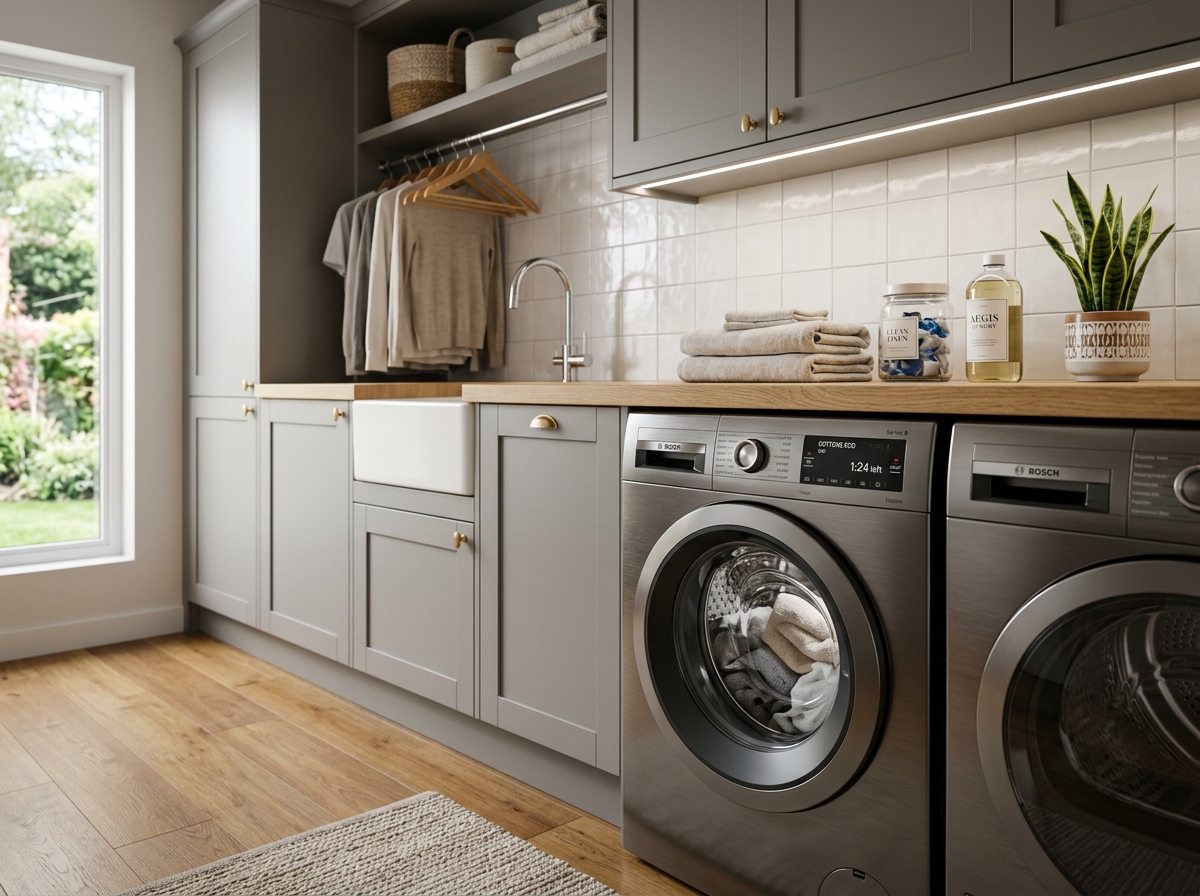
A washing machine that thumps, bangs violently, or sounds like a jet airplane during the spin cycle is signaling severe mechanical strain in its suspension or tub bearing assembly.
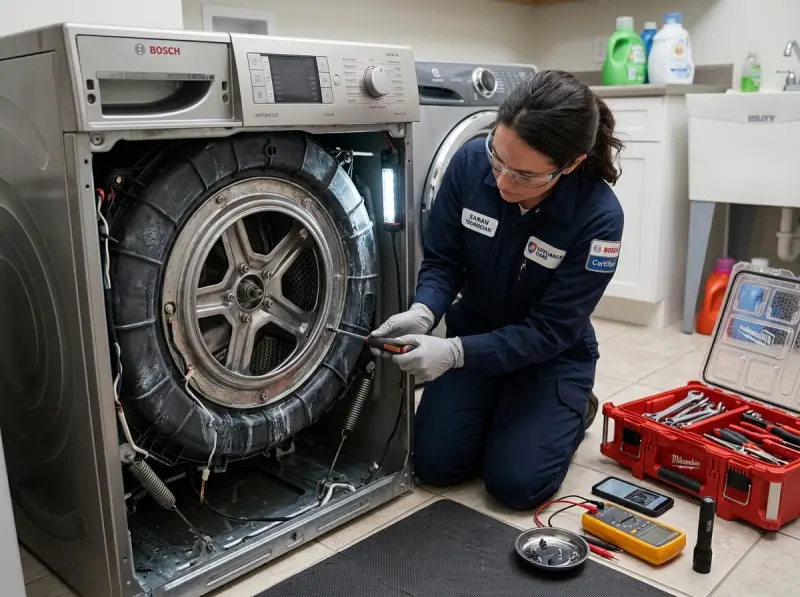
Quick Answer: Why is My Washing Machine Making a Loud Banging Noise?
Quick Answer: A loud banging or roaring noise during the spin cycle is most commonly caused by worn main tub bearings, a cracked aluminum spider arm, failed suspension damper shocks, or an off-balance clothing load. Inspect leveling legs and manually spin the drum to test for bearing grind.
1. Introduction & Overview
Quick Answer: Understanding the mechanical logic and circuit diagnostics of your appliance allows homeowners to differentiate between minor adjustments and serious component failures before spending on unneeded repairs.
Detailed Explanation: Modern home appliances rely on complex interactions between electronic control modules, thermal sensors, relays, microswitches, and mechanical drive mechanisms. When an anomaly occurs, safety lockouts or component failures can halt operation entirely. In this comprehensive guide, our EPA-certified master technicians break down the root causes, diagnostic procedures, and safety precautions required to address this issue safely and effectively in Alpharetta, GA.
- Systematic diagnostics prevent unnecessary component replacement.
- Electrical safety and proper voltage isolation are paramount before testing.
- Local Fulton County water hardness and electrical power stability play a major role.
2. Symptoms & Early Warning Signs
Before a complete breakdown occurs, appliances usually exhibit distinct mechanical, acoustic, or operational warning signs. Recognizing these symptoms early can save hundreds of dollars in secondary component damage.
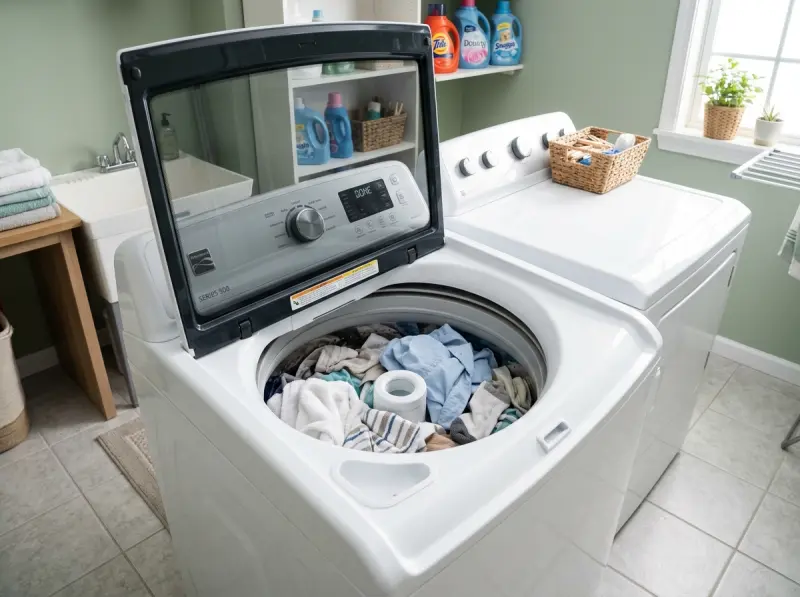
- Unusual Acoustic Signatures: Loud buzzing, grinding, clicking, or rattling during specific operational cycles.
- Intermittent Operation: Unit runs sporadically, trips the GFCI breaker, or stops mid-cycle with flashing indicator lights.
- Thermal Imbalance: Inability to reach operating temperature or excessive heat buildup around cabinets.
- Water Flow Disturbances: Slow filling, standing water, or localized leaks around supply lines.
3. Primary Causes & Mechanical Failures
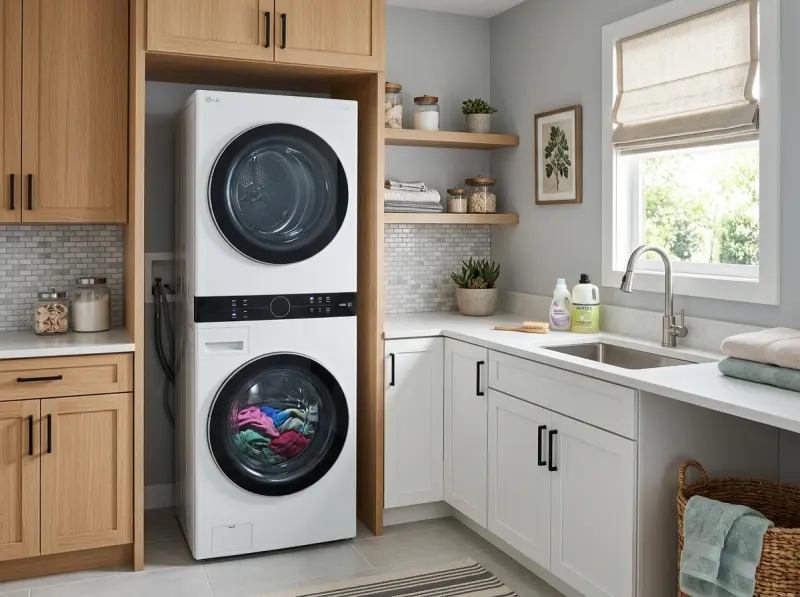
Worn Main Tub Bearings & Lip Seal
The inner wash tub rotates on heavy-duty ball bearings sealed by a rubber lip seal. When water breaches the seal, rust destroys the bearings, causing a deafening roaring or jet-engine noise during high-speed spin.
Damaged Tub Spider Arm Assembly
On front-load washers, a three-pronged aluminum spider arm connects the inner stainless tub to the drive shaft. Detergent buildup corrodes the aluminum, causing the arm to crack and the tub to wobble violently.
Failed Suspension Rods or Shock Absorbers
Top-load washers use 4 spring-loaded suspension rods, while front-load washers use hydraulic shock absorbers. When damper grease leaks out, the tub hits the cabinet frame loudly.
Worn Motor Drive Pulley or Belt
A worn, cracked drive belt or loose motor pulley causes severe slippage and heavy thumping during direction reversals.
4. Step-by-Step DIY Troubleshooting Guide
- Check Load Balance: Redistribute heavy towels, blankets, or rugs evenly around the tub before starting a high-speed spin.
- Inspect Leveling Legs: Ensure all 4 washer legs rest firmly on the floor and lock nuts are tightened to prevent cabinet rocking.
- Manually Spin the Inner Drum: Spin the empty drum by hand with the unit off. If you hear a loud grinding noise or feel rough resistance, the tub bearings are shot.
- Check Door Boot & Foreign Objects: Inspect the rubber bellows for loose coins, bra wires, or nails caught between the inner and outer tub.
- Inspect Rear Shock Absorbers: Remove the rear access panel and check hydraulic shocks for oil leaks or broken mounting pins.
5. When to Stop DIY & Call a Professional
While basic cleaning and visual inspections are safe for homeowners, certain conditions pose severe safety risks or require specialized equipment:
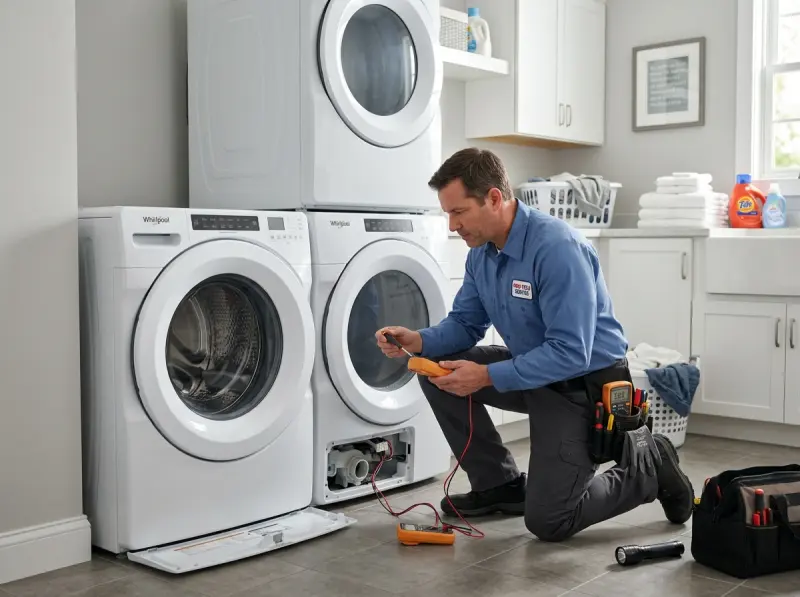
STOP DIY IMMEDIATELY IF YOU ENCOUNTER:
- Exposed 240V high-voltage wiring, burnt control board traces, or acrid electrical odor.
- High-voltage capacitors in microwaves holding lethal electrical charges even when unplugged.
- Gas leaks, damaged flexible supply lines, or clicking igniters near open gas fumes.
- Sealed refrigerant system leaks or pressurized compressor lines requiring EPA Section 608 certification.
6. Repair vs Replace Cost Evaluation (50% Rule)
When deciding whether to repair or replace an aging home appliance, industry experts apply the 50% Rule: if the cost of repair exceeds 50% of the price of a comparable new unit, and the appliance has passed half of its expected lifespan, replacement is generally recommended.
| Factor | Recommended to Repair | Recommended to Replace |
|---|---|---|
| Appliance Age | Under 6 Years Old | Over 8–10 Years Old |
| Repair Cost Ratio | < 50% of New Appliance Cost | > 50% of New Appliance Cost |
| Issue Severity | Minor component (valve, fuse, switch) | Major structural (compressor, tub bearing, magnetron) |
7. Repair Cost Factors in Alpharetta
The total cost of professional appliance repair depends on several standardized technical variables in the Alpharetta and North Fulton area:
- Diagnostic Service Fee: Covers local technician travel, initial disassembly, multimeter testing, and error code decoding. (Waived upon repair approval).
- OEM Component Pricing: Genuine manufacturer replacement parts (Samsung, Whirlpool, Bosch, GE) carry 90-day warranties compared to generic aftermarket parts.
- Labor & Accessibility Complexity: Built-in cabinetry removal or high-voltage safety procedures require additional labor hours.
8. How Certified Master Technicians Diagnose This Issue
Our EPA-certified technicians follow a rigorous 5-step diagnostic protocol:
- Diagnostic Test Mode Activation: Accessing hidden factory service modes to retrieve stored error codes and test sensor outputs.
- Voltage & Isolation Testing: Using digital multimeters to measure supply AC voltage and test components for shorted-to-ground conditions.
- Resistance Curve Benchmarks: Testing thermistors, solenoids, and heating coils against factory resistance tables (Ohms).
- Mechanical Clearance Check: Inspecting impellers, motor bearings, drive belts, and water lines for physical wear or obstruction.
- Post-Repair Safety Validation: Verifying grounding continuity and operational load cycles before signing off.
9. Common Replacement Parts Involved
Depending on the root cause, professional repair involves replacing specific factory-authorized components:
- Water inlet dual-solenoid valves & pressure switches
- High-voltage magnetrons, diodes, and safety door interlocks
- Tub bearings, spider assemblies, and suspension damper shocks
- Gas burner spark modules, igniter electrodes, and safety valves
10. Preventive Maintenance Tips
Extend the operational lifespan of your home appliances with these practical maintenance routines:
- Clean water inlet screens every 6 months to prevent mineral clogging from hard Fulton County water.
- Avoid overloading washing machines to prevent premature spider arm fracture and tub bearing wear.
- Keep gas cooktop burner ports clear of boiled-over grease using a soft brass wire brush.
- Inspect door gaskets and seals regularly to prevent air or water leaks.
11. Electrical & Mechanical Safety Warnings
Safety is the top priority during all appliance inspections. Always adhere to these safety standards:
- Power Isolation: Always disconnect main 120V/240V power or turn off dedicated circuit breakers before removing access panels.
- Gas Line Shutoff: Shut off manual gas supply valves before servicing any gas stove, cooktop, or dryer component.
- Capacitor Discharge: Never touch high-voltage microwave capacitors without discharging them using a 20,000-ohm resistor tool.
12. Frequently Asked Questions (FAQs)
Why does my washing machine sound like a jet engine during spin cycle?
A jet-engine roaring sound is the classic symptom of failed main tub bearings caused by a leaking tub seal.
Can unbalanced clothes ruin a washing machine?
Repeatedly spinning severely off-balance loads strains suspension springs, snaps spider arms, and prematurely destroys motor bearings.
How much does it cost to fix tub bearings on a washer?
Tub bearing replacement is labor-intensive and usually costs between $250 and $450 depending on whether the outer tub must be replaced as an assembly.
Why is my top-load washer banging against the wall?
Banging against cabinet walls indicates stretched suspension damper springs or worn snubbers that can no longer absorb centrifugal force.
Is it safe to run a noisy washer?
No. Running a washer with failing bearings or cracked spider arms will eventually tear the outer plastic tub and cause catastrophic water leakage.
17. Key Takeaways & Summary
- Systematic troubleshooting isolates issues between mechanical wear and electronic safety lockouts.
- Always disconnect power and shut off water or gas supplies before testing components.
- Apply the 50% Rule to evaluate whether repair or replacement offers better long-term value.
- Genuine OEM parts and professional master technician diagnosis guarantee long-term reliability.
Need Fast, Reliable Appliance Repair in Alpharetta, GA?
Don’t let a broken appliance disrupt your household. Contact our EPA-certified master technicians for same-day service, upfront transparent pricing, and a 90-day warranty on all parts and labor.
Need Certified Appliance Repair Today?
Skip the phone line — book direct local priority dispatch across Alpharetta, Milton, Roswell & Johns Creek.