
When a high-volume corporate bistro, artisan bakery, sports grill, or hotel kitchen along the bustling Windward Parkway commercial corridor in Alpharetta powers up their primary baking line for morning banquet preparation, an unexpected oven ignition lockout halts kitchen throughput immediately. Blodgett commercial gas convection ovens—revered throughout North Fulton food service establishments for heavy-gauge engineering and rapid thermal recovery—rely upon a precision Fenwal direct spark ignition (DSI) control module, high-voltage spark electrode, and microamp flame rectification sensor to fire the dual-burner combustion system safely. When carbon deposits, ceramic insulator micro-fractures, incorrect spark gaps, or degraded solid-state circuits prevent flame establishment, the oven locks out into safety shutdown, leaving line cooks with cold racks and escalating ticket backlogs. Our emergency commercial cooking technicians provide master-level diagnostics and genuine OEM component replacements to restore your production capacity without delay.
Quick Answer: Why Does a Blodgett Gas Convection Oven Click Continuously or Fail to Light?
A Blodgett commercial convection oven fails to ignite or locks out after clicking when its Fenwal 35-60 DSI module detects inadequate flame rectification current (below 1.0 microamp DC) or encounters a grounded spark electrode. Carbon fouling on the sense rod, an out-of-spec spark gap exceeding 1/8 inch, defective 24VAC gas valve solenoids, or an open combustion air pressure switch prevent the module from maintaining safe gas flow, triggering an automatic safety lockout.
Listen to 60-Second Blodgett Ignition Diagnostic Summary
Narrated by Jason J. (Master Certified Commercial Cooking Specialist)
Check Same-Day Commercial Oven Tech Availability in Alpharetta
Verified Local Service
Recently Serviced in Windward Pkwy Commercial Hub
Blodgett DFG-100 Dual Spark Igniter Calibration & Fenwal 35-60 Module Replacement • Verified 5.0 ★★★★★
Field Case Study • Windward Parkway Commercial Hub
Emergency Ignition Recovery on Blodgett Zephaire-200-G at Corporate Conference Bistro
Dispatched Location: 5400 Windward Parkway, Alpharetta, GA 30004.
Reported Issue: During early morning breakfast service, the double-stacked Blodgett Zephaire-200-G convection oven commenced loud rapid sparking for 4 seconds, failed to ignite the lower burner bank, and locked out with a steady red fault indicator on the Fenwal control module.
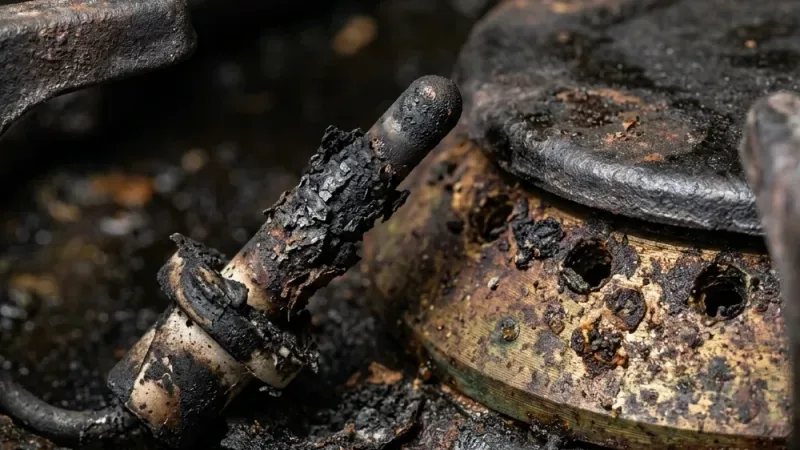
True-RMS Multimeter Telemetry: Control transformer secondary supply tested steady at 24.2 VAC across terminals 24V and GND. During the 4-second trial for ignition, the 24VAC valve output terminal momentarily energized the dual-solenoid gas valve, but flame rectification signal registered zero microamps (0.0 µA DC). Visual teardown revealed heavy baked grease and carbon glazing covering the flame sensing electrode, combined with a spark electrode gap opened up to 0.210 inches due to repeated thermal stress.
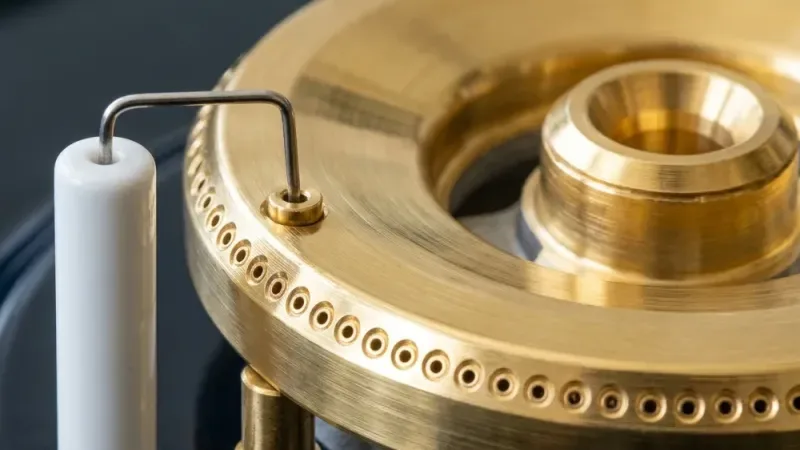
OEM Restoration: Installed genuine Blodgett OEM igniter and flame sense electrode assembly (Part #38302), precisely gapping the spark gap to exactly 1/8 inch (0.125 inches / 3.18 mm). Replaced thermal-fatigued Fenwal 35-605600-005 DSI control module. Upon test firing, instantaneous ignition occurred in 0.8 seconds, producing a robust 2.85 µA DC flame rectification signal. The commercial kitchen resumed uninterrupted baking within 75 minutes of technician arrival.
Parts: Blodgett #38302, Fenwal 35-605600
Warranty: 1-Year Commercial Warranty
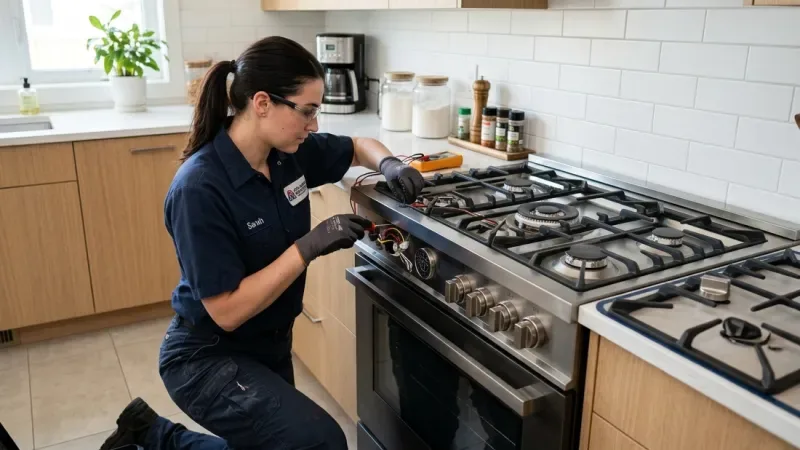
Table of Contents: Blodgett Commercial Convection Oven Technical Repair Guide
- Commercial Convection Oven Ignition Physics & Kitchen Demands Along Windward Parkway
- Recognizing Blodgett Convection Oven Spark Igniter & Fenwal Module Lockout Failures
- Visual Restoration Showcase: Before vs. After Spark Electrode OEM Service
- Root Causes of Direct Spark Ignition & Flame Sensing Breakdown in Blodgett Ovens
- Step-by-Step Operator Diagnostic Workflow & Safe Verification Checks
- Critical High-Voltage & Gas Safety Protocols: When to Halt In-House Inspections
- Commercial Equipment Longevity: Repairing Igniter Assemblies vs. Complete Oven Replacement
- Interactive Instant Commercial Oven Repair Cost Estimator
- Commercial Cooking Equipment Repair Pricing Variables in Alpharetta
- How Master Technicians Diagnose Blodgett Ovens: Multimeter & Telemetry Data
- Essential Blodgett OEM Components, Fenwal DSI Control Modules & Spark Probes
- Preventative Maintenance Schedules for High-Volume Commercial Convection Ovens
- Commercial Kitchen NFPA 96 & Gas Compliance Safety Guidelines
- Frequently Asked Questions Regarding Blodgett Convection Oven Ignition Repairs
- Related Commercial & Residential Cooking Equipment Services
- Related Commercial Kitchen Diagnostic & Error Code Guides
- Commercial & Luxury Cooking Equipment Brands We Support
- North Fulton Local Service Coverage Areas
- Summary & Key Takeaways for Commercial Kitchen Managers
- Emergency Commercial Convection Oven Repair Dispatch
Commercial Convection Oven Ignition Physics & Kitchen Demands Along Windward Parkway
In the demanding culinary landscape of Alpharetta, Georgia—stretching from the bustling fast-casual chains and corporate dining centers around Windward Parkway to the fine-dining establishments in Downtown Alpharetta and Avalon—commercial gas convection ovens serve as the backbone of thermal food processing. Whether slow-roasting prime ribs, baking dozens of trays of artisan baguettes, or reheating poultry portions under strict HACCP temperature guidelines, line chefs depend on constant, predictable convection heating. When kitchen managers require rapid commercial appliance repair, understanding the intricate electro-mechanical chain of events that governs gas combustion is paramount.
Unlike residential ovens that employ silicon carbide glow-bar igniters drawing high amperage over long warm-up intervals, heavy-duty commercial equipment like Blodgett DFG-100, DFG-200, Zephaire-100-G, and Zephaire-200-G ovens utilize Direct Spark Ignition (DSI). This industrial technology relies on instant high-voltage electrical discharge across a calibrated air gap to ignite natural gas or liquid propane within milliseconds. Because commercial operations demand rapid cycle recovery when the insulated oven doors swing open during meal rush, direct spark systems eliminate the 45-to-60-second ignition delay inherent in residential hot surface elements.
Central to this high-speed operation is the Fenwal 35-60 series electronic ignition module. Operating on a 24VAC control circuit derived from a dedicated step-down step-up transformer, the Fenwal board monitors input safety interlocks—including the door microswitches, high-limit thermal safety cutoffs, and centrifugal combustion blower draft switches—before commanding the internal solid-state step-up coil to produce up to 20,000 volts of pulsed spark energy. Simultaneous with the spark generation, the module energizes the redundant dual-solenoid 24VAC gas valve, bathing the primary burner ports in combustible fuel air mixture.
However, delivering gas into a high-temperature chamber without verifying ignition within seconds would create an imminent risk of fuel accumulation and catastrophic deflagration. To prevent this, the Fenwal ignition board employs the quantum physical phenomenon of flame rectification. When an AC voltage signal is broadcast across the ionized plasma field of a burning hydrocarbon flame to the ground burner frame, the dissimilar surface areas of the flame probe and burner head act as a natural electrical diode, converting a portion of the alternating current into a tiny direct current signal ranging from 1.8 to 4.0 microamperes (µA DC). If this microamp current fails to reach the control threshold within a strict 4-second or 7-second trial for ignition, the Fenwal module cuts power to the gas valve coils instantly, locking down the oven into a safe failure state.
When this critical flame rectification signal breaks down, restaurants encounter unexpected work stoppages that jeopardize daily revenue and customer satisfaction. Scheduling dedicated commercial oven repair ensures that high-voltage circuits, gas pressures, and microamp flame currents are evaluated by factory-trained technicians using precision True-RMS diagnostic equipment.
Recognizing Blodgett Convection Oven Spark Igniter & Fenwal Module Lockout Failures
Commercial kitchen supervisors and line cooks along North Fulton corridor roadways encounter specific audible, visual, and operational symptoms when a Blodgett gas oven begins to experience ignition deterioration. Recognizing these warning signs early allows restaurant managers to contact our team for same-day appliance repair before an intermittent ignition hiccup escalates into a complete multi-deck dinner rush shutdown.
1. Rapid Clicking Followed by Total Burner Silence (Lockout State)
The most common complaint reported to our dispatch desk is an oven that emits rapid, rhythmic snapping or clicking sounds for 4 to 10 seconds when calling for heat, followed by sudden silence, while the convection blower fan continues circulating room-temperature air. This symptom indicates that the Fenwal DSI module is successfully initiating its trial for ignition, firing high-voltage pulses across the electrode gap, but fails to sense a valid flame rectification signal before its internal safety timer expires. Once the module enters lockout, it will not attempt reignition until the main power switch is toggled off and on to reset the solid-state microcomputer.
2. Instant Ignition Flame That Drops Out After Exactly Three Seconds
When line staff observe the main burner roaring to life with a healthy blue flame, only to watch it vanish abruptly 3 to 4 seconds later, the issue is almost never fuel delivery. Instead, this symptom confirms that gas entered the burner tube and ignited on schedule, but the Fenwal control module did not receive the required 1.8 µA DC rectification current through the flame sense rod. Blind to the existence of the flame, the module acts to avert gas accumulation by snapping the redundant 24VAC gas solenoid valves shut. On 3-try retry modules, this ignition-and-drop cycle repeats three consecutive times before locking out permanently.
3. Absence of Audible Spark Discharge (Silent Lockout)
If turning the thermostat above room temperature produces the sound of the convection blower spinning but zero sparking sounds, the ignition circuit is interrupted upstream. Potential failures include a tripped manual-reset high-limit thermal switch, a malfunctioning centrifugal blower air draft switch that cannot confirm combustion airflow, a blown 24VAC control transformer secondary winding, or a completely dead Fenwal 35-60 control board unable to generate internal DC logic voltage.
4. Weak, Stray Sparking Arcing to Oven Chassis Instead of Burner Tube
Over months of high-temperature operation, airborne grease, aerosolized flour dust, and heat cycling degrade the glazed alumina ceramic insulator that cradles the spark rod. Microscopic cracks in the ceramic allow 20,000-volt spark pulses to track across moisture or carbon pathways directly to the metal housing of the oven, short-circuiting to ground before ever jumping the calibrated 1/8-inch air gap over the burner gas ports. Without spark energy positioned directly in the gas stream, combustion cannot initiate.
5. Acrid Electrical Odors or Searing Gas Smell from Lower Control Compartment
When an unburned gas odor lingers around the base of the oven or operators detect the pungent smell of scorched conformal coating and overheating copper coils, immediate emergency appliance repair is required. Degraded relay contacts on the Fenwal board or internal solenoid coil shorts within the dual gas valve can lead to localized thermal breakdown that demands urgent component isolation.
Visual Restoration Showcase: Before vs. After Spark Electrode OEM Service
Continuous commercial baking exposes burner assemblies to extreme thermal cycling between 150°F and 500°F, creating significant carbonization and thermal oxidation on sensitive flame sensor metals. Below is a macro photographic comparison demonstrating a severely compromised Blodgett spark and flame sense assembly versus a brand-new factory-calibrated OEM replacement installed by our North Fulton service technicians.
Root Causes of Direct Spark Ignition & Flame Sensing Breakdown in Blodgett Ovens
Diagnosing commercial ignition issues requires an intimate understanding of high-voltage electronics, gas fluid dynamics, and metallurgy. In commercial foodservice environments throughout appliance repair in Alpharetta, GA, several distinct mechanical and chemical root causes account for over 90% of all Blodgett oven ignition failures.
Silicon Carbide and Ceramic Insulator Degradation
The ceramic body supporting the spark and flame rods is fabricated from specialized high-alumina porcelain engineered to withstand up to 1,800°F. However, constant exposure to grease vapor, vaporized animal fats, and harsh commercial kitchen degreasers creates micro-porosity on the ceramic surface. Once contaminated, the ceramic loses its dielectric strength. When the Fenwal module fires its 20,000V pulse, the electricity chooses the path of least resistance across the greasy ceramic surface into the metal mounting bracket, completely bypassing the air gap over the gas burner tube.
Spark Gap Distortion from Repeated Thermal Expansion
Factory specifications for Blodgett DFG and Zephaire series ovens mandate a spark electrode gap of exactly 1/8 inch (0.125 inches / 3.18 mm) relative to the grounded burner port or return rod. Over years of thermal cycling, the metal electrode undergoes metallurgical annealing, causing it to warp or droop. If the gap widens beyond 5/32 inch (0.156 inches), the electrical resistance of the air gap exceeds the ignition module’s voltage capacity, resulting in intermittent spark failure or weak, cool sparks that cannot ignite gas reliably.
Heavy Carbon Glazing on the Flame Sensing Rod
Incomplete gas combustion—often caused by slight air shutter misadjustments, lint obstruction in the burner venturi, or grease buildup—deposits a glassy layer of carbon upon the metallic flame rod. Carbon acts as an electrical insulator at low microamp DC voltages. Even when enveloped in a vibrant flame, the insulated rod cannot pass electrons through the flame envelope to ground, causing the Fenwal 35-60 module to assume that ignition failed and trip into safety lockout after 3 seconds.
Solid-State Electrolytic Capacitor & Relay Failure within Fenwal 35-60
The lower electrical control module compartment of a commercial convection oven is subjected to radiant heat from the bake chamber and vibration from the heavy-duty convection blower motor. Over time, the electrolytic filter capacitors on the Fenwal printed circuit board dry out, losing capacitance and creating electrical ripple in the DC microamp sensing logic. Simultaneously, the mechanical micro-relay that switches 24VAC to the gas valve coils suffers contact pitting, leading to voltage drops that prevent the valve solenoids from holding open against line gas pressure.
Centrifugal Air Switch & Combustion Blower Obstructions
Blodgett gas convection ovens utilize a specialized combustion draft system interlocked with a centrifugal air switch mounted to the blower motor. If flour dust, grease, or debris restricts the squirrel-cage blower wheel, or if the internal diaphragm switch becomes stiff, the electrical contacts will not close to complete the 24VAC circuit to the Fenwal module. The oven will silently refuse to spark, protecting the facility from unvented gas buildup.
Step-by-Step Operator Diagnostic Workflow & Safe Verification Checks
Before escalating to commercial service calls, restaurant managers and kitchen line supervisors in nearby communities seeking Milton commercial kitchen services can execute a non-invasive five-step operational check to rule out simple external variables.
Step 1: Verify Gas Supply Isolation Valves and Flexible Line Quick-Disconnect
Ensure that the manual gas shutoff valve behind the equipment lineup is fully parallel to the supply pipe. Check the commercial quick-disconnect collar on the flexible stainless steel gas hose; if the spring-loaded quick-disconnect sleeve has been partially dislodged during floor sweeping or mopping, internal safety poppets will starve the oven of fuel pressure.
Step 2: Inspect Main Electric Power and Door Interlock Microswitches
Confirm that the dedicated 120V/208V circuit breaker on the kitchen electrical panel is firmly set. Examine the door seal and latch mechanism: Blodgett ovens feature a mechanical microswitch inside the front door jamb that cuts power to the ignition circuit and blower motor whenever the door is open. If the door hinges are loose or misaligned, the switch will not depress fully, halting all ignition sequences.
Step 3: Execute a Controlled Hard Reset on the Fenwal Ignition Control
When a Fenwal 35-60 DSI module trips on lockout, it remains latched until 24VAC power is interrupted. Turn the main BLOWER / COOK switch to the OFF position. Wait a full 60 seconds to allow the internal microprocessor and bleed-down resistors to clear memory. Turn the switch back to COOK and advance the thermostat 50°F above current ambient temperature to observe the ignition response.
Step 4: Check Manual High-Limit Cutout Reset Button
Most Blodgett commercial models feature a red manual-reset high-limit button located behind the lower front access panel or service kickplate. If the oven experienced an over-temperature condition exceeding 450°F, this mechanical switch trips open. With power disconnected, press the button firmly; a solid audible click indicates that an over-temp cutoff had occurred.
Step 5: Inspect Combustion Air Intake Louvers for Lint and Debris Blockage
Examine the lower ventilation louvers and perimeter air intakes. In high-volume baking environments, airborne flour and grease accumulate rapidly across intake screens. Use a dry shop vacuum or soft brush to clear any surface buildup that could choke the combustion blower and prevent the air pressure switch from establishing continuity.
Critical High-Voltage & Gas Safety Protocols: When to Halt In-House Inspections
Commercial kitchen operators must establish strict safety boundaries regarding gas and electrical diagnostics. While simple operational resets are safe for line staff, attempting in-house disassembly of gas manifolds, ignition controls, or high-voltage leads introduces life-safety hazards that demand licensed professional intervention. Foodservice teams requiring expert Roswell restaurant equipment repair rely on certified professionals to manage complex commercial gas mechanics safely.
- 20,000-Volt Electrical Shock Danger: The ignition transformer inside the Fenwal 35-60 generates secondary pulse potentials up to 20 kV. Touching an energized spark lead or test probe while the module attempts ignition can inflict painful electric shocks, involuntary muscle contractions, and severe nerve damage.
- Explosion Hazard from Gas Accumulation: Repeatedly cycling the main power switch to force an oven through multiple ignition trials without investigating why it fails to establish a flame allows unburned gas to pool in the heat exchanger and flue passages. Subsequent sparking can detonate the pocket, blowing out door hinges and rupturing heat exchanger baffles.
- Combustion Manifold Pressure Calibration: Blodgett gas valves require precise manometer balancing. Operating an oven with gas pressures outside factory parameters (3.5″ W.C. natural gas, 10.0″ W.C. propane) causes flame impingement, heavy carbon monoxide formation, and scorched burner tubes.
- Insurance & Fire Code Invalidation: NFPA 54 (National Fuel Gas Code) and local Fulton County commercial mechanical ordinances mandate that commercial gas cooking repairs be performed by qualified service agencies to preserve building insurance coverage.
Commercial Equipment Longevity: Repairing Igniter Assemblies vs. Complete Oven Replacement
When faced with an ignition system breakdown on a Blodgett commercial convection oven, restaurant operators must evaluate whether to replace the ignition components or invest in a brand-new double-stacked convection oven suite. For corporate dining facilities in Johns Creek food service facilities, making the financially prudent decision requires comparing capital expenditures against predictable repair longevity.
A brand-new commercial gas convection oven like the Blodgett DFG-100 or Zephaire-100-G costs between $8,500 and $14,000 for a single deck, and up to $25,000 for double-stacked units with freight, mechanical gas hookups, and professional hood ventilation balancing included. In contrast, replacing the complete ignition train—including a new Fenwal 35-60 DSI control module, OEM spark and flame sense assembly, high-temperature spark wire, and 24VAC dual-solenoid gas valve—typically ranges from $580 to $1,250.
| Decision Factor | Repair Ignition Train (Recommended) | Replace Complete Oven Assembly |
|---|---|---|
| Average Total Cost | $580 – $1,250 (Parts & Labor) | $8,500 – $22,000+ (Equipment + Install) |
| Kitchen Downtime | 1 to 2 Hours (Same-Day Restoration) | 1 to 3 Weeks (Freight, Rigging, Permits) |
| Expected Remaining Life | 5 to 8+ Additional Years | 10 to 15 Years |
| Heat Exchanger Condition | Sound, No Cracks, Welds Intact | Cracked, Rusted Through, Flue Breach |
| ROI & Payback Period | Immediate (Within 1-2 Days of Service) | 24 to 36 Months |
The primary operational criterion is the structural integrity of the stainless steel combustion heat exchanger and door frame. If the heat exchanger tubes are crack-free and the chassis retains structural rigidity, repairing the ignition control module is overwhelmingly the most economical path. Operators who also manage refrigerated food storage frequently coordinate oven maintenance alongside commercial refrigeration repair to maximize preventative kitchen coverage.
target.innerText = ‘$380 – $540’;
} else if (issue === ‘fenwal_module’) {
target.innerText = ‘$520 – $740’;
} else if (issue === ‘gas_valve’) {
target.innerText = ‘$580 – $820’;
} else if (issue === ‘full_ignition_train’) {
target.innerText = ‘$890 – $1,280’;
Commercial Cooking Equipment Repair Pricing Variables in Alpharetta
Transparent, predictable pricing is critical for commercial kitchen budgeting. When commercial operators schedule repairs, several technical and logistical variables dictate the final invoice. Foodservice operations requiring synchronized dish room support often coordinate oven diagnostics alongside commercial dishwasher maintenance to streamline technician dispatch fees.
- OEM vs. Aftermarket Parts: We utilize genuine Blodgett factory-authorized ignition modules (Fenwal 35-60 series) and ceramic electrode assemblies. Genuine OEM parts cost 15-20% more than generic universal boards, but they guarantee exact flame rectification microamp thresholds, precise timing, and adherence to manufacturer warranty criteria.
- Single Deck vs. Double Stack Access: Servicing the lower deck of a stacked Blodgett DFG-200 requires technicians to work near floor level, often requiring detachment of flexible restraining cables and rolling the oven bank forward. Upper deck repairs allow faster access, requiring less labor time.
- Gas Manifold & Solenoid Valve Replacement: If electrical diagnostic telemetry confirms that shorted internal valve solenoids damaged the Fenwal board, both the module and the redundant dual-solenoid gas valve must be replaced simultaneously, increasing the parts investment.
- Emergency Night & Weekend Kitchen Dispatch: Weekend dinner rushes and early-morning catering emergencies outside standard service hours carry specialized emergency dispatch rates, offset by immediate kitchen operational recovery.
How Master Technicians Diagnose Blodgett Ovens: Multimeter & Telemetry Data
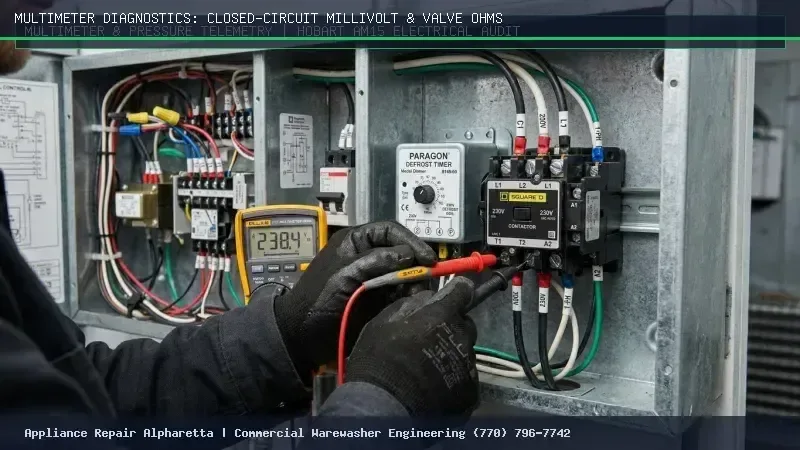
Professional commercial diagnostics rely on scientific measurements using calibrated True-RMS digital multimeters and microamp telemetry. When our master technicians inspect a non-heating Blodgett convection oven along the North Fulton highway system, they execute a precise diagnostic sequence. Hospitality operators maintaining in-house guest laundry or culinary linen wash rooms benefit similarly when pairing kitchen service with commercial laundry equipment repair.
| Component / Test Point | Test Parameter | Acceptable Benchmark Value | Failure Indication & Action |
|---|---|---|---|
| Fenwal 35-60 Input Voltage | AC Voltage across 24V & GND | 24 VAC nominal (21.6V to 26.4V AC) | < 20.8V AC: Faulty step-down transformer or loose line tap. |
| Flame Rectification Current | DC Microamperes in series with Sense Wire | 1.8 to 4.0 µA DC (Stable) | < 1.0 µA DC: Sooted probe, bad chassis ground, or module lockout. |
| Spark Electrode Air Gap | Mechanical Feeler Gauge Measurement | Exactly 1/8″ (0.125″ / 3.18 mm) | > 5/32″: Weak spark; < 3/32″: Spark energy insufficient to ignite fuel. |
| Dual Redundant Gas Valve Main Coil | Cold DC Resistance across terminals | 12 to 18 Ω | Infinite (OL) = Open coil; < 8 Ω = Shorted coil tripping board. |
| Dual Redundant Gas Valve Safety Coil | Cold DC Resistance across safety terminals | 14 to 22 Ω | Open circuit prevents safety valve diaphragm from lifting. |
| Centrifugal Combustion Air Switch | Contact Resistance when Blower Runs | < 0.3 Ω (Closed circuit) | Open (OL) indicates clogged wheel or defective draft diaphragm. |
| Manual Reset High-Limit Thermostat | Closed Loop Continuity below 450°F | 0.1 to 0.3 Ω (Closed) | Open (OL) indicates over-temp trip or internal bimetal fatigue. |
| Spark Wire Dielectric Insulation | Megohmmeter Resistance to Chassis Ground | > 50 MΩ @ 1,000V DC | < 20 MΩ: High-voltage spark leaks through silicone sleeve. |
Essential Blodgett OEM Components, Fenwal DSI Control Modules & Spark Probes
To guarantee reliable commercial operation, our field service vehicles carry an exhaustive inventory of genuine factory-certified Blodgett and Fenwal replacement parts. Commercial kitchen operators operating auxiliary gas equipment or commercial gas dryers also benefit from our team’s cross-platform expertise in commercial dryer repair when maintaining comprehensive facility infrastructure.
Fenwal 35-60 Direct Spark Ignition (DSI) Module (Blodgett OEM #32244 / 53003)
The microprocessor-controlled core of the ignition assembly. Featuring conformal coating to shield sensitive circuitry against commercial kitchen humidity and airborne grease, this board manages the trial for ignition, timing logic (4-second trial, 3-try retry with 15-second inter-purge), high-voltage spark generation, and microamp flame rectification analysis.
Dual Spark Electrode & Flame Sense Assembly (Blodgett OEM #38302 / 33249)
Engineered with dual Kanthal steel alloy rods encased in high-temperature glazed alumina ceramic. One rod delivers the 20 kV spark discharge to establish the flame, while the adjacent rod acts as the rectification sensor transmitting DC microamperes back to the Fenwal module. Mounted directly over the primary burner ribbon.
Dual Redundant Solenoid Gas Valve (Blodgett OEM #30013 / 54228)
A heavy-duty 24VAC commercial gas control containing two internal valves in series. Both valves must energize to permit gas flow. Features an integral gas pressure regulator adjustable from 3.0″ to 5.0″ W.C. for Natural Gas, or field-convertible with LP conversion springs to 10.0″ W.C.
Silicone Insulated High-Tension Spark Lead (Blodgett OEM #33158)
Rated for 25,000 volts dielectric insulation and temperatures exceeding 450°F. Features ceramic boot ends and stainless steel locking terminals that prevent micro-arcing and radio frequency interference (RFI) from corrupting the oven’s digital temperature control board.
Preventative Maintenance Schedules for High-Volume Commercial Convection Ovens
Implementing a rigorous preventative maintenance schedule prevents emergency dinner rush breakdowns, extends equipment operational lifespan, and ensures maximum fuel efficiency. High-end culinary environments equipped with heavy commercial ranges or luxury culinary suites such as Viking commercial-grade range repair apply identical disciplined service protocols to maintain peak kitchen readiness.
| Maintenance Interval | Required Action Protocol | Responsible Personnel |
|---|---|---|
| Daily Closing Protocol | Wipe down interior door gaskets; inspect glass door alignment; clear crumbs from door sill. | Kitchen Stewarding Staff |
| Monthly Kitchen Protocol | Vacuum exterior ventilation louvers; inspect combustion blower wheel for lint; verify blue flame color. | Kitchen Facilities Supervisor |
| Quarterly Professional Service | Clean and burnish flame sense rod; calibrate 1/8″ spark gap; inspect high-voltage lead ceramic sleeves. | Certified Commercial Tech |
| Annual Comprehensive Overhaul | Test manifold gas pressure with manometer; measure microamp rectification signal; lubricate blower motor bearings. | Master Equipment Specialist |
Commercial Kitchen NFPA 96 & Gas Compliance Safety Guidelines
Commercial foodservice establishments in Fulton County must comply strictly with NFPA 96 (Standard for Ventilation Control and Fire Protection of Commercial Cooking Operations) and NFPA 54 (National Fuel Gas Code). Operating commercial gas convection ovens with erratic direct spark ignition modules or bypassed flame rectification circuits violates municipal fire codes and compromises the life safety of kitchen staff and patrons. Kitchens maintaining luxury culinary appliances like Thermador cooking appliance repair demand the same rigorous attention to combustion ventilation and safety shutoff protocols.
All Blodgett gas convection ovens must operate underneath an approved Type I commercial ventilation hood equipped with an operational fire suppression system (such as an Ansul R-102 system). The mechanical gas supply line must feature an automatic gas shutoff valve interlocked with the fire suppression control box, ensuring that any thermal fire discharge cuts incoming fuel supply instantly. Furthermore, heavy-duty commercial equipment on caster wheels must utilize an approved restraining cable anchored to the structural wall to prevent tensile stress upon the flexible gas line.
Frequently Asked Questions Regarding Blodgett Convection Oven Ignition Repairs
Below are detailed, technically rigorous answers to the most common questions raised by commercial kitchen managers, executive chefs, and restaurant operators across the North Fulton dining community.
What causes my Blodgett oven to spark continuously without ever stopping?
Continuous, unending sparking occurs when the Fenwal DSI module fails to detect flame rectification while simultaneously failing to trip its lockout timer, typically due to a defective internal timing circuit. In standard operation, the Fenwal 35-60 should spark for a maximum of 4 to 10 seconds before terminating the trial. If it clicks endlessly without stopping, the internal solid-state control board has failed internally and must be replaced.
Can I clean the spark igniter and flame sense rod with sandpaper or steel wool?
Never use coarse sandpaper or steel wool to clean a commercial flame rod. Coarse abrasives leave fine mineral grit and deep microscopic scratches that trap carbon and grease rapidly. Steel wool leaves microscopic metallic slivers that cause short-circuits across the ceramic base. Master technicians use fine Scotch-Brite scouring pads or 600-grit emery cloth, wiping the probe down with denatured alcohol to remove all residue without altering rod geometry.
What is the exact factory spark gap specification on a Blodgett gas oven?
The factory-mandated spark gap between the high-voltage spark electrode and the grounded burner tube or return rod is exactly 1/8 inch (0.125 inches / 3.18 mm). If the gap is narrower than 3/32 inch, the spark is too short and cool to ignite the fuel air mixture reliably. If the gap exceeds 5/32 inch, the Fenwal module’s secondary voltage cannot bridge the gap under gas flow, causing arcing elsewhere.
How many microamps of flame rectification current are required by a Fenwal 35-60 module?
A Fenwal 35-60 direct spark ignition control requires a minimum threshold of 0.8 to 1.0 microamp DC (µA DC) to sustain combustion. Under optimal operating conditions with a clean burner and proper gas air mixture, a healthy Blodgett flame rectification reading measures between 1.8 and 4.0 µA DC. Readings below 1.2 µA DC indicate imminent failure due to carbon buildup or grounding degradation.
Why does my oven light for three seconds and then immediately shut off?
This classic commercial symptom is known as a flame rectification drop-out. The Fenwal board successfully sparks and opens the gas valve, allowing gas to ignite. However, because the flame rod is carbonized, the spark wire is corroded, or the burner chassis ground is loose, the module cannot detect the required DC microamp signal through the flame. Assuming ignition failed, it snaps the gas valve shut to prevent dangerous unburned gas buildup.
Can a bad chassis ground cause ignition lockout on a Blodgett oven?
Yes, absolutely. Flame rectification relies on a continuous electrical loop passing from the Fenwal sense terminal through the flame to the metal burner chassis, and back through the green ground wire to the control module’s GND terminal. If the ground wire connection is oxidized, loose, or reading more than 0.5 ohms resistance, the microamp circuit is broken, causing immediate lockout even with a brand new electrode.
What is the difference between a 1-try and 3-try Fenwal ignition module?
A 1-try ignition module executes a single 4-to-10-second trial for ignition; if a flame is not established, it locks out permanently until power is reset. A 3-try module attempts ignition for 4 seconds, and if no flame is confirmed, it pauses for a 15-second inter-purge period before attempting a second and third trial. 3-try modules provide greater tolerance against momentary gas line pressure drops during peak kitchen usage.
How does the combustion blower air switch prevent the oven from sparking?
Blodgett gas ovens feature an air pressure differential switch wired in series with the 24VAC power feed to the Fenwal module. The switch verifies that the convection blower is spinning at full speed (1,725 RPM) and providing sufficient airflow for combustion. If the switch remains open due to a loose belt, dirty squirrel-cage wheel, or failed diaphragm, the 24VAC circuit is interrupted and the ignition module remains dormant.
What are the proper gas manifold pressures for Blodgett convection ovens?
For standard Natural Gas configurations, Blodgett convection ovens require an incoming dynamic pressure of 7.0″ W.C. and a regulated manifold pressure of 3.5″ W.C. at the burner orifice tap. For Liquid Propane (LP), incoming dynamic pressure must measure 11.0″ to 14.0″ W.C., with manifold pressure calibrated to exactly 10.0″ W.C. Incorrect pressures cause delayed ignition, sooting, or pilot liftoff.
Can an aftermarket universal ignition module be used on a Blodgett oven?
While generic aftermarket modules exist, installing them on commercial Blodgett equipment is strongly discouraged. Universal boards frequently feature different trial-for-ignition timings, lack conformal moisture-proof coatings, and may not match the microamp rectification sensitivity of genuine Blodgett/Fenwal 35-60 controllers. Furthermore, non-OEM boards violate NSF and ANSI Z83.11 commercial cooking equipment certifications.
How does grease accumulation inside the lower control cavity cause ignition failure?
Commercial kitchens produce airborne grease vapors that are drawn into the lower control compartment by the motor cooling fan. Over time, grease blankets the printed circuit board of the Fenwal module and coats the high-voltage spark connector. Grease acts as a semi-conductive blanket that traps heat, degrades solder joints, and causes high-voltage spark current to short out before reaching the burner assembly.
Why does my oven spark only when the door is slammed shut?
If an oven only initiates ignition when the door is slammed with force, the primary door interlock microswitch is out of mechanical alignment or suffering from internal contact wear. The switch actuator arm inside the door jamb must fully close the 24VAC safety circuit when the door seals. Slamming jarringly closes the worn contacts momentarily, but the switch will quickly fail completely and requires replacement.
Can an open-circuit secondary high-limit thermostat prevent ignition sparking?
Yes. The high-limit safety thermostat is wired directly in series with the 24VAC ignition circuit. If the oven chamber exceeds 450°F due to a stuck contactor or faulty operating thermostat, the high-limit switch trips open to prevent structural damage. Until the red reset button on the high-limit switch is manually depressed, zero 24VAC power can reach the Fenwal ignition module.
What are the signs of a cracked ceramic spark electrode insulator?
A cracked ceramic insulator presents as weak or nonexistent sparking at the burner tip accompanied by faint clicking noises originating inside the burner compartment. Under darkened kitchen lighting, technicians can observe electrical arcing jumping through the crack directly into the metal mounting bracket. Even hairline fractures invisible to the naked eye cause spark voltage leakage, demanding complete assembly replacement.
How quickly can a commercial technician reach our Alpharetta restaurant for emergency repair?
Our commercial cooking equipment specialists maintain dedicated on-call status along Georgia 400 and the Windward Parkway commercial hub. Average emergency dispatch response times range between 45 and 90 minutes. With fully stocked service vans carrying Fenwal 35-60 modules, OEM electrode probes, and 24VAC gas valves, over 95% of ignition emergencies are completed on the initial service visit.
Does your commercial repair service include a warranty on parts and labor?
Yes. All commercial Blodgett repairs performed by our certified technicians include a comprehensive 1-Year Commercial Warranty covering installed genuine OEM parts and associated diagnostic labor. If the replaced component experiences premature failure within 12 months, our technicians return and replace it with zero additional cost to your business.
Can an erratic flame rectification signal damage the Fenwal 35-60 control module?
An erratic flame signal alone will not directly destroy the Fenwal module, but the resulting short-cycling causes excessive relay chatter. The internal micro-relay that supplies 24VAC to the dual gas valve solenoids cycles on and off repeatedly every few seconds, generating electrical arcing that pits and welds the relay contacts. Once contacts are scorched, the module fails completely.
Related Commercial & Residential Cooking Equipment Services
Appliance Repair Alpharetta provides comprehensive commercial kitchen and residential cooking maintenance across North Fulton County. Operators managing multiple culinary stations can review our core specialized services below:
Commercial Cooking Equipment
Complete diagnostic service for commercial convection ovens, pizza deck ovens, salamanders, and conveyor ovens.
Commercial Range & Griddle Repair
Calibration of heavy-duty open burners, standing pilots, thermocouple safety valves, and thermostatic griddle plates.
Same-Day Emergency Tech Dispatch
Rapid on-demand commercial dispatch within 45 to 90 minutes to restore critical revenue-generating kitchen lines.
Related Commercial Kitchen Diagnostic & Error Code Guides
Browse our comprehensive technical knowledge base covering commercial cooking and refrigeration failures in local North Fulton facilities:
Commercial & Luxury Cooking Equipment Brands We Support
Our factory-trained technicians possess extensive component-level diagnostic expertise across the world’s leading commercial foodservice and ultra-luxury cooking appliance manufacturers:
- Blodgett, Vulcan, & Southbend: Commercial gas convection ovens, radiant broilers, and heavy-duty cooking ranges.
- Sub-Zero Commercial & Residential: High-capacity commercial walk-ins, undercounter prep chillers, and Sub-Zero commercial refrigeration service units.
- KitchenAid Commercial Platforms: Commercial stand mixers, wall ovens, and premium KitchenAid commercial cooking appliances.
- Bosch & Thermador: Commercial catering prep lines, gourmet combi-ovens, and Bosch commercial kitchen appliances.
North Fulton Local Service Coverage Areas
Our mobile commercial service units are stationed strategically throughout the northern metropolitan corridor, delivering rapid on-site commercial repair across:
- Alpharetta (30004, 30005, 30009, 30022): Windward Parkway, North Point Mall district, Avalon, Old Milton Parkway, and Downtown Alpharetta.
- Milton (30004): Crabapple Market, Birmingham Crossroad, and executive private clubs.
- Roswell (30075, 30076): Historic Canton Street dining corridor, Holcomb Bridge culinary hub, and Alpharetta Highway retail plazas.
- Johns Creek (30005, 30022, 30097): Medlock Bridge corridor, Technology Park, and country club banquet kitchens.
Summary & Key Takeaways for Commercial Kitchen Managers
- Instant Direct Spark Physics: Blodgett convection ovens rely on high-voltage direct spark ignition (up to 20,000V) and 1.8–4.0 µA DC flame rectification via Fenwal 35-60 solid-state modules.
- Critical 1/8″ Spark Gap Calibration: Spark electrodes must be precisely calibrated to 0.125 inches (3.18 mm). Gaps beyond 5/32 inch cause spark voltage arcing to chassis or failure to jump the gas stream.
- Lockout Warning Signs: Rapid clicking followed by silence, or burners firing for exactly 3 seconds before extinguishing, indicates flame rectification failure rather than a gas supply outage.
- Severe Life Safety Risks: Bypassing safety switches or repeatedly force-resetting a locked-out commercial oven creates severe gas detonation and electrical shock hazards.
- Substantial Financial ROI: Restoring the ignition train ($580–$1,250) preserves commercial equipment with intact heat exchangers, avoiding $8,500–$22,000+ premature oven replacement costs.
- Priority Same-Day Dispatch: Professional commercial technicians provide 45–90 minute priority dispatch along Windward Parkway with fully stocked OEM service vehicles.
Restore Your Blodgett Convection Oven to Peak Commercial Performance
Do not let a sparking igniter lockout or failing Fenwal ignition control board derail your restaurant’s dinner service. Our master commercial technicians are standing by in Alpharetta with genuine OEM Blodgett and Fenwal parts for same-day restoration.
1-Year Commercial Warranty • Licensed & Insured Master Technicians • 45–90 Min Live Dispatch