
Southbend Commercial Gas Range Pilot & Thermocouple Safety Valve Repair Johns Creek GA
When a bustling fine dining bistro, corporate culinary center, country club banquet facility, or high-volume family restaurant in Johns Creek discovers that their heavy-duty cooking line has suffered a sudden oven pilot outage, meal service grinds to an immediate halt. Southbend commercial gas ranges—celebrated across executive chef kitchens for rugged cast-iron construction and high-BTU performance across the Ultimate, S-Series, and Platinum modular platforms—rely on a fail-safe thermoelectric safety circuit consisting of a standing pilot burner, a high-output coaxial thermocouple, and a Baso magnetic safety valve. When kitchen staff report that a southbend commercial gas range pilot thermocouple assembly refuses to stay lit when the pilot push-button is released, the primary safety circuit has lost the millivolt potential required to hold open internal gas safety seats. Explore our dedicated commercial appliance repair capabilities engineered to keep Johns Creek restaurants firing at peak culinary capacity. For urgent emergency dispatch to your commercial kitchen, call our certified commercial technicians directly at (770) 796-7742.
Quick Answer: Why Does a Southbend Gas Range Pilot Refuse to Stay Lit?
A Southbend commercial gas range pilot fails to stay lit when the thermocouple produces less than 12 millivolts under closed-circuit load, the pilot orifice is clogged with carbonized grease, or the internal electromagnet inside the Baso safety valve has failed. The thermocouple must generate sufficient DC voltage from the pilot flame to energize the safety valve’s magnetic coil, preventing raw unburned gas accumulation.
Listen to 60-Second Southbend Gas Range Diagnostic Summary
Narrated by Jason J. (Master Certified Commercial Cooking Specialist)
Check Same-Day Southbend Tech Availability in Your Johns Creek Neighborhood
Verified Local Restaurant Service Record
Recently Serviced on Medlock Bridge Road, Johns Creek, GA
Southbend S36D 6-Burner Commercial Gas Range • Pilot Orifice Ultrasonic De-carbonization, Thermocouple Replacement & Gas Pressure Calibration • Verified 5.0 ★★★★★
Table of Contents: Southbend Commercial Range Pilot Diagnostics
- Introduction: The High Cost of Unplanned Commercial Cooking Outages
- Operational Symptoms: Identifying Thermocouple & Pilot Valve Distress
- Visual Before & After: Southbend Range Pilot & Burner Restoration
- Root Causes of Pilot Failure (Millivolt Loss, Carbonization, Baso Magnets)
- Step-by-Step Operator Troubleshooting: Safe Checks for Kitchen Staff
- When to Stop DIY: Flammable Gas Leak Risks & Gas Pressure Hazards
- Repair vs. Replace Decision Matrix: Heavy-Duty Commercial Gas Ranges
- Interactive Instant Repair Cost Estimator for Southbend Cooking Ranges
- Cost Factors Influencing Commercial Range Gas Valve Overhauls in Johns Creek
- How Master Technicians Diagnose Thermocouples (Millivolt Load Testing)
- Critical OEM Parts Involved in Southbend Commercial Range Service
- Preventive Maintenance Protocols to Eliminate Carbon Clogging
- NFPA 54 Fuel Gas Safety, Gas Manifold Pressures & Ventilation Standards
- Frequently Asked Questions (16 In-Depth Technical Answers)
- Related Commercial Cooking & Refrigeration Equipment Services
- Key Takeaways for Johns Creek Restaurant & Culinary Managers
- Call to Action: Emergency Commercial Cooking Dispatch in Johns Creek
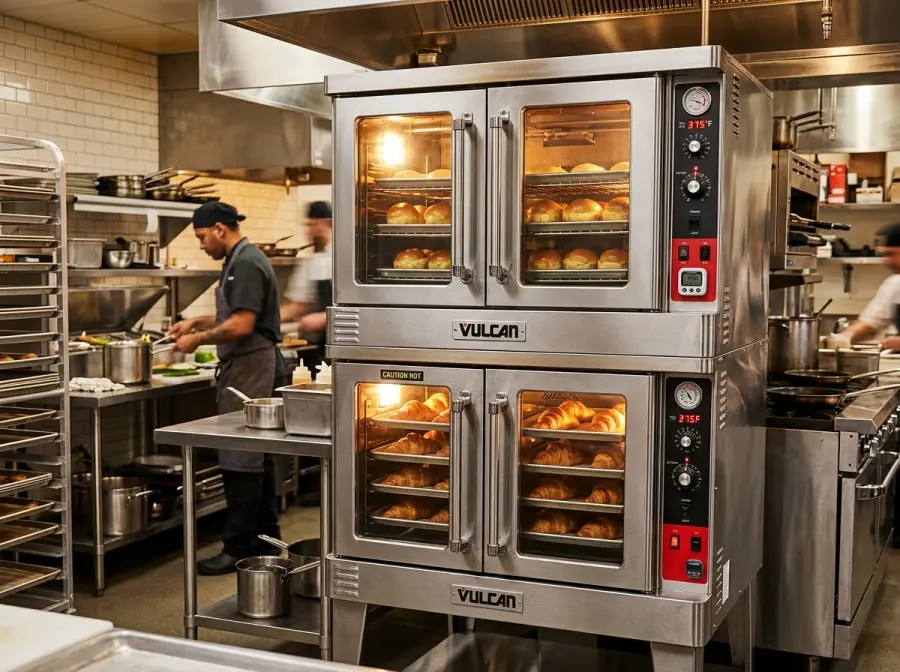
Introduction: The High Cost of Unplanned Commercial Cooking Outages
In high-volume commercial kitchens, hotel banquet facilities, upscale gastropubs, and private academy dining halls across Johns Creek, the gas cooking range is the undisputed workhorse of the culinary line. Southbend, an industry-leading manufacturer with over a century of commercial cooking heritage, engineers heavy-duty commercial gas ranges designed to withstand intense kitchen punishment. Whether firing an Ultimate 400 Series range with 33,000 BTU cast-iron star burners or an S-Series standard depth oven, the reliability of the oven base and open burners is non-negotiable during dinner rush. However, when an executive chef or prep cook discovers that the oven pilot flame refuses to stay lit after holding down the reset button, roasted meats, baked breads, and sauces cannot be prepared. Scheduling prompt appliance repair in Johns Creek, GA ensures that commercial gas lines and combustion safety circuits are evaluated by licensed gas specialists.
Unlike residential gas ovens that use silicon carbide or silicon nitride electronic glow-bar igniters, commercial Southbend ranges utilize a 100% fail-safe thermoelectric standing pilot system. This system is engineered specifically for commercial durability, avoiding sensitive electronic boards that can fail under high ambient grease and extreme heat. The standing pilot flame burns continuously directly adjacent to the tip of a heavy-duty coaxial thermocouple. The thermocouple utilizes the Seebeck effect: two dissimilar metals (typically Constantan and Chromel or Copper-Nickel alloys) welded together at the tip produce a minute direct-current (DC) millivoltage when heated by the flame.
This electrical potential—measuring between 25 and 35 millivolts (mV) open circuit—travels through a copper coaxial cable to an electromagnetic coil inside the Baso H15 safety valve. When an operator pushes the red pilot override button, they physically force the internal valve plunger against the electromagnet. If the thermocouple generates at least 12 to 15 millivolts under closed load, the electromagnet generates sufficient magnetic holding force to keep the safety gas valve open. If the pilot flame blows out, the thermocouple cools within 30 to 45 seconds, the magnetic field collapses, and a heavy internal spring snaps the gas valve shut, preventing raw gas from filling the oven cavity. When safety circuits fail, requesting expert same-day appliance repair guarantees fast recovery before dinner service begins.
Operational Symptoms: Identifying Thermocouple & Pilot Valve Distress
Before a Southbend range pilot completely refuses to ignite, the combustion and safety hardware displays clear operational symptoms. Identifying these signs early prevents sudden mid-service failures:
| Observed Symptom | Underlying Combustion Fault | Safety Severity | Immediate Tech Protocol |
|---|---|---|---|
| Pilot Lights with Button Held, Dies Instantly on Release | Thermocouple millivoltage below 10 mV or open Baso electromagnet coil | High (Oven Inoperable) | Perform closed-circuit millivolt test; replace thermocouple or Baso valve |
| Lazy Yellow Pilot Flame That Lifts Away | Clogged pilot air shutter or carbonized pilot gas orifice spud | Moderate (Sooting & Instability) | Clean pilot burner orifice with ultrasonic bath; adjust primary air shutter |
| Pilot Flame Blows Out When Oven Door Slams | Misaligned pilot target hood or draft shield missing/bent | Moderate (Draft Sensitivity) | Re-align pilot bracket so flame engulfs top 3/8″ of thermocouple tip |
| Oven Burner Lights with Delayed Violent “Whoosh” | Main burner carryover ports clogged; raw gas pools before igniting | Critical Explosion Hazard | Shut off gas immediately; clean burner carryover wings and re-check manifold pressure |
| Gas Odor Present When Oven Dial Is Turned Off | Baso safety valve internal seat leaking unburned gas past seal | Severe Emergency Hazard | Evacuate area; close manual emergency gas cock; call emergency service |
When commercial ovens fail, secondary commercial cooking equipment can be pushed beyond capacity. To maintain smooth kitchen throughput, facilities frequently rely on our oven and range repair services to ensure both gas and electric cooking appliances meet stringent safety codes.
Visual Before & After: Southbend Range Pilot & Burner Restoration
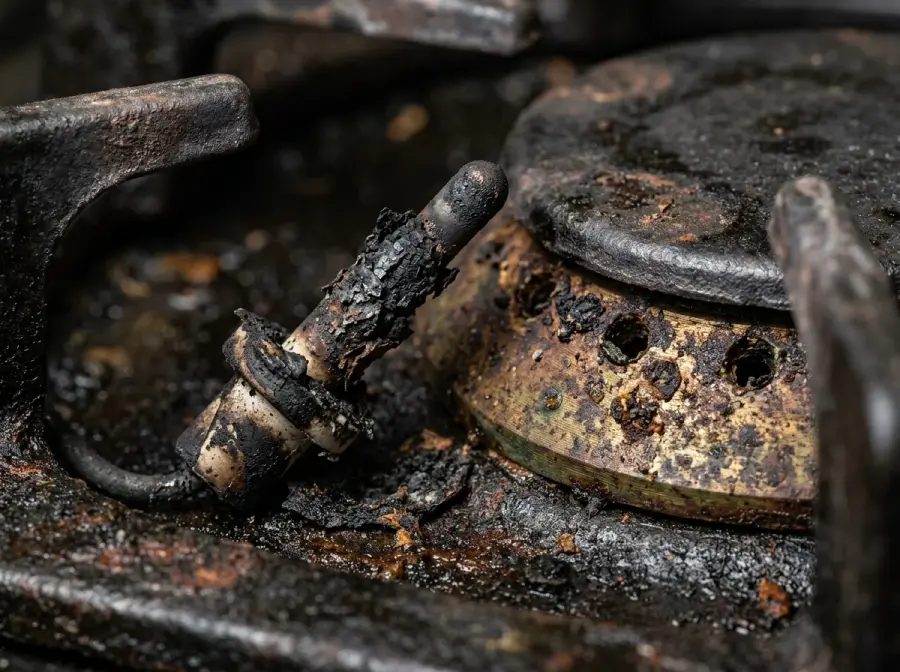
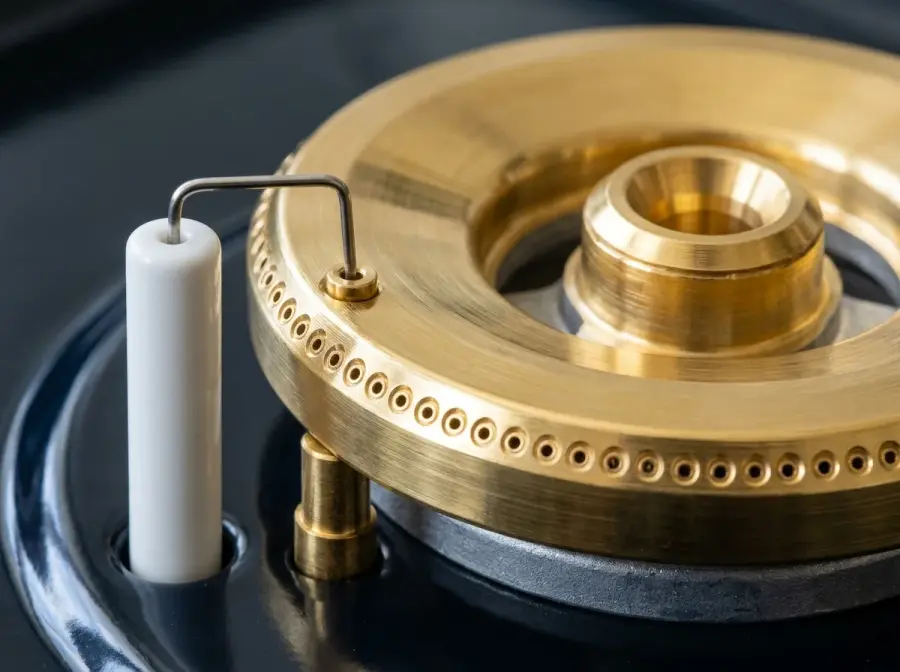
Field Case Review (Johns Creek, GA): On the left, severe grease accumulation and carbon soot clogged the pilot spud orifice and corroded the copper thermocouple junction, causing closed-circuit output to plunge to 4.2 mV. On the right, our certified technician installed a factory OEM Southbend pilot burner assembly, precision brass orifice, and high-millivolt heavy-duty thermocouple yielding 28.5 mV open circuit and a rock-steady 14.8 mV closed circuit.
Root Causes of Pilot Failure (Millivolt Loss, Carbonization, Baso Magnets)
When a Southbend gas range pilot refuses to stay lit, one of four mechanical or thermoelectric failures has developed within the combustion train:
1. Thermocouple Hot Junction Oxidation & Thermal Fatigue
A commercial range pilot burns continuously 24 hours a day, 365 days a year. Operating in an environment exceeding 1,200°F, the outer protective sheath of the thermocouple slowly oxidizes and blisters. Internally, the metallurgical bond between the dissimilar alloy wires undergoes crystal degradation, causing internal electrical resistance to climb from 0.05 Ω up to several ohms. As internal resistance rises, the millivolt potential delivered to the safety valve coil drops below the 12 mV holding threshold, causing the pilot to drop out the microsecond the operator releases the button. Commercial convection ovens face similar thermal degradation on motor interlocks, as explored in our guide on commercial oven repair.
2. Heavy Grease & Carbon Clogging of the Pilot Orifice Spud
Boiling broths, dripping roasting pans, and atomized fryer grease settle onto the pilot assembly mounted beneath the oven floor plate. The tiny pilot gas orifice—measuring only 0.014 to 0.018 inches in diameter—is easily constricted by carbonized grease crust. When the orifice is restricted, the pilot flame shrinks from a robust 1.5-inch blue flame to a flickering, pencil-thin flame. A weak pilot flame cannot heat the top 3/8 inch of the thermocouple to the required 900°F temperature, starving the safety valve of electrical energy. In neighboring cities, commercial kitchens facing similar burner clogging depend on our appliance repair in Alpharetta, GA for ultrasonic cleaning.
3. Internal Magnetic Coil Failure in the Baso Safety Valve
The Baso H15 safety valve contains a fine copper wire coil wrapped around a soft iron core. When 12 to 15 millivolts flow through this coil, it generates a magnetic flux that holds the spring-loaded rubber seal open against incoming gas pressure. Over 10 to 15 years of commercial kitchen thermal exposure, the coil insulation breaks down or the internal spring weakens. If the coil develops an open circuit or shorts to the valve body, no amount of thermocouple voltage will hold the valve open, requiring complete safety valve replacement. Executive kitchens in Milton experiencing similar valve failures turn to our appliance repair in Milton, GA for factory valve swaps.
5. Robertshaw Modulating Thermostat Bypass Flame Calibration & Capillary Bulb Placement
Beyond the basic standing pilot and thermocouple safety circuit, commercial Southbend ranges utilize a sophisticated throttling hydraulic thermostat—most commonly the Robertshaw FDTH or FDO series. This thermostat incorporates a liquid-filled sensing bulb mounted inside the oven cavity on specialized standoff brackets. Unlike residential electric cycling thermostats that switch completely on and off, a commercial throttling thermostat gradually modulates gas flow through internal poppet valves as the oven cavity approaches the setpoint temperature. Crucially, the thermostat features a precision bypass flame adjustment screw. When the oven reaches set temperature, the thermostat does not extinguish the burner entirely; instead, it reduces the main burner flame to a tiny 1/8-inch continuous bypass ribbon to maintain steady baking temperature without cycling shock.
If kitchen staff accidentally dislodge the copper capillary bulb from its factory mounting clips—causing it to rest against the cold oven wall or touch the hot steel deck plate—the thermostat receives false temperature feedback. If the bulb reads artificially hot, it throttles the gas valve down prematurely, leading to weak burner flames that can flicker and induce drafts that blow out the pilot. Furthermore, if the minimum bypass flame screw is misadjusted too low, the flame can backfire into the burner venturi when closing the oven door. Master technicians calibrate both the pilot flame height screw and the minimum bypass throttling dial using sensitive gas pressure gauges and calibrated temperature probes, ensuring flawless temperature regulation from a delicate 175°F holding temperature up to a searing 500°F baking cycle.
6. Commercial Kitchen Gas Line Manifold Sizing & Simultaneous Demand Pressure Sags
In bustling Johns Creek restaurant kitchens, gas appliances are frequently installed in tight batteries connected to a single gas header pipe. A typical line might feature a 6-burner Southbend range (198,000 BTU/hr total), two double-basket commercial fryers (122,000 BTU/hr each), and a heavy-duty radiant gas charbroiler (105,000 BTU/hr), resulting in total connected gas demand exceeding 540,000 BTU/hr. If the supply gas pipe feeding the cookline is undersized (such as a 3/4-inch supply line attempting to carry half a million BTUs over a 40-foot run), pressure drops precipitously whenever all appliances fire simultaneously. During the dinner rush when line cooks drop frozen fries and fire high-BTU open burners, gas line pressure can plunge from 7.0 inches W.C. down to 2.8 inches W.C. This severe pressure starvation deprives the standing pilot burner of fuel, causing the pilot flame to shrink below the thermocouple threshold and tripping the Baso safety valve. Verifying dynamic gas header volume and installing dedicated line regulators ensures rock-solid pilot stability under full kitchen demand.
Step-by-Step Operator Troubleshooting: Safe Checks for Kitchen Staff
Before calling for emergency service, restaurant kitchen staff can perform several basic safety and operational checks:
Step 1: Check the Manual Gas Shutoff Valve
Verify that the gas cock handle behind the range on the flexible quick-disconnect line is fully parallel to the gas pipe. In busy kitchens, wheeled equipment can bump against yellow flexible gas hoses, partially closing quarter-turn emergency ball valves and starving the pilot line.
Step 2: Follow Proper Pilot Relighting Hold Times
Rotate the oven thermostat dial to the “PILOT” position. Depress the red reset button fully and hold a long match or butane lighter to the pilot burner tip. Once the flame ignites, continue holding the red button down firmly for a full 60 seconds. A heavy-duty commercial thermocouple requires at least 45 seconds to generate sufficient heat to create its magnetic holding charge.
Step 3: Inspect Pilot Flame Color and Geometry
Observe the pilot flame through the pilot viewing port. A healthy flame is crisp, sharp, and predominantly bright blue, completely engulfing the top 3/8 inch to 1/2 inch of the thermocouple bulb. If the flame is yellow, lazy, flickering, or burning too far away from the probe tip, carbon buildup or draught issues are starving the thermocouple.
Step 4: Verify Mechanical Flare Nut Tightness at the Safety Valve
Vibrations from heavy sheet pans sliding across cast-iron grates can loosen the brass thermocouple fitting threaded into the rear coaxial receptacle of the Baso safety valve. With the range cool and gas off, physically inspect the knurled brass connector. The outer copper sleeve of the thermocouple acts as the negative electrical path; if loose, high resistance prevents millivolt current flow. Snug the fitting gently with an open-end 7/16-inch wrench (finger-tight plus 1/4 turn; do not over-torque).
Step 5: Check Type I Ventilation Hood Makeup Air Balance
Powerful kitchen exhaust hoods extract thousands of cubic feet per minute (CFM) of air. If the dedicated makeup air (MUA) supply fan is malfunctioning or filters are blocked, the kitchen enters a strong negative static pressure state. This negative pressure pulls air down through the range flue and chimney channels, creating fierce internal drafts across the oven deck that physically blow out standing pilots. Test pilot stability with the exhaust hood running versus powered off to determine if air balance is the root cause.
When to Stop DIY: Flammable Gas Leak Risks & Gas Pressure Hazards
Natural gas and liquid propane pose severe fire and explosion risks in commercial kitchens. Immediately stop troubleshooting and shut off gas supplies under the following circumstances:
- Distinct Mercaptan Gas Odor (Rotten Eggs): If you smell raw gas in the kitchen, immediately turn off the main gas shutoff valve. Do not operate electrical switches, range hood fans, or lighters. Evacuate the kitchen and ventilate the building.
- Hissing Sound from Safety Valve Body: If a hissing sound is audible around the Baso safety valve or aluminum pilot tubing while the oven is turned off, a cracked flare fitting or ruptured valve diaphragm is leaking pressurized gas.
- Pilot Blows Back into Mixing Tube: If the flame burns inside the pilot air shutter or makes a loud roaring blowtorch noise, combustion conditions are dangerous, risking toxic carbon monoxide buildup. Commercial food prep tables also require strict safety protocols, as outlined in our refrigerator repair services.
Repair vs. Replace Decision Matrix: Heavy-Duty Commercial Gas Ranges
A commercial Southbend gas range is built from thick gauge steel and heavy cast iron, often lasting 20 to 25 years in busy foodservice operations. Because replacing a heavy-duty 6-burner commercial range costs between $5,500 and $12,000 (excluding freight, rigging, and gas installation fees), rebuilding the gas safety train is overwhelmingly cost-effective:
| Combustion Component Status | Range Age | Estimated Repair Cost | Recommended Action | Financial Rationale |
|---|---|---|---|---|
| Worn Thermocouple & Clogged Pilot Orifice | 1–10 Years | $240 – $380 | Direct Repair | New OEM thermocouple and orifice ultrasonic clean restores 100% factory ignition at minimal cost. |
| Failed Baso Safety Valve & Pilot Assembly | 5–15 Years | $420 – $650 | Rebuild Safety Train (Repair) | Replacing the safety valve completely refreshes the combustion control circuit for another decade of reliable baking. |
| Cast Iron Oven Bottom Cracked + Burner Rotted | 15–20 Years | $1,200 – $1,800 | Evaluate Cast Iron Rebuild | If frame and cooktop are pristine, replacing cast iron deck plates and U-burners preserves heavy-gauge steel chassis. |
| Rotted Manifold + Multiple Seized Gas Cocks | 20+ Years | $2,800+ | Full Unit Replacement | Structural manifold leaks and rotted body panels warrant upgrading to a modern energy-efficient commercial range. |
Commercial kitchens operating high-demand dishwashing equipment alongside gas ranges can review our specialized commercial dishwasher repair for high-temp sanitizing booster heater diagnostics.
Cost Factors Influencing Commercial Range Gas Valve Overhauls in Johns Creek
When commercial operators in Johns Creek schedule service on a Southbend range pilot, several technical factors influence the final repair estimate:
- Standard Thermocouple vs. High-Output Thermopile: Standard Southbend static ovens use a single 30-millivolt coaxial thermocouple. However, convection base ranges or models equipped with electronic spark reignition utilize a 750-millivolt powerpile/thermopile generator or dual-pilot arrangement, which carries higher replacement component costs.
- Access & Cookline Congestion: A freestanding range with accessible quick-disconnect gas flex lines allows rapid service access. Ranges installed within tightly nested cooking batteries flanked by heavy fryers and salamander broilers require significantly more technician labor hours to uncouple and inspect.
- OEM Baso Safety Valves vs. Uncertified Universal Valves: Installing factory-certified Baso safety valves ensures compliance with ANSI Z83.11 and NFPA 54 commercial cooking standards. Non-certified universal valves carry improper opening pressure ratings that violate local Fulton County mechanical inspection codes. Commercial laundry systems require similar dedicated components, as supported by our dryer repair specialists.
How Master Technicians Diagnose Thermocouples (Millivolt Load Testing)
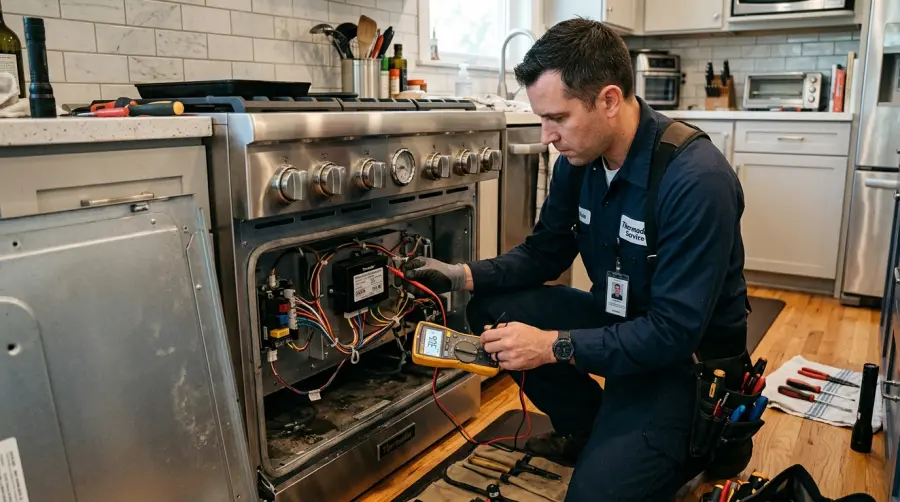
Master certified commercial cooking technicians execute a methodical testing procedure using true-RMS digital multimeters and specialized thermocouple test adapters to isolate ignition failures:
First, the technician unscrews the copper thermocouple connection from the rear of the Baso safety valve and connects a thermocouple test adapter in-line between the valve and probe. With the pilot flame ignited and fully enveloping the tip, open-circuit voltage is measured. A healthy Southbend thermocouple produces between 25.0 and 35.0 millivolts DC (mV). Any reading below 20.0 mV indicates severe oxidation of the hot junction. Commercial deep fryers operate on similar millivolt safety systems, as covered in our diagnostic breakdown on Frymaster commercial fryer troubleshooting.
Second, the technician connects the load adapter to measure closed-circuit voltage while the safety valve electromagnet is actively energized. Under load, voltage normally drops by approximately 50%, settling between 12.0 and 16.0 mV DC. If closed-circuit voltage plunges below 9.0 mV, the thermocouple internal resistance is too high to sustain the magnetic holding field. If closed-circuit voltage remains strong (above 13.0 mV) but the valve immediately snaps shut when released, the electromagnet coil inside the Baso valve is defective and must be replaced.
| Combustion Component / Test | Measurement Parameter | Normal Factory Specification | Fault / Failure Threshold |
|---|---|---|---|
| Thermocouple Open-Circuit Voltage | DC Millivolts (mV) – Unloaded | 25.0 mV to 35.0 mV DC | < 20.0 mV (Oxidized Junction) |
| Thermocouple Closed-Circuit Voltage | DC Millivolts (mV) – Under Load | 12.0 mV to 16.0 mV DC | < 9.0 mV (Cannot Hold Valve Open) |
| Baso Magnetic Coil Resistance | Ohms (Ω) across Valve Terminal | 0.02 Ω to 0.05 Ω (Very Low) | ∞ OL (Open Coil) or > 0.2 Ω |
| Natural Gas Manifold Pressure | Inches Water Column (W.C.) | 4.0″ W.C. ± 0.2″ | < 3.5″ (Starvation) or > 5.0″ (Overfire) |
| LP Propane Manifold Pressure | Inches Water Column (W.C.) | 10.0″ W.C. ± 0.3″ | < 9.0″ W.C. or > 11.5″ W.C. |
| Pilot Dropout Time (Safety Test) | Seconds from Flame Extinguish | 30 to 60 Seconds | > 90 Seconds (Stuck Valve Plunger) |
Commercial convection ovens also feature specialized centrifugal interlocks and blower motor circuits, detailed in our analysis of Blodgett commercial convection oven blower motor repair. Methodical testing guarantees that combustion components operate at peak thermodynamic efficiency.
Critical OEM Parts Involved in Southbend Commercial Range Service
Restoring a commercial Southbend gas range to factory performance requires certified OEM combustion parts built to withstand continuous restaurant duty:
- Southbend Heavy-Duty Coaxial Thermocouple (Part #1182151 / #1053100): Commercial 30mV thermocouple with high-temperature stainless steel sheath and threaded brass connection.
- Baso H15 Safety Shutoff Valve (Part #1182152): Precision electromagnetic gas safety valve that shuts off main gas flow if the pilot flame extinguishes.
- Southbend Pilot Burner Assembly with Target Hood (Part #1182150): Cast-iron and brass pilot burner head providing stable flame geometry directed over the thermocouple tip.
- Precision Machined Pilot Orifice Spud: Sized specifically for Natural Gas (#0.018″) or LP Propane (#0.010″) to deliver optimal stoichiometric air-fuel combustion.
- Robertshaw FDTH Commercial Oven Thermostat: Heavy-duty hydraulic modulating thermostat regulating gas flow from 150°F to 500°F. Commercial freezers require comparable precision temperature management, supported by our team specializing in commercial freezer repair.
Preventive Maintenance Protocols to Eliminate Carbon Clogging
Scheduled combustion maintenance prevents sudden pilot dropouts during peak meal hours:
- Weekly Pilot Assembly Carbon Inspection: Inspect the pilot bracket for boiled-over sauces, animal fats, and carbon crust. Use a brass wire brush to clear debris around the thermocouple hot junction.
- Quarterly Burner Port De-scaling: Remove cast-iron top grates and star burner heads. Clean all burner carryover slots using a wire pick to ensure smooth flame propagation from the pilot.
- Semi-Annual Gas Manifold Pressure Calibration: Connect a digital manometer to the manifold test port and verify that gas pressure matches nameplate specifications (4.0″ W.C. natural gas / 10.0″ W.C. LP).
- Annual Thermocouple Millivolt Telemetry Audit: Measure open and closed-circuit millivoltage. If closed-circuit voltage drops below 12.0 mV, replace the thermocouple before it fails during service. Commercial washing machines in laundromats also require preventive drive audits, outlined in our report on Dexter commercial washer inverter fault repair.
NFPA 54 Fuel Gas Safety, Gas Manifold Pressures & Ventilation Standards
Commercial gas equipment involves immense thermal energy and flammable fuel gases. Strictly adhere to these critical standards:
- NFPA 96 Commercial Hood Exhaust Interlock: Commercial ranges must be operated under an approved Type I kitchen ventilation hood equipped with an automated gas shutoff valve that closes gas flow if the exhaust fan fails.
- Soap Bubble Leak Testing: Never use an open flame to test for gas leaks. Apply non-corrosive gas leak detection fluid to all threaded pipe joints and look for bubbling.
- Carbon Monoxide (CO) Monitoring: Ensure commercial kitchen spaces are equipped with commercial-grade ambient CO detectors calibrated to alarm at levels exceeding 35 PPM. Commercial laundry washers also follow strict utility isolation guidelines, as shown in our washing machine repair services.
Frequently Asked Questions (Interactive Technical Accordions)
Below are 16 in-depth, expert answers to the most common questions regarding Southbend commercial gas range pilot outages, thermocouple diagnostics, and safety valve repairs in Johns Creek, GA:
Q1: Why won’t my Southbend commercial gas range pilot stay lit when I release the button?
The pilot fails to stay lit primarily because the thermocouple has oxidized and cannot generate the 12 to 15 millivolts required to hold open the Baso safety valve electromagnet. Other common causes include a clogged pilot gas orifice that starves the flame of heat, a misaligned bracket where the flame misses the thermocouple tip, or a failed magnetic coil inside the safety valve.
Q2: How long should I hold the pilot reset button down when relighting?
You must hold the red pilot override button down firmly for a full 45 to 60 seconds after the pilot flame ignites. Unlike residential pilots, commercial heavy-duty thermocouples possess thick protective outer sheaths that take nearly a minute to reach the 900°F operating temperature needed to generate sufficient magnetic holding flux.
Q3: How much millivoltage should a healthy Southbend thermocouple produce?
Under open-circuit conditions (disconnected from the valve), a healthy commercial thermocouple produces 25 to 35 millivolts DC (mV). Under closed-circuit operating load connected to the safety valve, it should maintain between 12 and 16 mV DC. If closed-circuit voltage drops below 9 mV, the safety valve will drop out.
Q4: Can I clean a clogged commercial pilot orifice with a needle or wire?
Never poke sewing needles, drill bits, or stiff steel wire into a brass pilot orifice. The orifice hole is precision-machined to thousandths of an inch (e.g., 0.018″). Poking steel wire into the soft brass enlarges the hole, causing an over-gassed, lazy yellow flame that soots up the oven cavity. Use ultrasonic solvent cleaning or replace the brass spud.
Q5: What is the function of the Baso H15 safety valve?
The Baso H15 valve is a 100% safety shutoff device. It uses an internal electromagnet powered by the thermocouple to hold open a spring-loaded gas valve seat. If the pilot flame blows out or is smothered, the thermocouple stops generating current, the magnet de-energizes within 45 seconds, and the valve snaps shut, preventing dangerous gas build-up.
Q6: How often should commercial range thermocouples be replaced?
In busy 7-day-a-week commercial kitchens, thermocouples should be replaced every 18 to 24 months as a preventive maintenance measure. The intense continuous heat causes gradual metallurgical oxidation, leading to unexpected failures during busy holiday dinner rushes.
Q7: Why does the pilot flame blow out when the oven door is closed quickly?
Closing the heavy counterbalanced oven door rapidly creates an internal air pressure wave. If the pilot flame’s primary air shutter is improperly adjusted, the pilot target hood is corroded, or the sheet metal draft shield is missing, the air blast will physically blow the pilot flame off the burner tip.
Q8: Can a generic universal thermocouple be installed on a Southbend range?
Standard hardware store thermocouples are designed for low-BTU residential water heaters and lack the high-temperature stainless alloy construction and heavy lead wire needed for commercial ranges. Always use genuine factory OEM Southbend or heavy-duty Baso commercial thermocouples rated for commercial ovens.
Q9: What causes delayed ignition and a loud boom when the oven burner fires?
Delayed ignition occurs when the burner carryover ports adjacent to the pilot are clogged with spilled food or grease crust. When the gas valve opens, gas fills the bottom of the oven before finally igniting off the pilot flame, creating a concussive “boom.” This is a severe hazard that can warp sheet metal and break oven door glass.
Q10: What is the correct manifold pressure for a Southbend commercial range?
For Natural Gas (NG), factory specification is exactly 4.0 inches Water Column (W.C.). For Liquid Propane (LP), the pressure must be calibrated to 10.0 inches W.C. Operating at incorrect pressures causes sooting, unstable flames, and carbon monoxide generation.
Q11: Can a Southbend range be converted between Natural Gas and LP Propane?
Yes, but it requires a certified factory OEM conversion kit. The main burner orifices, pilot spuds, and pressure regulator springs must all be replaced and calibrated to accommodate the differing energy densities and pressures of NG and LP gases.
Q12: How long does an emergency pilot or safety valve repair take on-site?
Our service vehicles in Johns Creek carry genuine OEM Southbend thermocouples, Baso H15 safety valves, pilot burners, and gas pressure gauges. Most on-site pilot diagnoses, thermocouple swaps, and valve calibrations are completed within 1 to 2 hours on the same day.
Q13: Why is my pilot flame burning yellow and producing black soot?
A yellow, sooty pilot flame indicates incomplete combustion caused by restricted primary combustion air or an oversized orifice. The air shutter must be adjusted to admit more oxygen, and any grease or lint choking the pilot venturi must be cleaned out.
Q14: Does a loose thermocouple nut at the safety valve cause pilot dropouts?
Yes. The threaded brass nut at the back of the safety valve serves as the electrical ground return for the millivolt circuit. If this connection is loose or cross-threaded, high electrical resistance prevents current flow, causing the valve to drop out. It should be tightened finger-tight plus 1/4 turn with a wrench.
Q15: Can a commercial range pilot stay lit but the oven still refuse to heat?
Yes. If the pilot flame is lit and the safety valve is held open, but turning the thermostat dial fails to ignite the main oven burner, the main thermostat valve has failed, the main burner orifice is blocked, or the oven high-limit switch has tripped.
Q16: Why should I hire certified commercial gas technicians instead of general plumbers?
Commercial cooking equipment requires specialized training in high-BTU combustion dynamics, NFPA 54/96 fire codes, millivolt safety circuits, and digital gas pressure manometers. Our technicians carry specialized commercial parts, factory gas diagnostic tools, and commercial insurance coverage, ensuring full code compliance.
Related Commercial Cooking & Refrigeration Equipment Services
Our commercial technical team provides complete diagnostic, repair, and preventive maintenance across all commercial cooking and refrigeration systems in Johns Creek:
Key Takeaways for Johns Creek Restaurant & Culinary Managers
- Thermoelectric Fail-Safe: A Southbend commercial range uses a thermoelectric safety circuit where the pilot flame heats a thermocouple to generate holding current for a Baso valve.
- Voltage Threshold: A healthy thermocouple produces 25–35 mV open-circuit; if closed-circuit voltage drops below 9–12 mV, the safety valve automatically closes.
- 60-Second Rule: Always hold down the red pilot override button for 60 seconds to allow the heavy commercial thermocouple to reach operating temperature.
- No Steel Wire: Never use steel needles or wire to ream out brass pilot orifices; poke-cleaning ruins precision gas flow and creates dangerous sooting.
- Gas Pressure Mandate: Proper manifold pressure (4.0″ W.C. natural gas / 10.0″ W.C. LP) is essential to prevent pilot flame lift-off and delayed ignition concussions.
- High Economic Return: Rebuilding a commercial range pilot safety train restores a $8,000+ cooking line for a fraction of new equipment cost.
- Certified Emergency Dispatch: Same-day priority commercial cooking service is available across Johns Creek, Alpharetta, Milton, and Roswell with genuine OEM parts.
Call to Action: Emergency Commercial Cooking Dispatch in Johns Creek
Priority Commercial Cooking Dispatch
Relight Your Southbend Commercial Range Today
Don’t let a stubborn pilot outage or failed thermocouple shut down your restaurant’s cookline. Our master certified commercial technicians provide same-day emergency diagnostics, millivolt testing, and genuine OEM Southbend parts replacements across Johns Creek, GA.
Licensed & Insured Commercial Gas Technicians • Genuine OEM Southbend Parts • 90-Day Comprehensive Warranty
Need Certified Appliance Repair Today?
Skip the phone line — book direct local priority dispatch across Alpharetta, Milton, Roswell & Johns Creek.